Entertainment
The 6 Best Books Released Since 2000

A strange thing happens with truly great novels. Their premise stops being the part you remember most. Years later, what comes back is a moral complication, a voice, a particular room, the feeling of somebody making the wrong choice for reasons you understand too well. Plot gets you inside. The book’s way of seeing people is what follows you home.
That is especially true of the six novels on this particular list. They deal with slavery, migration, political power, cloning, parenthood, and the collapse of civilization, yet none of them can be reduced to the large subjects printed on their jackets. Their real force comes from making history and systems feel painfully private. Or maybe let’s put it this way — these are books that keep expanding after you finish them.
6
‘The Underground Railroad’ (2016)

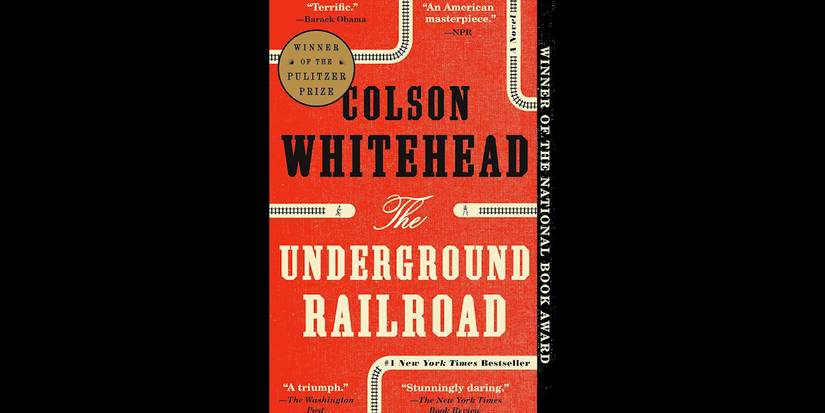
The Underground Railroad follows Cora, an enslaved young woman on a Georgia plantation who escapes with Caesar and discovers that the Underground Railroad is literally operating beneath the country through hidden stations and trains. Colson Whitehead takes a historical network and makes it physical, then uses each stop on Cora’s journey to expose a different American method of controlling Black life. South Carolina initially offers apparent safety. North Carolina reveals another form of terror. The geography keeps changing, while the larger machinery of racism simply learns new disguises.
That speculative choice gives Whitehead enormous freedom without loosening the historical weight. Slave catcher Ridgeway pursues Cora with an almost ideological devotion, treating her escape as an insult to the national order he believes in. Cora’s own understanding of freedom keeps evolving because survival in one place does not guarantee dignity in the next. The novel won both the National Book Award and the Pulitzer Prize, but its staying power comes from how naturally history, horror, adventure, and allegory coexist. It moves quickly enough to feel dangerous and leaves enough behind to make every station worth thinking about afterward.
5
‘Never Let Me Go’ (2005)

Kathy H. remembers growing up at Hailsham, an English boarding school where the children are encouraged to create art, remain healthy, and accept rules whose real purpose they barely understand. Never Let Me Go gradually clarifies that Kathy, Ruth, Tommy, and their classmates were created as organ donors. Their lives have been designed in advance by a society that prefers not to look too closely at the human cost of extending everyone else’s. Kazuo Ishiguro never turns that discovery into a conventional rebellion story. The horror is that these characters have been raised so completely inside the system that its limits feel almost natural to them.
Kathy’s calm narration is devastating because memory does most of the emotional work. She recalls schoolyard jealousies, cassette tapes, friendships, sex, minor betrayals, and the possibility that love might somehow earn two people more time. Tommy’s childhood anger becomes more painful once adulthood explains what he could sense without understanding. Ruth’s behavior also grows richer when insecurity and regret begin catching up with her. Ishiguro makes an enormous ethical crime visible through people remembering very ordinary days, which is precisely why the book hurts. The science fiction stays quiet. The humanity does not.
4
‘Pachinko’ (2017)

Pachinko begins with Sunja growing up in a poor Korean family during Japanese occupation and follows the consequences of one relationship across generations. After becoming pregnant by Koh Hansu, a wealthy married man, she accepts a marriage proposal from Isak, a Christian minister who takes her to Osaka. Japan offers the family opportunities Korea could not, but it also places them inside a society that treats Koreans as permanent outsiders. Children are born there, businesses are built there, and still the question of belonging refuses to disappear.
Min Jin Lee makes that history intimate through money, food, work, education, marriage, religion, and the small humiliations people learn to anticipate before entering a room. Sunja selling kimchi to support her family carries as much importance as larger historical events because survival is built from those decisions. Noa tries to move through Japanese society by distancing himself from what others despise about his background. Mozasu finds another path through the pachinko business, where luck, manipulation, and economic possibility sit together rather neatly. The novel spans decades without losing sight of the people paying for those decades. You finish with the feeling that one family has somehow taught you an entire century.
3
‘Wolf Hall’ (2009)

Thomas Cromwell is usually remembered as one of the cold operators surrounding Henry VIII. Wolf Hall does something far more interesting. Hilary Mantel enters his perspective during the king’s effort to end his marriage to Catherine of Aragon and marry Anne Boleyn, turning Tudor politics into a world of negotiations, debts, religious pressure, memory, family alliances, and people constantly measuring what another person might want. Cromwell begins the novel carrying the death of his wife and daughters while navigating the political collapse of his mentor Cardinal Wolsey.
The pleasure is in watching how quickly his mind works. Cromwell remembers favors, recognizes weaknesses, understands money, and notices when somebody’s public position no longer matches the private reality underneath it. Mantel’s present-tense prose keeps sixteenth-century England from feeling embalmed, while the famous use of “he” pulls the reader unusually close to Cromwell’s consciousness. Henry remains dangerous partly because everybody around him has to convert royal desire into lawful reality. Anne is equally alert to the stakes of every conversation. Wolf Hall won the Booker Prize and began one of modern historical fiction’s greatest trilogies, yet the immediate appeal is simpler. Politics has rarely felt this alive at table level.
2
‘The Road’ (2006)

Few books make love feel this practical, frightened, and necessary. A father and son travel south through a burned America in The Road, pushing their possessions in a shopping cart and trying to survive cold, hunger, armed strangers, and a landscape where almost nothing living remains. Cormac McCarthy removes nearly every comfort associated with post-apocalyptic adventure. There are no rebuilding montages, clever factions, or exciting scavenger runs. Food means another day. A locked cellar can contain something worse than starvation. The father’s entire idea of the future has narrowed to keeping the boy alive long enough to reach somewhere safer.
That simplicity makes every moral decision enormous. The father has learned to distrust almost everyone, while the boy keeps asking whether compassion still has a place in a world where kindness can be fatal. Their language about “carrying the fire” becomes a way of preserving some idea of goodness when civilization can no longer enforce one. McCarthy’s stripped prose can make a can of Coca-Cola, a remembered meal, or a shared blanket feel almost sacred because scarcity has changed the value of ordinary things. The novel won the Pulitzer Prize, though awards are almost beside the point once these two begin walking.
1
‘The Known World’ (2003)

The Known World won the Pulitzer Prize in 2004, but its greatness sits deeper than recognition. The book begins with the death of Henry Townsend, a formerly enslaved Black man in antebellum Virginia who became a slaveholder himself. That fact immediately disrupts any comfortable way of organizing the world around him. Henry owns people because the society he lives in has taught him that property, race, status, and freedom can coexist inside grotesque contradictions. After his death, the plantation begins losing its fragile order, and Edward P. Jones widens the story through Henry’s widow Caldonia, the enslaved people he owned, neighboring families, white authorities, and lives that will continue long after the immediate events have passed.
Jones refuses to arrange these characters according to easy moral categories. A person can suffer under one hierarchy and still participate in another. Affection can exist inside ownership without making ownership less monstrous. The narration moves freely across time, sometimes telling us what becomes of a seemingly minor character decades before the present story reaches that future, which gives the novel the eerie authority of a historian who already knows where everybody ends up. That structure turns one Virginia county into a complete social system with memory stretching in every direction. The Known World literally makes American history harder to simplify once you have lived inside its contradictions.
You must be logged in to post a comment Login