A trilogy is a much harder thing to pull off than a single great movie, since you need three separate stories that each work on their own and still add up to something bigger by the time the credits roll on the last one. A lot of trilogies coast on the first film’s goodwill and just get worse from there.
These six didn’t do that. Every one of them either stayed level across all three entries or actually improved as it went, which is rarer than it sounds. Some of these films are the greatest movies ever produced in Hollywood. Good to best, have a look at them below.
Advertisement
6
‘Captain America Trilogy’ (2011–2016)
Captain America surrounded by HYDRA soldiers in ‘Captain America: The First Avenger.’Image via Marvel Studios
Each movie in this trilogy is basically a different genre with the same lead actor. The First Avenger is a pulpy World War II adventure, Winter Soldier is the second one which turns into a 70s political paranoia thriller openly inspired by Three Days of the Condor, and Civil War, the last one becomes a full ensemble political drama that barely has room for its own title character.
Anthony and Joe Russo came from sitcom backgrounds, Arrested Development and Community, before taking over the back two entries, and the elevator fight in Winter Soldier alone is still held up as one of the best pieces of action choreography the entire Marvel universe has produced. Steve Rogers (Chris Evans) anchors all three films despite the genre whiplash and he is still easily one of the most favorite Avengers of teenagers and adults.
Advertisement
5
‘How to Train Your Dragon Trilogy’ (2010–2019)
Hiccup watching his kids, who are about to touch Toothless, in ‘How to Train Your Dragon: The Hidden World’Image via Universal Pictures
Dean DeBlois directed all three of these movies, which is rarer than it sounds for an animated franchise, and it shows in how consistent the emotional throughline stays across almost a decade of real time. Hiccup (Jay Baruchel) loses his father partway through the second film, and by the third, he has to let Toothless go be with his own kind instead of keeping him forever, which is a genuinely mature thing to ask a kids’ franchise to sit with.
You can actually watch the animation technology improve across the three movies, fur, water, and fire all get noticeably more detailed by the third installment. Not many franchises built for children trust their audience with actual grief and actual goodbyes the way this one does.
Advertisement
4
‘Planet of the Apes Reboot Trilogy’ (2011–2017)
Caesar (Andy Serkis) looking angry in Rise of the Planet of the Apes.Image via 20th Century Studios
Caesar (Andy Serkis) is one of the best performances of the last two decades built entirely through motion capture, and he never once feels like a special effect, but only a tragic figure slowly losing the fight to keep his own ideals intact. Matt Reeves took over directing for the last two entries and leaned hard into genuine moral weight instead of just monkeys-with-guns show.
War for the Planet of the Apes borrows heavily from prison camp movies and Apocalypse Now, which is an unusual place for a summer blockbuster about talking apes to end up. Serkis never got an Oscar nomination for any of this, despite basically every critic agreeing he deserved one, and that omission still gets brought up as one of the Academy’s bigger blind spots.
Advertisement
Collider Exclusive · Sci-Fi Survival Quiz Which Sci-Fi World Would You Survive? The Matrix · Mad Max · Blade Runner · Dune · Star Wars
Advertisement
Five universes. Five completely different ways the future went wrong — or sideways, or up in flames. Only one of them is the world your instincts were built for. Eight questions will figure out which dystopia, galaxy, or desert wasteland you’d actually make it out of alive.
💊The Matrix
🔥Mad Max
🌧️Blade Runner
🏜️Dune
Advertisement
🚀Star Wars
Advertisement
01
You sense something is deeply wrong with the world around you. What do you do? The first instinct is often the truest one.
Advertisement
02
In a world of scarcity, what resource do you guard most fiercely? What we protect reveals what we believe survival actually requires.
Advertisement
03
What kind of threat keeps you up at night? Fear is useful data — if you’re honest about what you’re actually afraid of.
Advertisement
04
How do you deal with authority you don’t trust? Every dystopia has a power structure. Your approach to it determines everything.
Advertisement
05
Which environment could you actually endure long-term? Survival isn’t just tactical — it’s physical, psychological, and very much about where you are.
Advertisement
06
Who do you want in your corner when things fall apart? The company you keep is the clearest signal of who you actually are.
Advertisement
07
Where do you draw the line — if you draw one at all? Every survivor eventually faces a moment that tests what they’re actually made of.
Advertisement
08
What would actually make survival worth it? Staying alive is one thing. Having a reason to is another.
Advertisement
Your Fate Has Been Calculated You’d Survive In…
Your answers point to the world your instincts were built for. This is the universe your temperament, your survival instincts, and your particular brand of stubbornness were made for.
Advertisement
The Resistance, Zion
The Matrix
You took the red pill a long time ago — probably before anyone offered it to you. You’re a systems thinker who can’t help but notice the seams in things.
You’re drawn to understanding how the system works before figuring out how to break it.
You’d find the Resistance, or it would find you — your instinct for spotting constructed realities is the machines’ worst nightmare.
You function best when you have access to information and the freedom to act on it.
The Matrix built an airtight prison. You’d be the one probing the walls for the door.
Advertisement
The Wasteland
Mad Max
The wasteland doesn’t reward the clever or the well-connected — it rewards those who are hard to kill and harder to break. That’s you.
You don’t need comfort, community, or a cause larger than the next horizon.
You need a vehicle, a clear threat, and enough fuel to outrun it — and you’re good at all three.
You are unsentimental enough to survive that world, and decent enough — just barely — to be something more than another raider.
In the wasteland, that distinction is everything.
Advertisement
Los Angeles, 2049
Blade Runner
You’d survive here because you know how to exist in moral grey areas without losing yourself completely.
You read people accurately, keep your circle small, and ask the questions others prefer not to answer.
In a city where humanity is a legal designation rather than a feeling, you hold onto something that keeps you functional.
You’re not a hero. But you’re not lost, either.
In Blade Runner’s world, that distinction is everything.
Advertisement
Arrakis
Dune
Arrakis is the most hostile environment in the known universe — and you are precisely the kind of person it rewards.
Patience, discipline, and political awareness are your core strengths — and on Arrakis, they’re survival tools.
You understand that the long game matters more than any single victory.
Others come to Dune and are consumed by it. You’d learn its logic and earn its respect.
In time, you wouldn’t just survive Arrakis — you’d begin to reshape it.
Advertisement
A Galaxy Far, Far Away
Star Wars
The galaxy far, far away is vast, loud, and in a constant state of violent political upheaval — and you wouldn’t have it any other way.
You find meaning in being part of something larger than yourself — a cause, a crew, a rebellion.
You’d gravitate toward the Rebellion, or the fringes, or whatever pocket of the galaxy still believes the Empire’s grip can be broken.
You fight — not because you have to, but because standing aside isn’t something you’re capable of.
In Star Wars, that willingness is what makes all the difference.
Advertisement
3
‘The Dark Knight Trilogy’ (2005–2012)
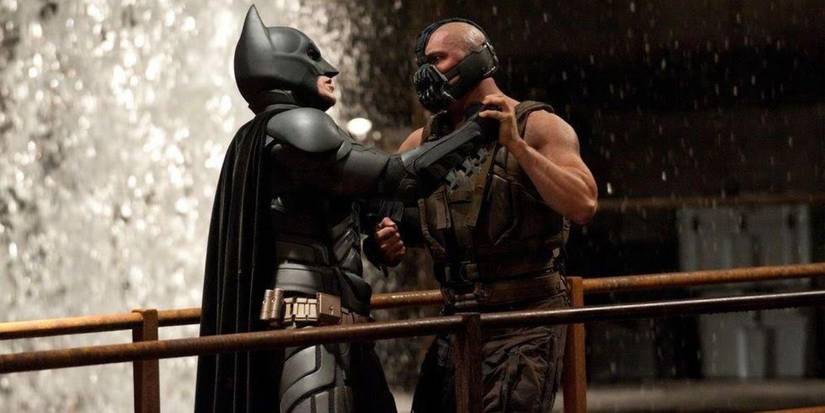
Batman (Christian Bale) and Bane (Tom Hardy) fighting each other in ‘The Dark Knight Rises’.Image via Warner Bros.
Advertisement
Christopher Nolan built each entry in this trilogy as a completely different genre stitched onto the same character. Batman Begins is a training film, The Dark Knight is a crime thriller, and The Dark Knight Rises is closer to a war epic about revolution. None of these films looks like it belongs to a superhero movie in the way that word usually gets used.
Heath Ledger’s posthumous Oscar for playing the Joker is the moment most people remember, but the bigger legacy is what this trilogy did for the genre as a whole. It proved that a movie about a guy in a bat costume could get taken seriously by people who’d normally skip anything with a cape in it. IMAX became a real blockbuster format partly because Nolan kept insisting on using it here first.
2
‘Guardians of the Galaxy Trilogy’ (2014–2023)
Chris Pratt in Guardians of the Galaxy Vol. 2.Image via Walt Disney Studios Motion Pictures
Advertisement
James Gunn directed all three of these and built the whole thing around a soundtrack gimmick that turned into two genuinely bestselling real albums, Awesome Mix Vol. 1 and Vol. 2. Peter Quill (Chris Pratt) leads a team of misfits that starts out as comic relief and slowly turns into one of the more emotionally devastating found-family stories in any recent blockbuster franchise.
Gunn actually got fired from the franchise briefly over old resurfaced tweets before the third movie, then got rehired once Disney reversed course, and Vol. 3 ended up dealing with a genuinely dark, upsetting backstory for Rocket involving real animal cruelty. It’s a rare trilogy that gets more emotionally serious with each entry without ever losing its sense of humor.
1
‘The Lord of the Rings Trilogy’ (2001–2003)
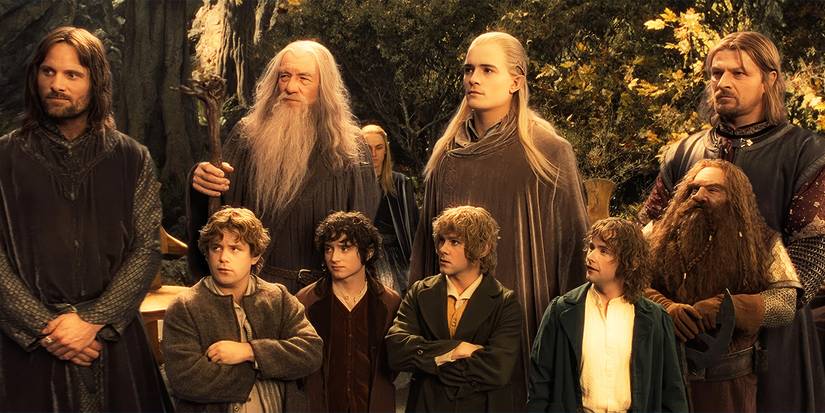
Aragorn, Gandalf, Legolas, Boromir, Samwise, Frodo, Gimli, Merry, and Pippin forming The Fellowship in The Lord of the Rings: The Fellowship of the RingImage via New Line Cinema
Advertisement
No studio had ever greenlit three blockbuster films shot back to back before knowing whether the first one would even work, and Peter Jackson filmed all three of these together in New Zealand over about eighteen months anyway, an enormous gamble that could have bankrupted everyone involved if audiences hadn’t shown up.
They did, obviously, and The Return of the King went on to win all eleven Oscars it was nominated for, a sweep that basically never happens. This trilogy also built WETA Workshop into a global force in visual effects and turned New Zealand into one of the biggest film production hubs in the world. Fantasy movies got taken seriously by the Academy because of what these three proved was possible.



You must be logged in to post a comment Login