Picking just six movies out of everything released since 2000 is almost unfair, there’s probably fifty other movies from this stretch that could make an argument for a spot here too. But these six actually changed a genre, an industry standard, and what people expected walking into a movie theater afterward.
A couple of these took over a decade just to get made. One single film ended up sweeping almost every major award category it was nominated in. And they all still get brought up in conversations about the best movies ever made, not just the best movies of this particular quarter century. So, here is the six best ones out of all of them.
Advertisement
6
‘The Social Network’ (2010)
Jesse Eisenberg as Mark Zuckerberg in The Social NetworkImage via Sony Pictures Releasing
This movie has two guys arguing about website code and it looks like an actual thriller, and a lot of that comes down to Aaron Sorkin‘s script, where characters talk over each other at an extremely high speed. Mark Zuckerberg (Jesse Eisenberg) comes across as brilliant and genuinely unlikable at the same time, and the movie never really tries to make you root for him, just understand him.
David Fincher directed it, and Eduardo Saverin (Andrew Garfield) ends up as the actual emotional core of the story, a guy who gets pushed out of the company he helped start by his own best friend. Armie Hammer played both Winklevoss twins using some clever camera tricks and a body double, and Trent Reznor’s score, all cold synths and tension, won an Oscar as well.
Advertisement
5
‘Spirited Away’ (2001)
Chihiro standing among flowers and looking up in ‘Spirited Away’.Image via Studio Ghibli
A ten-year-old girl wanders into a bathhouse for literal spirits after her parents get turned into pigs for eating food that wasn’t meant for them, and Hayao Miyazaki builds an entire believable world around that premise in under two hours. It is a beautifully made animated film which triggers more emotions than a non-animated one.
Chihiro has to work off her parents’ debt to the witch running the bathhouse just to save them, and along the way she meets No-Face, one of the strangest, quietly saddest characters in any animated movie. It became the first hand-drawn, non-English film to win the Oscar for Best Animated Feature, and it was the highest-grossing movie in Japan’s history for years after it came out.
Advertisement
4
‘Parasite’ (2019)
Park So-dam and Choi Woo-shik check their cellphones in a scene from Parasite.Image via NEON
A poor family cons their way into working for a wealthy one, one lie at a time, tutor, driver, housekeeper, until they’ve basically replaced the household staff completely, and Bong Joon-ho builds so much tension out of that setup before anything actually goes wrong.
The studio famously asked critics not to reveal anything about the second half of the movie before release, and that secrecy campaign worked, most people went in with zero idea where the story was headed. It became the first non-English language film to ever win Best Picture at the Oscars.
Advertisement
Collider Exclusive · Oscar Best Picture Quiz Which Oscar Best Picture Is Your Perfect Movie? Parasite · Everything Everywhere · Oppenheimer · Birdman · No Country
Advertisement
Five Oscar Best Picture winners. Five completely different visions of what cinema can be — and what it can do to you. One of them is the film that was made for the way your mind works. Ten questions will figure out which one.
🪜Parasite
🌀Everything Everywhere
☢️Oppenheimer
🐦Birdman
Advertisement
🪙No Country for Old Men
Advertisement
01
What kind of film experience do you actually want? The best movies don’t just entertain — they leave something behind.
Advertisement
02
Which idea grabs you most in a film? Great films are driven by a central obsession. What’s yours?
Advertisement
03
How do you like your story told? Form is content. The way a story is shaped changes what it means.
Advertisement
04
What makes a truly great antagonist? The opposition defines the protagonist. What kind of opposition fascinates you?
Advertisement
05
What do you want from a film’s ending? The final note is the one that lingers. What do you want it to sound like?
Advertisement
06
Which setting pulls you in most? Where a film takes place shapes everything — mood, stakes, what’s even possible.
Advertisement
07
What cinematic craft impresses you most? Every great film has a signature — a technical or artistic element that makes it unmistakable.
Advertisement
08
What kind of main character do you root for? The protagonist is the lens. Who you choose to follow says something about you.
Advertisement
09
How do you feel about a film that takes its time? Pace is a choice. Some films sprint; others let tension accumulate slowly, deliberately.
Advertisement
10
What do you want to feel walking out of the cinema? The best films leave a mark. What kind of mark do you want?
Advertisement
The Academy Has Decided Your Perfect Film Is…
Your answers have pointed to one Oscar Best Picture winner above all others. This is the film that was made for the way your mind works.
Advertisement
Parasite
You are drawn to films that operate on multiple levels simultaneously — that begin in one genre and quietly, brilliantly migrate into another. Bong Joon-ho’s Parasite is a film about class, desire, and the architecture of inequality that manages to be darkly funny, deeply suspenseful, and genuinely shocking across a single extraordinary running time. Your instinct is for cinema that hides its true intentions until the moment it’s ready to reveal them. Parasite is exactly that — a film that rewards close attention and punishes assumptions, right up to its devastating final image.
Advertisement
Everything Everywhere All at Once
You want it all — and this film gives you all of it. The Daniels’ Everything Everywhere All at Once is one of the most maximalist films ever made: action comedy, multiverse sci-fi, family drama, existential crisis, and a genuinely earned emotional core that sneaks up on you amid the chaos. You are someone who responds to ambition, who doesn’t want cinema to choose between being entertaining and being meaningful. This film refuses that choice entirely. It is overwhelming by design, and its overwhelming nature is precisely the point — because the feeling of being crushed by infinite possibility is exactly what it’s about.
Advertisement
Oppenheimer
You are drawn to cinema on a grand scale — films that understand history not as a backdrop but as a force, and that place their characters inside that force and watch what happens. Christopher Nolan’s Oppenheimer is a film about the terrifying gap between what we can do and what we should do, told with the full weight of one of the most consequential moments in human history behind it. You want your films to feel important without feeling self-important — to earn their ambition through sheer craft and the gravity of their subject. Oppenheimer does exactly that. It is enormous, complicated, and refuses easy comfort.
Advertisement
Birdman
You are drawn to films that foreground their own construction — that make the how of the filmmaking part of the what it’s about. Alejandro González Iñárritu’s Birdman, shot to appear as a single continuous take, is cinema examining itself through the cracked mirror of a fading actor’s ego. You respond to formal daring, to the feeling that a film is doing something that probably shouldn’t be possible. Michael Keaton’s performance and Emmanuel Lubezki’s restless camera create something genuinely unlike anything else — a film that is simultaneously about creativity, relevance, self-destruction, and the impossibility of ever truly knowing if your work means anything at all.
Advertisement
No Country for Old Men
You are drawn to cinema that trusts silence, that refuses to explain itself, and that treats dread as a form of meaning. The Coen Brothers’ No Country for Old Men is a film about the arrival of a new kind of evil — implacable, arbitrary, and utterly indifferent to the moral frameworks we use to make sense of the world. It is one of the most formally controlled films ever made, and its controlled restraint is what makes it so terrifying. You want your films to haunt you, not comfort you. You are not interested in resolution if resolution would be dishonest. No Country for Old Men is honest in a way that most cinema never dares to be.
Advertisement
3
‘Mad Max: Fury Road’ (2015)
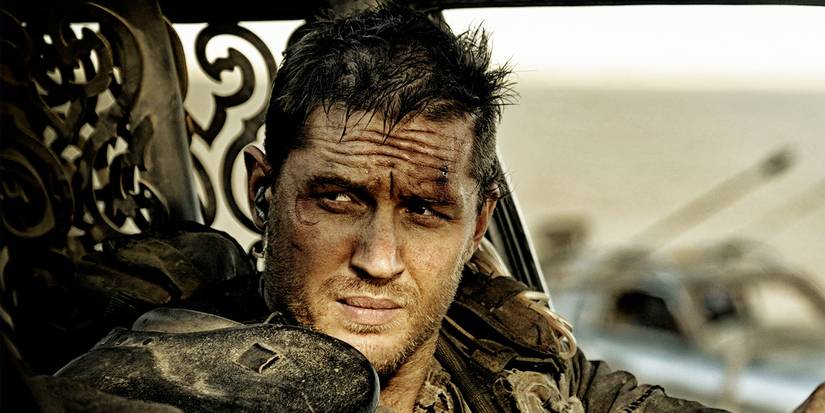
Tom Hardy in Mad Max: Fury RoadImage via Warner Bros. Pictures
Advertisement
George Miller had this script sitting around since before 2000, and actual production kept getting delayed for years, first by the Iraq War making the original filming location unsafe, then by unrelated financing problems, until the movie finally got shot more than a decade after it was first supposed to happen. Furiosa (Charlize Theron) shaved her head for the role, and production designer Colin Gibson built an entire fleet of custom vehicles from scratch, cars with exposed engines and mounted flame effects instead of anything added digitally later.
Tom Hardy and Theron reportedly didn’t get along great on set, and you can almost feel some of that tension in how little their characters actually talk to each other on screen. The whole movie ended up on more best-of-the-decade lists than almost anything else released that year, which is a strange thing to say about a movie that’s basically one long chase across the desert.
2
‘The Lord of the Rings: The Return of the King’ (2003)
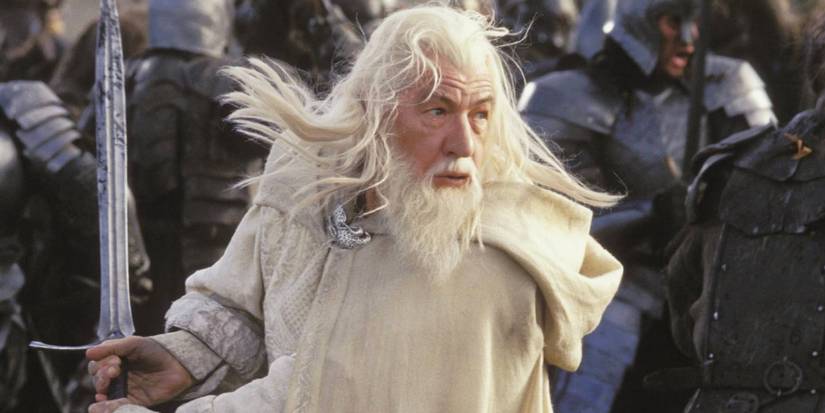
Image via New Line Cinema
Advertisement
Peter Jackson closes out the trilogy with a movie that runs almost three and a half hours, and the Battle of Pelennor Fields alone justifies a good chunk of that runtime, thousands of soldiers, giant war elephants, a massive practical and digital effects operation happening all at once.
Aragorn (Viggo Mortensen) finally steps into the role he’s been avoiding for two whole movies, and the film ties up basically every character’s arc from the entire trilogy without rushing through any of them. It won all eleven Oscars it was nominated for, tying the record for most wins by a single film, and the ending gets joked about constantly for having what feels like five or six separate places it could’ve stopped.
1
‘There Will Be Blood’ (2007)
Paul Dano as Eli Sunday with a cross necklace and slicked back hair looking ahead in There Will Be Blood.Image via Miramax Films
Advertisement
Daniel Plainview (Daniel Day-Lewis) is an oil prospector who cares about exactly two things, money and beating everyone else around him. The movie in almost its entire opening stretch has barely any dialogue at all, just him digging, alone, in nearsilence.
Paul Thomas Anderson loosely based the story on an Upton Sinclair novel, and Jonny Greenwood’s score, all screeching strings and dread, makes even quiet scenes feel like something’s about to go wrong. Day-Lewis reportedly stayed in character for months during filming, and the bowling alley scene at the end, the one everyone quotes, is as unhinged as anything put on film that decade.







You must be logged in to post a comment Login