Psychological thrillers are a hard deal to pull off for the creators. They have to make complete sense while being eccentric. This is why they’re at times just plain weird to some people. And they’re definitely not for everybody. Usually, psychologically stimulating movies, good or bad, are at their best when the danger starts inside somebody’s interpretation of reality. A locked hospital can become a conspiracy. A missing child can turn desperation into moral collapse. But that’s not all.
The six films on this list reward attention long after the central mystery has been understood. Their strongest ideas live in memory, guilt, desire, obsession, class, identity, and the stories people invent to survive themselves. Some leave the audience disturbed. Others leave you arguing over motives for hours. All six are ridiculously difficult to shake. These are not for the short attention-spanned or weak-hearted. Let’s get started.
Advertisement
6
‘Shutter Island’ (2010)
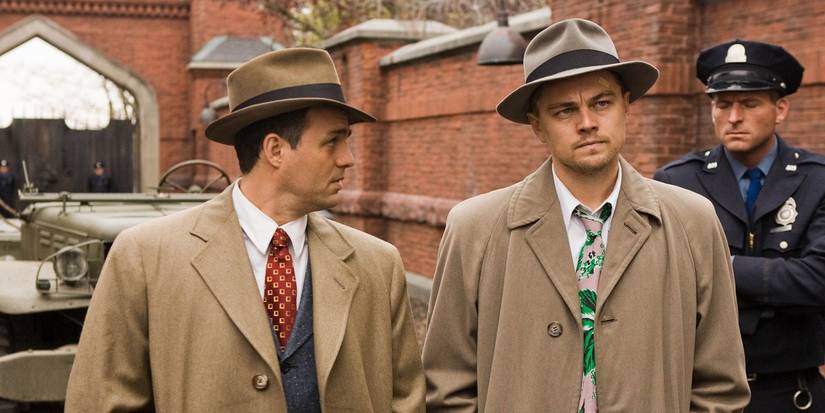
Leonardo DiCaprio and Mark Ruffalo as U.S. Marshals investigating a case in Shutter IslandImage via Paramount Pictures
Shutter Island follows U.S. Marshal Teddy Daniels (Leonardo DiCaprio) as he travels to Ashecliffe Hospital in 1954 to investigate the disappearance of a patient from an institution for dangerous criminals. The hospital sits on an isolated island, a storm cuts off communication, and nearly everyone Teddy questions seems to know more than they are willing to say. His investigation also carries personal weight through memories of his wife and his fixation on Andrew Laeddis, the man he believes destroyed his life. If I tell the name of the person who played Andrew, I’d spoil it for you so let me withhold that information.
Dennis Lehane’s novel gave the film an ideal foundation for paranoia, while the atmosphere turns every corridor, notebook, cigarette, and guarded answer into possible evidence. Teddy is emotionally raw enough that his certainty never feels comfortable, and the hospital’s elaborate architecture mirrors how desperately he needs one version of reality to remain intact. The pleasure of revisiting Shutter Island comes from noticing how openly the movie was communicating all along. So make sure you watch it once for the mystery. Return later for the tragedy sitting underneath it.
Advertisement
5
‘Prisoners’ (2013)
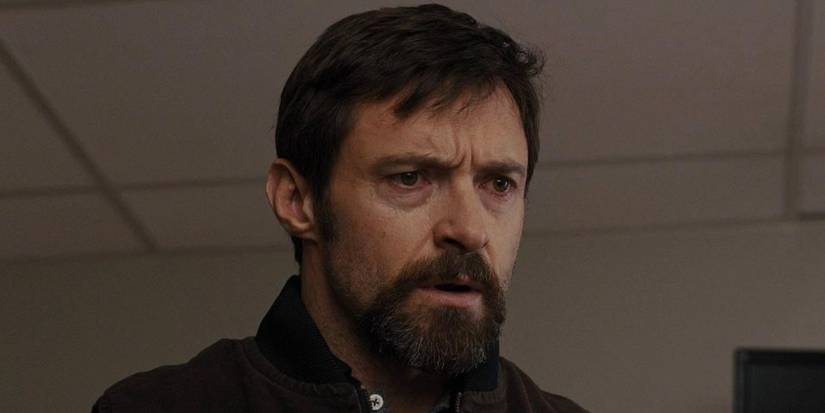
Hugh Jackman in Prisoners.Image via Warner Bros.
Two young girls disappear during a Thanksgiving gathering in Prisoners, leaving their families with almost nothing beyond an RV that had been parked nearby. Detective Loki (Jake Gyllenhaal) begins following the evidence, while Keller Dover (Hugh Jackman) becomes convinced that the vehicle’s driver knows where the children are. When the police cannot hold their suspect, Keller decides that waiting for lawful proof is an unacceptable risk and begins pursuing answers through increasingly brutal means.
The film keeps the audience painfully close to Keller’s logic without making his choices easy to defend. That tension is the whole nightmare. Hugh Jackman gives Keller the desperation of a parent who has turned certainty into survival, while Jake Gyllenhaal’s Loki keeps pushing through mazes, old crimes, damaged witnesses, and details that refuse to line up neatly. Roger Deakins’ rain-soaked Pennsylvania imagery makes houses, parking lots, and empty roads feel permanently exhausted. Prisoners is heavy, precise, and deeply involving. Set aside the evening, follow every clue, and prepare to question how far sympathy should really stretch. There’s this one particular scene of Jackman where he improvised his intensity while punching the wall and it literally scared his co-stars.
Advertisement
4
‘Burning’ (2018)
Jeon Jong-Seo as Shin Hae-mi, Steven Yeun as Ben, and Yoo Ah-in as Lee Jong-su in BurningImage via CGV Arthouse
Burning begins with Jong-su (Yoo Ah-in), an aimless young man in South Korea who reconnects with childhood acquaintance Hae-mi (Jeon Jong-seo) and agrees to care for her cat while she travels to Africa. She returns with Ben (Steven Yeun), a wealthy, calm, and strangely unreadable man whose lifestyle feels completely removed from Jong-su’s own financial uncertainty. Then Hae-mi disappears, and one unsettling conversation leaves Jong-su convinced that Ben may be hiding something far darker than casual arrogance.
Haruki Murakami’s short story Barn Burning provides the seed, though the film expands it into a study of class resentment, loneliness, masculinity, and the terrifying uncertainty of believing something without being able to prove it. Ben is frightening through composure rather than overt menace, while Yoo Ah-in lets Jong-su’s suspicion grow alongside humiliation and envy. Even Hae-mi remains partly unknowable, which is important in a story filled with men assigning meaning to her absence. Burning moves slowly and uses that patience beautifully. Give it room and the unease keeps accumulating long after individual scenes appear to have ended.
Advertisement
3
‘Black Swan’ (2010)
A close-up of Natalie Portman dancing in Black SwanImage via Searchlight Pictures
Black Swan centers on Nina Sayers (Natalie Portman), a technically gifted ballerina chosen to perform both the White Swan and Black Swan in a major production of Swan Lake. The White Swan fits the control and discipline Nina has spent her life perfecting. The Black Swan demands sensuality and freedom that she cannot produce through technique alone. Rehearsals intensify while her mother, artistic director, and fellow dancer Lily (Mila Kunis) each become connected to a different part of the pressure closing around her.
Natalie Portman’s Oscar-winning performance captures how completely Nina has built her identity around perfection. Her body becomes something to discipline, inspect, punish, and eventually distrust. Lily represents an ease Nina cannot manufacture, while the relationship with her mother reveals how little space she has been given to develop outside ballet. It’s honestly a beautiful movie and genuinely nasty in the same breath.
Advertisement
Collider Exclusive · Oscar Best Picture Quiz Which Oscar Best Picture Is Your Perfect Movie? Parasite · Everything Everywhere · Oppenheimer · Birdman · No Country
Advertisement
Five Oscar Best Picture winners. Five completely different visions of what cinema can be — and what it can do to you. One of them is the film that was made for the way your mind works. Ten questions will figure out which one.
🪜Parasite
🌀Everything Everywhere
☢️Oppenheimer
🐦Birdman
Advertisement
🪙No Country for Old Men
Advertisement
01
What kind of film experience do you actually want? The best movies don’t just entertain — they leave something behind.
Advertisement
02
Which idea grabs you most in a film? Great films are driven by a central obsession. What’s yours?
Advertisement
03
How do you like your story told? Form is content. The way a story is shaped changes what it means.
Advertisement
04
What makes a truly great antagonist? The opposition defines the protagonist. What kind of opposition fascinates you?
Advertisement
05
What do you want from a film’s ending? The final note is the one that lingers. What do you want it to sound like?
Advertisement
06
Which setting pulls you in most? Where a film takes place shapes everything — mood, stakes, what’s even possible.
Advertisement
07
What cinematic craft impresses you most? Every great film has a signature — a technical or artistic element that makes it unmistakable.
Advertisement
08
What kind of main character do you root for? The protagonist is the lens. Who you choose to follow says something about you.
Advertisement
09
How do you feel about a film that takes its time? Pace is a choice. Some films sprint; others let tension accumulate slowly, deliberately.
Advertisement
10
What do you want to feel walking out of the cinema? The best films leave a mark. What kind of mark do you want?
Advertisement
The Academy Has Decided Your Perfect Film Is…
Your answers have pointed to one Oscar Best Picture winner above all others. This is the film that was made for the way your mind works.
Advertisement
Parasite
You are drawn to films that operate on multiple levels simultaneously — that begin in one genre and quietly, brilliantly migrate into another. Bong Joon-ho’s Parasite is a film about class, desire, and the architecture of inequality that manages to be darkly funny, deeply suspenseful, and genuinely shocking across a single extraordinary running time. Your instinct is for cinema that hides its true intentions until the moment it’s ready to reveal them. Parasite is exactly that — a film that rewards close attention and punishes assumptions, right up to its devastating final image.
Advertisement
Everything Everywhere All at Once
You want it all — and this film gives you all of it. The Daniels’ Everything Everywhere All at Once is one of the most maximalist films ever made: action comedy, multiverse sci-fi, family drama, existential crisis, and a genuinely earned emotional core that sneaks up on you amid the chaos. You are someone who responds to ambition, who doesn’t want cinema to choose between being entertaining and being meaningful. This film refuses that choice entirely. It is overwhelming by design, and its overwhelming nature is precisely the point — because the feeling of being crushed by infinite possibility is exactly what it’s about.
Advertisement
Oppenheimer
You are drawn to cinema on a grand scale — films that understand history not as a backdrop but as a force, and that place their characters inside that force and watch what happens. Christopher Nolan’s Oppenheimer is a film about the terrifying gap between what we can do and what we should do, told with the full weight of one of the most consequential moments in human history behind it. You want your films to feel important without feeling self-important — to earn their ambition through sheer craft and the gravity of their subject. Oppenheimer does exactly that. It is enormous, complicated, and refuses easy comfort.
Advertisement
Birdman
You are drawn to films that foreground their own construction — that make the how of the filmmaking part of the what it’s about. Alejandro González Iñárritu’s Birdman, shot to appear as a single continuous take, is cinema examining itself through the cracked mirror of a fading actor’s ego. You respond to formal daring, to the feeling that a film is doing something that probably shouldn’t be possible. Michael Keaton’s performance and Emmanuel Lubezki’s restless camera create something genuinely unlike anything else — a film that is simultaneously about creativity, relevance, self-destruction, and the impossibility of ever truly knowing if your work means anything at all.
Advertisement
No Country for Old Men
You are drawn to cinema that trusts silence, that refuses to explain itself, and that treats dread as a form of meaning. The Coen Brothers’ No Country for Old Men is a film about the arrival of a new kind of evil — implacable, arbitrary, and utterly indifferent to the moral frameworks we use to make sense of the world. It is one of the most formally controlled films ever made, and its controlled restraint is what makes it so terrifying. You want your films to haunt you, not comfort you. You are not interested in resolution if resolution would be dishonest. No Country for Old Men is honest in a way that most cinema never dares to be.
Advertisement
2
‘The Handmaiden’ (2016)
Image via Amazon Studios/ CJ Entertainment
Advertisement
The Handmaiden introduces Sook-hee (Kim Tae-ri), a young pickpocket recruited to help a con man steal the fortune of wealthy heiress Lady Hideko (Kim Min-hee) and is set in Korea during Japanese colonial rule. Sook-hee enters Hideko’s secluded estate as her new maid, while the plan requires the two women to become close enough for manipulation to look like trust. The household already contains its own forms of control, and every person inside it seems to be performing a role for someone else.
Park Chan-wook adapted Sarah Waters’ Fingersmith by relocating the story from Victorian England, adding colonial identity, language, architecture, and sexual power to an already intricate deception. The film revisits events from different perspectives, allowing gestures that first seemed innocent to acquire completely different meanings once another person’s knowledge becomes visible. Kim Min-hee and Kim Tae-ri give the relationship emotional force that keeps the elaborate plotting from becoming a puzzle for its own sake. The Handmaiden is sensual, funny, cruel, and enormously clever without losing its heart.
1
‘Gone Girl’ (2014)
Rosamund Pike smiling gently in Gone GirlImage via 20th Century Studios
Advertisement
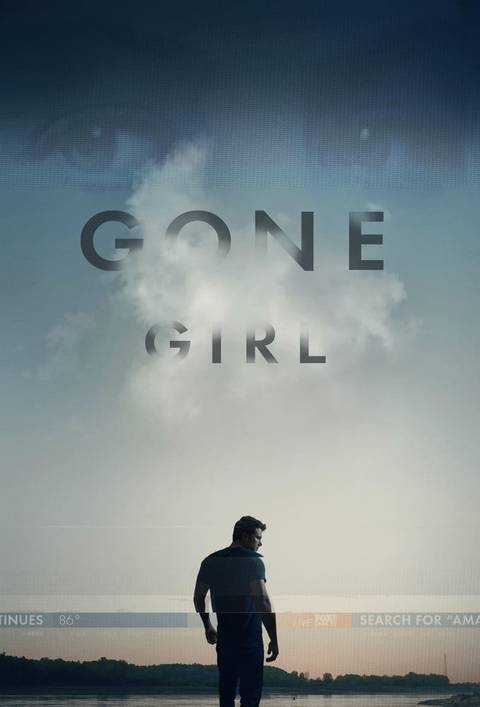
Gone Girl is a movie made with mystery and psychological thrill on steroids. It begins when Amy Dunne (Rosamund Pike) disappears on the morning of her fifth wedding anniversary and her husband Nick (Ben Affleck) becomes the center of the investigation. Their marriage has already been damaged by unemployment, infidelity, resentment, and the collapse of the glamorous New York life they once shared. Nick’s lies make him look increasingly suspicious, while Amy’s diary appears to tell the story of a woman becoming afraid of the man she married. Soon the case belongs as much to television audiences and public opinion as it does to the police.
Gillian Flynn adapted her own novel for David Fincher, and preserved the vicious argument about marriage that gives the thriller its staying power. Nick and Amy originally fell in love through idealized versions of themselves, then became furious when ordinary life exposed the performance underneath. Rosamund Pike gives Amy intelligence, rage, and control without reducing her to one easy label, while Ben Affleck’s Nick understands too late that public perception can become another form of evidence. Gone Girl is wickedly entertaining, darkly funny, and uncomfortably recognizable whenever love starts sounding like image management. Few modern thrillers invite this much discussion after the credits.







You must be logged in to post a comment Login