Entertainment
The 6 Best Thriller Shows Released Since 2000, Ranked

Thriller television becomes addictive when ordinary routines start carrying danger. A marriage can hide an intelligence operation. A therapy session can become an interrogation. An elevator ride can separate one consciousness from another. Give those ideas several seasons to develop and suspense stops being something that happens during a big scene. It settles into the characters’ daily lives.
That is the standard here. These six thriller shows understand pacing, escalation, psychology, and the value of making viewers notice small details. Their best scenes can involve murder or conspiracy, yet a conversation across a kitchen table can create just as much pressure. That combination separates a gripping show from one you keep thinking about years later.
6
‘Mindhunter’ (2017–2019)

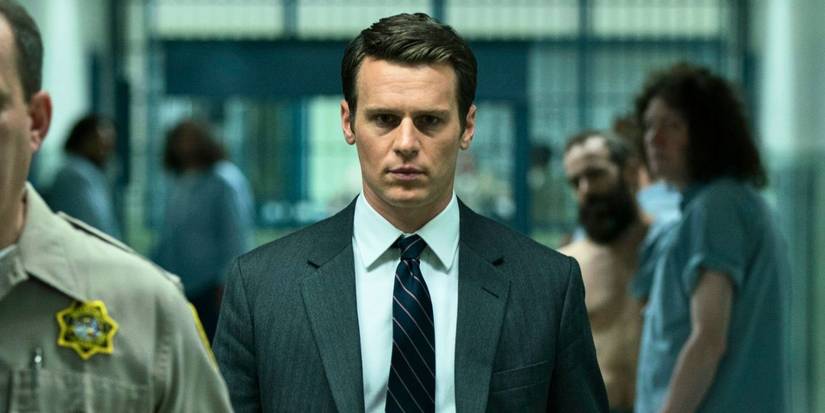
Mindhunter follows FBI agents Holden Ford (Jonathan Groff) and Bill Tench (Holt McCallany) during the late 1970s as they begin interviewing imprisoned killers to understand how serial offenders think. Psychologist Wendy Carr (Anna Torv) helps turn those conversations into actual behavioral research, placing the trio at the early edge of what eventually became criminal profiling. That premise could easily become a murderer-of-the-week procedural. Instead, the show spends long stretches inside interview rooms where one carefully phrased question can alter the balance between investigator and subject.
Ed Kemper (Cameron Britton) becomes especially important because his intelligence and willingness to talk make him useful while constantly reminding Holden that access can create false intimacy. Conversations with Richard Speck (Jack Erdie) and other offenders become rougher as the team experiments with language, provocation, and empathy. Meanwhile, Bill’s home life and Wendy’s frustrations expose the personal cost of treating extreme human behavior as daily work. The Atlanta child-murder investigation then shows how much harder behavioral theory becomes once politics, race, bureaucracy, and terrified families enter the room. Two seasons still feel painfully short because Mindhunter had found a form of suspense almost entirely its own.
5
‘The Americans’ (2013–2018)
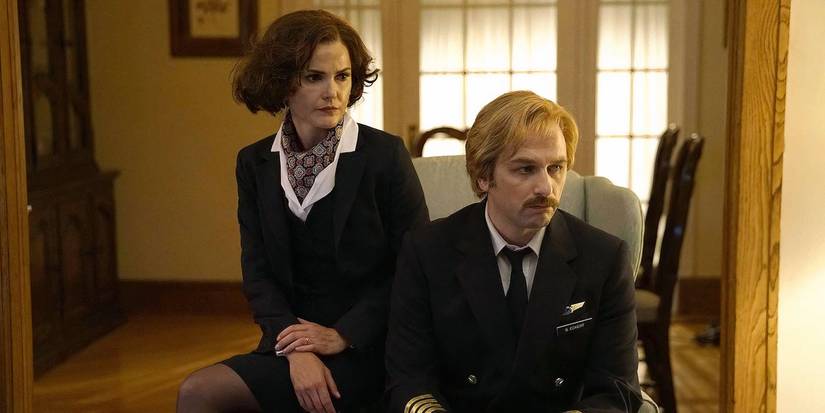
The Americans places two Soviet intelligence officers inside suburban Washington during the Reagan era, where Philip Jennings (Matthew Rhys) and Elizabeth Jennings (Keri Russell) live as a married American couple while carrying out missions for the KGB. Their children believe the family is ordinary. Their neighbor Stan Beeman (Noah Emmerich) happens to work in FBI counterintelligence. That arrangement creates an obvious spy thriller, but the real tension comes from a marriage that began as an assignment and gradually accumulated years of shared history, children, loyalty, resentment, and genuine attachment.
Their neighbor Stan Beeman happens to work in FBI counterintelligence. That is more than decoration. Dead drops, disguises, surveillance routes, coded messages, and carefully built false identities have consequences that can continue for seasons. Philip’s relationship with Martha Hanson (Alison Wright) through his “Clark” identity becomes especially painful because espionage requires him to exploit feelings that are completely real to her. Elizabeth carries ideological certainty more comfortably, which creates another fault line as their children grow old enough to question the family around them. Paige Jennings (Holly Taylor)’s increasing awareness changes the household permanently. The Americans understands that a cover identity becomes much harder to maintain once the fake life starts containing people you actually love.
4
‘Mr. Robot’ (2015–2019)

Elliot Alderson (Rami Malek) spends his days working in cybersecurity and his nights hacking the people around him in Mr. Robot. His connection with the underground group fsociety pulls him toward an attack on E Corp, the enormous conglomerate he privately calls Evil Corp. Elliot is brilliant with systems and deeply unreliable about his own experience, which means the viewer has to evaluate the world through a narrator whose isolation, addiction, and mental health constantly affect what he understands.
The series keeps finding formal ways to express that instability. Characters are pushed to the edges of the frame, empty space becomes oppressive, and Elliot often speaks directly to the audience as though we are another private relationship he has created. Later episodes become even more adventurous. “eps3.4_runtime-error.r00” is staged to resemble one continuous shot while chaos moves through E Corp, and “407 Proxy Authentication Required” strips nearly everything away for an extended confrontation built around conversation. Those experiments have substance because they reflect what Elliot is experiencing rather than announcing how clever the production can be. Mr. Robot rewards close attention, especially when earlier assumptions begin changing under information that was present all along. Watch it for the first season, it has a clear payoff, and then decide whether you want to continue. This has a 93% audience and critic rating at the time of writing — that must tell you enough.
3
‘Dark’ (2017–2020)

A child disappears in the small German town of Winden, opening a mystery that eventually connects four families across several generations in Dark. The local caves, a nuclear power plant, and a repeating thirty-three-year cycle gradually turn the missing-person investigation into something much larger. Time travel is central, yet the series treats family history as seriously as science fiction. Knowing who somebody loves, resents, raises, or eventually becomes can matter as much as understanding which year the story has entered.
That complexity is remarkably disciplined. Younger and older versions of characters were cast with enough care that faces themselves become clues, while recurring locations help orient the viewer as decades shift around them. Jonas Kahnwald (Louis Hofmann), Martha Nielsen (Lisa Vicari), Ulrich Nielsen (Oliver Masucci), Claudia Tiedemann (Julika Jenkins), and the wider Winden families keep trying to repair losses that have already become part of somebody else’s history. Their motivations remain understandable even when the timeline becomes intimidating. This is exactly why Dark benefits from attentive viewing rather than passive bingeing. Remembering a surname from several episodes earlier can suddenly clarify an entire relationship, and few thrillers make that kind of recognition feel so satisfying.
2
‘Severance’ (2022– )
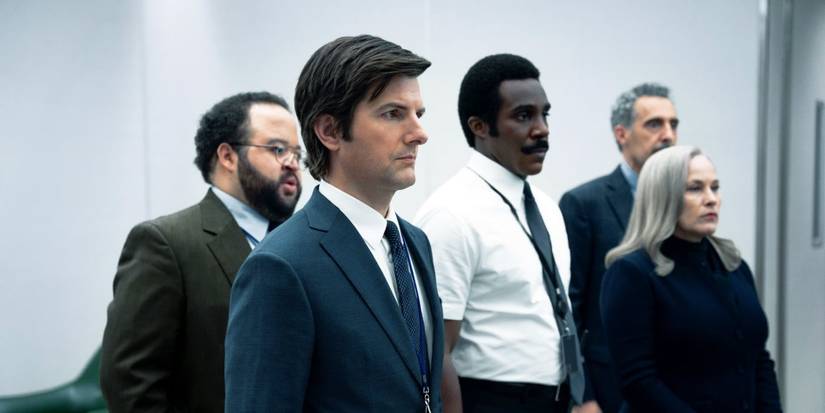
Severance begins with one of the smartest workplace premises television has produced. Lumon Industries can surgically divide an employee’s memories between work and personal life. The person who enters the office remembers nothing about home, while the person who leaves remembers nothing about the working day. Mark Scout (Adam Scott) accepts that arrangement while grieving his wife, then his “innie” begins questioning why anyone should accept an existence that consists entirely of fluorescent corridors, mysterious assignments, and company-approved rewards.
The brilliance is in how Lumon turns corporate nonsense into a complete system of control. Macrodata Refinement gives employees numbers without explaining their purpose. Wellness sessions ration personal information. The Music Dance Experience turns a basic office reward into something oddly desperate because the innies possess so little pleasure of their own. Helly R. (Britt Lower)’s resistance immediately exposes the moral problem at the center of severance, while Irving Bailiff (John Turturro) and Dylan George (Zach Cherry) discover different reasons to question the lives they have been assigned. The strange departments, goats, paintings, handbooks, and religious devotion to Kier Eagan keep widening the mystery without weakening the human stakes. Severance makes curiosity almost impossible to resist because every ridiculous company ritual could be hiding something important.
1
‘Breaking Bad’ (2008–2013)
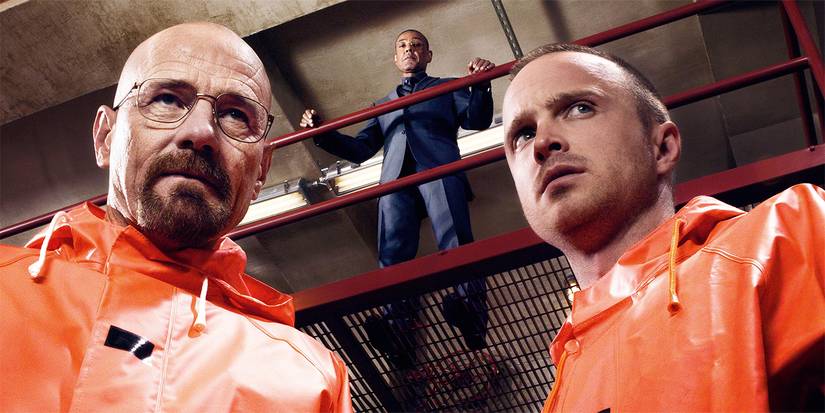
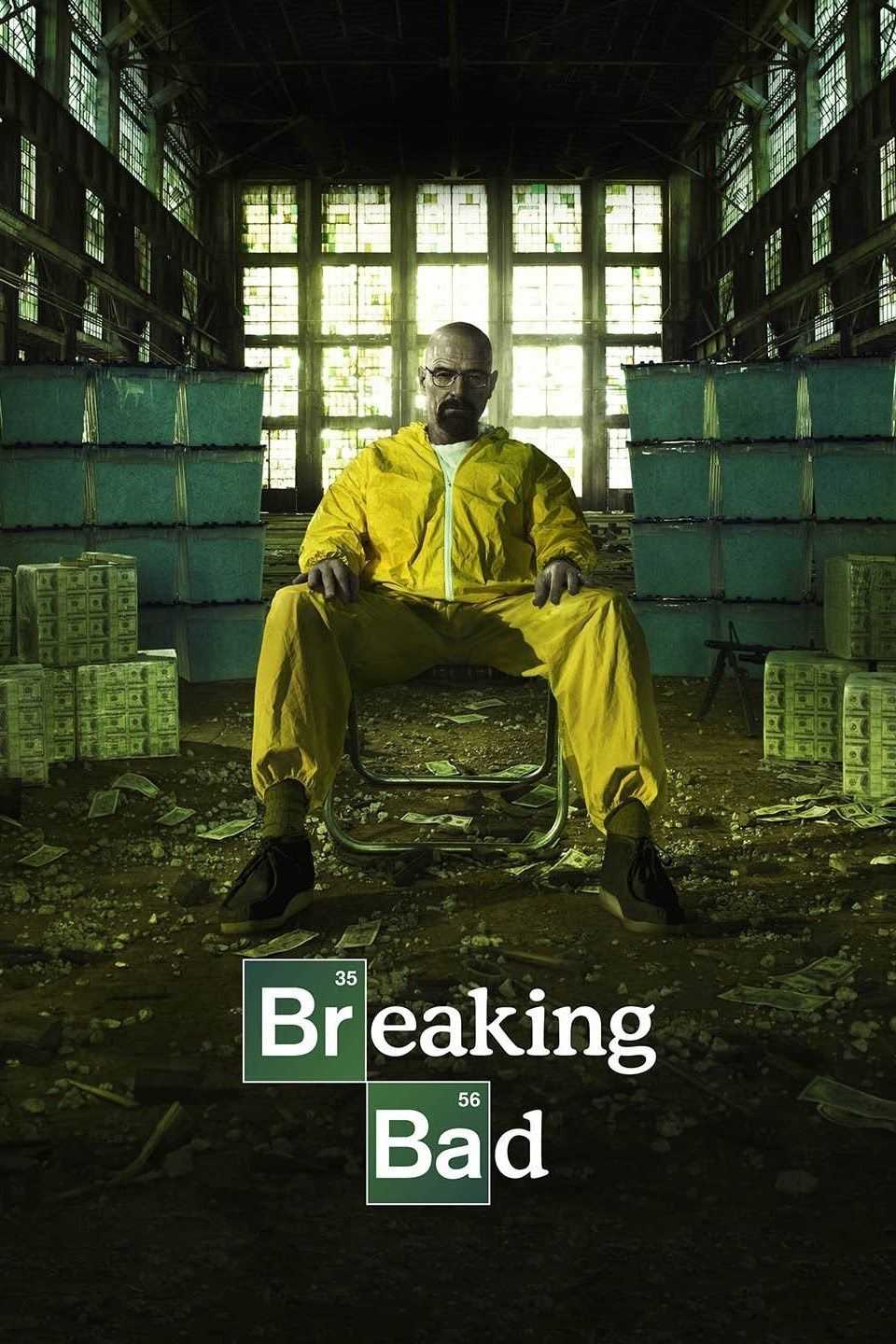
Breaking Bad starts with Walter White (Bryan Cranston), an underpaid chemistry teacher diagnosed with lung cancer, deciding to manufacture methamphetamine with former student Jesse Pinkman (Aaron Paul) so his family will have money after his death. The idea sounds like the setup for a crime story about desperation. What follows is a remarkably controlled study of how one decision creates another, then another, until Walt’s intelligence becomes inseparable from his appetite for control. The series keeps changing the scale of his criminal life while remembering exactly which earlier choices made each escalation possible.
That cause-and-effect structure is why the suspense remains so powerful. Early on, Walt notices that a broken ceramic plate is missing a shard and realizes what another person intends to do with it. Much later, an operation involving Gus Fring (Giancarlo Esposito) can create tension through something as mundane as a scheduled meeting, a phone call, or who happens to be watching a particular location. Jesse’s conscience develops in the opposite direction from Walt’s ego, which gives their partnership emotional pressure even when both men understand the criminal mechanics around them. The supporting world is equally precise, from Hank Schrader (Dean Norris)’s investigation to Saul Goodman (Bob Odenkirk)’s improvisation and Mike Ehrmantraut (Jonathan Banks)’s professionalism. Breaking Bad never needs to manufacture suspense artificially because every dangerous situation grows from choices somebody already made. That level of control is why it still feels like the benchmark.

Breaking Bad
- Release Date
-
2008 – 2013-00-00
- Network
-
AMC
- Showrunner
-
Vince Gilligan
- Directors
-
Vince Gilligan, Michelle Maclaren
You must be logged in to post a comment Login