Entertainment
The 6 Best TV Shows Released Since 2000, Ranked

Television changed when writers stopped treating an episode as the finish line. Characters could now make one terrible decision in season one and still be paying for it years later. Jobs, marriages, addictions, institutions, and private lies had room to accumulate history. The medium became less about what happened this week and more about what a person slowly became. Not to mention the stories just ended up becoming so much more dense and character arcs became complex.
That shift produced shows with wildly different rhythms, yet the very best share one quality. They make time feel productive. Ten hours deepen a relationship. Forty episodes alter how we understand a character. A final season can make an early conversation suddenly look different. These six used long-form storytelling with almost ruthless precision.
6
‘The Leftovers’ (2014–2017)

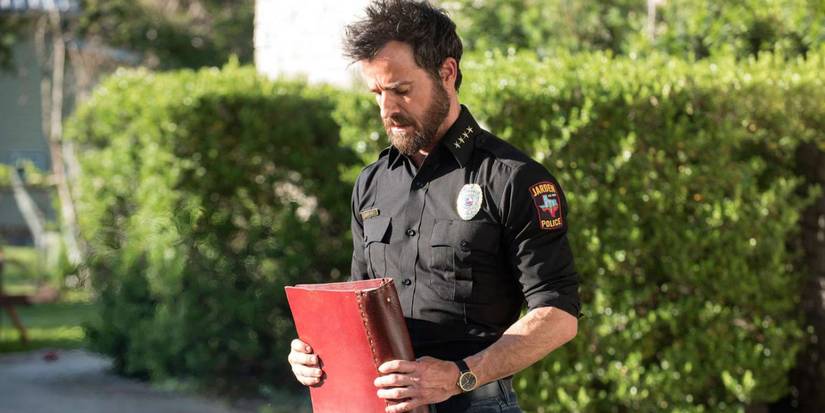
The Leftovers begins three years after two percent of the world’s population disappears without explanation. The event, known as the Sudden Departure, leaves families shattered and whole communities desperate to invent meaning around something that may never provide any. Kevin Garvey (Justin Theroux) tries to hold together his life in Mapleton while his wife Laurie Garvey (Amy Brenneman) has joined the Guilty Remnant, his children are drifting, and his own grip on reality feels increasingly unreliable. Nora Durst (Carrie Coon) carries an even crueler burden after losing her husband and both children in the same instant.
The series becomes extraordinary once it stops behaving like a mystery that owes the audience an answer. Grief, faith, coincidence, madness, and love all compete to explain experiences that may resist explanation entirely. Nora’s anger can be funny one moment and devastating the next, while Kevin keeps crossing lines between psychological breakdown and something harder to dismiss. The move to Jarden in season two expands the world without abandoning the emotional damage already built. The Leftovers asks for patience early, then rewards it with some of the most fearless and strangely tender television of its era.
5
‘Succession’ (2018–2023)
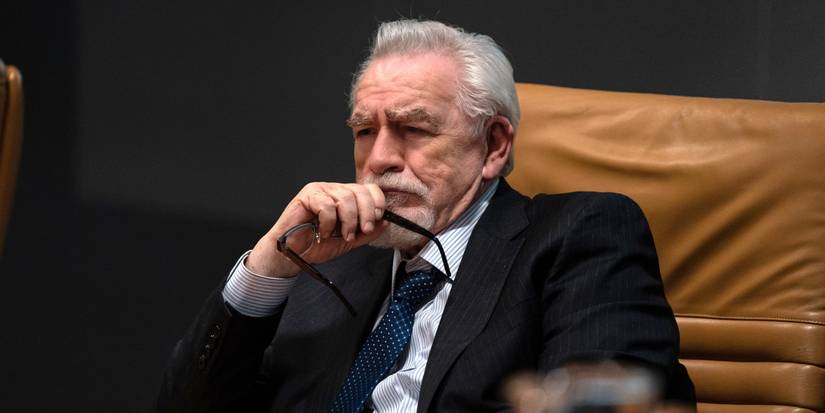
Succession turns the future of a global billion-dollars media empire into a family argument that never really stopped after childhood. Logan Roy (Brian Cox) controls Waystar Royco, while Kendall Roy (Jeremy Strong), Shiv Roy (Sarah Snook), Roman Roy (Kieran Culkin), and Connor Roy (Alan Ruck) orbit his power with different mixtures of ambition, fear, resentment, and need. Board votes, acquisitions, scandals, elections, and investor meetings matter, but almost every corporate crisis is also somebody trying to earn approval from a father who understands exactly how useful withheld affection can be.
That overlap between business and family gives the series its extraordinary tension. Kendall can prepare a takeover with lawyers and bankers, then lose his footing because one glance from Logan reactivates years of insecurity. Shiv believes she can remain emotionally independent until power becomes personal. Roman turns humiliation into humor before anyone else can use it against him. The language is vicious and often hilarious, but the jokes work because everybody is fighting for position even during supposedly private moments. Succession makes wealth look enormous and emotional freedom look almost impossible. Four seasons are enough to make every family dinner feel like a hostile negotiation. And never forget, you can’t break a Tomlette (Matthew Macfadyen) without breaking some Greggs (Nicholas Braun). You’re going to thank me once you finally understand this.
4
‘Mad Men’ (2007–2015)
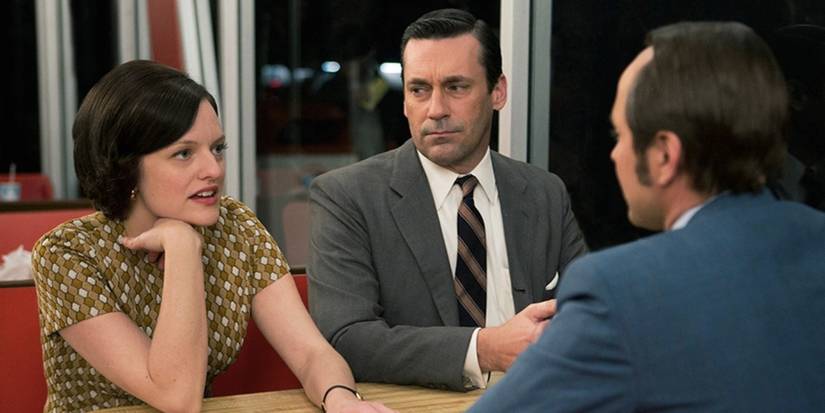
This show moves patiently, but that patience lets entire lives change without announcing every change when it happens. Mad Men enters New York advertising at the beginning of the 1960s through Don Draper (Jon Hamm), a brilliant creative director whose professional confidence hides a life built on reinvention. Sterling Cooper (John Slattery) sells products by selling identities, and Don understands that process because he has done something similar to himself. Around him, Peggy Olson (Elisabeth Moss) begins carving out a career in a workplace designed to underestimate her, while Joan Holloway (Christina Hendricks), Roger Sterling (John Slattery), Pete Campbell (Vincent Kartheiser), and Betty Draper (January Jones) reveal different costs of living inside the era’s rules.
The advertising campaigns give the show structure, but the deeper pleasure comes from watching social change reach people unevenly. Gender expectations shift. Civil rights reshape the country. Divorce becomes more visible. Youth culture alters what companies want to sell and who gets listened to inside the room. Don can understand consumers brilliantly while remaining baffled by the people closest to him. Peggy’s growth is equally important because her ambition requires constant negotiation between talent and a system reluctant to reward it. It’s a very unique show.
3
‘Better Call Saul’ (2015–2022)
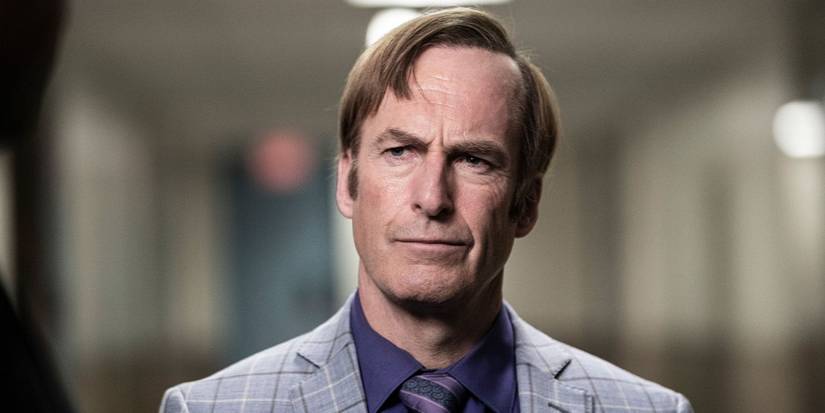
Better Call Saul begins with Jimmy McGill (Bob Odenkirk) struggling to build a legitimate legal career while living in the shadow of his older brother Chuck McGill (Michael McKean). Jimmy is clever, persuasive, energetic, and dangerously good at finding the shortcut nobody else considered. His relationship with Kim Wexler (Rhea Seehorn) gives that ambition emotional depth because she understands both his talent and the damage that can follow when persuasion becomes manipulation. Running alongside that story is Mike Ehrmantraut (Jonathan Banks)’s gradual movement into the criminal world surrounding Gus Fring (Giancarlo Esposito) and the Salamanca family.
The series, which is a Breaking Bad spin-off, by the way, earns its greatness through accumulation. A forged document, a wounded ego, a small lie told for a supposedly understandable reason, and a prank that feels harmless can keep echoing until the consequences become enormous. Chuck’s conflict with Jimmy works because both brothers are partly right about the other, which makes every victory feel contaminated. Kim’s involvement becomes even more painful because she is never simply dragged along. She makes choices. The cartel storyline eventually closes in on the legal world with terrifying precision, but the show never forgets that its most important transformation happens through ordinary decisions repeated often enough to become identity. Better Call Saul turns patience into suspense.
2
‘Breaking Bad’ (2008–2013)
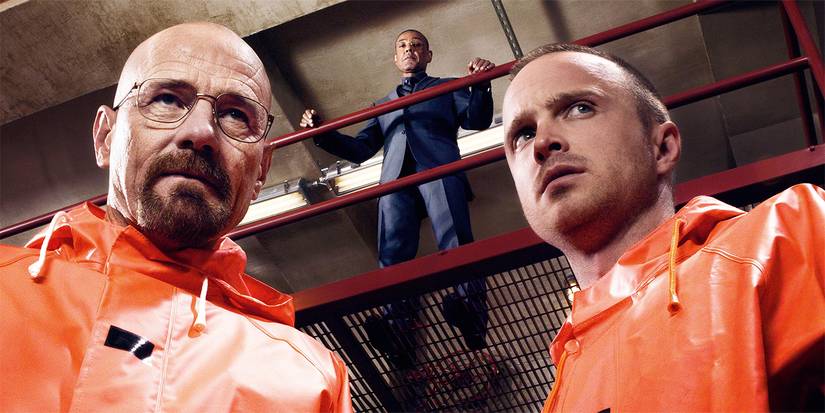
This show is slow, sure. But it keeps you hooked in a weird way. Breaking Bad starts with Walter White (Bryan Cranston), a chemistry teacher diagnosed with lung cancer, deciding to manufacture methamphetamine with former student Jesse Pinkman (Aaron Paul). He tells himself the money will protect his family after his death. That explanation is believable long enough for the series to expose everything else underneath it. Walt enjoys competence, recognition, control, and finally being feared by people who once overlooked him. The criminal world gives those desires somewhere to grow.
What makes the transformation so convincing is how carefully every escalation is connected to an earlier choice. Walt rarely wakes up and decides to become worse. He solves one immediate problem in a way that makes the next moral compromise easier. Jesse moves in the opposite emotional direction, becoming more disturbed by violence as Walt becomes better at rationalizing it. Gus Fring (Giancarlo Esposito), Mike Ehrmantraut (Jonathan Banks), Hank Schrader (Dean Norris), Skyler White (Anna Gunn), and Saul Goodman (Bob Odenkirk) all pressure different parts of that change without feeling like devices built around the protagonist. The show is suspenseful because consequences are constantly catching up with people who thought they had managed them. Few series have ever controlled cause and effect this well.
1
‘The Wire’ (2002–2008)
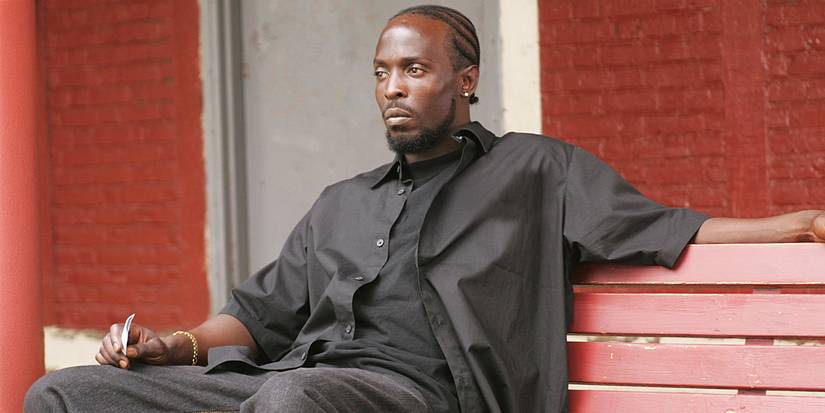
The Wire begins with a police investigation into a Baltimore drug organization, then steadily widens its attention until crime becomes only one part of a much larger system. The first season follows detectives trying to build a wiretap case against the Barksdale organization. Later seasons move into the docks, city politics, public schools, and journalism, showing how each institution creates incentives that can defeat the people working inside it. The cast changes focus constantly, yet Baltimore remains the real center of the story.
That structure is what makes the series so difficult to rival. A drug dealer, police commander, teacher, politician, dockworker, journalist, and teenager can all be trapped by different versions of the same problem. Statistics get manipulated because careers depend on them. Schools teach toward numbers instead of children. Police chase arrests instead of solutions. Newspapers cut resources while demanding impact. Characters such as Jimmy McNulty (Dominic West), Stringer Bell (Idris Elba), Omar Little (Michael K. Williams), Bubbles (Andre Royo), Cedric Daniels (Lance Reddick), and eventually the students of season four give those systems human faces without reducing the argument to good people versus bad ones. The Wire can feel dense at first because it expects the viewer to listen. Once the pieces connect, very little television feels as complete.

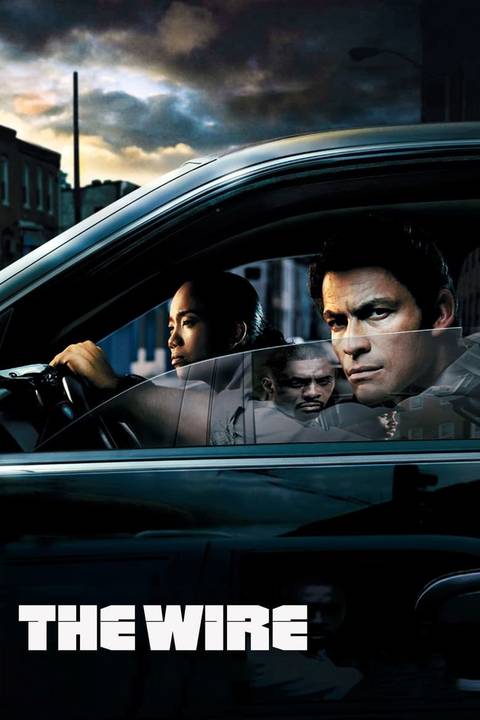
The Wire
- Release Date
-
2002 – 2008-00-00
- Network
-
HBO
- Directors
-
Ernest R. Dickerson, Ed Bianchi, Steve Shill, Clark Johnson, Daniel Attias, Agnieszka Holland, Tim Van Patten, Alex Zakrzewski, Anthony Hemingway, Brad Anderson, Clement Virgo, Elodie Keene, Peter Medak, Rob Bailey, Seith Mann, Christine Moore, David Platt, Dominic West, Gloria Muzio, Jim McKay, Leslie Libman, Milcho Manchevski, Robert F. Colesberry, Thomas J. Wright
You must be logged in to post a comment Login