Some movies create suspense around a question. These six movies? I chose them because they create it inside your nervous system. You notice your shoulders tightening. A conversation suddenly feels dangerous. Somebody makes one bad decision and you immediately understand that the next hour is going to punish everyone for it. And you love it.
Intensity, however, can come from completely different places. The point is that these six films are super immersive. And that’s exactly why you stay hooked. Let’s dig in.
Advertisement
6
‘Prisoners’ (2013)
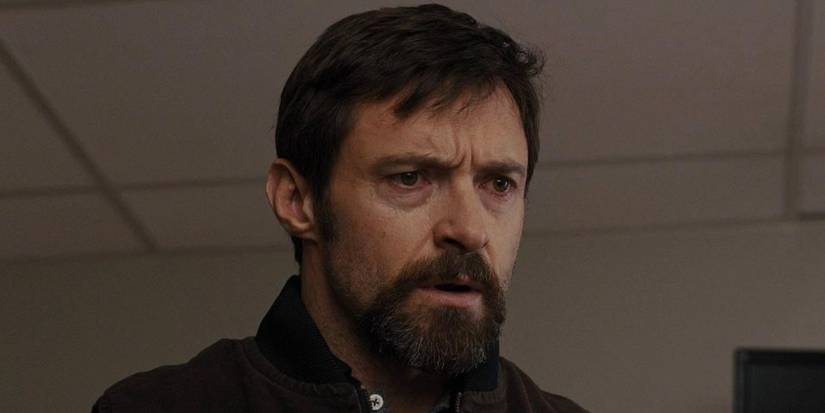
Hugh Jackman in Prisoners.Image via Warner Bros.
Two young girls disappear during Thanksgiving, and Prisoners immediately creates the kind of fear that makes reasonable behavior feel almost impossible. Keller Dover (Hugh Jackman) becomes convinced that Alex Jones (Paul Dano) knows where the children are, while Detective Loki (Jake Gyllenhaal) keeps pursuing evidence through abandoned buildings, suspicious histories, and the maze imagery that starts appearing around the case. Keller eventually decides the police are moving too slowly. That is where the movie becomes genuinely difficult to shake.
The interrogation and torture of Alex inside an abandoned building turns parental desperation into something ugly enough that the audience has to keep reassessing its sympathy. Meanwhile, Loki’s investigation operates with a completely different tension, built from tiny clues and the possibility that every wasted hour counts. Even the weather seems hostile. Rain, gray skies, cramped rooms, and Roger Deakins’ severe images make Pennsylvania feel spiritually waterlogged. Prisoners keeps tightening because certainty becomes dangerous long before anybody actually has it.
Advertisement
5
‘Green Room’ (2015)
Image via A24
The Ain’t Rights are broke, exhausted, and desperate enough to accept a gig at a neo-Nazi club in rural Oregon. They even open with a cover of “Nazi Punks Fuck Off”, which tells you roughly how good their survival instincts are. Then someone in the band walks into the green room, sees a dead woman on the floor, and Green Room closes the door behind them.
From there, nearly everything feels physical. The walls are thin. The exits are controlled. The people outside know exactly what they are doing. A gun does not magically make anyone competent, and injuries behave like injuries instead of temporary action-movie inconveniences. The infamous arm sequence still produces the kind of audience reaction where half the room recoils at once. Even the attack dogs feel horribly practical because the film understands how little space these characters have to improvise. Green Room is lean, vicious, and terrifyingly good at making one locked room feel smaller every minute.
Advertisement
4
‘Sicario’ (2015)
Josh Brolin in SicarioImage via Lionsgate
The most frightening stretch of Sicario happens in broad daylight. FBI agent Kate Macer (Emily Blunt) joins Matt Graver (Josh Brolin) and Alejandro Gillick (Benicio del Toro) on a convoy into Juárez, crossing past mutilated bodies, crowded streets, and armed escorts before reaching the border back into the United States. Then traffic stops. Cars surround the convoy. Everyone starts watching hands.
That border sequence captures the entire movie’s method. Information is distributed unevenly, which means Kate is always entering situations where other people understand the rules better than she does. Alejandro’s calm becomes unsettling precisely because very little seems capable of surprising him. The tunnel operation pushes that imbalance even further, placing trained teams inside darkness where night-vision images reduce people to shapes and movement. Jóhann Jóhannsson’s pounding score sounds less like music than machinery approaching from underground. Sicario understands that dread becomes unbearable when somebody else knows what is about to happen and you do not.
Advertisement
Collider Exclusive · Oscar Best Picture Quiz Which Oscar Best Picture Is Your Perfect Movie? Parasite · Everything Everywhere · Oppenheimer · Birdman · No Country
Advertisement
Five Oscar Best Picture winners. Five completely different visions of what cinema can be — and what it can do to you. One of them is the film that was made for the way your mind works. Ten questions will figure out which one.
🪜Parasite
🌀Everything Everywhere
☢️Oppenheimer
🐦Birdman
Advertisement
🪙No Country for Old Men
Advertisement
01
What kind of film experience do you actually want? The best movies don’t just entertain — they leave something behind.
Advertisement
02
Which idea grabs you most in a film? Great films are driven by a central obsession. What’s yours?
Advertisement
03
How do you like your story told? Form is content. The way a story is shaped changes what it means.
Advertisement
04
What makes a truly great antagonist? The opposition defines the protagonist. What kind of opposition fascinates you?
Advertisement
05
What do you want from a film’s ending? The final note is the one that lingers. What do you want it to sound like?
Advertisement
06
Which setting pulls you in most? Where a film takes place shapes everything — mood, stakes, what’s even possible.
Advertisement
07
What cinematic craft impresses you most? Every great film has a signature — a technical or artistic element that makes it unmistakable.
Advertisement
08
What kind of main character do you root for? The protagonist is the lens. Who you choose to follow says something about you.
Advertisement
09
How do you feel about a film that takes its time? Pace is a choice. Some films sprint; others let tension accumulate slowly, deliberately.
Advertisement
10
What do you want to feel walking out of the cinema? The best films leave a mark. What kind of mark do you want?
Advertisement
The Academy Has Decided Your Perfect Film Is…
Your answers have pointed to one Oscar Best Picture winner above all others. This is the film that was made for the way your mind works.
Advertisement
Parasite
You are drawn to films that operate on multiple levels simultaneously — that begin in one genre and quietly, brilliantly migrate into another. Bong Joon-ho’s Parasite is a film about class, desire, and the architecture of inequality that manages to be darkly funny, deeply suspenseful, and genuinely shocking across a single extraordinary running time. Your instinct is for cinema that hides its true intentions until the moment it’s ready to reveal them. Parasite is exactly that — a film that rewards close attention and punishes assumptions, right up to its devastating final image.
Advertisement
Everything Everywhere All at Once
You want it all — and this film gives you all of it. The Daniels’ Everything Everywhere All at Once is one of the most maximalist films ever made: action comedy, multiverse sci-fi, family drama, existential crisis, and a genuinely earned emotional core that sneaks up on you amid the chaos. You are someone who responds to ambition, who doesn’t want cinema to choose between being entertaining and being meaningful. This film refuses that choice entirely. It is overwhelming by design, and its overwhelming nature is precisely the point — because the feeling of being crushed by infinite possibility is exactly what it’s about.
Advertisement
Oppenheimer
You are drawn to cinema on a grand scale — films that understand history not as a backdrop but as a force, and that place their characters inside that force and watch what happens. Christopher Nolan’s Oppenheimer is a film about the terrifying gap between what we can do and what we should do, told with the full weight of one of the most consequential moments in human history behind it. You want your films to feel important without feeling self-important — to earn their ambition through sheer craft and the gravity of their subject. Oppenheimer does exactly that. It is enormous, complicated, and refuses easy comfort.
Advertisement
Birdman
You are drawn to films that foreground their own construction — that make the how of the filmmaking part of the what it’s about. Alejandro González Iñárritu’s Birdman, shot to appear as a single continuous take, is cinema examining itself through the cracked mirror of a fading actor’s ego. You respond to formal daring, to the feeling that a film is doing something that probably shouldn’t be possible. Michael Keaton’s performance and Emmanuel Lubezki’s restless camera create something genuinely unlike anything else — a film that is simultaneously about creativity, relevance, self-destruction, and the impossibility of ever truly knowing if your work means anything at all.
Advertisement
No Country for Old Men
You are drawn to cinema that trusts silence, that refuses to explain itself, and that treats dread as a form of meaning. The Coen Brothers’ No Country for Old Men is a film about the arrival of a new kind of evil — implacable, arbitrary, and utterly indifferent to the moral frameworks we use to make sense of the world. It is one of the most formally controlled films ever made, and its controlled restraint is what makes it so terrifying. You want your films to haunt you, not comfort you. You are not interested in resolution if resolution would be dishonest. No Country for Old Men is honest in a way that most cinema never dares to be.
Advertisement
3
‘Whiplash’ (2014)
Image via Sony Pictures Classics
Advertisement
There are no killers, monsters, or collapsing civilizations in Whiplash. There is a rehearsal room, a drum kit, and Terence Fletcher (J.K. Simmons) asking whether Andrew Neiman (Miles Teller) is rushing or dragging. Somehow that becomes enough.
Andrew wants greatness with the desperation of someone who has confused achievement with personal worth. Fletcher recognizes that hunger and attacks it relentlessly, using humiliation, competition, exhaustion, and the constant possibility of replacement. A chair can suddenly become a projectile. A tempo mistake can feel catastrophic. Andrew practices until his hands bleed onto the kit, then keeps going because stopping would mean admitting that somebody else might want it more. The car crash sequence takes that obsession into territory so extreme that the absurdity almost becomes horrifyingly funny. Whiplash turns artistic ambition into a combat sport and leaves one uncomfortable question behind. How much damage can somebody justify if the result really is extraordinary?
2
‘Mad Max: Fury Road’ (2015)
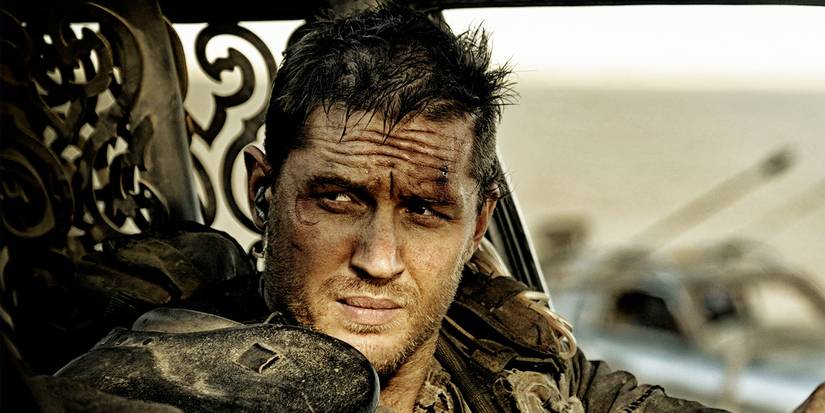
Tom Hardy in Mad Max: Fury RoadImage via Warner Bros. Pictures
Advertisement
Immortan Joe (Hugh Keays-Byrne) discovers that Imperator Furiosa (Charlize Theron) has taken his wives and diverted the War Rig from its route. Within minutes, half the wasteland appears to be chasing her. Mad Max: Fury Road then spends most of its runtime finding increasingly deranged ways to keep that chase alive.
War Boys swing between vehicles on poles. Motorcycles launch over moving trucks. A guitarist strapped to a wall of amplifiers blasts flames from his instrument while an army races through the desert. People spray chrome into their mouths and scream “Witness me” before attempting something catastrophically dangerous. The spectacle is outrageous, yet the geography stays remarkably clear. You understand where Furiosa is trying to go, who is gaining ground, and why every mechanical failure is disastrous. Max Rockatansky (Tom Hardy) gradually becomes part of her escape rather than automatically taking control of it, while the wives have their own reasons for refusing Joe’s world. Fury Road is two hours of forward momentum executed with such precision that exhaustion becomes part of the thrill.
1
‘Uncut Gems’ (2019)
Julia Fox in Uncut GemsImag via A24
Advertisement
Howard Ratner (Adam Sandler) gets hold of a rare black opal and immediately sees salvation. Then Kevin Garnett (Kevin Garnett) sees it. Howard lets him borrow it, pawns Garnett’s championship ring, uses that money for another bet, lies to several people, dodges the men trying to collect what he owes, and continues running his Manhattan jewelry store as though this arrangement is remotely sustainable. Uncut Gems understands Howard perfectly. Every disaster convinces him that one sufficiently brilliant win can erase all the disasters before it.
That belief turns the movie into an anxiety machine. Phones ring over conversations. Customers argue. The security door refuses to open at the worst possible moment. The Weeknd appears during his 2012-era rise and somehow becomes part of another Howard catastrophe. Even a Celtics playoff game becomes unbearable because Howard has constructed a bet elaborate enough to make every rebound feel personal. The Safdie brothers keep noise, movement, debt, family, business, and gambling colliding until Howard’s life feels like twenty browser tabs all playing audio simultaneously. The maddening part is that you begin understanding his excitement. Uncut Gems makes terrible decision-making feel so electrically alive that, for two hours, stress becomes entertainment.






You must be logged in to post a comment Login