Entertainment
The 6 Worst R-Rated Thriller Movies of the 2020s So Far

It’s relatively surprising that there are still such disastrous mainstream releases in the current decade when considering the pressure that the industry is under. The rise of streaming as an alternative to moviegoing for many audiences, especially young people, has made it so that there needs to be a strong incentive to see something in theaters. This would seemingly give studios the incentive to reserve their highest-quality projects for the big screen, given that the lesser films are often shunted directly to a subscription service or VOD. Nonetheless, there are a few noteworthy disasters in the R-Rated thriller category that show just how willing production companies are to send out a hastily put together product to make a quick buck.
It’s disappointing that films like this still exist given the challenges that face the current marketplace. Many of the best films of a given year almost barely get out of limited release, as they tend to be catered towards the wealthier, privileged moviegoers in New York and Los Angeles. This year even saw the debut of some truly excellent R-Rated thrillers like Carolina Caroline, Crime 101, and Tuner, which sadly didn’t have the box office success that they deserved. When audiences complain that there is nothing to see in theaters besides blockbusters, and that television has been a replacement when it comes to mature stories aimed at adults, it’s these types of films that they see as the issue.
6
‘Psycho Killer’ (2026)


Psycho Killer feels like a serial killer thriller that was lifted from the ‘90s, which makes sense because it was written by Andrew Kevin Walker, the screenwriter behind Se7en. Se7en was obviously a game changer that kicked off a newfound obsession with unpredictable psychopathic characters, but much of the film’s genius can be credited to David Fincher, who would later prove himself to be the master of the serial killer subgenre with Zodiac, The Girl With The Dragon Tattoo, and Mindhunter. Psycho Killer is the laziest and most incompetent version of the same cliched premise imaginable, and seems not to have acknowledged how the genre has evolved in the last 30 years.
The worst thing that a serial killer film can be as boring, as the kills in Psycho Killer are relatively unengaging, the characters have no substance to them, and the conspiracy that is revealed is far more mundane than it was hyped up as being. Not even a ridiculous, over-the-top performance by Malcolm McDowell is enough to salvage this utter mess.
5
‘The Front Room’ (2024)


The Front Room is perhaps the worst film that has ever been released by A24, as not even the lower-budget, direct-to-VOD genre titles that the distributor put out before it became a mainstream awards contender and box office superstar are quite as unwatchable. The worst thing that has resulted from the era of “prestige” genre films is the obsession with trying to make a point without having the substance to back it up, and The Front Room isn’t even clear what type of genre it is supposed to be; it’s more gross than it is scary, and the dark comedy is more uncomfortable than it is transgressive.
There’s nothing worse than being forced to spend time with obnoxious characters who do not develop, and witnessing The Front Room is an endurance test. While there is the slightest of possibilities that it could have been somewhat successful if the same premise had been used for a short film, it completely collapses in its ambitions to be a feature.
4
‘The Alto Knights’ (2025)

The Alto Knights is one of the most disappointing films of the decade when considering the caliber of talent involved and the potential of this specific material. Barry Levinson is an Academy Award winning filmmaker who won Best Picture and Best Director for Rain Man, and he has continuously made solid work in the years since; a reunion with Robert De Niro seemed like a great idea, as they had previously made the crime epic Sleepers and the underrated HBO drama The Wizard of Lies together. The Alto Knights is focused on the New York mob bosses Frank Costello and Vito Genovese during the 1950s, but in a baffling decision Levinson decided to cast De Niro as both characters, using makeup to differentiate the two. It’s a ridiculous choice that limits the interactions between characters who are supposed to have a specific bond, and it’s disappointing to see someone of De Niro’s talent doing the type of cheap gimmicks that are usually reserved for Adam Sandler or Johnny Depp.
The Alto Knights doesn’t succeed in being a throwback to classic gangster films, as the entire ensemble seems to be bored by Levinson’s slow, methodical approach to remembering details, which may have only worked if it was a docudrama. De Niro has shown recently in films like Killers of the Flower Moon and The Irishman that he is still capable of giving great performances, and thus the failure of The Alto Knights to muster any energy out of him can only be blamed on Levinson.
3
‘Don’t Worry Darling’ (2022)
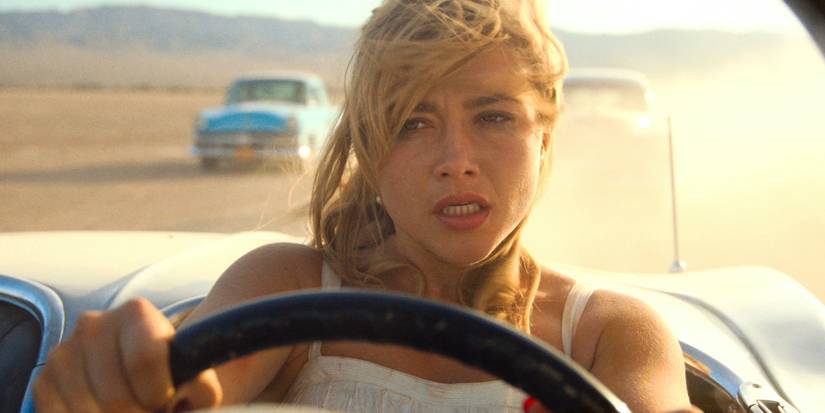
Don’t Worry Darling is without a doubt one of the most fascinating films of the 2020s based purely on the alleged chaos that went on behind-the-scenes during the production. While it’s important to separate the art from the artist, even if intriguing gossip can shape perspectives, Don’t Worry Darling was so clearly a film that everyone was on different pages making it fascinating to see how it became such a disaster. It’s one of the rare instances in which a group of truly talented people worked to make something nearly unwatchable, given that director Olivia Wilde had previously succeeded with her high school comedy Booksmart, and her latest film The Invite is one of the best of 2026.
Don’t Worry Darling builds to a twist so laughable that it might have succeeded as satire, but the commentary on misogyny and ‘50s culture is so outdated that it can’t hope to have any sort of resonance. What’s particularly unfortunate is that there is some compelling lavish production design and Florence Pugh does give a very charismatic, empathetic lead performance, but they are both wasted on a film that doesn’t take advantage of them.
2
‘Flight Risk’ (2025)

Flight Risk is a bizarre film for Mel Gibson to have directed, given that it is unlike anything else he has done as a filmmaker. While Gibson is obviously an extremely controversial director for multiple reasons, it would be hard to deny his talents when it comes to epic filmmaking; Braveheart is a Best Picture winner, Hacksaw Ridge is a riveting World War II drama, and Apocalypto is one of the most underrated action films ever made. Gibson has a talent for telling massive stories about societies on the verge of collapse, so it makes little sense that he would want to make a tight confinement thriller that had obvious budgetary impediments. While this is not the first time that he has collaborated with Mark Wahlberg, it is more than obvious that they aren’t bringing out the best in one another.
The worst thing about Flight Risk is that it is not nearly as fun as it should be, as the moments of ultra-violence and allusions to sexual abuse make what could have been a goofy B-movie feel downright sinister in nature. Wahlberg’s performance (and hairpiece) are downright ridiculous, and the final action set piece contains some of the worst CGI in any film since The Mummy Returns. Gibson’s qualities have long since been debated, but Flight Risk shows that he has also sold out as a filmmaker.
1
‘Kraven the Hunter’ (2024)

Kraven the Hunter finally brought the Sony Spider-Man spinoff universe to an end, as it was more than clear that trying to make a cinematic universe composed solely of villains that couldn’t be part of the MCU or feature any iteration of the webslinger was a very bad idea. Kraven the Hunter seemed like it might be a corrective because it was the only one of the six films to be Rated-R, and looked to be embracing some of the more exciting aspects of the comics. While Kraven the Hunter is better than both Madame Web and Morbius, that’s really not saying much at all; it suffers from the same issues of an overcomplicated backstory, bad and aloof dialogue, and not enough of the characters in their costumes or using powers.
Trying to make Kraven himself be an intimidating assassin only ended up feeling silly because of the goofy accents, even if Aaron Taylor-Johnson does have the right physique to play the character. There is unfortunately too much time when Taylor-Johnson is off screen that is centered on the character’s childhood, which ends up following down the same melodramatic route as nearly every other origin film. Russell Crowe, Alessandro Nivola, and Christopher Abbott are three brilliant actors who are trapped playing ridiculous villains with undefined powers, as Kraven the Hunter doesn’t even take the effort to make a centralized threat. It’s films like this that have caused “superhero fatigue.”

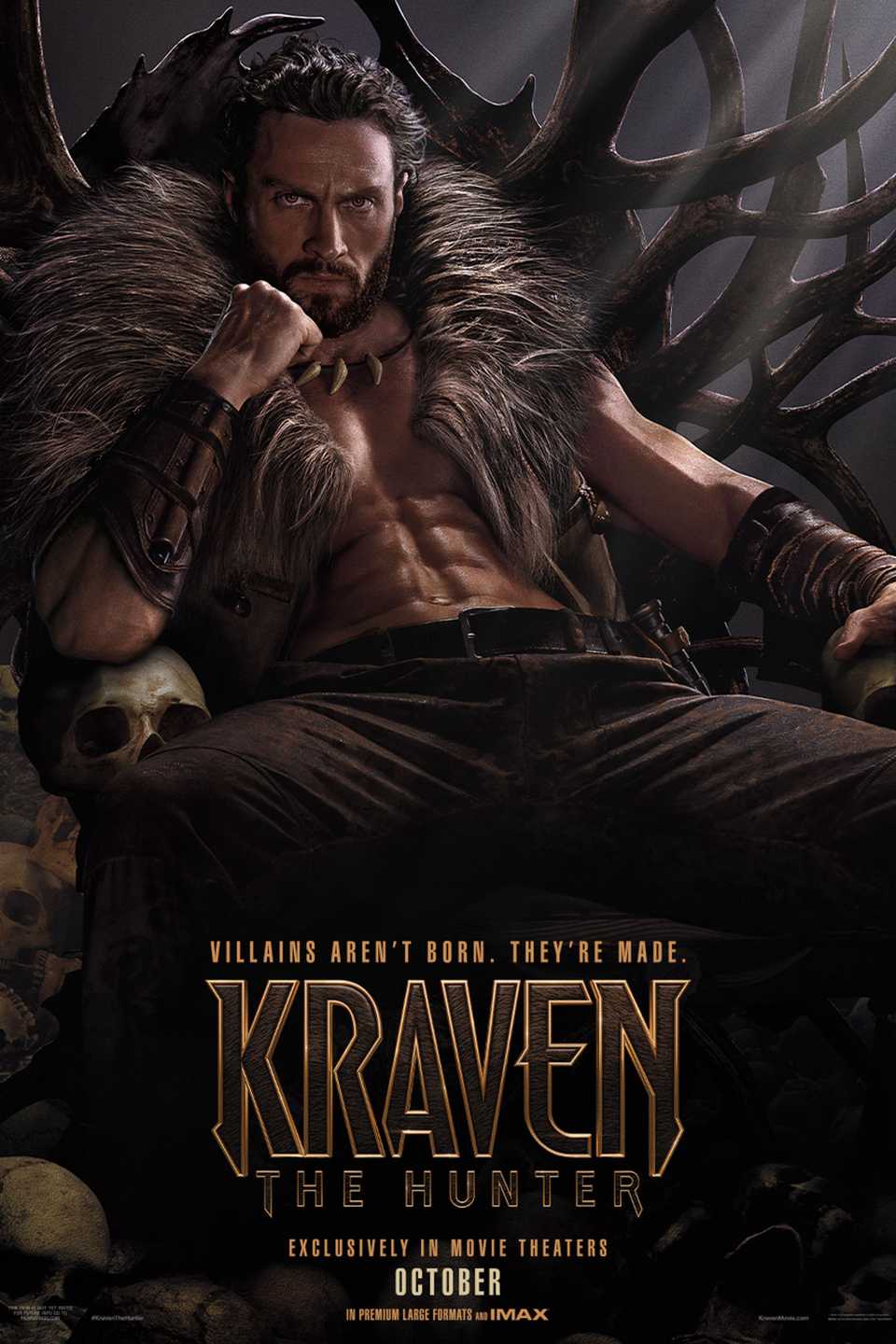
Kraven the Hunter
- Release Date
-
December 13, 2024
- Runtime
-
127 Minutes
- Director
-
J.C. Chandor
- Writers
-
Art Marcum, Richard Wenk, Matt Holloway
You must be logged in to post a comment Login