Entertainment
The 8 Most Fun Steven Spielberg Movies, Ranked

Movie taste would be unbearably dull if everyone behaved themselves. Sometimes the film with the cleaner reputation loses to the one that makes you feel eight years old again. Sometimes a supposedly messy movie gets defended for twenty years because one scene lives in your bloodstream. And sometimes a director’s most important work has to sit politely in another room while the movies with dinosaurs, pirates, treasure maps, flying bicycles, and gloriously stupid danger take over the evening. Today I want to dig into Steven Spielberg’s most vibrant takes from that angle.
There is a little narcissism in loving movies this way. Of course the scene that worked on you feels like the scene everybody should understand. Of course the adventure that rearranged your brain at twelve still seems objectively superior to whatever respectable answer somebody brings to the table. Fine. Let taste be irrational for once. Something impossible appears, common sense leaves the building, and suddenly watching a movie feels like the only sensible thing to be doing. Here are 8 most fun Spielberg films that people have all the right to be irrational about, and they’re ranked.
8
‘Ready Player One’ (2018)


Ready Player One is probably the easiest Spielberg movie to roll your eyes at and one of the easiest to have a blast with once you stop resisting it. Wade Watts (Tye Sheridan) lives inside a miserable future and escapes into the OASIS, where an entire civilization has turned nostalgia into currency. Then James Halliday (Mark Rylance) leaves behind a contest for control of the whole virtual world, and every obsessive pop-culture nerd suddenly has a reason to treat obscure trivia like military intelligence.
The references can absolutely become too much. That complaint is fair. But when the movie stops showing off what it recognizes and starts using the OASIS as a giant playground, it becomes ridiculously enjoyable. The opening race is pure controlled chaos. The trip into The Shining is even better because half the characters have no clue why entering the Overlook is a catastrophically bad idea. Spielberg takes somebody else’s nostalgia obsession and occasionally turns it into genuine movie magic. Eighth place feels right. Dismissing it completely even if I’m not a fan would be a bad take.
7
‘Catch Me If You Can’ (2002)

Frank Abagnale Jr. (Leonardo DiCaprio) discovers something incredibly dangerous while still a teenager. Adults are often bluffing too. That realization powers Catch Me If You Can. Frank walks into rooms wearing the correct uniform, sounds confident enough, and watches people supply the rest of the illusion for him. Pilot. Doctor. Lawyer. He keeps building identities faster than anyone can expose them, while FBI agent Carl Hanratty (Tom Hanks) stays behind him with the patience of somebody who knows charm eventually runs out of road.
Watching Frank talk his way through impossible situations is pure pleasure because every lie feels like a high-wire act. Yet the movie never lets the confidence become the whole person. Christmas phone calls, motel rooms, and the wreckage of his parents’ marriage keep slipping through the glamour. That little sadness makes the con more addictive rather than less. Frank is having the time of his life and trying desperately not to notice why.
6
‘Hook’ (1991)

Yes, Hook is excessive. Yes, it is sentimental. Yes, it sometimes behaves as though one more set, one more costume, one more emotional swell, and one more shouting child might finally satisfy it. Good.
Peter Pan becoming Peter Banning (Robin Williams) is such a wonderfully mean idea. The boy who never wanted to grow up has become a stressed lawyer who cannot even watch his son’s baseball game without checking his phone. Then Captain Hook (Dustin Hoffman) drags him back to Neverland and forces him to confront the embarrassing possibility that adulthood has made him boring. The imaginary food fight still rules. Rufio (Dante Basco) still feels impossibly cool if you first met him young enough. Hook still acts like every minor inconvenience deserves Shakespearean outrage. And Peter remembering how to fly works because the movie commits to the emotion without flinching. Plenty of people consider this minor Spielberg. Plenty of people are also wrong in exactly the way childhood nostalgia permits.
5
‘The Adventures of Tintin’ (2011)

There are stretches of The Adventures of Tintin where the camera behaves like it has just been informed that walls, gravity, and basic physics are optional. Tintin (Jamie Bell) buys a model ship, stumbles into a mystery involving hidden treasure, and ends up traveling with Captain Haddock (Andy Serkis), whose relationship with alcohol and common sense is already complicated before anybody starts shooting at them.
The Bagghar chase is the sort of action sequence that makes you grin simply because of how many things it refuses to stop doing. Streets collapse, vehicles change, objects keep passing between hands, and somehow you never lose track of the goal. Haddock supplies most of the human chaos because he can turn a family legacy into an argument, a disaster, and eventually a reason to keep going. Snowy remains suspiciously competent throughout. Motion capture never became everybody’s favorite visual language, but freedom suits Spielberg here. He finally gets to stage adventure without asking whether a camera could physically survive the shot. You can practically feel him enjoying the loophole.

The beautiful thing about E.T. the Extra-Terrestrial is how quickly Elliott (Henry Thomas) stops treating an alien like an alien. He finds a terrified creature stranded near his home, hides him from adults, feeds him whatever a child thinks an extraterrestrial might enjoy, and starts loving him before he understands anything about where he came from.
That relationship is why all the famous stuff still works. Reese’s Pieces. The improvised English lessons. E.T. (Pat Welsh) getting drunk and Elliott feeling the effects elsewhere. The wig. “Phone home.” None of it feels like iconography while you are watching because the friendship underneath it remains so weirdly intimate. Then government agents close in and the movie turns neighborhood bicycles into escape vehicles. The moon shot has been copied, parodied, printed, and referenced into cultural oblivion, yet the actual scene still gets you. That is irritatingly impressive. It should have become wallpaper decades ago. Somehow it still feels like a kid discovering that the impossible can love him back.
3
‘Jurassic Park’ (1993)

There are adults who can watch a brachiosaurus appear in Jurassic Park without feeling anything. Those people are fascinating and should probably be studied. The movie understands exactly how long to let wonder breathe before turning the same idea against you. First comes the awe. Then the goat disappears. The water trembles. The fence is no longer a fence.
Suddenly the T. rex is standing in the rain and every beautiful promise John Hammond (Richard Attenborough) made about the park has become hilariously irrelevant. The raptor kitchen scene later turns stainless steel counters into childhood nightmare architecture, while Ian Malcolm (Jeff Goldblum) keeps finding time to be amused by everyone’s confidence in a system he already knows is doomed. What makes the movie so much fun is that terror never replaces wonder. They keep feeding each other. You are scared because the dinosaurs feel real, and you are thrilled for exactly the same reason.
2
‘Indiana Jones and the Last Crusade’ (1989)
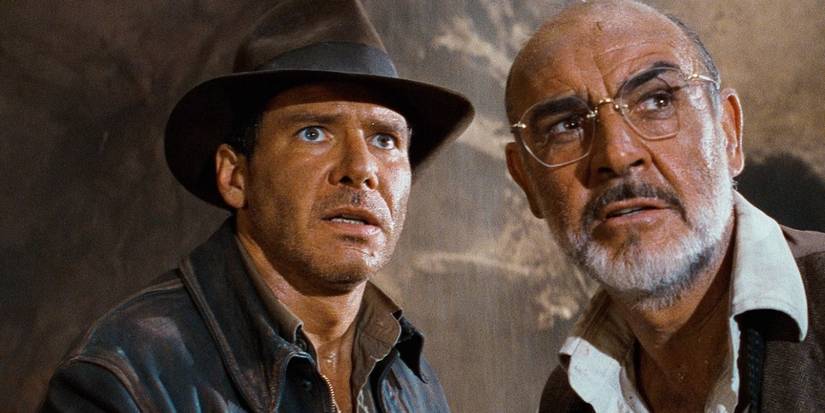
Indiana Jones and the Last Crusade understands that the funniest possible person to embarrass Indiana Jones (Harrison Ford) is his father. That choice changes the whole adventure. Indy can punch Nazis, escape burning rooms, leap onto tanks, and bluff his way through ancient mysteries, yet one disapproving look from Henry Jones Sr. (Sean Connery) can make him feel twelve.
Their relationship gives the movie a warmth the first two films approach differently. Henry is scholarly, stubborn, distracted, and somehow completely unimpressed by the fact that his son has become one of cinema’s greatest adventurers. The Grail hunt gives them castles, catacombs, motorcycles, zeppelins, and one immortal exchange about sleeping with the same woman. Then the final trials strip everything back to faith, trust, and whether Indy can let go of the thing he has been chasing. It is hilarious, ridiculously rewatchable, and dangerously close to number one.
1
‘Raiders of the Lost Ark’ (1981)
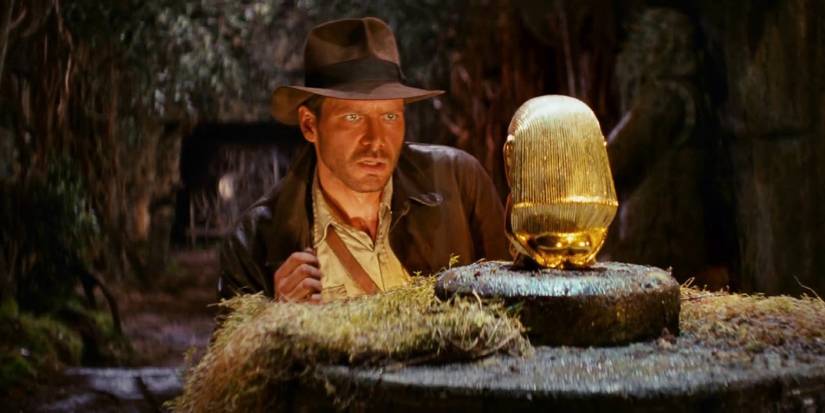
The opening of Raiders of the Lost Ark is almost rude in how quickly it establishes the fantasy. Jungle. Temple. Darts. Golden idol. Betrayal. Giant boulder. Escape. Plane. Snake. And that is before the movie has really started. Indiana Jones (Harrison Ford) is great because the adventure never treats him like a superhero. He gets punched, dragged, bruised, annoyed, exhausted, and occasionally solves a problem by deciding he has absolutely no patience left for it.
Hence the swordsman. Marion Ravenwood (Karen Allen) makes the movie better because she can drink, argue, fight, and call Indy on his nonsense without becoming an accessory to his adventure. The truck chase is absurdly good. The Well of Souls remains a nightmare for anyone with basic feelings about snakes. The Ark carries enough mystery to make the final act genuinely eerie. Raiders has been imitated so many times that its rhythms can feel familiar before you remember it helped invent half the language everyone copied. Then you watch it again and, annoyingly, it is still that good.


Raiders of the Lost Ark
- Release Date
-
June 12, 1981
- Runtime
-
115 minutes
- Writers
-
Lawrence Kasdan, George Lucas, Philip Kaufman
You must be logged in to post a comment Login