Entertainment
The 8 Most Suspenseful Thriller Movies You’ll Ever Watch

We claim to hate a good shock or surprise in real life, but when it comes to movies, keep ’em coming! Movie lovers watch a film and don’t know what’s coming next. By keeping the audience in suspense, it heightens the stakes and provides a reason to reach the next scene. If there’s one genre that loves suspense, it’s the thriller. From murder mysteries to high-octane action flicks, they excel at building suspense and tension.
There are an abundance of thrillers in cinema history that are brilliantly suspenseful, but we’re here to discuss eight of the very best in the category. From blindsiding murders in the first act to dueling timelines that reveal a dark truth, these films leave you pondering everything that came before, after, and the film as a whole. While there are certainly many other films that could be on this list, these eight are essentials.
1
‘Black Swan’ (2010)


One may not think a film about art could be suspenseful, but Darren Aronofsky knows how to deliver just the right dosage in his brilliant psychological horror thriller Black Swan. The film depicts Nina (Natalie Portman), a dedicated New York City ballet dancer, and her dark descent after being cast in Swan Lake. As Nina strives for artistic perfection, she suffers vivid hallucinations and delusions, blurring the line between what is real and what is in her head, causing a devastating spiral into madness. The film uses the ballet narrative as a mirror for Nina’s internal conflict as her rigid nature makes it hard for her to unlock the dark, passionate side of the Black Swan. A masterpiece in tension and suspense, Black Swan provides a raw examination of the dangerous cost of artistic greatness.
Led by a powerhouse performance from Portman, Black Swan captures a terrifyingly grim world through Aronofsky’s precise, moving camera angles and endless mirrors that trap the audience and invite a sense of confusion similar to Nina. The audience is kept on the edge as Aronofsky blurs the line between chilling hallucinations and reality. With Nina operating as an unreliable narrator, determining what’s true or made up. Her self-destruction is inevitable, but determining how or when it will come is as great as the actress playing that journey. When the film reaches the body horror phase, it’s clear that Nina’s fall is inevitable. There’s no way in which a prima ballerina can be such through mutation. Black Swan is terrifyingly grotesque, and the journey into decay is worth the difficult, visceral watch.
2
‘M’ (1931)
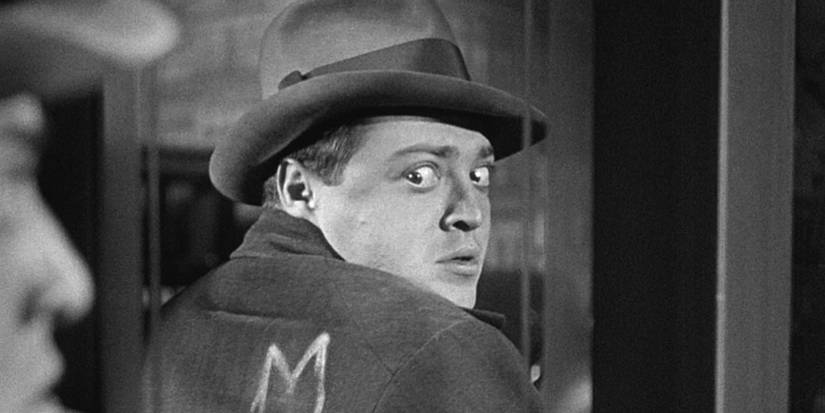
One of the greatest and subtly influential films of the early days of talkies is the German thriller M. Directed by Fritz Lang in his first sound film, M tells the story of a massive manhunt in Berlin for Hans Beckert (Peter Lorre), a serial killer who targets children. Because the police searches disrupt their own illegal activities, the city’s criminal underworld decides to hunt down the murderer themselves. Building suspense through a menacing whistling clue and a menacing double manhunt, M set the template for modern police procedurals, psychological thrillers, and film noir through its simple yet effective execution. By establishing the modern serial killer thriller, M could do as it pleased. And what it pleased exuded perfection.
A risk perhaps at the time, sound design became a crucial part of the storytelling. The killer’s whistling of “In the Hall of the Mountain King” builds terror before he even appears on-screen. With an audio soundscape established as the primary narrative tool, the dynamic camera angles of stark shadows and silhouettes aid visual storytelling. Together, Lang crafts an aesthetic that subverts expectations. You’re left in suspense as the monster is humanized and the city’s criminal syndicate becomes the villains. M often forces your imagination to fill in the blanks, building dread from the very start. M’s catastrophic tale where the walls close in for the hunted can genuinely be felt in projects still today.
3
‘Memento’ (2000)
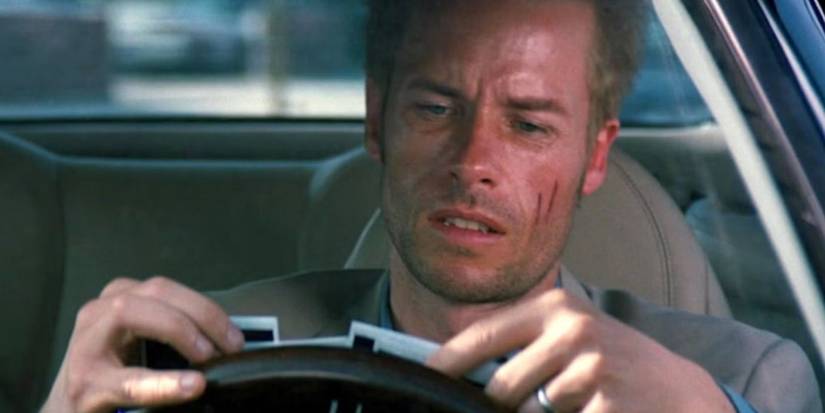
Multiple timeline storytelling can be a difficult mechanic to execute, but if there’s one visionary who can do it, look no further than Christopher Nolan and Memento. His early thriller tells the story of Leonard Shelby (Guy Pearce), a man with short-term memory loss who cannot form new memories. He uses Polaroid notes and body tattoos to hunt the man who raped and murdered his wife, Catherine (Jorja Fox). Memento uses two alternating timelines—one where color scenes move in reverse, starting with the immediate aftermath of an action and moving backward to explain how it happened, and the other in black-and-white, where scenes move forward in chronological order. When they converge, the truth is revealed, and it’s nothing you or Leonard could have predicted.
Memento brilliantly plays with both the protagonist and the audience through a masterful mystery that you must solve. Instead of just crafting a typical revenge narrative, Nolan’s structure subverts expectations. You cannot lean on past context because the previous scene was actually the future, meaning you must focus on every detail for the truth to unravel. By feeling just as disoriented as Leonard, you share the evocative lack of context of its amnesiac protagonist. Without the ability to predict the past or future, the audience lives in suspense. It can be a dizzying film, but Memento established Nolan’s storytelling prowess through the most complicated conceit right off the bat.
4
‘Memories of Murder’ (2003)

Replacing the pristine Hollywood detective film comes Bong Joon Ho’s gritty Neo-noir crime thriller Memories of Murder. Based on the 1996 play Come to See Me by Kim Kwang-lim, local detective Park Doo-man (Song Kang-ho) and Seoul detective Seo Tae-yoon (Kim Sang-kyung) investigate a brutal string of rapes and murders of young women who wear red on rainy days. Bogged down by poor forensic technology and brutal interrogation methods, the detectives chase false leads in a frustrating, ultimately dead-end search for the elusive killer. Through a bewitching blend of dark comedy, satire, and raw tragedy, Bong presents a flawed series of events that show that justice isn’t guaranteed and that evil can come from the ordinary.
Memories of Murder seamlessly moves through tonal genres to keep audiences guessing whether resolution is even possible. What begins as a bumbling odd couple cop story evolves into moments of harsh, brutal sadness. Rooted in an unsolved true crime case, the narrative had an added edge as Bong cast society’s chaotic nature as a reason for the lack of success. Memories of Murder is a film in which suspense stems from frustration. A botched police investigation can truly stunt justice; the ticking clock of upcoming rainy nights, crumbling local clues, and the psychological unraveling of desperate detectives can destroy progress. Bong’s presentation of a suffocating, claustrophobic fear of failure exudes existential dread that leaves a lingering question about where the evil hides in ordinary society.
5
‘Psycho’ (1960)


Simply seeing the name Psycho evokes an evocative reaction. You either immediately see the iconic image or hear the quintessential musical theme. Or, maybe because they were paired together, you experience them both. That’s the sheer brilliance of the Alfred Hitchcock masterpiece. Based on the Robert Bloch novel, the thriller follows secretary Marion Crane (Janet Leigh) who hides out at the Bates Motel after stealing $40,000. While there, she is murdered by the motel owner, Norman Bates (Anthony Perkins), who is controlled by his abusive, unseen mother. It launches a hunt for Marion as the truth about Norman is suddenly revealed. Setting the pace for Act One shocking deaths, Psycho established how twists are the best way to build and maintain suspense when literally anything can happen next.
Hitchcock used Psycho to redefine how scary stories can be told. The legendary shower scene that killed off its top-line star deliberately tricked the audience. In turn, it created new tricks for suspense that directors still play with. Hitchcock films use purposeful angles and framing to evoke immediate tension. With terror occurring in a practical, tangible location, Psycho plays with the audience’s fear that the simple and mundane could hide the greatest monsters. Bernard Herrmann’s piercing, string-heavy music cuts like a knife, no pun intended. Psycho is a perfectly curated thriller that leaves you eager for what’s to come. Hitchcock knows how to cause his audiences anxiety!
6
‘Rear Window’ (1954)
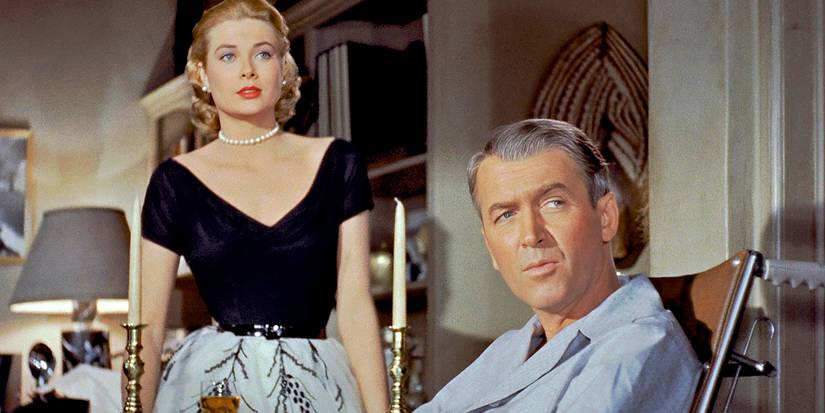
Imagine bearing witness to a potential murder, but you’re confined to a room with no way out. It’s voyeurism at its best and worst. Hitchcock again delivers anxiety in the mystery thriller Rear Window. The classic follows L.B. “Jeff” Jefferies (James Stewart), a professional photographer stuck in a wheelchair with a broken leg. Confined to his New York apartment, he passes the time by spying on his courtyard neighbors and comes to suspect that one of them has murdered his wife. With only his nurse, Stella (Thelma Ritter), and his girlfriend, Lisa Fremont (Grace Kelly), by his side, he seeks clues to determine whether Lars Thorwald (Raymond Burr) has murdered his wife. Rear Window is an extraordinary film that turns a story about a broken limb into a life-or-death battle.
Rear Window expertly not only confines Jeff inside his home but also the camera. By framing each and every shot inside his apartment, we can only see what he sees. That fear of the unknown plays straight into the anxiety of the situation. We share Jeff’s vantage through lenses, binoculars, and long shots that put the viewer right in the photographer’s seat. Jeff begins his journey as a seemingly honest man, but obsession takes over, turning his acts of voyeurism into a dangerous game. What makes Lars a terrifying threat is that he is seemingly ordinary, so seeing him as a threat builds into the suspense of the situation. By the time Jeff becomes a literal sitting duck, you’re left pondering what will happen with a dangerous confrontation that potentially cannot be stopped. Rear Window is a beautifully tense thriller where even simplicity can be scary.
7
‘The Silence of the Lambs’ (1991)
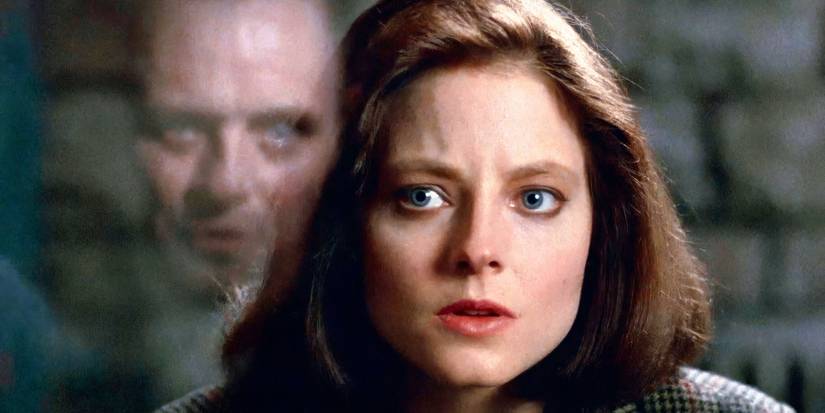
Earning itself a seat at the award show table, The Silence of the Lambs proved to be a sensational masterclass in tension and suspense. Directed by Jonathan Demme, the adaptation of Thomas Harris’ novel tells the story of rookie FBI trainee Clarice Starling (Jodie Foster) as she tries to catch an active serial killer named “Buffalo Bill” (Ted Levine), who skins his female victims. To build a profile, she must interview a brilliant, imprisoned serial killer and cannibal, Dr. Hannibal Lecter (Anthony Hopkins), in exchange for the young cop’s personal details. Built upon a brilliant bond between the hunter and the captive mastermind, The Silence of the Lambs is what nightmares are made of.
The Silence of the Lambs is more than a scary movie about an abominable monster; it’s a harrowing exploration of trauma and fighting against the past to defeat the evils in front of you. Rich in psychological dread, Demme creates extraordinary tension through terrifying mind games, suffocating close-up shots, and the defeat of silence and stillness. He puts you in Clarice’s eye level, building instant intimacy and vulnerability. It further pushes the audience to feel exposed as characters are seen staring directly into the camera. The Silence of the Lambs is a chilling thriller that launched an antagonist to such great heights while making horror thrillers a mainstream genre.
8
‘The Talented Mr. Ripley’ (1999)

It’s quite wild to see where the ensemble has gone since starring in The Talented Mr. Ripley, but the film is proof that dynamic performances elevated the adaptation of Patricia Highsmith’s beloved novel. The film follows Tom Ripley (Matt Damon), a struggling young con artist in 1950s New York who is hired by a wealthy shipbuilder to travel to Italy. His mission is to persuade the man’s spoiled playboy son, Dickie Greenleaf (Jude Law), to return home. Instead, Tom becomes dangerously obsessed with Dickie’s luxurious lifestyle, leading to murder and a web of elaborate identity theft. With a vibrant backdrop unlike that of typical psychological thrillers, The Talented Mr. Ripley provides a gripping cat-and-mouse game that leaves you eager for more.
Director Anthony Minghella uses a nostalgic aesthetic to create a tense narrative about class and identity. He builds a stylish story through complex characters moving through a dangerous maze where, with one wrong step, can spell disaster. Damon exudes a natural charm that makes him unsuspecting, especially next to Law’s arrogant Dickie. You want to root for Tom despite his actions. There are moments of split sympathy as identity theft is a terrible thing, but that means the charismatic murderer is taken down. While other thrillers go a drastically different route, the jazzy score weaves through the story, building up Tom’s risky double life with an upbeat melancholy. Just like the coastal setting, it’s simply ironic. The Talented Mr. Ripley is a wonderful example of juxtaposed suspense that was well ahead of its time.


- Release Date
-
December 25, 1999
- Runtime
-
140 minutes
- Director
-
Anthony Minghella
- Writers
-
Anthony Minghella
- Producers
-
Tom Sternberg, William Horberg
-

Gwyneth Paltrow
Marge Sherwood
-


You must be logged in to post a comment Login