Entertainment
The Best Performance of Every Year in the 2020s

The 2020s have been full of incredible movies, many of which are outright classics in the making. From Westerns like The Power of the Dog to war thrillers like Oppenheimer and subversive horrors like The Substance, this decade has been anything but safe when it comes to cinema. Virtually every genre has seen the release of at least one major, acclaimed movie, proving that the seventh art is in good hands, a comforting thought in uncertain times like these.
Logically, with such a wealth of quality in the movies themselves, the performances in them are equally standout. Indeed, the 2020s have produced several truly incredible performances, many of which have a timeless quality to them that all but guarantees they’ll be remembered among the all-time greats in the medium. We’re here to celebrate the best performance of every year of the 2020s, a relatively easy task for some years (2020 is particularly weak, it must be said), but an incredibly difficult one for some others (2022, in particular, was a bloodbath). Also, since 2026 is still underway and many movies are still to come, this list will only cover up to 2025.
2020: Anthony Hopkins in ‘The Father’


In a career spanning over sixty years, Sir Anthony Hopkins has delivered many powerful performances. From his iconic villainous turn in The Silence of the Lambs to his subdued and quiet turn in The Remains of the Day, Hopkins is a true master of his craft. It’s particularly impressive, then, that at the age of 83, Hopkins delivered what’s arguably his best performance to date in Florian Zeller’s drama, The Father.
In the movie, Hopkins plays Anthony, a man slowly succumbing to dementia. As the life he knows becomes unknowable to him, Anthony becomes despondent, both resisting the deterioration of his mind and holding on to an idea of the reality he once knew. Hopkins delivers a masterclass in controlled despair, portraying every side of Anthony, both the soft and confused and the thornier and confrontational, with remarkable commitment, never shying away from the intricacies of playing such a man. The ending, which sees Anthony reduced to an infantilized version of himself, is particularly heartbreaking, capturing the universal fear of becoming a stranger in one’s own shoes. For this year, the extremely close runner-up is the late Chadwick Boseman, whose visceral performance in Ma Rainey’s Black Bottom is a true tour de force.
2021: Hidetoshi Nishijima in ‘Drive My Car’

2021 was a curious year for cinema. Reeling from the pandemic, the year seemed to last forever, with an absurdly prolonged award season and countless movies going directly to streaming because of the still-closed movie theaters. Many great movies came out, though, including a few that were genuinely celebrated as masterpieces but which failed to receive individual nominations for their leading performers. Case in point: Drive My Car, which became the first Japanese movie nominated for the Best Picture Oscar, but whose lead actor, Hidetoshi Nashijima, failed to break into the Best Actor category.
A veteran of the screen, Nashijima plays Yūsuke Kafuku, a theater director grieving the death of his wife while attempting to mount a multilingual version of Uncle Vanya. The performance is largely silent, yet Nashijima conveys so much with his face: his eyes become the centerpiece in multiple scenes, weary and observant, interested yet detached. Nashijima conveys an all-too-relatable feeling: the struggle to simply be. He carries the weight of everything — the pain, the longing, the burden of surviving, and the years themselves — all while trying to remain present, both for his sake and for the work itself. For this year, the runner-up has to be Renate Reinsve, whose breakthrough work in The Worst Person in the World captured the aimlessness of an entire generation.
2022: Danielle Deadwyler in ‘Till’

2022 may very well be the best year for performances this decade. We had an embarrassment of riches, from Cate Blanchett‘s furious, career-best turn in Tár to Tang Wei‘s mesmerizing, mysterious efforts in Decision to Leave to Colin Farrell‘s devastating, melancholy work in The Banshees of Inisherin. Any of these would be the best in any other year, but in 2022, and after much deliberation, the title for the best performance must go to Danielle Deadwyler‘s utterly heart-wrenching portrayal of Mamie Till in Chinonye Chukwu‘s Till.
The film is based on the true story of Mamie Till, whose 14-year-old son, Emmett, was brutally lynched. Till then became an educator and activist while pursuing justice for her son. Deadwyler is, quite simply, superb in the movie, fully embodying Till’s devastation and desperation, not to mention her hunger for justice and her determination to see it through. What Deadwyler does here is nothing short of extraordinary, maintaining a subtle hint of determination that borders on anger throughout, even during Mamie’s most vulnerable and heartbroken moments. Her resoluteness is commanding to the point of being chilling, and it’s an utter disgrace that the Academy snubbed this tremendous performance, especially because Deadwyler was a constant presence in almost every precursor, as she should’ve been.
2023: Emma Stone in ‘Poor Things’

Emma Stone was already a Best Actress winner and a three-time Oscar nominee when she stepped into the shoes of Bella Baxter in Yorgos Lanthimos‘ absurdist sci-fi comedy Poor Things. An adaptation of the eponymous novel by Alasdair Gray, the film offers a new take on the classic tale of Frankenstein, focusing on a Victorian woman brought back to life by an eccentric scientist with the brain of a baby. Bella Baxter then goes on a journey of self-discovery, involving debauched lawyers, pastries, unexpected friends, and multiple sexual escapades.
Bella Baxter is a wholly singular character, and it takes a remarkably courageous and confident actress to bring her to life. Stone is completely unrestrained in the role, creating a spirited, vibrant, multifaceted heroine that ranks among the best in the new millennium. Bella is such an original creation, and Stone loses herself in the role. She embodies Bella’s innocence and hunger for discovery, using the inherent absurdist humor in Tony McNamara‘s screenplay to enhance the text’s themes of autonomy, self-discovery, and sexual liberation. Stone won a second Best Actress statuette, arguably the best choice the Academy has made this decade. The runner-up this year is Andrew Scott for his soulful, restrained performance in All of Us Strangers, a modern masterpiece in every sense of the word.
2024: Marianne Jean-Baptiste in ‘Hard Truths’


Mike Leigh is well known for making movies that rely on organic and reactionary dynamics, thus bringing out some truly stellar work from his performers. His latest effort came in 2024 with the drama Hard Truths, starring Marianne Jean-Baptiste as Pansy, a confrontational, angry, and anxiety-ridden woman whose harsh attitude alienates everyone in her life—except for her cheerful sister, single hairdresser Chantelle (Michele Austin).
Pansy is a truly difficult character: she’s abrasive, short-tempered, always ready to attack, and chronically anxious. In other words, she’s someone who’s very difficult to sympathize with. It’s all a testament to Jean-Baptiste that not only do we sympathize with her, but we actually understand her plight. Leigh has always excelled at crafting character studies, and Hard Truths is not the exception. It’s a glimpse into the life of a woman who doesn’t know how she got to that point, who struggles to relate to a family she doesn’t quite recognize, and whose life is slowly passing before her while she’s too insecure, scared, and reluctant to do anything about it. For this year, the runner-up is Sebastian Stan for his stunning and haunting work in the criminally underrated A Different Man.
2025: Rose Byrne in ‘If I Had Legs I’d Kick You’
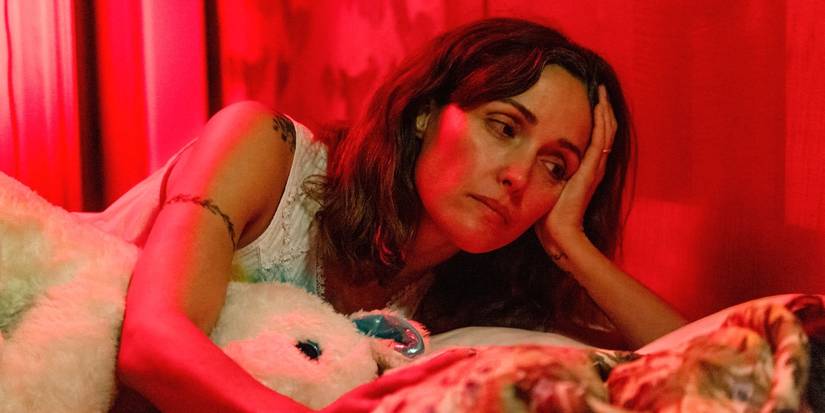
Finally, for our most recent performance, we have yet another depiction of a challenging woman dealing with a chaotic situation the best way she can. In If I Had Legs I’d Kick You, Rose Byrne plays Linda, a mother at her wits’ end: her daughter is suffering from an eating disorder, her husband is constantly away, and her house is undergoing repairs, forcing mother and daughter to live in a cheap motel. As the crises mount, Linda spirals into mental distress.
If I Had Legs I’d Kick You is one of the most stressful movie experiences you’ll ever see, so anxiety-inducing that even the Safdies would take a deep breath after seeing it. The film lives and dies with Rose Byrne, who delivers a tour de force as a mother slowly descending into a mess from which there seems to be no escape. Some of it is her own making, and some of it is just life being its usual difficult self, but her actions go from curious to puzzling to questionable to outright reprehensible. Through it all, Byrne is resolute and sympathetic, the living embodiment of desperation. It’s a tremendously courageous performance, fully committed to exploring the most complex and difficult side of the human psyche, the one that pushes itself towards the abyss because the alternative is simply too much to bear. As runner-up, we have Amanda Seyfried‘s equally daring, career-best turn as Ann Lee in the sadly ignored The Testament of Ann Lee.
You must be logged in to post a comment Login