Entertainment
The Greatest Action Series of All Time Is the Perfect Weekend Binge 40 Years Later

Everybody remembers the legacy of MacGyver. Swiss Army knives, duct tape, household objects being transformed into things household objects were never meant to become…the show practically invented that method. What gets forgotten is that Angus MacGyver wasn’t solving problems because he enjoyed building gadgets. He was solving them because he’d rather spend ten minutes figuring something out than ten milliseconds pulling a trigger.
MacGyver Was the Anti-Action Hero of the 1980s
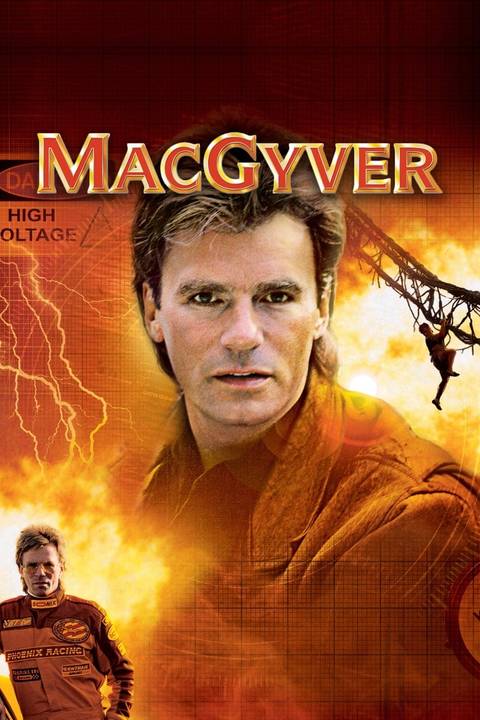
The setup was delightfully straightforward: MacGyver (Richard Dean Anderson) worked for the Phoenix Foundation — a government think tank housing an intelligence agency — and had a remarkable talent for showing up exactly where things were going wrong. One week, it was terrorists. The next week, it was spies. After that, it was kidnappers, criminals, or somebody whose terrible decision-making had spiraled completely out of control. Most television heroes would’ve solved those problems with bullets, but MacGyver usually solved them by staring at a pile of random objects until an idea appeared.
The concept probably shouldn’t work as well as it does. A man solving international crises with household objects sounds like the setup for a joke. The reason it works is Anderson. He never plays MacGyver like a genius, showing off. He plays him like a practical guy who’s slightly baffled that nobody else has noticed the obvious solution yet.
The contrast was especially noticeable in the 1980s. Television action heroes were getting louder, tougher, and increasingly more explosive. Every year, they seemed determined to add bigger weapons and larger body counts. Then there was MacGyver, wandering into danger looking like somebody’s approachable science teacher and somehow leaving with fewer casualties than everybody else.
That’s the part that feels surprisingly rebellious now. Modern action heroes often spend half their screen time processing trauma and the other half launching opponents through walls. MacGyver approached most crises the way ordinary people approach assembling furniture. It might be frustrating. It might take longer than expected. But surely there was a solution that didn’t involve setting everything on fire.


The power of the guilty pleasure.
MacGyver’s Intelligence Still Feels Refreshing Today
The gadgets were never really the point. They were a visual representation of how MacGyver viewed the world. Every problem had a solution. Every situation deserved a closer look. Every locked door, broken machine, hostage crisis, or dangerous confrontation could potentially be solved with observation, patience, and a little creativity. That philosophy gives the series an unusual warmth. Even when episodes become ridiculous, and some absolutely do, the show remains rooted in the belief that intelligence is useful. Not intelligence as arrogance. Intelligence as curiosity.
MacGyver succeeds because he notices things, asks questions, and understands how systems work. Then he uses that knowledge to help people. Watching the series now, it’s striking how little that approach has aged. Some of the hairstyles absolutely belong in a museum. Some of the technology looks like it should be displayed beside a fax machine and a stack of floppy disks. Yet the central idea remains surprisingly durable. The world does not need another hero looking for an excuse to pull a trigger, and that’s what makes him one of the best action heroes.
That’s why MacGyver still works forty years later. Not because of the Swiss Army knife or homemade inventions. Not only because Richard Dean Anderson remains endlessly likable, the show endures because it built an action hero around intelligence instead of violence. In an era when so many protagonists solve every problem by hitting it harder, watching somebody use his brain as Plan A still feels like a novelty. And somehow, decades later, that’s what makes MacGyver feel ahead of its time.

- Release Date
-
1985 – 1992-00-00
- Directors
-
Charles Correll, Bill Gereghty, Michael Vejar, Michael Caffey, Cliff Bole, Michael Preece, James L. Conway, Lee H. Katzin, Alexander Singer, Chuck Bowman, Paul Krasny, Dana Elcar, William Gereghty, Donald Petrie, Paul Stanley, Don Chaffey, Ernest Pintoff, Les Landau, Stephen Herek, Stan Jolley, Rob Bowman, Richard A. Colla, Alan Crosland, Jr., John Patterson
- Writers
-
Stephen Kandel, Chris Haddock, John Whelpley, Calvin Clements Jr., John J. Sakmar, Kerry Lenhart, Bill Froehlich, Terry Nation, Rob Hedden, Mark Lisson, David Rich, Joe Viola, Doug Heyes, Jr., Paul A. Magistretti, Thackary Pallor, Jerry Ludwig, Tony DiMarco, Dennis Foley, Brad Radnitz, Nancy Eddo, Robert Sherman, Robin Bernheim Burger, Don Mankiewicz, Douglas Brooks West
-

Alun Armstrong
Chief Superintendent Capshaw
-


You must be logged in to post a comment Login