Although recent years have offered far from the best of the genre, the gangster film was once one of the most reliable genres in Hollywood. In fact, some of the very best films are gangster movies, from Sergio Leone’s long and winding masterpiece Once Upon a Time in America and Quentin Tarantino’s breakout hit Reservoir Dogs to Fernando Meirelles and Kátia Lund‘s genius Brazilian flick City of Godand, of course, one of the most widely celebrated films of all time, The Godfather.
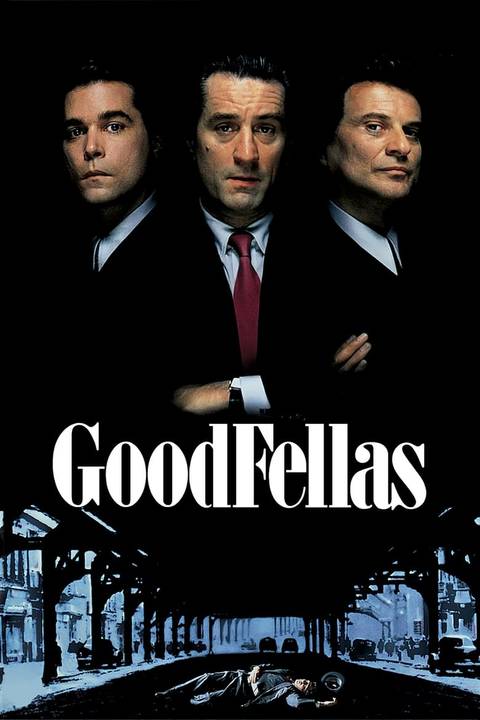
However, if there is one other movie that could possibly rival The Godfather for the title of the genre’s best, it is Martin Scorsese’s magnum opus, Goodfellas. Hailed as one of the finest pieces of filmmaking ever, and dubbed an “epic cinematic masterpiece” by the one and only Steven Spielberg, Goodfellas is held in almost singularly high regard by most cinephiles. Boasting a 93% critics’ score and 97% from audiences on review aggregator Rotten Tomatoes, the consensus on the site reads, “Hard-hitting and stylish, GoodFellas is a gangster classic — and arguably the high point of Martin Scorsese’s career.”
At the 63rd Academy Awards in 1991, the film was nominated in six categories but walked away victorious only in Best Supporting Actor (Joe Pesci), with the Academy choosing to honor Kevin Costner‘s first Western triumph, Dances with Wolves, with the Best Picture prize instead of Goodfellas. 36 years after the film debuted in theaters and changed the gangster genre forever, Goodfellas is once again a hit with audiences. At the time of writing, Scorsese’s masterpiece is one of the ten most-streamed movies on Tubi in the U.S.
Advertisement
Advertisement
Collider Exclusive · Oscar Best Picture Quiz Which Oscar Best Picture Is Your Perfect Movie? Parasite · Everything Everywhere · Oppenheimer · Birdman · No Country
Five Oscar Best Picture winners. Five completely different visions of what cinema can be — and what it can do to you. One of them is the film that was made for the way your mind works. Ten questions will figure out which one.
🪜Parasite
🌀Everything Everywhere
☢️Oppenheimer
Advertisement
🐦Birdman
🪙No Country for Old Men
Advertisement
01
What kind of film experience do you actually want? The best movies don’t just entertain — they leave something behind.
Advertisement
02
Which idea grabs you most in a film? Great films are driven by a central obsession. What’s yours?
Advertisement
03
How do you like your story told? Form is content. The way a story is shaped changes what it means.
Advertisement
04
What makes a truly great antagonist? The opposition defines the protagonist. What kind of opposition fascinates you?
Advertisement
05
What do you want from a film’s ending? The final note is the one that lingers. What do you want it to sound like?
Advertisement
06
Which setting pulls you in most? Where a film takes place shapes everything — mood, stakes, what’s even possible.
Advertisement
07
What cinematic craft impresses you most? Every great film has a signature — a technical or artistic element that makes it unmistakable.
Advertisement
08
What kind of main character do you root for? The protagonist is the lens. Who you choose to follow says something about you.
Advertisement
09
How do you feel about a film that takes its time? Pace is a choice. Some films sprint; others let tension accumulate slowly, deliberately.
Advertisement
10
What do you want to feel walking out of the cinema? The best films leave a mark. What kind of mark do you want?
Advertisement
The Academy Has Decided Your Perfect Film Is…
Your answers have pointed to one Oscar Best Picture winner above all others. This is the film that was made for the way your mind works.
Advertisement
Parasite
You are drawn to films that operate on multiple levels simultaneously — that begin in one genre and quietly, brilliantly migrate into another. Bong Joon-ho’s Parasite is a film about class, desire, and the architecture of inequality that manages to be darkly funny, deeply suspenseful, and genuinely shocking across a single extraordinary running time. Your instinct is for cinema that hides its true intentions until the moment it’s ready to reveal them. Parasite is exactly that — a film that rewards close attention and punishes assumptions, right up to its devastating final image.
Advertisement
Everything Everywhere All at Once
You want it all — and this film gives you all of it. The Daniels’ Everything Everywhere All at Once is one of the most maximalist films ever made: action comedy, multiverse sci-fi, family drama, existential crisis, and a genuinely earned emotional core that sneaks up on you amid the chaos. You are someone who responds to ambition, who doesn’t want cinema to choose between being entertaining and being meaningful. This film refuses that choice entirely. It is overwhelming by design, and its overwhelming nature is precisely the point — because the feeling of being crushed by infinite possibility is exactly what it’s about.
Advertisement
Oppenheimer
You are drawn to cinema on a grand scale — films that understand history not as a backdrop but as a force, and that place their characters inside that force and watch what happens. Christopher Nolan’s Oppenheimer is a film about the terrifying gap between what we can do and what we should do, told with the full weight of one of the most consequential moments in human history behind it. You want your films to feel important without feeling self-important — to earn their ambition through sheer craft and the gravity of their subject. Oppenheimer does exactly that. It is enormous, complicated, and refuses easy comfort.
Advertisement
Birdman
You are drawn to films that foreground their own construction — that make the how of the filmmaking part of the what it’s about. Alejandro González Iñárritu’s Birdman, shot to appear as a single continuous take, is cinema examining itself through the cracked mirror of a fading actor’s ego. You respond to formal daring, to the feeling that a film is doing something that probably shouldn’t be possible. Michael Keaton’s performance and Emmanuel Lubezki’s restless camera create something genuinely unlike anything else — a film that is simultaneously about creativity, relevance, self-destruction, and the impossibility of ever truly knowing if your work means anything at all.
Advertisement
No Country for Old Men
You are drawn to cinema that trusts silence, that refuses to explain itself, and that treats dread as a form of meaning. The Coen Brothers’ No Country for Old Men is a film about the arrival of a new kind of evil — implacable, arbitrary, and utterly indifferent to the moral frameworks we use to make sense of the world. It is one of the most formally controlled films ever made, and its controlled restraint is what makes it so terrifying. You want your films to haunt you, not comfort you. You are not interested in resolution if resolution would be dishonest. No Country for Old Men is honest in a way that most cinema never dares to be.
Advertisement
Advertisement
What Is ‘Goodfellas’ About?
As the twelfth directorial effort in Scorsese’s career, many believe this was the icon at the peak of his powers. The film featured several memorable performances in one of the best ensembles ever assembled, including Ray Liotta starring as Henry Hill; Lorraine Bracco as Hill’s wife, Karen Hill; Robert De Niro as Jimmy Conway; Joe Pesci as Tommy DeVito; and Paul Sorvinoas Paulie Cicero. A synopsis for the movie reads:
“Henry Hill, a poor Irish-Italian growing up in the 1950s New York City, rises through the ranks of his neighborhood’s organized crime branch; he ends up in the FBI’s witness protection program after testifying against his former partners.”
Goodfellas is streaming for free on Tubi. Make sure to stay tuned to Collider for the latest streaming stories.


You must be logged in to post a comment Login