Entertainment
The Next Generation’s Perfect Quote Defines the Sci-Fi Franchise

By the time the fifth season of Star Trek: The Next Generation blasts across television screens, the spin-off with a shaky beginning has gotten its feet firmly underneath it. The creative team is firing on all cylinders as they shrewdly expand on all that Star Trek can be. The Next Generation is still as earnestly optimistic as the blazing sun, but its increased emphasis on character depth underpins the franchise’s themes with greater resonance.
The 19th installment, “The First Duty,” continues Season 5’s streak of legendary episodes. Years before Star Trek: Deep Space Nine‘s ruthless eloquence interrogates the bleak cost of maintaining a utopia, Ronald D. Moore and Naren Shankar‘s script injects fault and fragility into Starfleet cadet Wesley Crusher (Wil Wheaton). In so doing, “The First Duty” adds another riveting, wisdom-dispensing speech to Captain Jean-Luc Picard’s (Patrick Stewart) collection — one positing a vision of Starfleet that’s rooted in a higher, more valuable ideal than spacefaring heroism.
‘Star Trek: The Next Generation’ Humanizes Wesley in “The First Duty”
Right before Wesley’s graduation from Starfleet Academy, a cadet dies during a training exercise. After enlisting the Enterprise crew to investigate, Picard deduces the facts: the flight team’s leader, Nicholas Locarno (Robert Duncan McNeill), wanted to feed his ego by performing a dangerous and illegal maneuver during their commencement ceremony. Between fearing punishment and Locarno misusing his charismatic influence over the peers who revere him, the quartet is concealing the maneuver and shifting the accident’s blame onto the deceased student.
Picard confronts Wesley about his culpability, only for his erstwhile protégé to plead the fifth. Full of righteous fury, Picard proclaims: “The first duty of every Starfleet officer is to the truth, whether it’s scientific truth, or historical truth, or personal truth. It is the guiding principle on which Starfleet is based. If you can’t find it within yourself to stand up and tell the truth about what happened, you don’t deserve to wear that uniform.”
Wesley has always been disliked to a disproportionately absurd degree for no crime except being a precocious, underwritten child who behaves like a precocious, underwritten child. Speaking only from a character standpoint, “The First Duty” finally does right by Wesley by deftly humanizing him with the same emotional texture and weight as his adult colleagues. This incident marks his first encounter with an ethical dilemma, let alone the ugly reality of consequences.
Instead of the perfect boy genius who likely grew accustomed to feeling like an invincible miracle worker, this is a flawed, fallible young man capable of mistakes. He’s terrified, torn between his loyalty to his friends and the guilty conscience that’s eating him alive. This is a young man learning the effort required to actually embody his aspirations. Wesley’s final choice — not his first decision, to go along with lies— will determine his future. Either he accepts responsibility and demonstrates humility and repentance while living with his error, or this one compromise will echo throughout his life.
“The First Duty” Upholds Truth as Starfleet’s Most Important Ideology
Picard intimately understands Wesley’s inevitable and pivotal moral crossroads. “The First Duty” reveals how Jean-Luc, one of Starfleet’s most compassionate, hopeful, and justice-driven officers, made at least one unspecified indiscretion during his Academy years. Add on his gradual evolution from being unfairly hostile toward his close friends’ son to his best approximation of a surrogate father, and there’s no character better suited to hold Wesley’s feet to the fire. Picard’s unrelenting reprimand isn’t his past frustrations reemerging, nor is it pompous grandstanding. Thanks to the ever-remarkable Stewart, the seismic disappointment in Picard’s words is resoundingly personal enough to stop hearts.
Those words propose a continuing mission that rings keenly true to Star Trek‘s virtuous ethos, but wields a more substantial edge. Even something as beautiful as chasing the stars collapses without truthful convictions. And the characters who stumble before ultimately choosing the harder, lonelier path of upholding that integrity understand truth’s intrinsic worth.

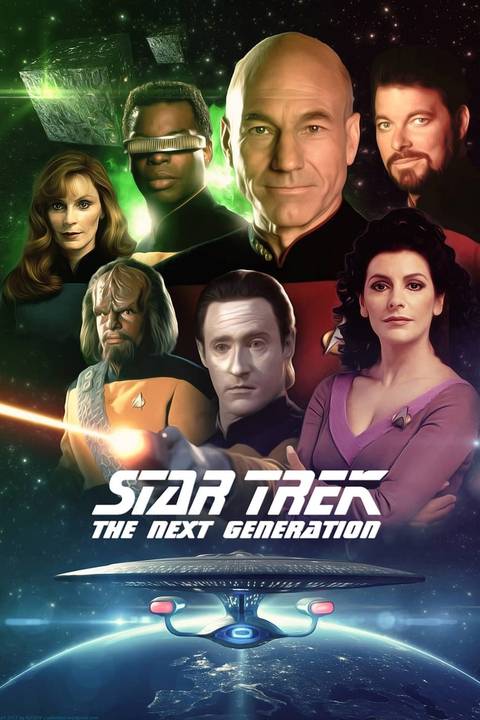
Star Trek: The Next Generation
- Release Date
-
1987 – 1994-00-00
- Network
-
Syndication
- Showrunner
-
Gene Roddenberry
- Directors
-
Cliff Bole, Les Landau, Winrich Kolbe, Rob Bowman, Robert Scheerer, Jonathan Frakes, Robert Wiemer, Gabrielle Beaumont, Alexander Singer, David Carson, Paul Lynch, Corey Allen, Patrick Stewart, Chip Chalmers, Joseph L. Scanlan, James L. Conway, Robert Lederman, Tom Benko, Timothy Bond, Robert Legato, Adam Nimoy, Robert Becker, David Livingston, LeVar Burton
You must be logged in to post a comment Login