Entertainment
‘The Testaments’ Star Explains What Episode 6’s Shocking Reveals Mean for Aunt Lydia

[Editor’s note: The following contains spoilers for The Testaments Season 1, Episode 6.]
Summary
Episode 6 of the Hulu series The Testaments, entitled “Stadium,” digs into the backstory of Aunt Lydia (Ann Dowd) and provides insight into her rise in Gilead as it reveals secrets that she’s still holding onto. A teacher by trade before her world was turned upside down, the shared past between Lydia and Vidala (Mabel Li) is deeply painful and traumatic, but also marked the moment when Lydia knew her future was up to her. She knew that if Gilead was to become her reality, she needed to take control of her place in it.
Collider recently got the opportunity to chat one-on-one with Dowd about what it was like to learn so much about the history of Lydia, after embodying her for six seasons of The Handmaid’s Tale. During the interview, she discussed how interested she was to learn about Lydia’s evolution, what she was initially drawn to about her, her reaction to that Lydia statue and how she thinks Lydia would feel about it, why there really is no way to ever fully mend what’s happened between Lydia and Vidala, the shock of that initial moment when the teachers realize that their world has permanently changed, solidifying her future with Commander Judd (Charlie Carrick), shooting the moment Lydia makes her most shocking decision, what kind of mother Lydia might have been if she’d made a different decision, and her desire to end Gilead for good.
Ann Dowd Is Getting To Know a Kinder, Gentler Aunt Lydia in ‘The Testaments’
“It was very interesting to explore that.”
Collider: I loved getting to see so many more sides to your character in this series. What new aspect of Lydia did you find most interesting to explore this season, especially after having spent so much time exploring her in The Handmaid’s Tale?
ANN DOWD: I think the biggest change was that she’s gentler and kinder. It was very interesting to explore that, and to see what she chooses to do and the clarity with which she does it. I would say that was the strongest thing, figuring out how she became that kinder, gentler person and what she did between the end of The Handmaid’s Tale and the beginning of The Testaments.
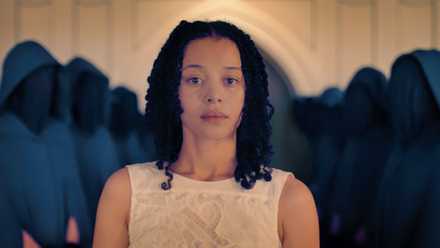

‘The Testaments’ premieres April 8 on Hulu.
When the possibility of playing Aunt Lydia originally came your way, what was it about her in those early days that most interested you about her, and how have your feelings about her changed with what you now know about her with this show?
DOWD: I think it’s important to say that one of the most important rules for an actor is no judgment. The way I interpreted her, what I focused on was, what is she doing? What does she want? What is she going to do to get what she wants? What’s in her way? Those are very basic questions. In other words, I was not judging her, calling her a villain, or saying that she’s evil. That’s not how I experienced her at all. Bruce Miller, our showrunner, said he thought she was a teacher, so I went back to my early days of education. I was educated by Catholic sisters, and they were not cruel. I say cruel in quotes because I don’t look at them as cruel, even though many people do. She did what she needed to do to get the job done, and these girls have no relationship with God, their language is atrocious, they’re living together unmarried, and they’ve had abortions. It was like, “What are we talking about here? With that, we’ve got a lot of work to do here, and it’s going to be intense, but that’s the way it is.”
What I learned from my Catholic sisters was about a work ethic, meaning you are not special. It was like, “Look around, you’re not special. You have a job to do, and you will do it to its completion, and that is the beginning and the end of it.” If we didn’t, I remember playing basketball after school in the gym and Sister Claude coming down and saying, “Follow me. Why do you think I’ve taken you off basketball practice? What do you think is going on?” And I would say, “Well, I guess I didn’t do my job.” And she would say, “That’s correct. We’d get to the back to the classroom and she pointed out, “What is that?” And I said, “It’s dust.” And she’d say, “What are you going to do with it?” I was like, “I’m going to sweep it up.” And she’d say, “That’s right. What is your job?” And I’d say, “My job is to sweep the room.” It was the kind of thing where it was ingrained in you not to think, for one moment, that you’re any better than anybody else because you’re not. You have a job to do, and you better do it well. That was really helpful with Lydia, in the beginning, when I was trying to find a way in. I loved her language. The way she was written, I thought was really so good, and I wanted to live up to it. I was really, really taken with her, right from the start.
Having worked with the cast of The Handmaid’s Tale for as long as you did, what was it like to work with this group of young women? What was it like to share scenes with them, work with them, and watch them work?
DOWD: Of course, I miss my colleagues from The Handmaid’s Tale. I loved each and every one of them. This group is just terrific. It’s been such a pleasure working with them, watching them work, and watching them in between shots. They’d be laughing and gossiping and giggling like sweet girls. Their acting is perfect. It’s really been a huge pleasure.
Ann Dowd Was Speechless When She Saw ‘The Testaments’ Aunt Lydia Statue
“I just thought, ‘What am I looking at?’”


How did you feel about the statue of you, or of Lydia? What was that like to see?
DOWD: I was speechless. I just thought, “What am I looking at?” It’s funny, as they were making it, they were taking so many pictures of me and I thought, “Why are they taking pictures? It’s not going to look like me.” Well, it does. I just thought, “How in the world did someone do that?”
And it looks like you from every angle, close-up and far away.
DOWD: It’s true. And the hunch in the back, I’m like, “Don’t let that be me.” I was stunned by it. I was impressed. They are pretty remarkable, whoever put that together.
Have they told you what happens to it when they’re done with it? Where will it go?
DOWD: It goes in my living room. Where could it possibly go, honestly? That’s so funny.
How do you think Lydia feels about it?
DOWD: I think she has a sense of humor about it. What did she say to Agnes? “Usually, they wait until people are dead, but I’m ahead of the game here.” She has a sense of humor about it and loves the little gifts. It’s very sweet, the oranges and the nice things that come underneath, keeping her aware of people’s love of her or attachment to her. She doesn’t take it terribly seriously. I think she’s like, “Okay, let’s not get carried away here.”

The spin-off also stars Lucy Halliday.
When you read the script for Episode 6, Lydia’s episode, what was your immediate reaction to what it would explore with her and the emotion of that?
DOWD: To go right to the part of the scene where we realize what’s important to Lydia, when she has the gun, and she has to make a choice to either shoot [Vidala] or not, and the notion of survival and how significant that is for Lydia, and fact that she would pull the trigger says so much. It was like, “Woah, what have we done here?” Even though there was no bullet in the gun, how are they ever going to mend and get through that? There’s nothing you can say. “I’m sorry” is worthless in that circumstance.
There’s an interesting moment, earlier on in the episode, when Lydia and the teachers look out the window in the door and they see the teacher shot in the head and drop to the floor, and that moment will forever change their lives. What was it like to be in the room with the other teachers that were there and to experience that, but not know what that would lead to next?
DOWD: It was shocking. It was beautifully shot and beautifully rehearsed. When it happened, just as you said, we’re trying to figure out what’s going on here. These guards have been around, but now it’s intense. What’s happening? How is it shifting? What’s going on? And we say to our colleague, “You go out and check, to see if you can get some kind of understanding of what’s going on here.” So, he asks a question, and then he’s shot in the head. That just tanked us all. We were floored by it, realizing this is where we’re at. This is no joke. They will shoot you as soon as look at you. It was a very, very powerful beginning to Gilead.
There is a distance and a separation with what happens in that moment because they’re on the other side of the door. And then, Lydia is in the stadium seeing what happens to the other women, but they’re still at a distance. And then, she’s brought down in front of them and that distance is completely taken away. I don’t know if any of that was intentional, but it feels very intentional in the way it builds to less and less distance from what’s happening.
DOWD: Absolutely, that’s a very, very good point. It just gets closer and there’s no way out. The main thing is survival.
What do you think fear to that extreme does, mentally and physically? The first time the blindfolded women are led out and made to kneel and all shot at once, what do you think that that does to Lydia and to all the women that are sitting there?
DOWD: I think it traumatizes to a degree that they will never ever forget or get over. It will remain with them, always. It’s so deeply and profoundly shocking and horrifying. Being in that stadium was incredibly helpful, experiencing what it was like to see those women. We were all sitting there at the end of a 16-hour day thinking, “They don’t get to go home. This is where they live.” The reality of it kept creeping in. It was incredibly helpful, shooting in that stadium and experiencing those things that they experienced, and just realizing, “Oh, my God, this is where we are. There’s no getting around this.”
At the start of the episode, Lydia and Vidala seem more like equals. They’re two women who happen to be co-workers, they’re both teachers, and they’re on more equal ground. And then, after the events of the episode, the power dynamic between them shifts forever. What was it like to find that relationship and to figure out how those past experiences would affect them in their present time? What did you most enjoy about exploring that relationship?
DOWD: I loved it. We see early in Episode 6 that Lydia has a thing about Vivian, which is her name. She doesn’t bring the coffee. She’s just such a good teacher that she can’t worry about anything other than how wonderful she is. Lydia is over her already. But I don’t know how you ever get beyond the decision to pull the trigger on someone. What does that do to their relationship? They don’t discuss it. Well, they do, eventually. But it’s deep within. Lydia knows that she’s going to survive. She knows, “I’m not going to be Aunt #5. If Vivian wants to do that, that’s her business. I want to be Aunt #1, and I’m going to do whatever it takes to get to that position. I don’t care where Vivian ends up. I will be #1, and I’m going to make sure, through Commander Judd, that that’s the direction we’re going in.”
That Shocking Moment Between Lydia and Vidala in the Stadium Was Extremely Powerful for ‘The Testaments’ Ann Down and Mabel Li
“We just had a very close friendship.”

The way that whole sequence plays out, with Lydia walking through the tunnel with a gun in her hand, walking over to the lineup of women, and then having Vidala’s blindfold removed so that they have to look at each other in that moment was a lot. What was all that like to shoot? What was that like to figure out?
DOWD: It was so powerful, the experience itself of walking down the tunnel with a gun. What is going to happen? The atmosphere was so good and so scary, and you felt like you were really in that situation. You were in the stadium, and you were in the middle of it. He takes off the blindfold, and you see your colleague, and you have to shoot her. I had to pull the trigger. Those were extremely powerful moments that really stayed with us. Before that happened, it was really nice that Mabel [Li], who plays Vivian, and I became very close shooting that episode. We spent a lot of time together, sitting in the stadium, experiencing for ourselves what it would be like to live there. We just had a very close friendship. I love Mabel. That’s what happened to us when we were working together. We grew to love each other in our friendship, and I’m very, very grateful for it. Everything was so close to you that you had to experience it. There was no way not to.
After everything that happens in the stadium, we see Lydia and Commander Judd again, as she essentially comforts him in the present when he loses his child. What was it like to have that relationship in the present, to bring in that history that they have and to know that he’s the one that put her in this position? Has she just resigned herself to the reality of her life, or do you think she secretly wishes she could just kill him with her bare hands? What do you think goes through her head?
DOWD: That’s a very good question. When she changes, and it’s all about survival, she commits and focuses there. She has an interesting relationship with Judd. They talk through things. There’s an odd friendship there. I think she does mean it when she comforts him. At that point, I think she accepts where she is in The Testaments. Worrying about the past and thinking about the past doesn’t do any good at all, so I think she stays present and therefore is able to comfort him and mean it.
Lydia says her biggest gripe with the old world was the emphasis on comfort, ease and convenience, and that everyone had become entitled little brats. There’s actually something to that thinking, in the sense that we all get used to certain conveniences and forget to appreciate things that come too easily. Do you see some logic in Lydia’s thinking, even if her approach is so extreme that no one would want to actually have to live that?
DOWD: I do kind of like her thoughts about that, with people acting like brats. That goes back to the Lydia that I came to know early on, with her work ethic. “You’re not special. Get the job done. Do it completely.” I think there is some logic to it. I just think she commits. It’s so huge, the changes. How much of it does she believe deep inside her? Does she believe that girls shouldn’t read or write? I bet somewhere deep inside her, she’s against that – to be trained only to be good wives, the husbands are in charge, being a good mother and homemaker, and all those things that keep you rooted to the home. Does she believe those things? That’s such a good question. She acts as though she does, deep in her core, but who knows?

How Does ‘The Handmaid’s Tale’s Series Finale Set Up ‘The Testaments’ Spin-off?
The fight has only just begun.
Lydia talks about knowing what you’ve done and knowing what you’ve allowed to be done. Do you think she’s someone with any guilt or regret?
DOWD: I think she took tremendous time to think about it, between The Handmaid’s Tale and The Testaments. I think she’s had a lot of time with herself to experience the shame and the deep regret, remorse, and begging for forgiveness. I think that’s hugely important to her. She sat with it for quite some time, and then asked herself, “Who do I wish to be?” She finally realized, “I love these girls. I’m not going to work for the Handmaids right now. I’m going to work with the daughters of High Commanders and Pearl Girls.” She commits fully to that. I did see that change in her. Between The Handmaid’s Tale and The Testaments, she had to have undergone a lot of thought and probably prayer to come to the place she’s in.
We know that Aunt Lydia had an abortion. Do you think if she hadn’t and she’d become a mother that it would have changed her? What kind of mother do you think she would have been?
DOWD: From what we see, with her love of the Handmaids and the love of the daughters of the High Commanders, I think she would have been a beautiful mother. I really do. What she’s been forced to take on and believe in and run her days with, it’s not who she is. It’s who she’s become to survive. But who is she, deeply? I honestly don’t know. But to answer your question, I think she would be a good mother. Do you?
I definitely think she could have been a good mother, especially if she had become a mother before all of the other things that she had to experience throughout The Handmaid’s Tale. Even watching the friendship develop between Lydia and Vidala, as they’re sitting in the stadium, made me see her in a different way. This series really challenges everything we know and previously thought about Lydia.
DOWD: That’s a very good point. Yes, I agree.
‘The Testaments’ Ann Dowd Believes Aunt Lydia Ultimately Wants To Shut Gilead Down
“She just takes her time.”

It’s very interesting that Lydia has decided to document everything and everyone and keep this book of Gilead’s secrets. Do you think that she did that with a plan to use it at some point and in some way?
DOWD: I don’t know for certain what the writers have in mind. These are thoughts that I have that could be very, very different when the time comes, and it’s going to take a lot of time to get there. Lydia doesn’t miss a thing. She is always paying attention, she’s alert, and she’s writing these things down because, at some point, she might be able to use these things. I think she ultimately wants to shut Gilead down. She’s not in that complete frame of mind right away. I think it grows over time. She just takes her time. She’s very, very patient. She’s just going to store that away where it’s safe, and no one’s going to know about it, and she’s not going to worry about it. She’s just going to pay attention. She has a lot of thoughts about what should happen with Gilead, and I think we’re going to see what those things are.
She certainly knows where the bodies are buried.
DOWD: Yes, thank you. I think that’s such a good point. She knows where the bodies are buried. You are absolutely right. Well said.
The Testaments is available to stream on Hulu.

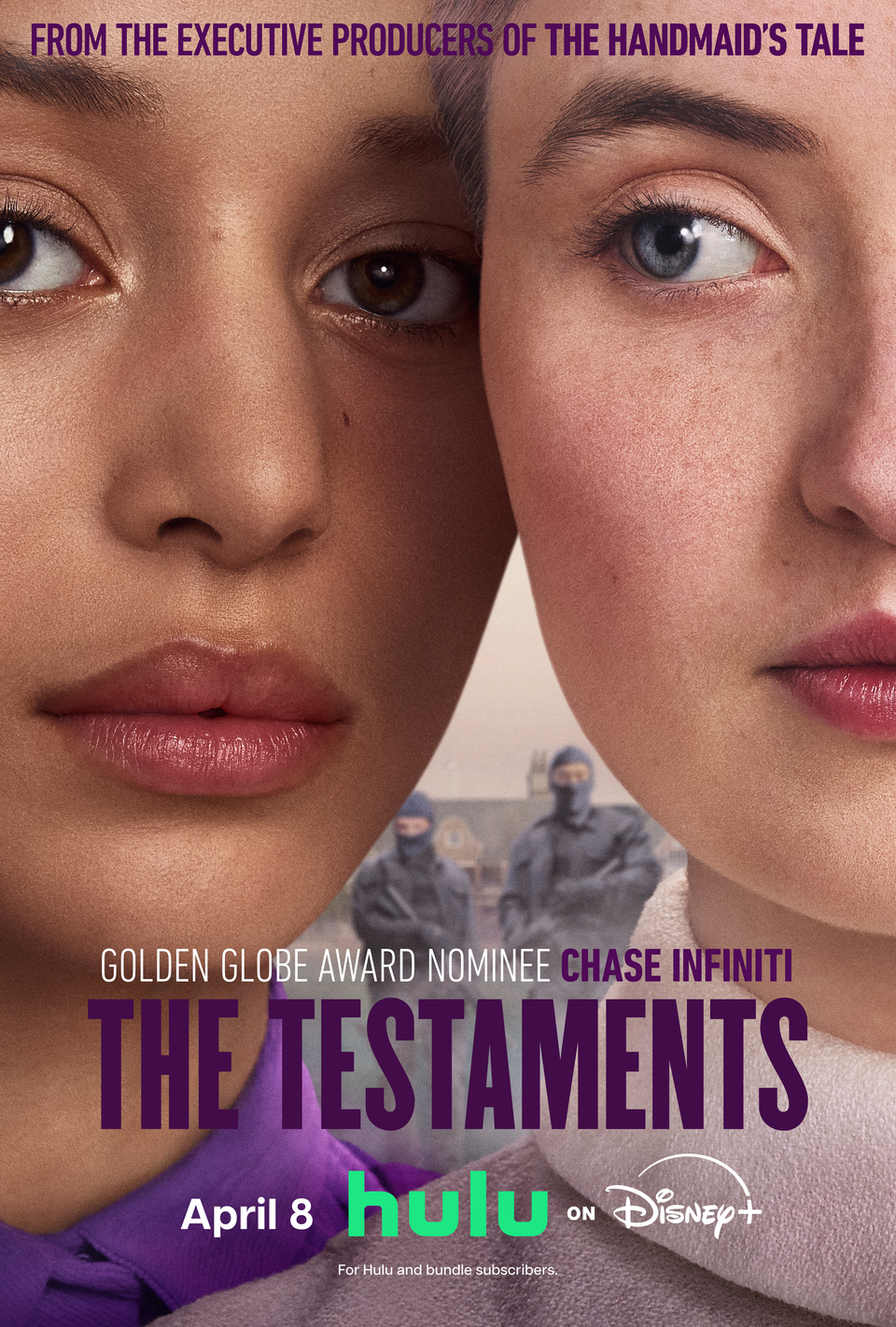
- Release Date
-
April 8, 2026
- Network
-
Hulu
- Showrunner
-
Bruce Miller
- Directors
-
Mike Barker
- Writers
-
Margaret Atwood


You must be logged in to post a comment Login