Laura Dern’s career has never been about one type of greatness. Dern has shown that she can fit inside anything from a literary period drama to a dinosaur blockbuster without feeling like the same performer dropped into different costumes. So the real argument is bigger than “Laura Dern is great in them.”
Dern has appeared in over 60 feature films since 1973 but these four films in here are masterpieces. They understand how to use her presence inside the larger machine of the film and more. Scroll down and find out.
Advertisement
4
‘Little Women’ (2019)
Image via Sony Pictures
Greta Gerwig’s Little Women retells Louisa May Alcott’s story through memory, money, ambition, sisterhood, and the painful question of how women build full lives when every choice comes with a cost. Marmee (Laura Dern) plays the mother of Jo March (Saoirse Ronan), Meg March (Emma Watson), Beth March (Eliza Scanlen), and Amy March (Florence Pugh). The role could easily fade into gentle background support because the daughters have the loudest dreams and conflicts. But that doesn’t happen here and Marmee remains central.
Her biggest moment comes when Jo admits her anger, and Marmee quietly reveals that she feels angry almost every day. That confession changes the way the whole performance reads. Marmee’s patience has struggle inside it. Her kindness comes from discipline, faith, exhaustion, and a clear understanding of how little room the world gives her daughters. Dern’s acting makes motherhood feel active and political without turning Marmee into a speech machine. She helps make Little Women feel alive across generations because the film respects both youthful hunger and adult restraint.
Advertisement
3
‘Marriage Story’ (2019)
Image Via Netflix
Marriage Story follows Nicole Barber (Scarlett Johansson) and Charlie Barber (Adam Driver) as their separation turns from a painful private decision into a legal fight that starts reshaping every feeling between them. Nora Fanshaw (Laura Dern) becomes Nicole’s lawyer. She listens to Nicole’s frustration about career, motherhood, marriage, and identity, then begins translating that pain into a strategy built to win.
Nora is fascinating and this character’s warmth has real usefulness and danger to it simultaneously. That comes off brilliant on screen. She comforts Nicole, flatters her, protects her, and pushes her toward a harder version of herself. Her monologue about the impossible standard placed on mothers hits so hard because the anger behind it feels earned. The brilliance of the movie is that Nora can say something true and still feed a system that makes everyone more ruthless. Dern, in Marriage Story, therefore, turns a supporting role into one of the sharpest portraits of modern divorce on screen.
Advertisement
Collider Exclusive · Oscar Best Picture Quiz Which Oscar Best Picture Is Your Perfect Movie? Parasite · Everything Everywhere · Oppenheimer · Birdman · No Country
Advertisement
Five Oscar Best Picture winners. Five completely different visions of what cinema can be — and what it can do to you. One of them is the film that was made for the way your mind works. Ten questions will figure out which one.
🪜Parasite
🌀Everything Everywhere
☢️Oppenheimer
🐦Birdman
Advertisement
🪙No Country for Old Men
Advertisement
01
What kind of film experience do you actually want? The best movies don’t just entertain — they leave something behind.
Advertisement
02
Which idea grabs you most in a film? Great films are driven by a central obsession. What’s yours?
Advertisement
03
How do you like your story told? Form is content. The way a story is shaped changes what it means.
Advertisement
04
What makes a truly great antagonist? The opposition defines the protagonist. What kind of opposition fascinates you?
Advertisement
05
What do you want from a film’s ending? The final note is the one that lingers. What do you want it to sound like?
Advertisement
06
Which setting pulls you in most? Where a film takes place shapes everything — mood, stakes, what’s even possible.
Advertisement
07
What cinematic craft impresses you most? Every great film has a signature — a technical or artistic element that makes it unmistakable.
Advertisement
08
What kind of main character do you root for? The protagonist is the lens. Who you choose to follow says something about you.
Advertisement
09
How do you feel about a film that takes its time? Pace is a choice. Some films sprint; others let tension accumulate slowly, deliberately.
Advertisement
10
What do you want to feel walking out of the cinema? The best films leave a mark. What kind of mark do you want?
Advertisement
The Academy Has Decided Your Perfect Film Is…
Your answers have pointed to one Oscar Best Picture winner above all others. This is the film that was made for the way your mind works.
Advertisement
Parasite
You are drawn to films that operate on multiple levels simultaneously — that begin in one genre and quietly, brilliantly migrate into another. Bong Joon-ho’s Parasite is a film about class, desire, and the architecture of inequality that manages to be darkly funny, deeply suspenseful, and genuinely shocking across a single extraordinary running time. Your instinct is for cinema that hides its true intentions until the moment it’s ready to reveal them. Parasite is exactly that — a film that rewards close attention and punishes assumptions, right up to its devastating final image.
Advertisement
Everything Everywhere All at Once
You want it all — and this film gives you all of it. The Daniels’ Everything Everywhere All at Once is one of the most maximalist films ever made: action comedy, multiverse sci-fi, family drama, existential crisis, and a genuinely earned emotional core that sneaks up on you amid the chaos. You are someone who responds to ambition, who doesn’t want cinema to choose between being entertaining and being meaningful. This film refuses that choice entirely. It is overwhelming by design, and its overwhelming nature is precisely the point — because the feeling of being crushed by infinite possibility is exactly what it’s about.
Advertisement
Oppenheimer
You are drawn to cinema on a grand scale — films that understand history not as a backdrop but as a force, and that place their characters inside that force and watch what happens. Christopher Nolan’s Oppenheimer is a film about the terrifying gap between what we can do and what we should do, told with the full weight of one of the most consequential moments in human history behind it. You want your films to feel important without feeling self-important — to earn their ambition through sheer craft and the gravity of their subject. Oppenheimer does exactly that. It is enormous, complicated, and refuses easy comfort.
Advertisement
Birdman
You are drawn to films that foreground their own construction — that make the how of the filmmaking part of the what it’s about. Alejandro González Iñárritu’s Birdman, shot to appear as a single continuous take, is cinema examining itself through the cracked mirror of a fading actor’s ego. You respond to formal daring, to the feeling that a film is doing something that probably shouldn’t be possible. Michael Keaton’s performance and Emmanuel Lubezki’s restless camera create something genuinely unlike anything else — a film that is simultaneously about creativity, relevance, self-destruction, and the impossibility of ever truly knowing if your work means anything at all.
Advertisement
No Country for Old Men
You are drawn to cinema that trusts silence, that refuses to explain itself, and that treats dread as a form of meaning. The Coen Brothers’ No Country for Old Men is a film about the arrival of a new kind of evil — implacable, arbitrary, and utterly indifferent to the moral frameworks we use to make sense of the world. It is one of the most formally controlled films ever made, and its controlled restraint is what makes it so terrifying. You want your films to haunt you, not comfort you. You are not interested in resolution if resolution would be dishonest. No Country for Old Men is honest in a way that most cinema never dares to be.
Advertisement
2
‘Blue Velvet’ (1986)
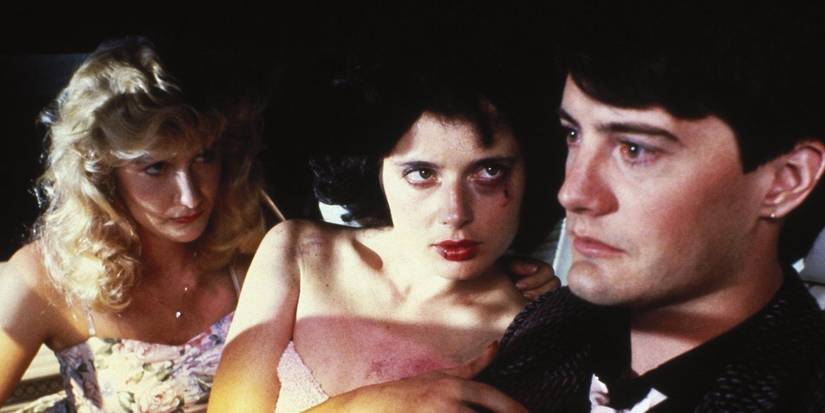
Laura Dern and Isabella Rossellini looking over at Kyle MacLachlan in ‘Blue Velvet’Image via De Laurentiis Entertainment Group
Advertisement
David Lynch’s Blue Velvet begins with the image of clean American suburbia and then drags Jeffrey Beaumont (Kyle MacLachlan) into the violence, desire, and sickness hiding underneath it. Sandy Williams (Laura Dern) is the police detective’s daughter who helps Jeffrey understand the first pieces of the mystery. She could have been a simple symbol of innocence beside Dorothy Vallens (Isabella Rossellini)’ suffering and Frank Booth (Dennis Hopper)’s terror. But she has more than that. Sandy has enough curiosity, fear, intelligence, and romantic hope to make her feel like a real teenager caught near something poisonous.
That matters because Blue Velvet needs Sandy’s belief in goodness to make the darkness hurt. Her dream about robins bringing light back into the world sounds almost fragile against the movie’s brutality, but Dern makes the fragility meaningful. Sandy watches Jeffrey become more fascinated by the nightmare he claims to be investigating. She feels the moral danger before he fully understands it. Through her, the film becomes more than a descent into evil. It becomes a story about how evil stains the people who keep staring at it.
1
‘Jurassic Park’ (1993)
Ellie Sattler (Laura Dern) looks off into the distance while lit from behind in Jurassic Park.Image via Universal Pictures
Advertisement
Steven Spielberg’s Jurassic Park is one of the cleanest examples of blockbuster filmmaking ever made: the concept is instantly exciting, the dinosaurs still feel miraculous, and every major set piece has perfect rhythm. Ellie Sattler (Laura Dern) is the paleobotanist invited to inspect John Hammond (Richard Attenborough)’s island park before it opens to the public. She arrives as a scientist excited by the impossible, then quickly becomes one of the few people who understands that wonder without responsibility turns dangerous.
Ellie’s greatness comes from how much she actually does. She studies the plants, investigates the sick Triceratops, challenges Hammond’s fantasy of control, protects the kids, and risks her life to help restore power when the park collapses. Dern gives the character fear, humor, authority, and physical urgency. Jurassic Park has the T. rex, the raptors, the music, and the awe, but Ellie gives the film one of its strongest human arguments: intelligence and courage matter most when the miracle starts trying to kill you.




You must be logged in to post a comment Login