Brendan Fraser‘s career is one of Hollywood’s most remarkable stories. Throughout the 90s and early 2000s, he established himself as one of the industry’s most charismatic leading men, effortlessly bouncing between action blockbusters, broad comedies, heartfelt family films, and thoughtful dramas. Then, after years away from the spotlight, Fraser made an extraordinary comeback (with an Oscar in tow) that reminded audiences of the talent they had almost forgotten.
Of course, what makes Fraser’s filmography so enduring is its remarkable range. He could carry a globe-trotting adventure with effortless charm, throw himself headfirst into an outrageous comedy, or deliver deeply emotional dramatic performances with equal conviction. But most importantly, he carries an unmistakable sincerity to every role he plays, making him impossible not to root for. So, for those wanting to go through a good nostalgia hit, why not check out the best of these Brendan Fraser classics?
Advertisement
5
Bedazzled (2000)
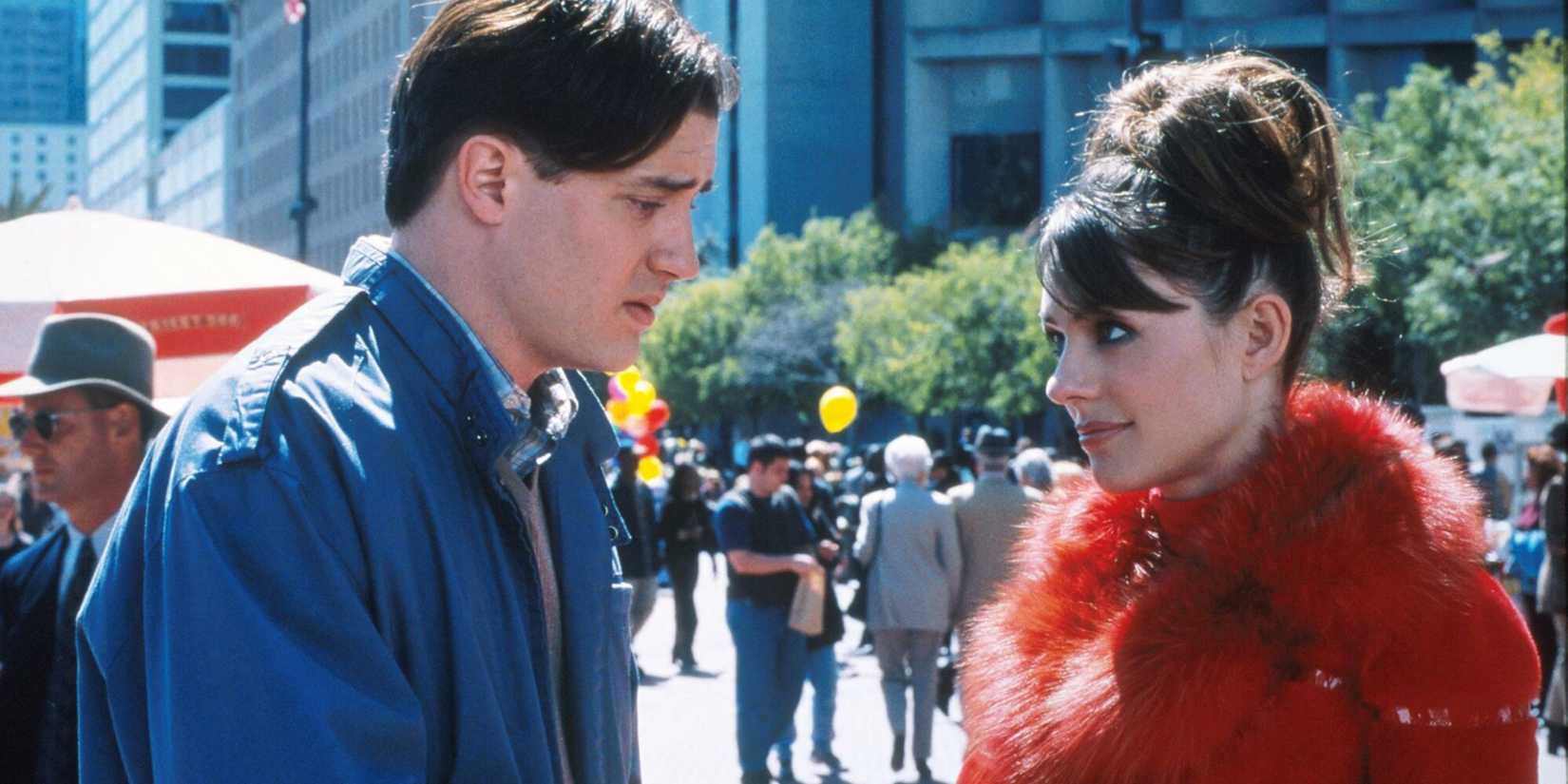
Elliot (Fraser) and the Devil (Hurley) standing in a park in BedazzledImage via 20th Century Studios
Elliot Richards (Fraser) is a painfully awkward office worker who’s hopelessly in love with his colleague Alison (Frances O’Connor). And after a chance encounter with a charming Devil (Elizabeth Hurley), Elliot agrees to trade seven years of his soul in exchange for seven wishes that he believes will win him the life of his dreams. Unfortunately for him, every wish backfires as they always come with a comical twist.
Asone of Fraser’s most underrated comedies, Bedazzledstands out as it showcases his wide range of talents, given that every new wish transforms him into a completely different character. Whether it’s an egotistical basketball star, an impossibly sensitive intellectual, or an overconfident crime boss, Fraser commits wholeheartedly to every moment of absurdity. His fearless comedy and willingness to make himself the butt of the joke make the film an extremely fun watch, while the story’s underlying message about self-worth gives it an unexpected amount of heart. Sure, it may not receive the same recognition as his other hits, but it deserves your attention, especially as it holds tons of 2000s charm.
Advertisement
4
Gods and Monsters (1998)
Brendan Fraser standing next to Ian McKellen outside in Gods and MonstersImage via Lionsgate Films
Set in the fictional final years of filmmaker James Whale‘s (Sir Ian McKellen) life, the retired Frankensteindirector finds himself developing an unlikely friendship with his young gardener, Clayton Boone (Fraser). But as Whale’s health deteriorates and painful memories resurface, Boone slowly gains insight into the loneliness, regrets, and extraordinary life of one of Hollywood’s most influential directors.
While McKellen deservedly received praise for his performance, Fraser provides the emotional counterbalance that makes Gods and Monsters such an affecting film. Boone could’ve been the mere “observer”, but Fraser imbues him with compassion, decency, and a quiet complexity that leave audiences hooked as he uncovers the truth behind the revered artist. Frankly, it’s a performance that served as an early indicator of Fraser’s dramatic chops. Elegant, deeply humane, and emotionally devastating, this is a great biopic that people should watch at least once in their life.
Advertisement
Collider Exclusive · Oscar Best Picture Quiz Which Oscar Best Picture Is Your Perfect Movie? Parasite · Everything Everywhere · Oppenheimer · Birdman · No Country
Advertisement
Five Oscar Best Picture winners. Five completely different visions of what cinema can be — and what it can do to you. One of them is the film that was made for the way your mind works. Ten questions will figure out which one.
🪜Parasite
🌀Everything Everywhere
☢️Oppenheimer
🐦Birdman
Advertisement
🪙No Country for Old Men
Advertisement
01
What kind of film experience do you actually want? The best movies don’t just entertain — they leave something behind.
Advertisement
02
Which idea grabs you most in a film? Great films are driven by a central obsession. What’s yours?
Advertisement
03
How do you like your story told? Form is content. The way a story is shaped changes what it means.
Advertisement
04
What makes a truly great antagonist? The opposition defines the protagonist. What kind of opposition fascinates you?
Advertisement
05
What do you want from a film’s ending? The final note is the one that lingers. What do you want it to sound like?
Advertisement
06
Which setting pulls you in most? Where a film takes place shapes everything — mood, stakes, what’s even possible.
Advertisement
07
What cinematic craft impresses you most? Every great film has a signature — a technical or artistic element that makes it unmistakable.
Advertisement
08
What kind of main character do you root for? The protagonist is the lens. Who you choose to follow says something about you.
Advertisement
09
How do you feel about a film that takes its time? Pace is a choice. Some films sprint; others let tension accumulate slowly, deliberately.
Advertisement
10
What do you want to feel walking out of the cinema? The best films leave a mark. What kind of mark do you want?
Advertisement
The Academy Has Decided Your Perfect Film Is…
Your answers have pointed to one Oscar Best Picture winner above all others. This is the film that was made for the way your mind works.
Advertisement
Parasite
You are drawn to films that operate on multiple levels simultaneously — that begin in one genre and quietly, brilliantly migrate into another. Bong Joon-ho’s Parasite is a film about class, desire, and the architecture of inequality that manages to be darkly funny, deeply suspenseful, and genuinely shocking across a single extraordinary running time. Your instinct is for cinema that hides its true intentions until the moment it’s ready to reveal them. Parasite is exactly that — a film that rewards close attention and punishes assumptions, right up to its devastating final image.
Advertisement
Everything Everywhere All at Once
You want it all — and this film gives you all of it. The Daniels’ Everything Everywhere All at Once is one of the most maximalist films ever made: action comedy, multiverse sci-fi, family drama, existential crisis, and a genuinely earned emotional core that sneaks up on you amid the chaos. You are someone who responds to ambition, who doesn’t want cinema to choose between being entertaining and being meaningful. This film refuses that choice entirely. It is overwhelming by design, and its overwhelming nature is precisely the point — because the feeling of being crushed by infinite possibility is exactly what it’s about.
Advertisement
Oppenheimer
You are drawn to cinema on a grand scale — films that understand history not as a backdrop but as a force, and that place their characters inside that force and watch what happens. Christopher Nolan’s Oppenheimer is a film about the terrifying gap between what we can do and what we should do, told with the full weight of one of the most consequential moments in human history behind it. You want your films to feel important without feeling self-important — to earn their ambition through sheer craft and the gravity of their subject. Oppenheimer does exactly that. It is enormous, complicated, and refuses easy comfort.
Advertisement
Birdman
You are drawn to films that foreground their own construction — that make the how of the filmmaking part of the what it’s about. Alejandro González Iñárritu’s Birdman, shot to appear as a single continuous take, is cinema examining itself through the cracked mirror of a fading actor’s ego. You respond to formal daring, to the feeling that a film is doing something that probably shouldn’t be possible. Michael Keaton’s performance and Emmanuel Lubezki’s restless camera create something genuinely unlike anything else — a film that is simultaneously about creativity, relevance, self-destruction, and the impossibility of ever truly knowing if your work means anything at all.
Advertisement
No Country for Old Men
You are drawn to cinema that trusts silence, that refuses to explain itself, and that treats dread as a form of meaning. The Coen Brothers’ No Country for Old Men is a film about the arrival of a new kind of evil — implacable, arbitrary, and utterly indifferent to the moral frameworks we use to make sense of the world. It is one of the most formally controlled films ever made, and its controlled restraint is what makes it so terrifying. You want your films to haunt you, not comfort you. You are not interested in resolution if resolution would be dishonest. No Country for Old Men is honest in a way that most cinema never dares to be.
Advertisement
3
George of the Jungle (1997)
Advertisement
After being raised by animals following a childhood plane crash, the lovable but hopelessly naïve George (Fraser) spends his days swinging through the jungle with his animal friends. But his peaceful existence is suddenly disrupted when he rescues San Francisco socialite Ursula Stanhope (Leslie Mann), eventually following her back to civilization where he struggles to adapt to a world that makes even less sense than the jungle.
On paper, George of the Junglecould’ve remained as your typical goofy family comedy. Instead, Fraser’s complete commitment transforms the film into something genuinely delightful (abs aside). Throwing himself into the physical comedy with infectious enthusiasm, he makes sure that George remains endlessly adored and sincere rather than simply ridiculous. His natural earnestness allows every joke to land perfectly as audiences are laughing with George, not at him (at least most of the time). Add in the film’s wonderfully self-aware narrator, clever visual gags, sweet romance, and an irresistible sense of fun, and it’s easy to understand why generations continue to revisit this 90s favorite.
2
School Ties (1992)
Ensemble cast of School Ties on a cropped poster
Image via Paramount Pictures
Advertisement
Set in an elite New England prep school in the 1950s, David Greene (Fraser), a gifted football player, earns a scholarship despite coming from a working-class background. Initially welcomed by his wealthy classmates, David’s popularity begins to unravel when they discover the truth behind his faith, exposing the deep-rooted prejudice lurking beneath the school’s polished exterior.
While School Tiesis undeniably a sports movie, its lasting impact comes not from a final match victory, but from its thoughtful examination of discrimination, privilege, and moral courage. Fraser anchors the film through one of his most emotionally resonant performances, by playing David not as an untouchable hero, but a character with vulnerability, quiet dignity, and a growing sense of isolation that becomes increasingly heartbreaking as the story unfolds. The filmalso benefits from an extraordinary young ensemble that features the likes of Matt Damon, Ben Affleck, Chris O’Donnell, and Cole Hauser. A true catapult of phenomenal careers.
Advertisement
1
The Mummy (1999)
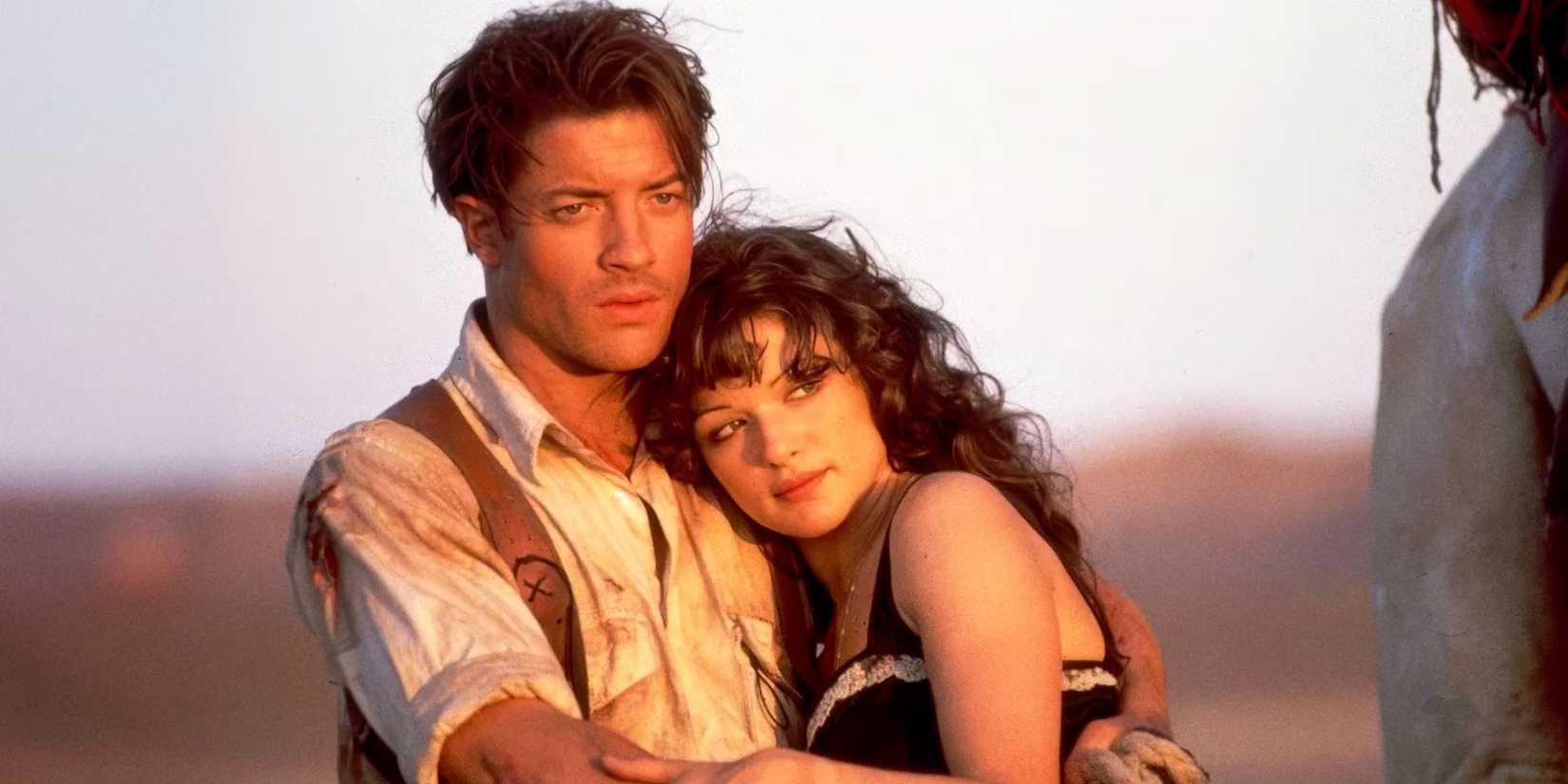
Rachel Weisz and Brendan Fraser in 1999’s The Mummy.Image via Universal Pictures
When librarian Evelyn Carnahan (Rachel Weisz) uncovers the location of the lost city of Hamunaptra, she recruits charming adventurer Rick O’Connell (Fraser) to guide an expedition into the Egyptian desert. But their treasure hunt accidentally awakens Imhotep (Arnold Vosloo)—an ancient high priest cursed for centuries—unleashing a supernatural force determined to reclaim his lost love and bring devastation to the modern world.
It’s impossible to talk about Fraser’s career without mentioning The Mummy. For one, Rick O’Connell remains one of the great cinematic blockbuster heroes simply because Fraser effortlessly balances rugged action-star charisma with self-deprecating humor and genuine warmth. He’s believable in a fistfight one minute and delivering a perfectly timed comedic line the next. More importantly, the film itself captures a sense of epic adventure that most modern blockbusters often struggle to replicate. Blending horror, comedy, romance, and action into one endlessly entertaining package, The Mummy has only grown more beloved over the years—and will (hopefully) continue to do so through the long-awaited fourth installment.








You must be logged in to post a comment Login