Entertainment
These 8 Movie Trilogies Are a Masterclass in Tension

Sometimes we seek out movies that are lighthearted and easy to watch. Then, there are those of us who love to get our blood pumping and adrenaline rushing. Whether through a juicy horror thriller, a high-octane action flick, or a tantalizing sci-fi film, if the film is intense, we’re happy. But what if there are trilogies that deliver tension from start to finish? Turn on the TV and prepare to be stressed!
We are here to celebrate eight film franchises that are masterclasses in tension. These films might require your blood pressure to be checked upon completion. Our list will include game-changing sci-fi action flicks, action-packed superhero stories, and sensational spy thrillers. If you spend your weekend binging these fantastic trilogies, you might need something soothing to calm your senses afterward.
1
‘Evil Dead’ Trilogy


Long before Sam Raimi entertained the world with a near-perfect Spider-Man trilogy, he delighted horror fans with the cult classic Evil Dead trilogy. The trilogy chronicles the horrific and darkly comedic misadventures of Ashley “Ash” Williams (Bruce Campbell) as he battles demonic entities released from an ancient Sumerian book. Throughout the films, Ash transforms from an ordinary guy into a chainsaw-wielding, shotgun-blasting icon. The trilogy unfolds as an evolving saga of survival, madness, and time travel. In the 1981 film, five college students vacation at an isolated cabin in the woods, where they discover the inciting Book of the Dead. As the sole survivor, Evil Dead II follows Ash as he returns to the cabin with his girlfriend, Linda (Denise Bixler), only for the demon to haunt her and his own right hand, causing him to chop it off and replace it with a chainsaw. Picking up after the second film, in Army of Darkness, Ash is sucked back in time by a vortex to 1300 A.D., where he is seen as a savior who must battle the army of the undead. Though they may be stylistically different, Ash’s adventures are high-octane entertainment that doesn’t skimp on blood and gore.
What makes this trilogy unique is how they evolve. The first film is pure horror. The second moves into slapstick horror, utilizing the franchise’s signature dark, chaotic humor. By the third film, it’s fully evolved into a fantasy-comedy adventure. The Evil Dead trilogy is a wildly entertaining ride defined by its iconic protagonist. From scared college student to a chainsaw-wielding, one-liner-spouting badass, Ash anchors the film. His adventures are full-throttle and unrelenting. Through Raimi’s dizzying camera work, he simulates the presence of the demonic entity. He uses the famous shaky cam and low-angle propulsive tracking shots to depict the monster itself. With aggressive direction, Raimi keeps the audience in a place of unnerving restlessness. He even masters the balance of claustrophobic quiet and explosive, chaotic violence. The terror is practical and tactical. The jump scares are active. From start to finish, no matter the genre, the Evil Dead trilogy is an escalation in tension.
2
‘Fear Street’ Trilogy


If there is any trilogy that properly depicts the true evolution of horror, it’s Netflix’s Fear Street trilogy. Based on R.L. Stine’s book series of the same name, it follows a group of teenagers in the cursed town of Shadyside, who must uncover the centuries-old secrets of a legendary witch to stop a recurring cycle of mass murders. Set across three distinct times—Part One: 1994, Part Two: 1978, and Part Three: 1666—Fear Street’s eras pay homage to different styles of horror cinema while delivering the spooks and scares from start to finish. Fear Street successfully blends nostalgic 90s slasher thrills with a deep, serialized curse mythology by tackling a multi-generational curse in reverse. Rather than a collection of random kills, the story of Shadyside and its rivalry with affluent Sunnyvale is a captivating, overarching mystery with a satisfying payoff.
The films evolve in tone, shifting from the Scream-inspired, high-energy terror of 1994 to the gritty Friday the 13th camp aesthetic of 1978, and finally ending with a dark period piece set in 1666. Though the frights are at the forefront, the trilogy is anchored by strong interpersonal relationships. From the central queer romance between Deena Johnson (Kiana Madeira) and Sam Fraser (Olivia Scott Welch) to the complex sibling bond of Nick (Ashley Zukerman) and Will Goode (Matthew Zuk), the characters drive the action. You care for the characters, so when you’re met with the relentless dread of classic slashers with deep, generational lore, the franchise sustains nail-biting suspense across 300 years of history. Knowing that the stakes are cyclical and that plot armor proves no one is safe, the audience’s foreknowledge of who survives makes the immediate chase sequences terrifying. Fear Street keeps you on your toes. Just be sure to watch in release order, please.
3
‘Planet of the Apes’ Reboot Trilogy

Depending on your vantage of the original iteration of Planet of the Apes, you might find it hokey. But it was an important part of the evolution of science fiction cinema. Then, when Tim Burton’s version arrived, it played by the same playbook, yet became even more unintentionally comical. Then, one last reboot came in 2011, and finally, the masterpiece was born. Beginning with Rise of the Planet of the Apes, the franchise chronicles the fall of humanity and the concurrent rise of an intelligent ape civilization. Centering on Caesar (Andy Serkis), a hyper-intelligent chimpanzee, as he breaks free from captivity and is tested in order to liberate his fellow apes. In Dawn of the Planet of the Apes, Caesar leads a thriving, peaceful colony of evolved apes hidden in the redwood forests, only to fall into a devastating war against extremist humans and apes. In the conclusion, War for the Planet of the Apes, the apes are locked in an intense, grueling conflict with a ruthless human military faction known as Alpha-Omega. Caesar battles his own darker instincts to exact revenge on the human leader (Woody Harrelson).
Elevating a classic sci-fi premise into a deeply emotional, character-driven epic, the reboot enhanced the story through incredible advanced CGI that gave the apes genuine emotions, with their faces showcasing them all. By making the apes less human and more life-like, the narrative earns stronger stakes. You have an emotional attachment to both humans and animals because you can emotionally relate to their hurt, pain, and joy. This is not a good vs. evil story; the reboot presented a morally grey area driven by survival, fear, and prejudice in which empathy arrives on both sides. With such brilliant stories that ultimately tie together, the Planet of the Apes trilogy is not only highly entertaining but also extraordinary in its action. All built around core emotions. The trilogy proved that science fiction action thrillers can evolve into something genially profound.
4
The Bourne Trilogy
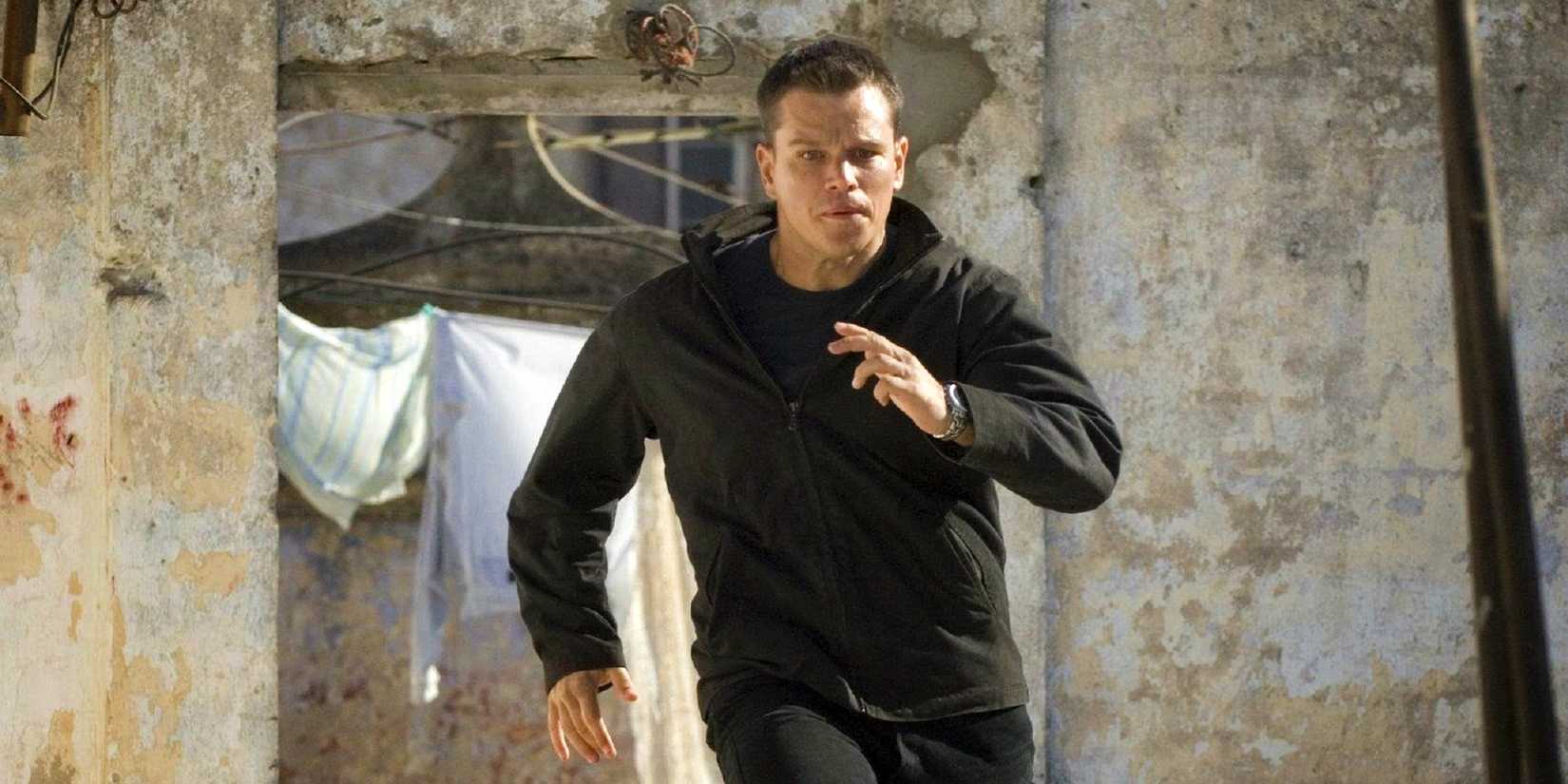
If the premise of the first film doesn’t stress you out, I’m not quite sure what will. Based on the character created by Robert Ludlum, the Bourne trilogy revolves around Jason Bourne (Matt Damon), an amnesic super-assassin trying to uncover his identity and survive rogue intelligence programs hunting him. Across the first three films in the broader franchise, a celebrated, cohesive arc follows Bourne on an unrelenting run around the world. Comprised of The Bourne Identity, The Bourne Supremacy, and The Bourne Ultimatum, Bourne is an unconventional anti-hero played by the non-traditional action star, and yet, it was a match made in heaven. Bourne operates as an empathetic, tortured individual on an emotional journey to discover the truth to keep himself alive. The Bourne trilogy redefined the espionage genre, swapping out moments of fantastical camp for grounded, gritty realism.
A major factor in the film’s success is the intense stunts. Whether it was action-packed hand-to-hand combat or epic car chases with real-world vehicles, the action heightened the tension throughout the film. But none of that would have resonated had it not been for the smart storytelling with its paranoiac direction. With fast-paced editing and flawless shaky-cam cinematography, the techniques immersed its viewers in the street-level action. It’s a frantic, chaotic experience that allows the audience to feel as if they’re on the run with the titular character. And yet, the controlled chaos gave the story the legs to stand on. Unlike many spy thrillers, the Bourne trilogy opts for sound over score. Every boom and pow can be heard, almost as if you can feel it without the music-filled underscoring taking focus. The films escalate brilliantly. After Bourne regains his past through a journey of literal self-discovery, the sequels elevate the narrative into an unrelenting global manhunt, bringing the story to full closure.
5
The Dark Knight Trilogy
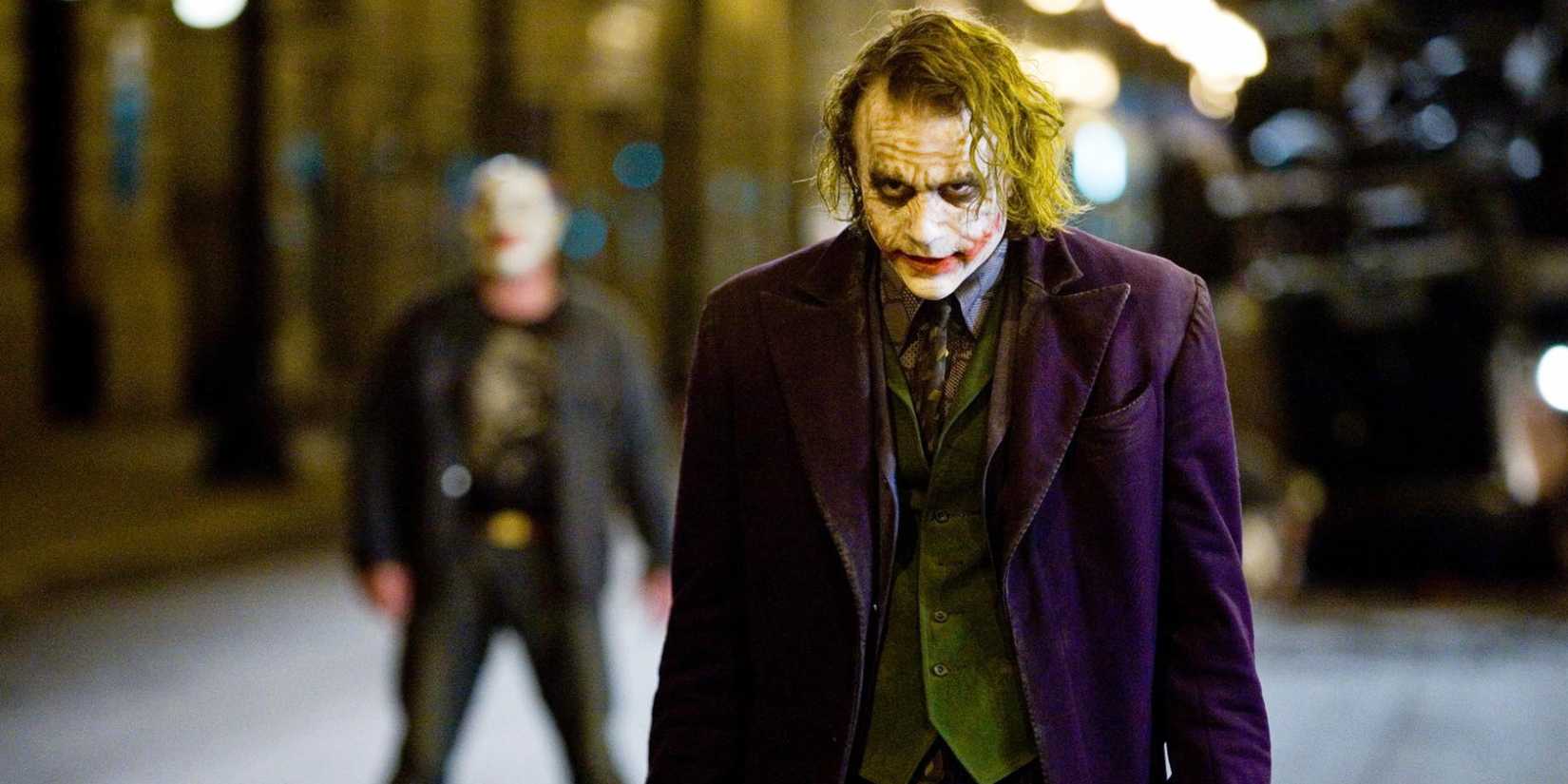
Often, we think that superhero film adaptations should have an aura of a comic book to them. At least that’s what we were led to believe in the late ’80s and ’90s with the Batman films. They were dark enough, but still had a hint of comic campiness. Then, Christopher Nolan arrived and stripped that all away with his masterpiece The Dark Knight trilogy. In a gritty, real-world take, billionaire Bruce Wayne (Christian Bale) transforms from a traumatized, vengeful orphan into Gotham’s greatest protector, fighting systemic corruption, pure chaos, and ultimate destruction to save his city. Set in a hyperrealistic Gotham City, the Dark Knight trilogy showcases a man with no superpowers fighting a cavalcade of iconic villains with true grit, tactical intellect, and cutting-edge technology. Comprised of Batman Begins, The Dark Knight, and The Dark Knight Rises, there may not be a greater superhero trilogy in history.
The Dark Knight trilogy moves beyond the standard superhero tropes. Nolan taps into complex themes of justice, corruption, sacrifice, and the toll that vigilantism takes on the human psyche. By giving audiences an emotional journey to watch, the Caped Crusader takes on a whole new cinematic identity. There are certainly extraordinary physical brawls within the three films, but it’s the psychological battles that triumph. Especially in the case of Heath Ledger‘s award-winning take on the Joker. The second film is almost stripped of large-scale action to make way for a mega clash of ideology. Watching the brilliant Batman nearly taken down by a sinister mastermind is tension at its finest. Gotham City was always under attack, but not as threatened as it is in this trilogy. The threat of anarchy led viewers to believe that the city was not only impenetrable but also nearly overrun by the bad guys for good. Nolan’s direction not only reshaped the DC IP but the entire superhero genre for good.
6
‘The Matrix’ Trilogy
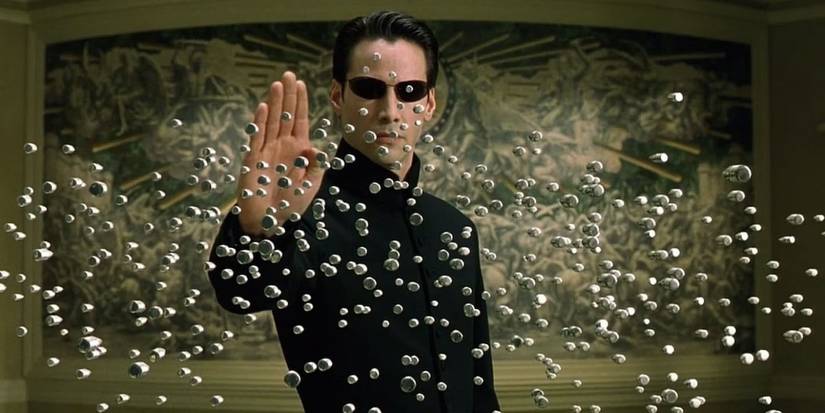
Very few films have the power to recalibrate an entire genre of cinema, but anything seemed possible when the Wachowskis gave the world the chance to enter The Matrix. The cyberpunk sci-fi action thriller franchise follows a hacker named Neo (Keanu Reeves) who soon discovers that humanity’s reality is a complex computer simulation called the Matrix. Built by intelligent machines, the simulation keeps humanity pacified while using their bodies as a power source. Neo joins a rebellion led by Morpheus (Laurence Fishburne) and Trinity (Carrie-Anne Moss) to free humanity and stop the machines. The epic story, made up of The Matrix, The Matrix Reloaded, and The Matrix Revolutions, blends action with deep philosophical themes that build across the films.
The Matrix is a masterclass of tension: while the Wachowskis entertain you with groundbreaking cinematic innovations, it’s the philosophical idea that our lives might be merely a simulation this whole time. There is an innate claustrophobic, life-or-death peril. There is constant dread within the Matrix, from rogue agents in the simulation to an all-out rage against the machines. The action is unrelenting, especially as the rules constantly shift. The Wachowskis keep viewers on their toes as the rules of the simulation constantly change, causing Neo to continually adapt to his surroundings. What’s worse than a rapidly multiplying Agent Smith (Hugo Weaving)? Perhaps the most intense element of The Matrix is the weight of choice. We watch characters become nearly paralyzed by moral dilemmas— namely, the decision of personal sacrifice for the greater good and questioning the illusion of free will. As much as the bullet time bent our minds, The Matrix is much bigger than it.
7
The Millennium Trilogy

One of the most highly anticipated page-to-screen adaptations in America was Stieg Larsson‘s The Girl with the Dragon Tattoo. But wouldn’t you know it, the American version is not the first version. In fact, the Swedish version arrived first, alongside The Girl Who Played with Fire and The Girl Who Kicked the Hornets’ Nest. The highly successful Millennium movie trilogy centers on Mikael Blomkvist (Michael Nyqvist), an investigative journalist, and Lisbeth Salander (Noomi Rapace), a brilliant but antisocial computer hacker, as they unravel dark conspiracies, corruptions, and serial murders. The interconnecting films tackle a range of themes, including corporate greed, abuse of power, systemic misogyny, and justice. With a raw, unflinching tone, the film’s portrayal of the unparalleled alliance of the iconic protagonists delivers a heart-pounding blend of intimate mystery and sprawling political thriller.
There is nothing sleek about these Swedish films. And that’s a good thing. Rather than rely on polish you might find in a Hollywood drama, the trilogy relies on a stark, oppressive Scandinavian atmosphere. It allows the ground-level themes to resonate more practically. The films works wonderfully as a compelling arc that builds upon itself. The first film operates as a tight, isolated family mystery. The second and third films then shift into an expansive espionage and legal-conspiracy thriller that brings closure to Lisbeth’s traumatic past introduced in the first film. The high-stakes threats are a ticking clock of abuse. The series revolves around the “men who hate women” overarching theme, presented in an exceptional manner. Directed by Daniel Alfredson and Niels Arden, the Millennium trilogy is rightly suffocating. No offense to David Fincher for his interpretation of The Girl with the Dragon Tattoo, but he was outmatched.
8
Vengeance Trilogy
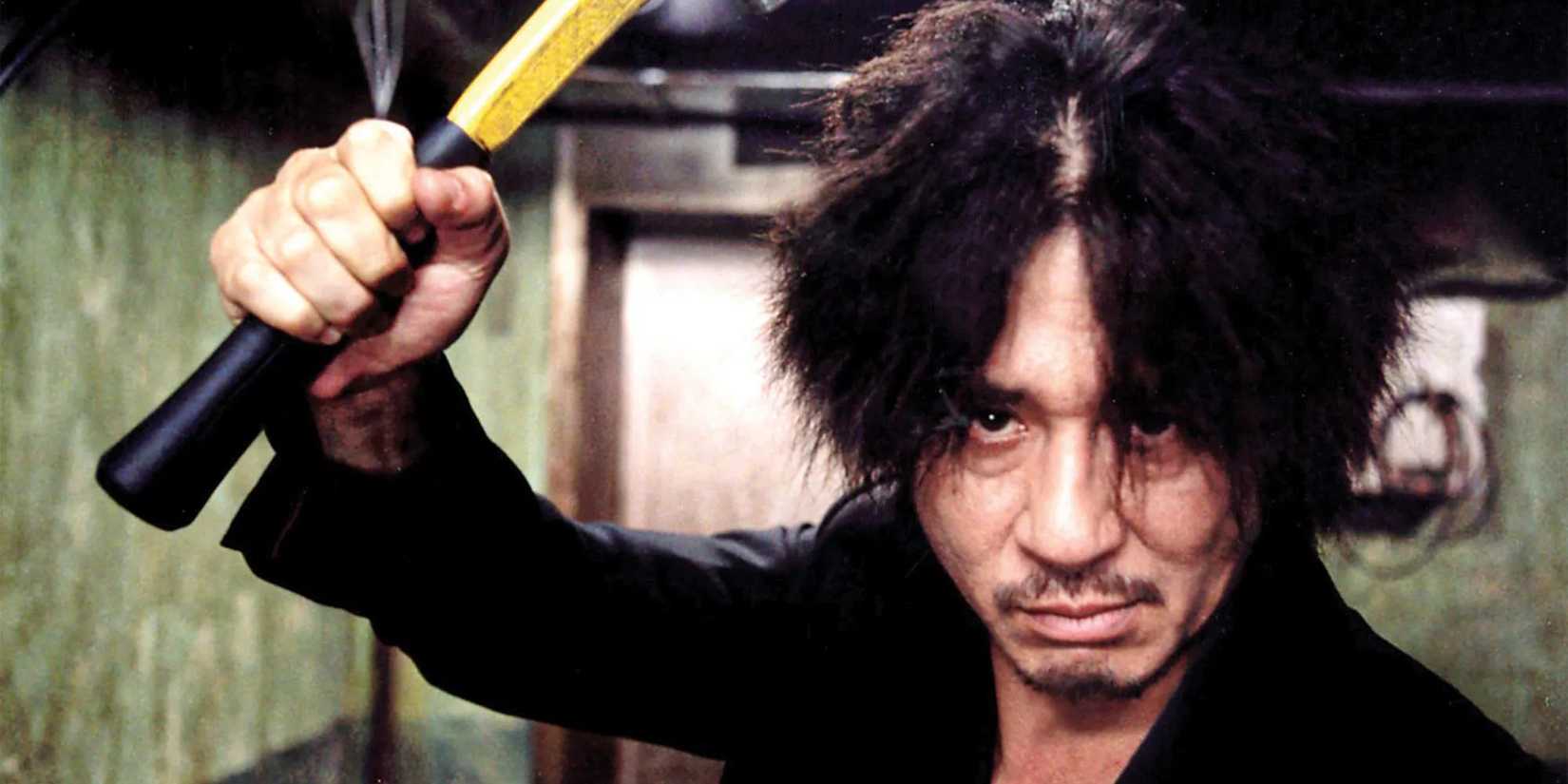
If you’re still pressed about the American remake of Oldboy, now’s the perfect time to revisit the original Vengeance trilogy to remind yourself why it was a futile attempt at capturing greatness. Directed by Park Chan-wook, the South Korean film trilogy is thematically linked by revenge, ethics, violence, and salvation. Comprising Sympathy for Mr. Vengeance, Oldboy, and Lady Vengeance, the films may not be linked by plot, but they are linked by the consuming, cyclical, and morally devastating nature of their shared themes. In Sympathy for Mr. Vengeance, a deaf-mute factory worker kidnaps his former boss’s daughter to pay for his sister’s life-saving kidney transplant, but a tragic accident sets off an escalating, vicious, and senseless cycle of retaliation. In Oldboy, a man who is mysteriously imprisoned in a hotel room for 15 years is given five days to uncover who orchestrated his imprisonment and why. Finally, in Lady Vengeance, a woman wrongfully imprisoned for 13 years for the kidnapping and murder of a child is released, setting out to exact brutal justice and revenge on the true culprit.
Celebrated for Park’s vision, the Vengeance trilogy deconstructs the traditional revenge narratives for an enthralling, visually stunning journey of unrelenting action. The plots give way to an intense set of stories, but what sets these films apart is their intricate visual storytelling. With a bold color palette and meticulously crafted action, the stylistic approach enhances the gruesome subject into pure art that matches the chaotic nature of the central characters. Now, don’t call them heroes, as moral ambiguity reigns supreme. There are no clear-cut heroes or villains as the characters are deeply flawed yet sympathetic, driven by desperation and grief. The Vengeance trilogy begs the audience to question whom to root for as the violence enters an endless cycle. The tension is turned up to full through the concept of an inescapable predetermined fate. Park uses extreme structural symmetry in each film to remind the audience that, no matter the story, every step digs the central character into an inescapable hole they might never pull themselves out of. The technical execution of the films perfectly mirror the psychological and emotional toll of the journey. The Vengeance trilogy is characterized by unpredictability, which makes it a worthy watch.



You must be logged in to post a comment Login