Entertainment
This 10/10 Netflix Sitcom Quietly Changed the Face of a 58-Year-Old Conflict

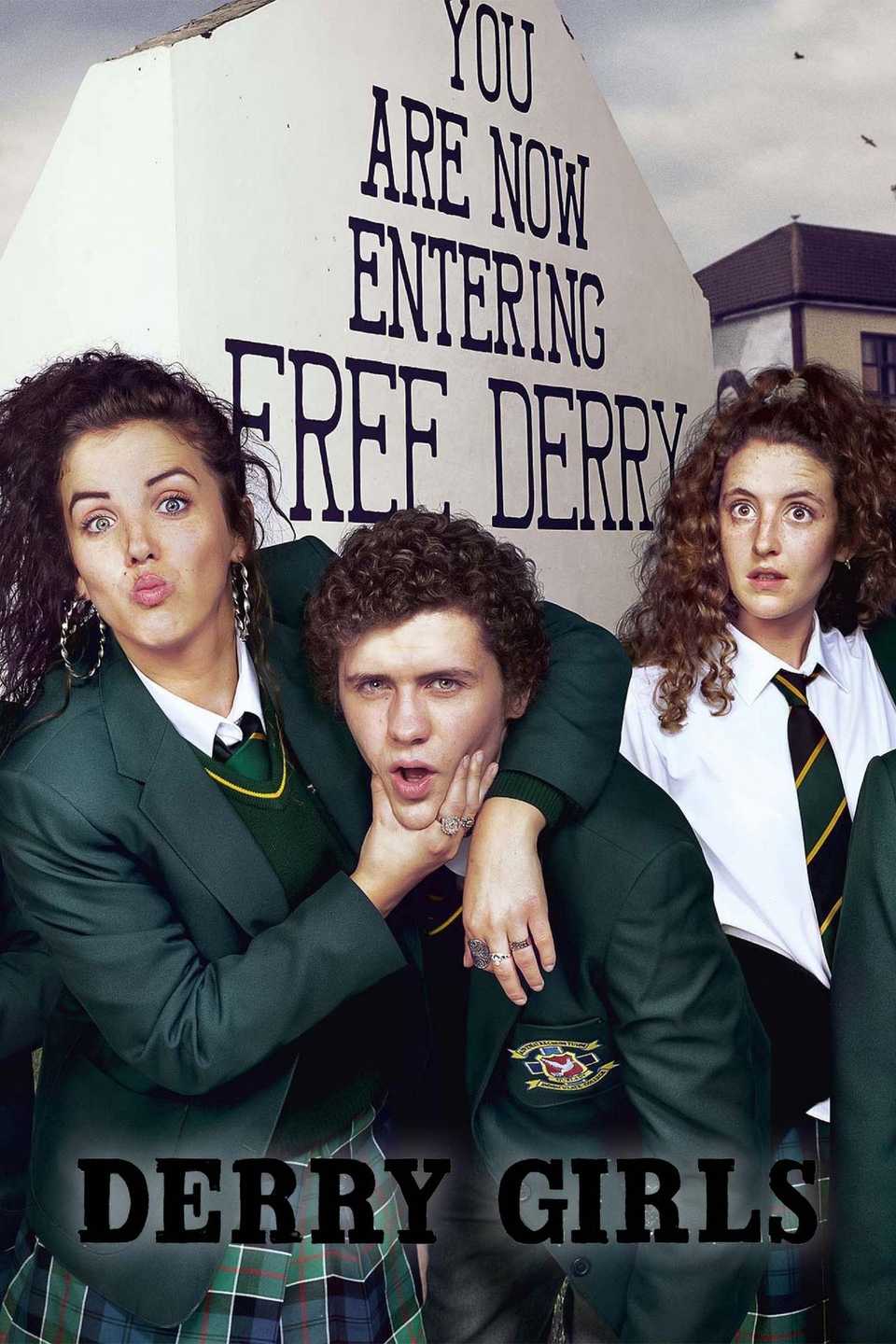
There’s a scene in the very first episode of Derry Girls where Erin Quinn (Saoirse-Monica Jackson), sixteen years old and melodramatically self-involved, is furious. Not about the British Army checkpoint that rerouted her bus. Not about the bomb scare that made her late for her first day back at her all-girls Catholic school. She’s furious because her cousin has read her diary…and now she’s cracking it open in class for her upcoming book report.
That joke – one of modern Europe’s longest-running civil conflicts as an inconvenience, the diary as a full-blown crisis – is creator Lisa McGee’s Netflix comedy in a nutshell. For people like her, who lived through the Troubles, war was the backdrop, not the whole story. That was everything else: the teenage humiliations, obsessions, and laughable mishaps that an absolutely unhinged group of friends living in a small town with nothing to do too often got into. Prestige TV, up until this point, never really got that, but Derry Girls – which ran for three seasons between 2018 and 2022 – definitely did. It is, by a considerable margin, the funniest show about an active ethno-nationalist conflict ever made. Actually, no. This is simply one of the funniest shows ever made, full stop.
‘Derry Girls’ Makes the Troubles Funny (Without Ever Making Light of Them)
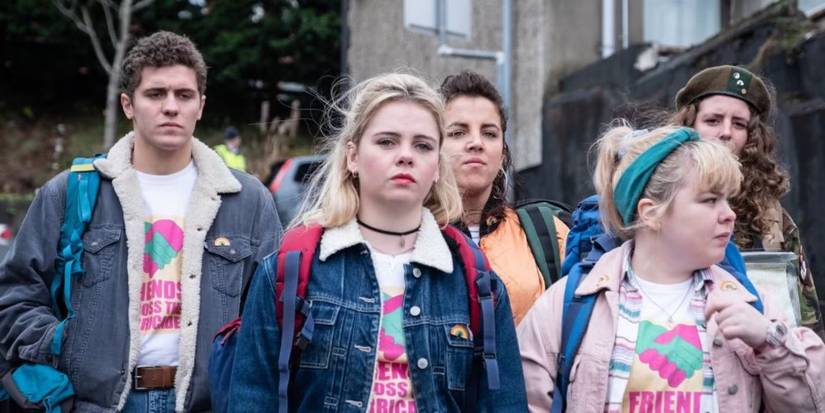
Set in Derry in the early 1990s, Derry Girls follows Erin (Jackson), her cousin Orla (Louisa Harland), their friends Clare (Nicola Coughlan), Michelle (Jamie-Lee O’Donnell), and Michelle’s English cousin James (Dylan Llewellyn), who attends their Catholic girls’ school because, as is repeatedly explained, it just isn’t safe for him to go to the boys’ school. He is, in the show’s most reliable running gag, treated as one of the girls by everyone around him. (It’s the hair…and maybe the cheekbones, too.)
The five of them stumble through adolescence with a specific but timeless incompetence: they scheme, fail, embarrass themselves publicly, rinse and repeat. The Troubles exist at the edges of every episode via newscasts, blown bridges, terrorists stowed away in the trunk of the family car, and errant suitcases that spark bomb squad calls. They are part of the setup, but never the punchline of the joke. The teenagers are. Or, more specifically, how deeply, cosmically unequipped they are for the adulthood they so desperately crave.

Netflix Just Dropped an 8-Episode Thriller Masterpiece That’s a Perfect Weekend Binge
Brace yourself for these unstoppable laughs.
That’s a choice that could have gone badly. Comedy about a real, ongoing, traumatic war is a minefield (metaphorically, and in this case, literally), but what keeps Derry Girls from tipping into bad taste is the specificity. McGee grew up in Derry. Her characters are people she knew, her settings are places she visited daily. If the show is irreverent or dismissive about grander political problems, it’s because it’s earned the right to be. In an interview with The New Yorker, McGee admitted she never wanted to write about the Troubles because every story she saw was entirely too bleak. “There were never any jokes,” she said. “I don’t know any Northern Irish person that isn’t funny. They’re so joyful.” Maybe that’s why Derry Girls always seemed to understand the difference between laughing at and laughing with, because it channeled joy instead of judgment.
Take That, Escaped Zoo Bears, and the Radical Normality of ‘Derry Girls’

To really appreciate what Derry Girls got right about the era, it helps to think about what came before it. The Troubles have generated some serious drama, on-screen that is. Works of genuine craft and moral meaning that want you to understand the politics, the violence, the historical reckoning of it all. Those films and shows and documentaries matter, but they have a tendency to flatten every experience into tragedy. War becomes the thing, and everyone exists in relation to it. But for anyone who’s actually lived that experience, that just doesn’t ring true. Life doesn’t work like that, and it shouldn’t be portrayed like that, at least not all the time.
In 1993 Derry, teenagers were still obsessed with Take That – enough so that those like Erin and her friends would absolutely concoct a ruse to escape to the city while the adults fretted over the polar bear who had just escaped the local zoo. And parents? They were still mortifying, confusing pop culture references to Macaulay Culkin with Protestant rebels met at a summer camp. Checkpoints and ceasefires and peace negotiations were happening, yes, but so was homework and heartbreak and the specific social catastrophe of being accidentally outed in the latest edition of your school’s newspaper. Derry Girls holds all of this at once, that’s what makes it so authentic and undeniably funny.
Why ‘Derry Girls’ on Netflix Is Still Essential Viewing
Derry Girls ended at three seasons, which was the right call – even if we did all lose our shite at the time. The story it wanted to tell had a shape, outlining childhood in the shadow of conflict, ending with the arrival of peace, and McGee told it expertly. Its legacy, though, is a bit harder to pin down. It’s proof that comedy can carry historical weight without being crushed by it. It’s a view of a place that has been defined for decades almost entirely by violence, one that insists on the fullness of life there.
There’s absurdity, warmth, and a deeply Irish chaos to it all despite, or maybe because of, what its characters are living through. And it’s all available on Netflix, which means, if you haven’t checked it out yet, you should. The first episode is just 24 minutes long, but you’ll know if it’s your thing within the first four. Spoiler: It will almost certainly be your thing.