Entertainment
This Forgotten Western Remains the Best TV Series of All Time 71 Years Later

When considering the vast catalog of Western television programs, there is only one series that reigns not only as the leading champion of the televised genre, but sits on the throne as the “gold standard” that so many others aimed to emulate. If you’ve guessed Gunsmoke, then you’d be right on the money. The famed CBS Western ran for an impressive 20 years between 1955 and 1975 (a feat quite unheard of at the time), and remained popular throughout the bulk of its run. Thus, it’s no wonder that even over 70 years since James Arness first graced the screen as Marshal Matt Dillon that this program continues to find an audience on streaming.
‘Gunsmoke’ Surpasses All Other Television Westerns — In Both Content and Episode Count

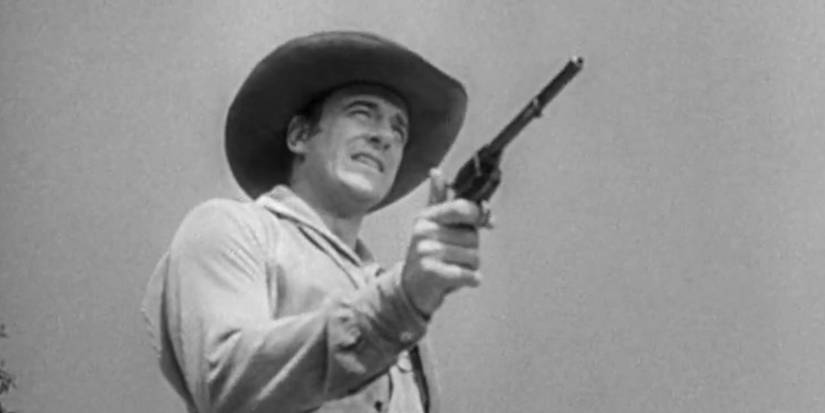
Like many television programs of its day, Gunsmoke began as a radio show. Created by Norman Macdonnell and John Meston, the adventures of Marshal Dillon became so popular that CBS aimed to push that reach even further. Charles Marquis Warren developed the series for television, and although John Wayne was initially sought for the leading role, the part ultimately went to James Arness. (However, as a favor, Wayne introduced the very first episode, making Gunsmoke among the few TV Westerns endorsed by the Duke.) Part of what set Gunsmoke apart from other TV Westerns at the time was that it was specifically aimed toward adult audiences. The network wasn’t interested in another “kiddie” series like The Lone Ranger or Hopalong Cassidy; they wanted a mature program that could stand on its own. No doubt, that’s exactly what it did.
Although The Life and Legend of Wyatt Earp beat Gunsmoke to the punch by a few days, it was Gunsmoke that came out on top as the best and brightest that this new TV fascination with the Old West had to offer. At first, the series followed the radio format quite faithfully, even adapting famous episodes like “The Cabin” effortlessly to the screen. These tight scripts produced excellent material for Arness and his co-stars to work with, but over time, the show found a voice of its own. Even after the radio series ended in 1961, the CBS drama continued. In fact, that same year, Gunsmoke shed its initial half-hour format in favor of an hour-long broadcast with an emphasis on original episodes that pushed Marshal Dillon and his allies — Amanda Blake‘s Miss Kitty, Milburn Stone‘s Doc Adams, and Dennis Weaver‘s Chester Goode — to their limits. It was in this era that the black-and-white hour-long program produced some of its very best episodes, including the hauntingly powerful “The Gallows,” an intimate look at what happens when an innocent man is condemned to die, and the riveting “Seven Hours to Dawn,” which emphasized the show’s supporting cast against a common threat.
Gunsmoke continued to produce hour-long Western plays for the remainder of its run. By its twelfth season, CBS began filming each episode in color, and only a few seasons later, Gunsmoke drifted away from following its heroes every week in favor of a Western anthology format. Much of the show’s continued popularity has been attributed to the fact that Gunsmoke was able to adjust to the times. Be it the advent of color television or the growing popularity of hour-long television programs (a trend that started with Cheyenne the same year Gunsmoke premiered in 1955). Marshal Dillon and his cohorts often found themselves performing in the sorts of adventures that were of interest to contemporary audiences — some of which even spawned short-lived spin-offs. It’s no wonder that Gunsmoke ranked #1 in the ratings for four years in a row at its peak, and boasted a spot in the Top 10 for 13 seasons. With 635 episodes to choose from, it’s a show that rides laps around most others — even Louis L’Amour was a fan.
The 20-Season Western Set the Standard for All Other Genre Series’ Going Forward
Of course, the main draw for Gunsmoke was always its main cast. Arness’ Matt Dillon is not only one of the greatest Western TV heroes out there, but he was the sort of stand-up type of lawman that you’d always want in your corner. Whether he was joined by sidekicks like Burt Reynolds‘ Quint Asper, Roger Ewing‘s Thad Greenwood, Buck Taylor‘s Newly O’Brien, or Ken Curtis‘ long-running Festus Haggen (or if he were simply on his own), there was a comfort in the sense that Dillon would always get his man. Indeed, no matter how often villains got the upper hand or how outmatched he was, Matt wouldn’t go down without a fight — and he certainly wouldn’t let the good people of Dodge City down. It was that consistency, that charm, that kept audiences faithful to Gunsmoke for 20 years, and it’s that same old-fashioned style that has prompted many to revisit the program on streaming years later.
Gunsmoke may be a product of its time in that it’s a Western that leans into the mythic notions that the genre has spread about the Old American West, but it remains relevant and entertaining today. Unlike many of the modern takes on the West we see now, it’s a series that the entire family can enjoy, despite its often mature themes or ideas. It was Gunsmoke‘s success that helped propel the genre as a TV staple in the 1950s and ’60s, and that success continues to influence the genre.
You must be logged in to post a comment Login