Entertainment
This Quentin Tarantino Western Has His Only “Good Guy”

Quentin Tarantino has never been accused of writing lots of morally upright characters with hearts of gold. More often than not, the opposite is true. We go to his movies because his characters are usually morally ambiguous; it makes them more fun to follow along for the ride, because it’s unclear how they’ll resolve whatever conflict they come across. Will it end with them killing people? (Probably. Otherwise, it’d be a waste to have all these blood squibs just lying around.) They’re consistently charismatic and cool, but very few enter a story without baggage, or get to the credits without doing something heinous. At worst, his characters are bad people—the title of The Hateful Eight reflects that—and at best, they’re anti-heroes who we like because they take part in engaging small talk about fast food in different countries and ethical debates about tipping at restaurants. To paraphrase Bill’s Superman speech, it is in that characteristic that Dr. King Schultz (Christoph Waltz) stands alone.
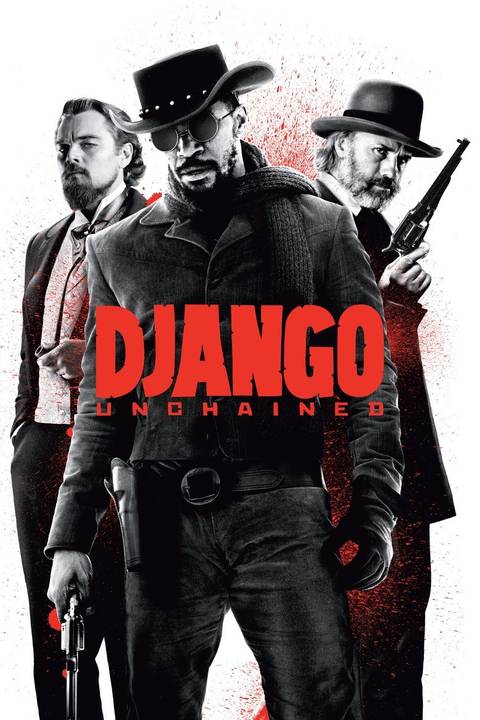
Appearing in Django Unchained, also known as the first entry in Tarantino’s unofficial Bounty Law Trilogy (title coined here and don’t you forget it), Waltz starred as the dentist-turned-bounty hunter, Dr. Schultz, which would earn him his second Oscar for Best Supporting Actor. It was a role that he initially turned down when Tarantino pitched it to him, out of fear that he would become typecast as villainous characters for the rest of his career. However, after Tarantino needled long enough, Waltz agreed under the condition that Schultz would be a pure and non-malicious character, which Tarantino agreed to. Having that context is important, because upon rewatch, Dr. Schultz is easily the most well-rounded and heroic character the filmmaker has ever created, and actually works in contrast to the style of the rest of the film.
His Name Was King


Tarantino has a well-documented love for spaghetti Westerns and, more specifically, The Good, the Bad, and the Ugly. That influence is present throughout most of his movies, even the ones that aren’t exclusively Westerns, and Django Unchained is no exception. Ironically, while spaghetti Westerns often have anti-hero leads, Schultz fits more in line with heroes with a white hat from traditional Westerns. He isn’t just noble but also…like, just a good man. One of his defining characteristics (besides an exceptional beard) is his politeness and courteousness to others, even his enemies. It’s a small detail, but he separates himself from the other characters by how well-spoken and jovial he is at all times, without ever giving off the impression that it’s a ruse to disarm people, akin to someone like Lalo Salamanca (Tony Dalton) in Better Call Saul. It’s not a performance, he’s just inherently effusive and personable. This is also reflective of his position on murder.
One of the unspoken rules among Tarantino’s characters is that killing is just something that happens from time to time, especially on the clock. His characters are very rarely affected by someone dying in front of them, or by their own hand. There have been three characters in his movies named Marvin, two of them died by gunshot, and one of their deaths was one of the funniest moments in movie history — and all Jules and Vincent care about after it happens is not getting in trouble, rather than the fact that they just accidentally murdered a coworker. When it comes to Pulp Fiction‘s Jules and Vincent having consonants to hand out, the letter F is not one of them. But by comparison, Dr. Schultz has plenty to give, and actively avoids killing.
Throughout most of Django Unchained, Dr. Schultz only engages in violent altercations out of self-defense (like with the Speck Brothers in the film’s opening) or to eliminate his targets and collect his bounties, which he does dispassionately and without malice. In all other cases, when in sticky situations, like confronting the U.S. Marshall and deputies of Daughtry, or dealing with Big Daddy (Don Johnson) and his staff, he gets out of his predicaments by explaining his profession and the reasoning behind his actions. If he can avoid killing, that’s the option he goes with.
Schultz’s Execution of Calvin Candie
The only time in the entire movie Schultz kills for the pleasure of it is when he executes Calvin Candie (Leonardo DiCaprio) — and that was after he tried to be the bigger person and just leave, even after Candie (but really, Stephen) bested him. The only reason he kills Candie is that he kept nagging at him to shake his hand, and Schultz couldn’t control his disdain anymore. But even after that, when Butch is clearly going to kill him and Schultz has a second round in his gun to defend himself, he doesn’t take it. He accepts responsibility for his actions and takes the punishment (in the form of death), and uses his last words to apologize to Django for making things worse by simply saying, “I’m sorry. I couldn’t resist.”
Of course, the thing that spurred Schultz’s resentment towards Candie the most was the brutal murder of D’Artagnan via rabid dogs. It’s an important moment not just because Schultz made an effort to avoid it by trying to save D’Artagnan’s life (which Django was weirdly complicit about, and yet he uses D’Artagnan’s name as a battle cry later); the trauma of witnessing it actually affects Schultz for the rest of the film, and it’s what sets the third act in motion. Very rarely does witnessing murder in a Tarantino movie have lingering effects on characters, short of Shosanna Dreyfus (Mélanie Laurent) in Inglourious Basterds or The Bride (Uma Thurman) in Kill Bill, but those characters witnessed the deaths of loved ones and friends, which gives the violence personal stakes. But in Schultz’s case, it’s purely the lasting effects of witnessing the murder of another human being.
For a filmmaker known for creating layered and complicated lead characters, it’s ironic that possibly Tarantino’s best character is the one that is the most well-meaning and with the most streamlined moral compass. Considering how Tarantino’s historical films play on the brutality of the world, it makes Dr. King Schultz stand out all the more because he’s not ambivalent to the landscape he lives in. He just chooses to be positive and self-assured in the face of it. Just because his job requires him to shoot outlaws for money, that doesn’t mean he has to be mean about it.

- Release Date
-
December 25, 2012
- Runtime
-
165 minutes
- Producers
-
Bob Weinstein, Harvey Weinstein, James W. Skotchdopole, Michael Shamberg, Pilar Savone, Reginald Hudlin, Shannon McIntosh
You must be logged in to post a comment Login