Entertainment
This Secret Theory Perfectly Explains The Backlash To The Odyssey
By Chris Snellgrove
| Published


Christopher Nolan’s The Odyssey is an ambitious attempt to transform one of the greatest works of literature into a crowd-pleasing blockbuster. The director certainly has the skills to do so; after all, this is the man who turned prettyboy comic actor Heath Ledger into the scariest villain to ever grace the silver screen. He’s also the man who turned the life of Robert Oppenheimer (not exactly a massively popular historical figure) into a smash summer hit. If there’s anyone who deserves the benefit of the doubt, it’s Nolan. Nonetheless, the movie has faced ample criticism since it came out, with most complaints focused on casting.
To nobody’s shock, most of the complaints come from right-wing figures like Elon Musk, who has echoed Matt Walsh’s complaints about Nolan casting Lupita Nyong’o as Helen of Troy. Others have griped about things like the accents (including a pronounced Boston accent) in the previews. Beyond the usual boring culture war stuff, it can be hard for casual film lovers to understand what is causing these gripes. However, complaints about this literary adaptation can mostly be explained by a popular literary theory that goes by a very unexpected name: the Tiffany problem.
Boys, Meet Tiffany

What’s the Tiffany problem? This theory was created in 2018, when English novelist Nicola Cornick explained that the word “Tiffany” originally comes from the medieval girl’s name “Theophania.” Around the year 1200, the French spelled the word “Tifinie,” and by the year 1600, the English were spelling the word “Tiffany.” Therefore, as Cormick explains, it would be historically accurate for a book or movie to have a 17th-century character named Tiffany, but writers never do this because the name Tiffany sounds too modern. After all, use of the name peaked in the ‘80s, nearly four centuries after it was first used.
So, what does this have to do with Christopher Nolan’s The Odyssey? The reason writers steer clear of naming those modern European characters “Tiffany” isn’t because the name is inaccurate but because audiences think the name is inaccurate. The vast majority of people enjoying historical texts are not historians, so they don’t have a very granular knowledge of the time period in question. Instead, they have a bunch of assumptions and half-baked ideas gleaned from God knows what, and they get annoyed (and even outright offended) at, say, a movie whose characters don’t look and sound like what they imagined.
Time To Hit The Books

When Homer wrote The Odyssey, he didn’t really describe Helen’s features but instead focused on her beauty. Now, the critics of Nolan’s film are correct that the average Greek woman of the time period was not Black, like Lupita Nyong’o’s Helen. Nonetheless, ancient Greece did have Black people, and some scholars of the original text have argued that Helen could have been a woman of color. One counterpoint critics bring up is that Homer does refer to Helen as “white-armed,” which modern readers might assume means she was white-skinned.
But white-armed was not a racial description so much as an epithet for noble women who don’t have to spend time outside, where the sun would darken (or further darken) their flesh. Therefore, Nyong’o playing Helen is perfectly reasonable and doesn’t contradict the original text. It’s also worth noting that when you ask these critics who they’d prefer in the role, they usually throw out names like Sydney Sweeney. Newsflash: while the average ancient Greek woman wasn’t Black, she also wasn’t a blonde, and her skin would have been far darker (brown, in all likelihood) than Sweeney’s.
Fake Complaints From Fake Fans

In other words, these complaints about Christopher Nolan’s The Odyssey aren’t based on any deep knowledge of the original text or the time period. They are based instead on the personal biases of the critics who don’t care about ahistorical casting choices as long as it involves an actor they like. Nolan basically invoked his own version of the Tiffany problem: there were Black women in Ancient Greece, and Homer says surprisingly little about the character’s physical features, so having Helen be a Black woman is perfectly reasonable. In fact, Orson Welles cast Earth Kitt in the role back in 1950! But because the average person hasn’t read The Odyssey and doesn’t know Ancient Greece had Black people, they think Nolan’s casting is completely unrealistic.
To some degree, this extends to complaints about the accents in the film as well. While nobody in Ancient Greece spoke with these accents, they also didn’t speak English. The only way to make The Odyssey completely realistic would have been to have everyone speaking Greek, but that doesn’t really work for a Western summer blockbuster. Like so many directors before him, Nolan had the cast speak English in deference to the audience. Haters think the accents stand out because they are accustomed to classic works with English accents. But that leads to two questions: 1) why do we find some accents more acceptable than others? And 2) why did these guys not complain about Brad Pitt spending all of Troy using a jarring “British meets American” accent?
Facts Over Feelings
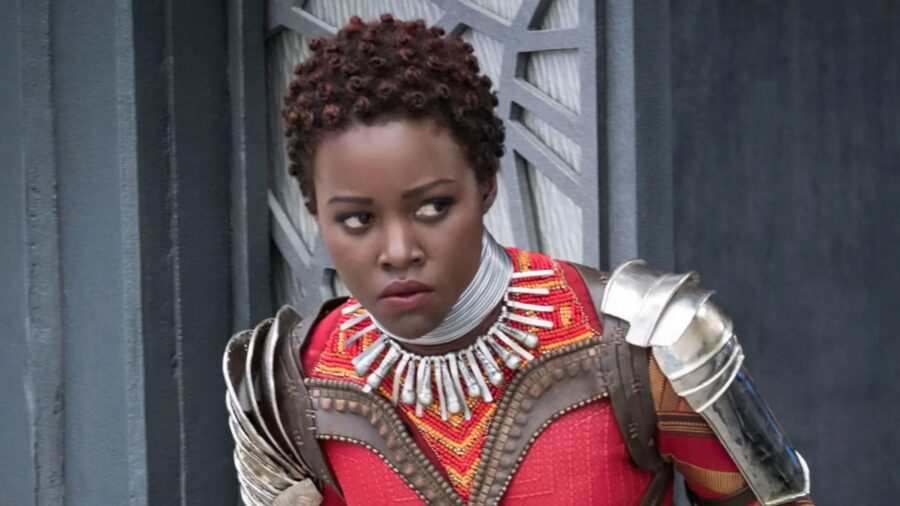
Obviously, a fair share of the people whining about The Odyssey before it comes out are stirring the pot of the culture war and just looking for an excuse to meet their daily “whine about Black people and trans people” quota. But anyone who, in good faith, thinks the casting of the film is an issue should consider the Tiffany problem. What Christopher Nolan has done by casting Lupita Nyong’o is perfectly realistic from both a historical and a literary lens; it just “feels” weird to those who haven’t read the original poem or ever cracked a book about Ancient Greece.
Sorry, guys: as you used to say with a bit of pride, facts don’t care about your feelings!
You must be logged in to post a comment Login