Entertainment
You Missed the Real Meaning Behind Netflix’s ‘Beef’ Season 2 Ending

[Editor’s Note: The following contains spoilers for Beef Season 2]
Summary
Netflix’s hit series Beef, from creator Lee Sung Jin, returned to the streamer for Season 2, taking viewers to an all-new country club location. With all eight episodes now available to binge, Collider’s Steve Weintraub spoke with director Jake Schreier about his thoughts on the finale, Season 2’s themes and message, and the show’s final shots.
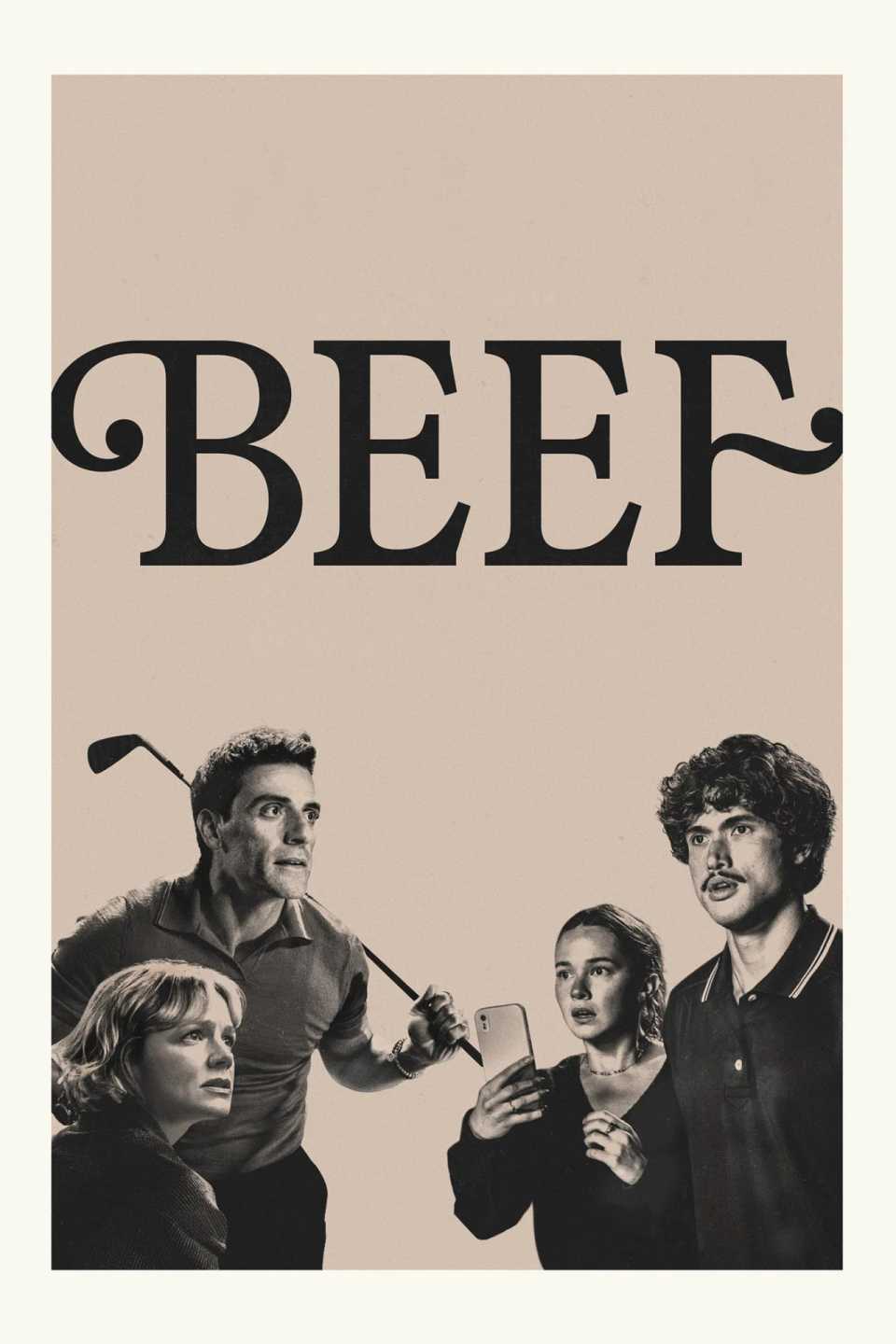
This season, Beef is back with an all-new ensemble cast. At a luxurious country club, a young, newly engaged Gen-Z couple, Ashley (Cailee Spaeny) and Austin (Charles Melton), accidentally witness a concerning fight between their Millennial boss, Joshua (Oscar Isaac), and his wife, Lindsay (Carey Mulligan). The young couple becomes ensnared in their boss’s unraveling marriage and coercion, as the four of them vie for the approval of their billionaire owner, Chairwoman Park (Youn Yuh-jung). This season also stars Mikaela Hoover (Superman), William Fichtner (Talamasca: The Secret Order), Seoyeon Jang (Butterfly), and Song Kang-ho (Parasite).
As for future projects, Schreier also shares details on Marvel’s upcoming untitled X-Men movie, which he’s serving as director of after successfully helming last year’s Thunderbolts*. The filmmaker will once again reunite with Beef collaborators Lee and Joanna Calo, and discuss the “less-trodden” path their team is aiming for with the movie. Check out the full conversation in the video above or the transcript below.
‘Beef’ Season 2 Is Built Around Cycles, Repetition, and Samsara
Schreier says “there is no great victory” in the Season 2 finale.


Coming into Beef Season 2, I’ve seen the whole show, and this is a jokey thing, but is the message of Season 2 don’t drink anything unless you’ve opened it yourself?
SCHREIER: [Laughs] That would certainly be wise, I think. Yeah.
The other thing: Is the message of Season 2 that the rich are always going to win?
SCHREIER: I think what Sunny’s going for in the ending and that I thought was so interesting was I don’t know that we see it quite as a win, that if you really think about that very last shot, if we’re talking about spoilers and the samsara, that was something that he and Grace Yun, our wonderful production designer, talked about so much in the season. It’s this idea that we’re all sort of trapped in this cycle, and the Chairwoman Park is trapped in it, as well, and that there’s a tinge of sadness to that ending.
So, it isn’t necessarily a victory, even if, in normal terms, who lives, who dies, you might look at it as the upper hand, but when you kind of step back from it and look at it on the level of this wheel and this idea of being trapped, there is no great victory in that, and that some sort of acceptance of that cycle is important for all of our characters.
In Episode 1, there is a shot of Oscar [Isaac] and Carey [Mulligan] walking out of the club, and there’s a symmetrical shot in Episode 8 of Charles [Melton] and Cailee [Spaeny] walking out, sort of the same thing. Talk a little bit about that composition of how you’re setting it up in Episode 1, and you’re ending it in Episode 8.
SCHREIER: From the beginning, Sunny was really interested in cycles, and this idea of the past repeating itself. There are lots of really interesting, great hidden writing gems where Cailee starts to appropriate language that we’ve heard Oscar [Isaac] say or that we’ve heard Carey [Mulligan] say from before. But I think knowing a sense of where it was going to go, we actually didn’t film those on the same day, but we knew in designing the shots for the opening sequence of [Episode] 1 that there was going to be this kind of echo and repetition of that happening in [Episode] 8, with the slight exception that when they get in the car in Episode 1, that moment is sort of balanced towards Carey, because it’s about her frustration and anger that’s going to explode over the course of the cold open.
In [Episode] 8, we’re leaving it on the two of them, so it’s a more balanced shot of the two of them in the car. But that’s something that Sunny and I spend a ton of time talking about, is the minute shot structure of how to enforce those kinds of ideas of whose scene it is and how are we showing the repetition of this, and how are we visually dramatizing those ideas of the cycles that they’re going through? Obviously, the opening shot that starts on ants and then reveals them, that’s a mirror of itself, as well.
I wanted to bring that up. In the script, is it exactly that we are watching a close-up of ants crawling? How does that get figured out?
SCHREIER: We filmed a version of it on the day, and then we ended up on another day doing our macro close-ups of those ants. Again, obviously, throughout the script, there is this idea of bugs in a lot of different places, and this idea, obviously, if the show is about that kind of battle between the individual and the collective, and forming a partnership with someone and how much you hold on to yourself within it, starting it with an image of bugs that have a hive mind, I think, was really fascinating to him. So, it was fun to kind of dramatize that and then watch that get smushed as we move into our long opening take.
Jake Schreier Reveals the Secrets to ‘Beef’s Success
“These are all such incredible craftspeople and artists in their own right.”
One of the things about this show is that it’s just something where every department, from cinematography to actors, is just firing on all cylinders. What is it like in the month or two leading up to filming? Because everything is so good, and if it were easy to do this, everyone would do it, but it’s impossible. So, what is the secret sauce going on behind the scenes that is able to make this happen?
SCHREIER: I think it’s sort of what you said, and I think it was one of the great lessons of Season 1 of Beef and something that we tried to take onto Thunderbolts*, which is that if you are lucky enough to work with collaborators that are that strong, and you’re on a set with people where everyone is pushing each other to be better and better, and there’s just such an amazing group of people that make this show, then even if it is a month before and you’re running around it — I mean, I was in post on Thunderbolts*, so it’s like stepping out of the mix to go to set — when you have collaborators that good, that’s what elevates it. If everyone is really bringing their best and they’re the best at what they do, and we just have so many department heads, if you go through it, like James Laxton and Grace Yun, who I’ve talked about, or Finneas [O’Connell’ coming in the season. These are all such incredible craftspeople and artists in their own right that when you pair that with Sunny, who cares so deeply and is writing something so personal to him, but that can also work on a broader level, if we’ve been successful, then that’s what does it.
I’m so curious, what are your thoughts on the way the season ended in terms of what all happened?
SCHREIER: I think it’s fascinating. It was something that we talked about from the start. Sunny had this loose idea of where he wanted things to go, and then as he gets into the details of writing it, more and more of those details get revealed. The very last shot we didn’t actually add until later, because it felt like we needed something even bigger to encapsulate what he was going for.
But I think that that concept, again, that there are these ups and downs and these cycles in life, and you can see the patterns repeated in all of these couples. And again, this idea of the samsara and that the only way to escape it is to accept it, and going for this idea of acceptance, which might not be the most traditional way. And the season, like you said, you might think that, “Oh, the rich won,” and again, I don’t think that he sees it that way or that we see it that way.
One of the things for me about Beef is Sunny and I have been friends for years, and friends before we made this show. To get to see your friend make work that is so personal, but is also obviously on this large platform, and go for these ideas that don’t feel as obvious or as expected, and get to help them try to bring that to life like that feels like a really special opportunity.
By the way, I’m totally joking about the rich thing. I just want to be clear I’m messing around.
‘Beef’ Season 2 Hits Different at Every Age
“I hope those conversations are really fun.”

Season 1 sparked a lot of conversation about anger, identity, and modern life. What conversations do you hope Season 2 sparks?
SCHREIER: I think what’s going to be really fascinating about this season is to see the way in which different generations watch it. A couple weeks ago I was sick and I did a full Mad Men rewatch, and it plays so differently now that I’m older than the first time I watched it when it came out. We’ve seen even a little bit of how everyone who watches the show maybe gravitates towards a different character that they kind of choose to view the narrative through, and I think that could be a really interesting conversation.
Then also, obviously, this season is about relationships, and nothing could be more relatable to people who watch. Everyone’s been through a version or many versions of those. So, I think seeing yourself or seeing aspects of your life reflected in all of the different parts, and finding times where you might look down on a certain character and then come around to looking at the narrative through their eyes, I hope those conversations are really fun.
I’ve had this conversation with so many people. When you watch Casablanca when you’re 20, it means nothing. You watch Casablanca when you’re 30, completely different movie.
SCHREIER: Yeah. Yeah.
I’m just about out of time, but you know I’m fascinated by the editing process. How was editing Season 1 compared to Season 2? I didn’t speak to you for Season 1. Did either season go through big changes in the edit, or is the script so tight that it’s really just little bits here and there?
SCHREIER: The scripts are tight. There’s clarifying a few moments here or there, or maybe a pickup here or there, but predominantly you’re watching, more or less, what Sunny and our wonderful writers’ room wrote.
The particulars of the way it’s edited, there’s a kind of almost house style that we developed. I had this idea about unbalanced coverage where, in a dialogue scene, it’s never just evenly weighted, the shot and reverse shot. It’ll be closer to one character and further from another, and then sometimes even transfer within scenes. In Season 1, that was a little easier to do just because any scene that Amy or Danny was in was their scene, versus anyone else that was in it, it would become balanced when the two of them are together.
Here, we have four perspective characters, and sometimes even sex. So, just really trying to be cognizant on set and really huddle with Sunny and talk about whose seen this was, and should it transfer at any point, and then going in with the editors and really holding on to that structure, and enforcing that, and getting a sense of, like, where is that working and where do we need to make it stronger, and how is that playing if we’ve made some of those decisions in production of how we want to weight it in post as far as who’s perspective we’re viewing each of these moments through? Those conversations got a lot more complex in Season 2 just because of that larger cast of perspective characters.
Marvel Wants ‘X-Men’ to Feel “New and Different”
Jake Schreier and the team are turning to the comics to take a “less-trodden” path.

COLLIDER: I heard rumors that you are also directing things for Marvel. I think you might have done a movie for them, and you might have something coming up.
JAKE SCHREIER: I might be making something for Marvel, yes. A movie called X-Men, I think.
Exactly. I thought Thunderbolts* was awesome, and you worked so well in what I call the Marvel machine. I’m just curious, what did you learn from making Thunderbolts* and working in that environment that you’re absolutely taking with you to X-Men?
SCHREIER: I guess mainly that it’s not a machine. What we think of as “the machine” is a group of people who are really lovely people who care deeply about what they make. We talked a lot about, in Thunderbolts* press, how Kevin was always like, “Do something different with this. Make it different. What can we bring to it?” There’s no house thing that you have to do. And I think that having the familiarity with them and getting to go back in and think about what to do next, it’s just exciting to think about how that could be applied on an even bigger scale.
One of the things I’m so curious about is that I believe you’re coming out in 2028, and you’re going to be coming out after Secret Wars. How are you planning on keeping the secrets, or the casting, or whatever it may be, under wraps when you’re going to be filming before Secret Wars is out? Have you guys already thought about, like, how do we keep the mystery, or is it like, well, we just have to accept that things are going to get out, and it is what it is?
SCHREIER: It’ll all be filmed in a black box, and we’re all just going to live in it and not emerge until we’re done with the movie. No, I mean, certainly the studio has a lot of experience with these things and how to try to hold on to what’s really most important. I can say that we’ve talked about it and we’ve thought about it, but I probably shouldn’t say any more than that.
I totally get it. For fans, where are you in the process?
SCHREIER: We’re still developing. One of the exciting things that’s tying into Beef is that Sunny, or Lee Sung Jin, and Joanna Calo both worked on this season — obviously, this is Sunny’s show — and Joanna worked on this season, as well, and we worked together on Season 1 of Beef and also on Thunderbolts*, have come in and are working on a draft right now, which is really, really exciting to be able to put that group of people together again.
I also think just having the time to sit back, I’ve just been digging into so many of the old comics and the entire [Chris] Claremont run, and just going through stuff and really trying to think about, like, “What can we do well that feels new and feels different, and that hasn’t been done well before,” obviously, because there’s such an incredible cinematic tradition of these comics, but what can we do and how can we put our own stamp on what that is?
This is obviously not going to be a one-and-done situation, so how much when you guys are working on the script, are you thinking about a track of where this is all going to go? Because it is going to eventually go somewhere.
SCHREIER: Obviously, first things first, we have to make one great movie, but we always have an eye as we’re talking about it to what are the different places that this can go? What are the places that it’s been in the comics? What hasn’t been explored as much, and how can that be incorporated? And what are some of the different avenues that we could take that feel like a less-trodden path that we could go down? But those ideas are always out there as we have the discussions.


Good News ‘X-Men’ Fans: The Movie Reboot’s Writer Is a Huge Gambit Fan [Exclusive]
He’s about to make a name for himself.
One of the things that I’m so curious about is getting a more accurate Wolverine in the movie, which means a short king. How much have you guys discussed that, and is it something that you think will happen?
SCHREIER: [Laughs] I think when it comes to any specifics, I’m gonna plead the fifth on that, if that’s okay.
What is Sunny bringing to the table? Because he’s such a fucking amazing writer, and I would imagine that he’s adding a lot, if you could touch on that.
SCHREIER: One of the things that I love so much about Sunny’s writing in Beef, and that he and Joanna are both so great about — she co-created The Bear, one of the most interesting shows on television right now — is that ability to take these very small interpersonal dynamics and explode them onto this much larger canvas.
In Season 1 of Beef, and people will see in Season 2, it always starts from the personal, and when you go back, and you read all of X-Men, and you see how much of it was also, obviously, the ideology is a huge part of what drives the narrative, but also the interpersonal. There’s a soap opera quality to it, when you go back and read those original comics, that I think having writers who understand both of those things and how to drive that ideology from more personal rifts, if we can get all of those things right, then in a way, that’s the thing that will feel most honest to what X-Men can be.
Beef Season 2 is available to stream on Netflix now.

- Release Date
-
April 6, 2023
- Network
-
Netflix
- Showrunner
-
Lee Sung Jin
- Directors
-
Hikari, Jake Schreier, Kitao Sakurai, Lee Sung Jin
- Writers
-
Alice Ju
You must be logged in to post a comment Login