Fashion
LONDON FASHION WEEK SPRING/SUMMER 2027

Art and Artist-Inspired Collections Owned the Runways at Simone Rocha, Erdem, McQueen, Emilia Wickstead and Roksanda.
SIMONE ROCHA, ERDEM, MCQUEEN, EMILIA WICKSTEAD, ROKSANDA and HARRIS REED

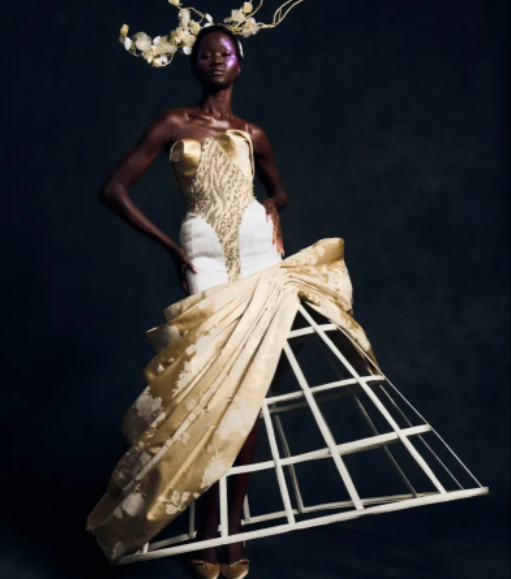

At Harris Reed
Image Credit London Fashion Week and WWD
London Fashion Week Spring/Summer 2027 was a proper mix of the fresh and the seasoned, with experimentation high on the agenda. LFW stayed true to its reputation as a platform for nurturing new talent while at the same time celebrating the talents of the stalwarts in their stables.
It was also a week full of surprises.
First and foremost, welcome home Alexander McQueen! A watershed moment came with the ‘homecoming’ of one of their most valued brands, McQueen, who, after 25 years of gracing Paris catwalks, returned to London.
Another surprise was Christopher Kane’s debut for Mulberry: it marked Mulberry’s first runway appearance in 6 years.
Irish legend Simone Rocha delivered a somewhat ‘revealing’ collection at the Old Bailey, inspired by the (unlikely) discovery of a… Caravaggio, yes Caravaggio, painting in Dublin!
Erdem – usually very precious about their signature female silhouette, surprised us with an interesting and deliberate tension between the masculine and the feminine. Male models sported ballgowns, to great effect.
Quintessential Brit brand Burberry closed the week with Daniel Lee’s celebration of British eccentricity, featuring a collaboration with beloved and legendary Brit textile designer Celia Birtwell – and there was a surprise runway debut from rapper Central Cee.
As for trends, romance was a definite thread that ran through many collections. We saw underwear posing very convincingly as outerwear at Simone Rocha and Erdem.
There were elaborate embellishments galore – from 3-D floral appliqués at Burberry to rhinestone-encrusted suiting at Erdem and McQueen.
There was a definitive explosion of voluminous, frothy tulle in many collections. Party-time!
Tactile texture stole the show, with ensembles begging to be touched and stroked.
Colourwise, in line with the theme of romance, which colour but pink would be the star of the show? Very Barbie indeed!
Join us for a little journey through some of the most memorable shows of the week.
SIMONE ROCHA
One of the greatest fashion storytellers of our time, Simone Rocha, created her S/S 2027 collection on the rediscovery of Caravaggio’s long-lost painting, The Taking of Christ in 1990. This significant artwork had been hanging (misattributed!) in the dining room of a Jesuit house in Dublin for over 5 decades – a proper miracle of art history!
Rocha created looks around this ‘miracle, this unlikely rediscovery of the painting. Silk organza slip dresses literally looked like they could fall off the body as if by some divine miracle.
The designer tried to find “the most beautiful thing in the most unobvious place”, according to the collection notes. The usual Rocha vocabulary of protective layers of tulle and frills looked stripped back this time. Transparent dresses reveal blood red underwear and black and red plaid knickers. Black leather jackets with cut-out rose-embellished collars were worn straight onto the skin. Lingerie-inspired silhouettes were mixed with everyday, utilitarian garments like bomber jackets, anoraks and parkas. Her trademark roses – red and white – were present throughout, but they appeared as oversized, sculptural embellishments smothering the face or a plunging neckline.
Rocha’s usual romanticism and femininity looked somewhat different in this collection, which felt rather raw and above all, most definitely thought-provoking. As ever, this Rocha collection leaves one in awe. The complexity of the elements, inferences and historic references will linger long after the stunning pieces have left the room.
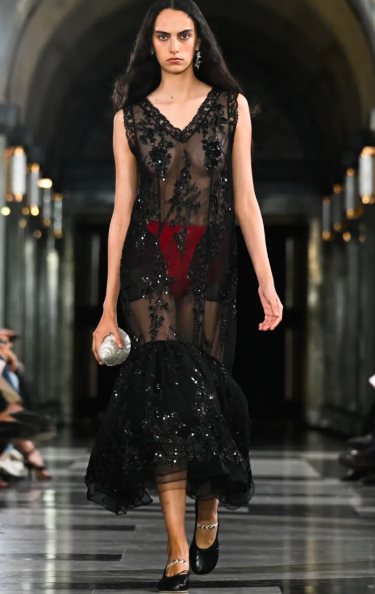

At Simone Rocha
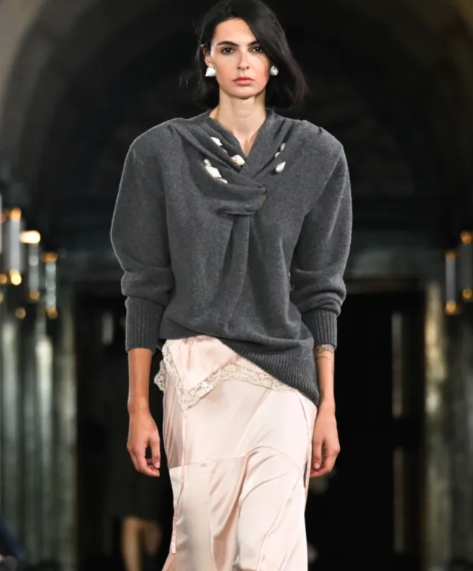

At Simone Rocha
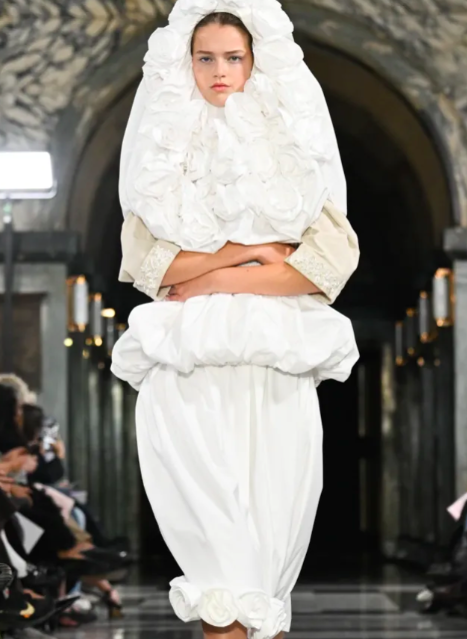

At Simone Rocha
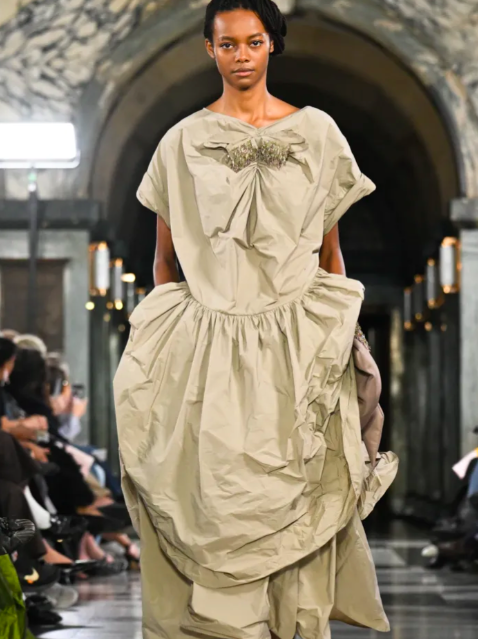

At Simone Rocha
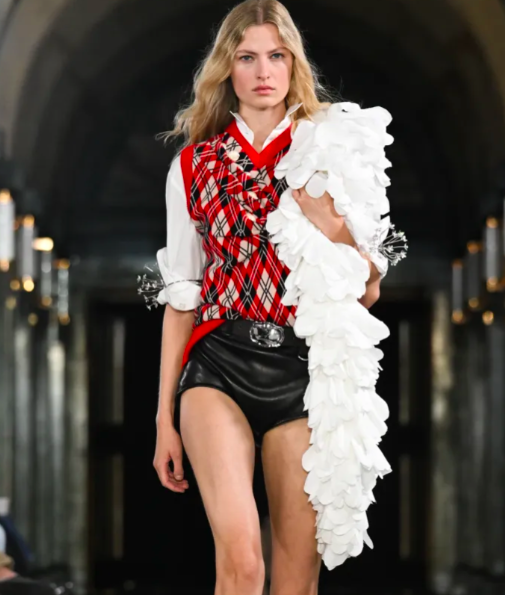

At Simone Rocha
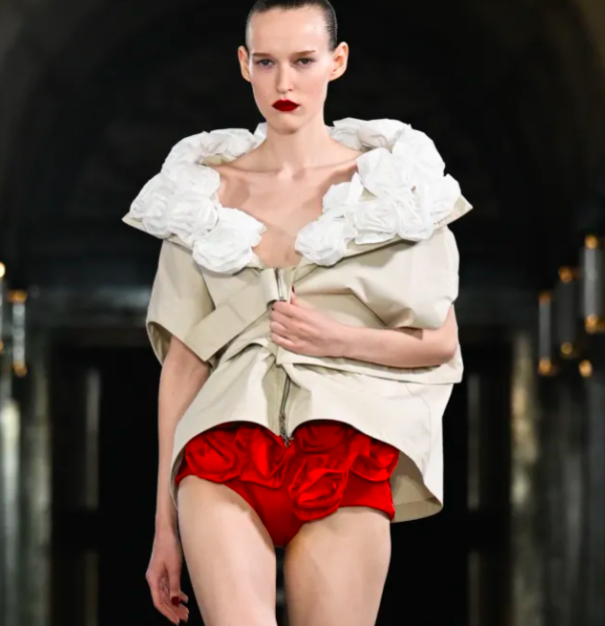

At Simone Rocha
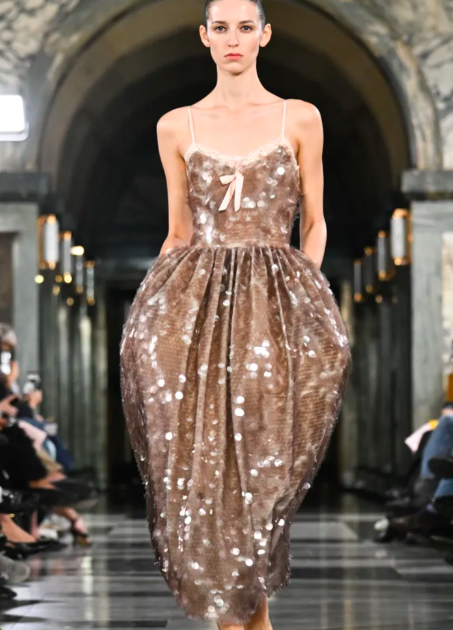

At Simone Rocha
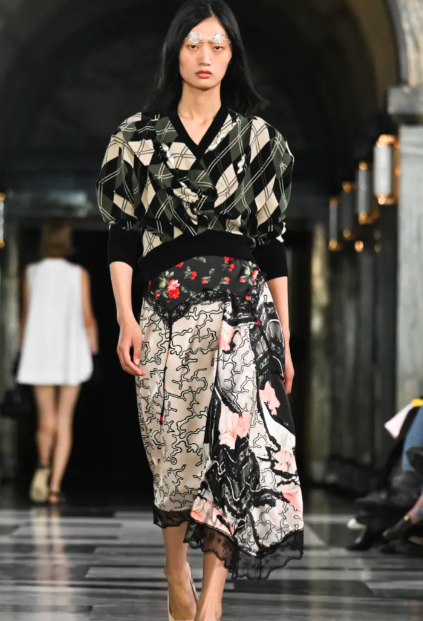

At Simone Rocha
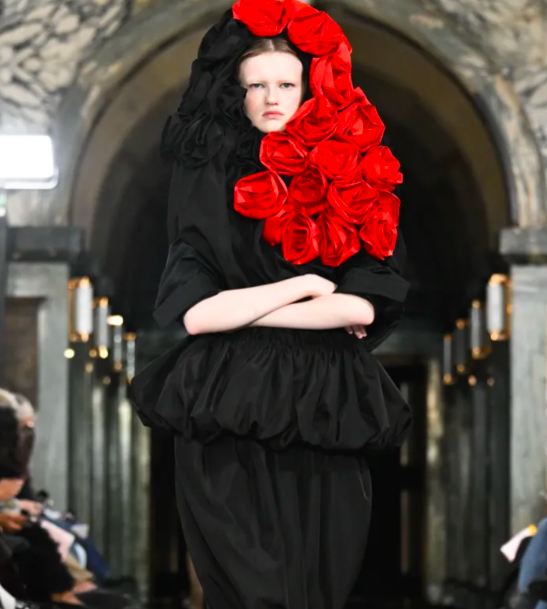

At Simone Rocha
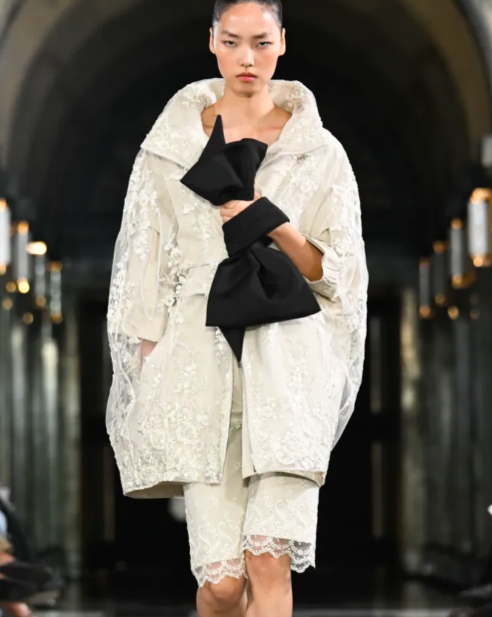

At Simone Rocha
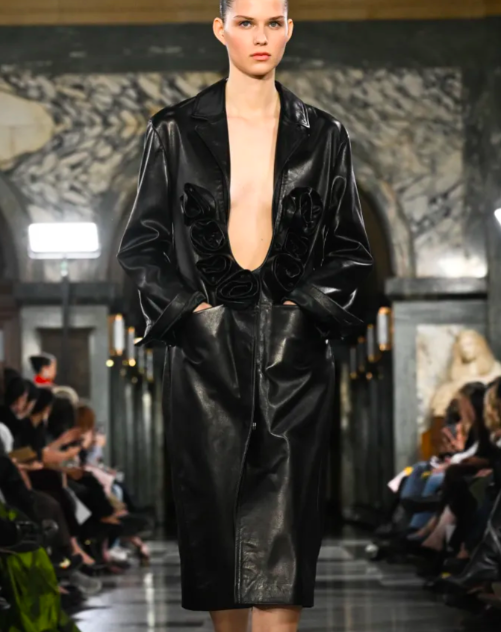

At Simone Rocha
ERDEM
Watch Erdem’s Show here:
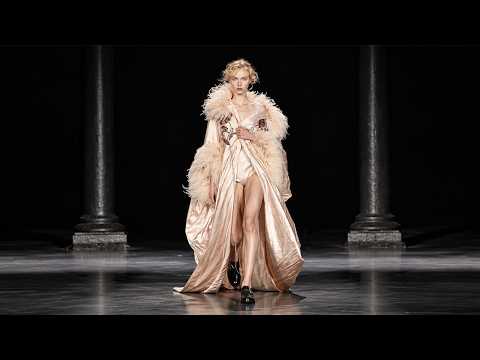
Erdem Moralioglu is known for his inimitable reinterpreting and reworking of fashion from the past – the 1920s, 1930s and 1950s especially. We’ve come to adore his signature vintage tulle ballgowns with their shapely silhouettes, typically in soft greys, sage greens and ballet pinks, embossed with diamante rhinestones from over the past 20 years.
This season the spotlight fell squarely on the 1920s and ‘30s, and specifically a character called Barbette, a male trapeze artist at the Moulin Rouge who ended up dressing up as a woman for the show to replace a female co-star who died.
It’s here that the genius of Erdem really shines through: this collection is, just like a trapeze artist, suspended somewhere between masculinity and femininity. Allegedly, when Barbette took off his wig after performances, his popularity was even greater! It’s this duality, this androgyny, that Erdem captured superbly in his S/S 2027 collection.
The most girlie pieces – like bras and knickers, were layered with pieces that were uber- masculine. These combinations were anything but genderless – they showed how the same person can effortlessly combine something super feminine together with a totally masculine piece. Case in point: heavy tweed jackets and canvas parkas were paired with rhinestone-embossed knickers, ballgowns were anchored in sturdy men’s shoes.
And it all looked like a match made in heaven.
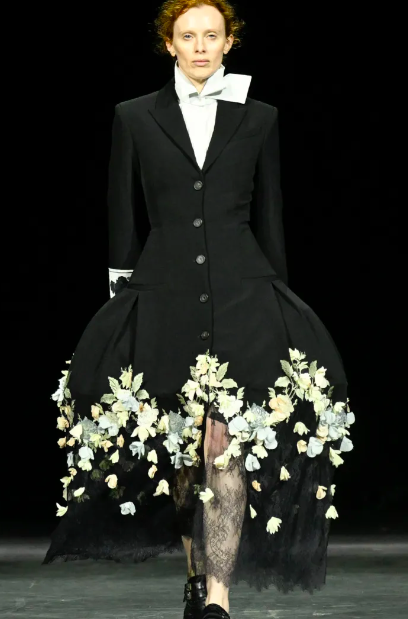

At Erdem
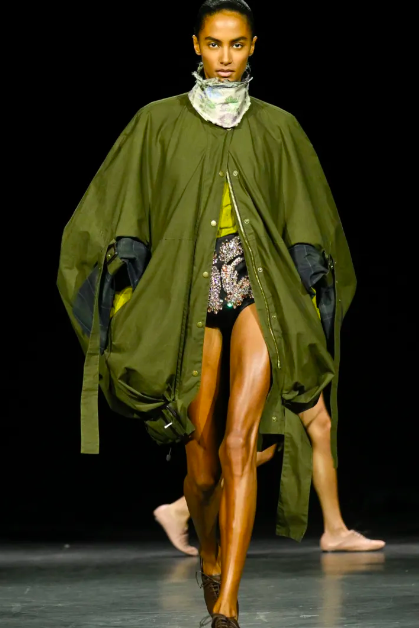

At Erdem
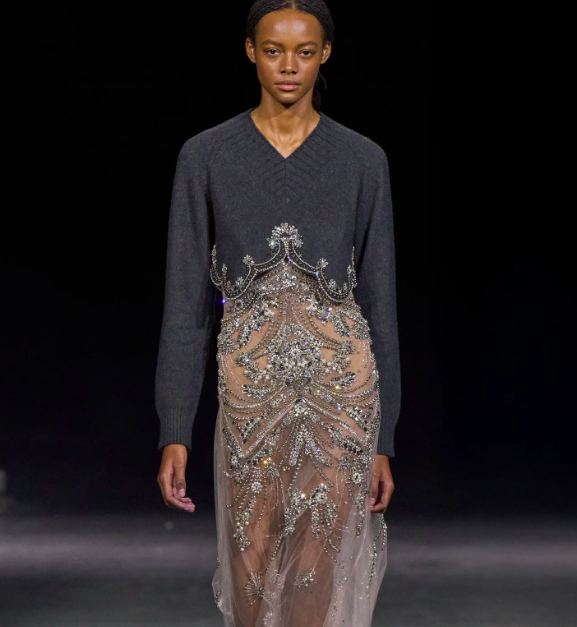

At Erdem
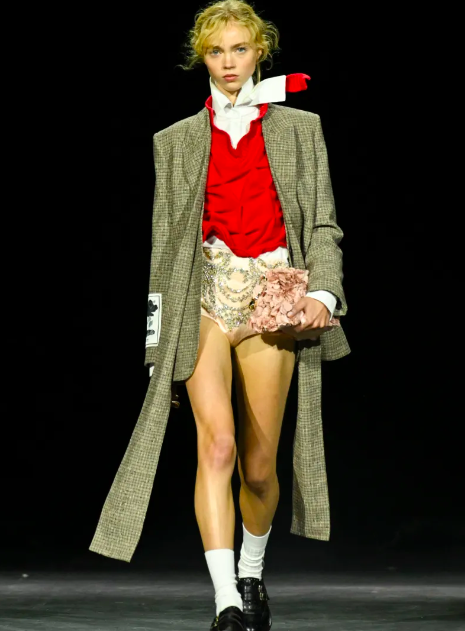

At Erdem
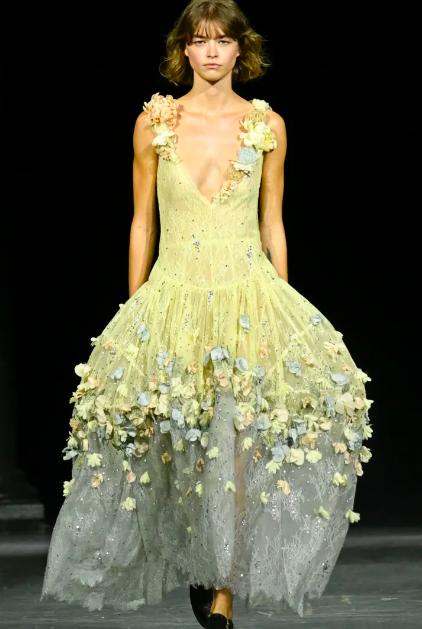

At Erdem
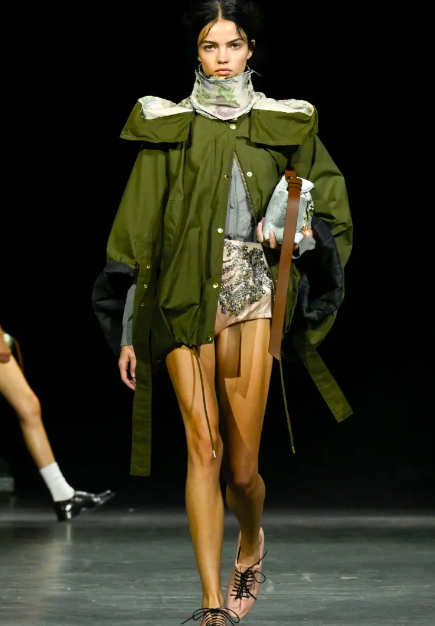

At Erdem
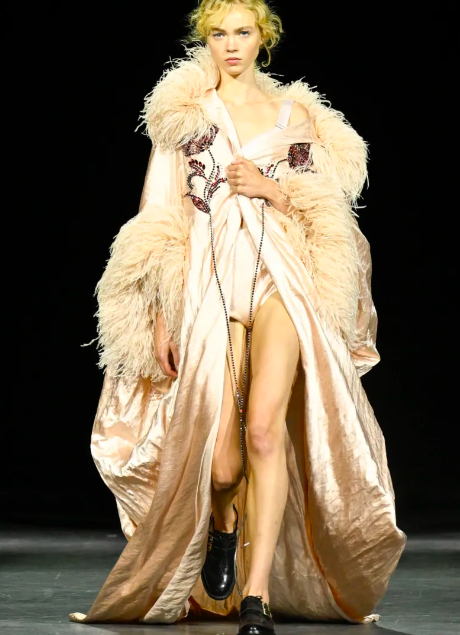

At Erdem
MCQUEEN
Watch McQueen’s Show here:

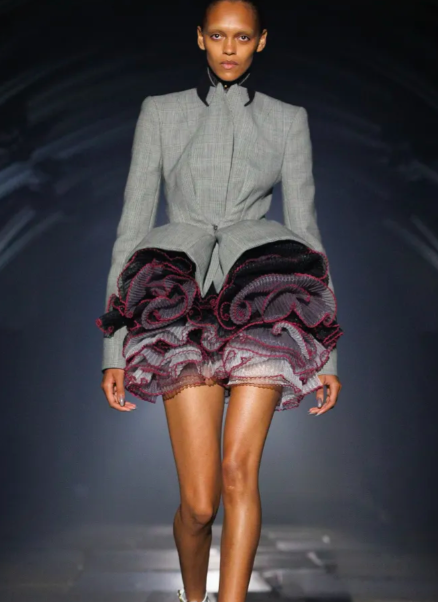
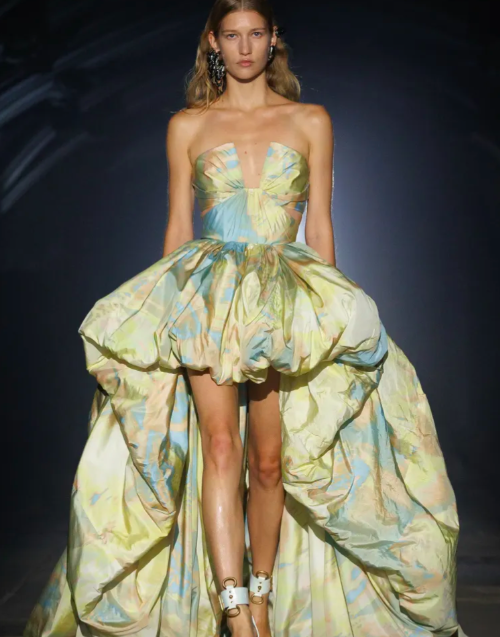
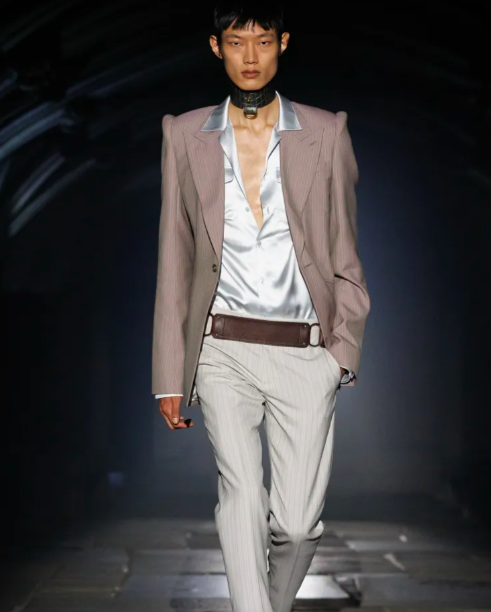
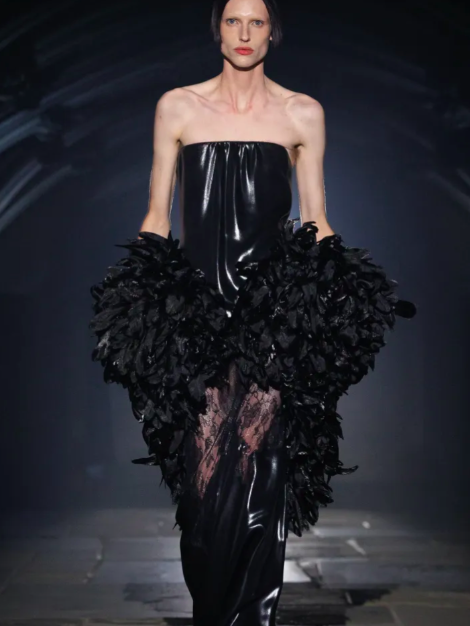
McQueen returned to London Fashion Week after an absence of 25 years of showing in Paris, and creative director Seán McGirr staged a homecoming of epic proportions.
McGirr juxtaposed the sacred and the sub-cultural in this S/S 2027 collection, and the effect was, well, pretty dramatic. Piero della Francesca’s The Baptism of Christ was the artwork that inspired the designer as a student, and it was to this divine backdrop that he pinned the other end of his inspiration: the crazy energy of the contemporary London’s rave scene! A greater contrast is indeed hard to imagine.
The result of this duality was a dark, gothic romanticism, as seen in the demonically energised ‘horned’ hairstyles of the models, the sculptural angel’s wing tailoring, the recycled silver body harness and the acid floral prints. There was a dress made of interlinked hand-embroidered silver metal skulls that stood out amongst all the other fantastical creations. There was plenty perforated leather, mesh, metallic leaves, S&M leather chokers and other elements that reminded one perhaps of the ‘darker’ side of things.
Angel or devil? Who knows, but one thing is for sure, the clothes were pure McQueen, and no doubt Alexander will be grinning from above.
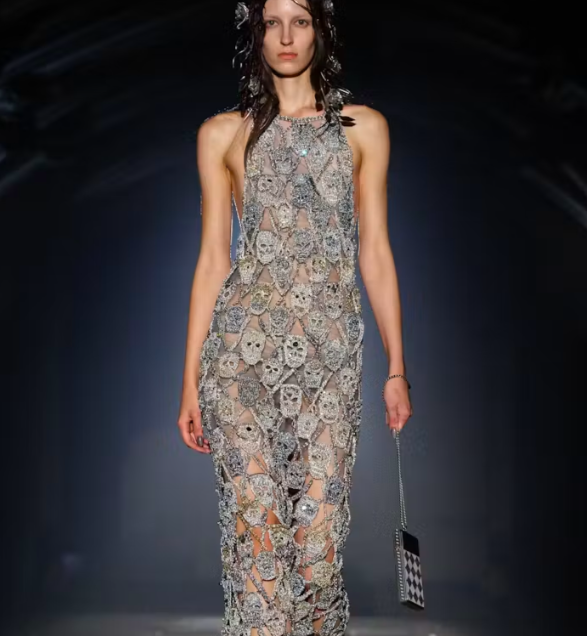

At McQueen
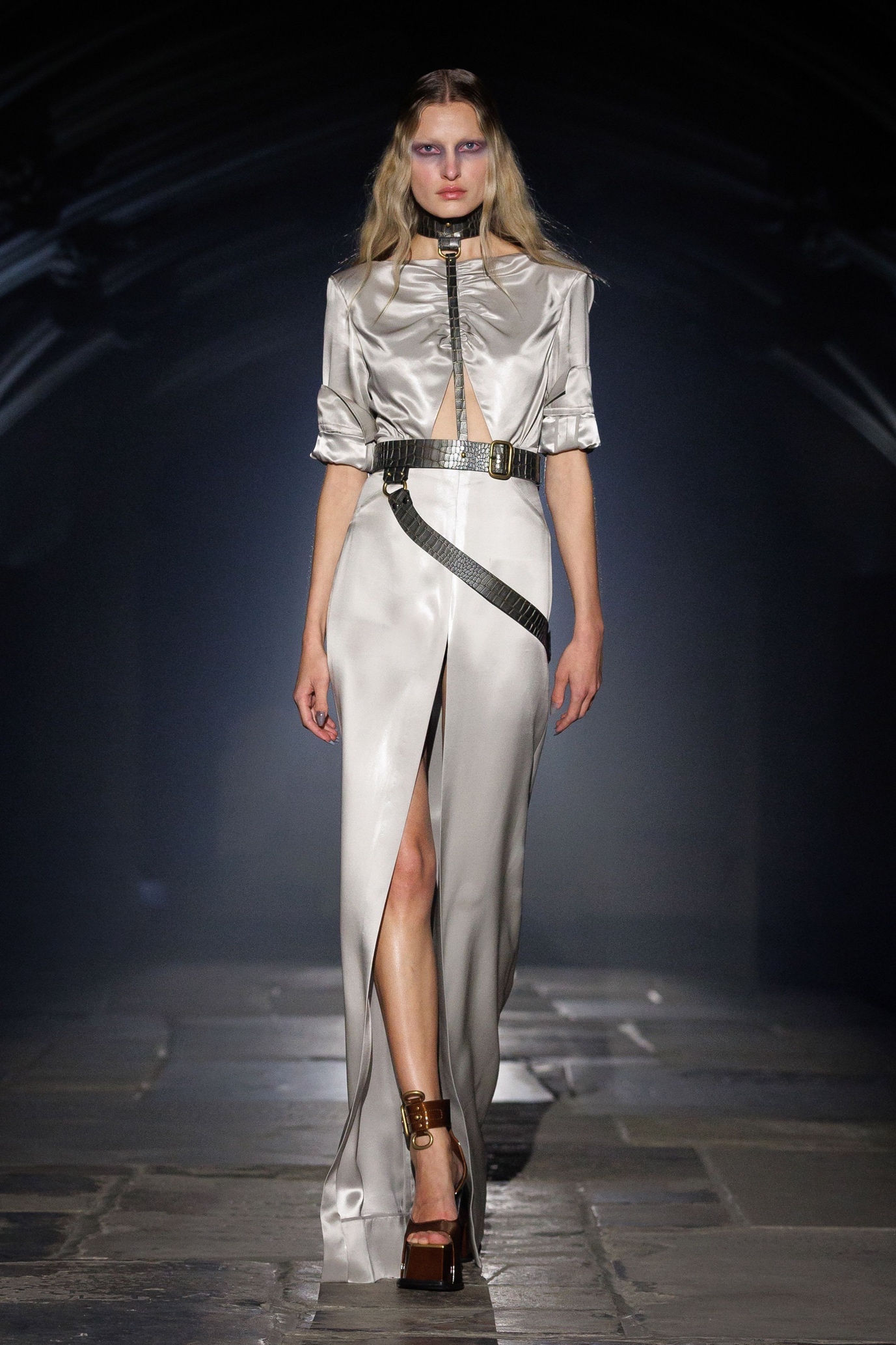

At McQueen
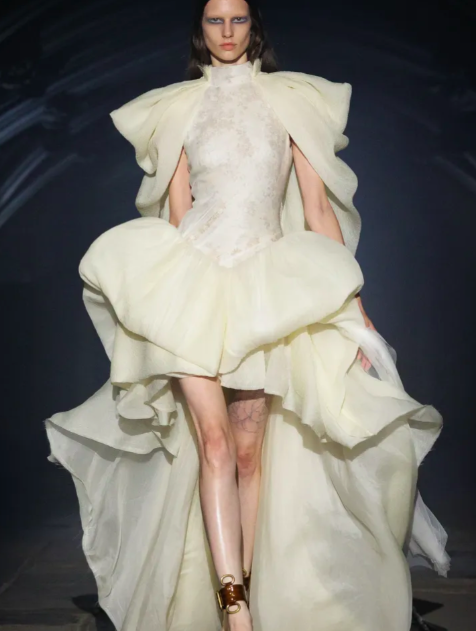

At McQueen
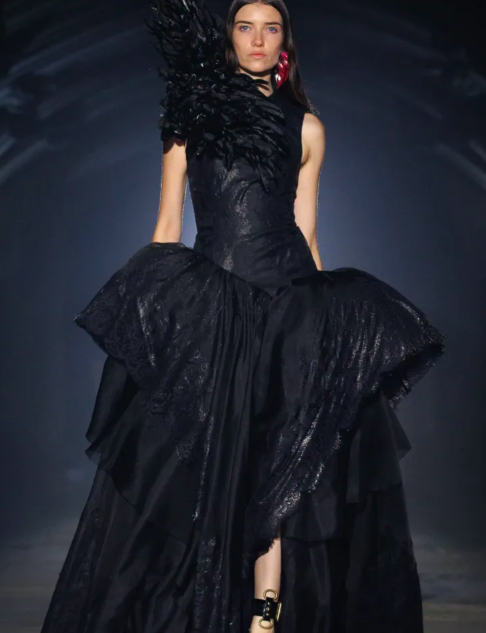

At McQueen

At McQueen

At McQueen

At McQueen

At McQueen
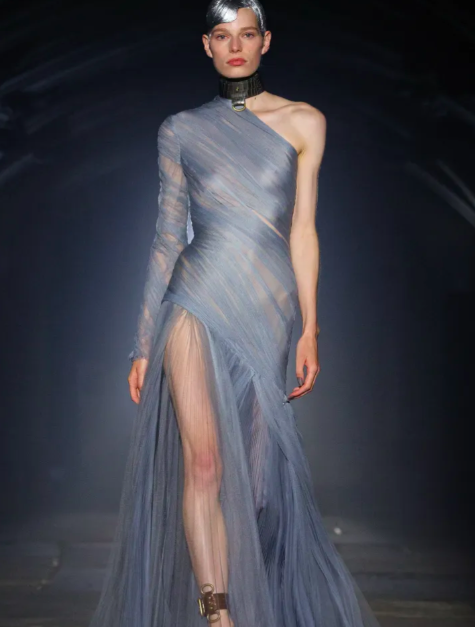

At McQueen
ROKSANDA
Roksanda Ilincic showed her S/S 2027 collection on the roof garden of the brutalist National Theatre building, a brilliant backdrop for her artfully shaded, voluminous and sculptural pieces.
A woman who faithfully designs for women, started her process for S/S 2027 by looking at a woman artist’s work, and this time it was Swiss-American fibre artist Françoise Grossen with her signature mammoth knotted-rope creations. Grossen’s braiding techniques were translated into ensembles where ropes and threads cinched the backs of garments together, and where threads dangled and trailed from giant clutch bags.
Colours of choice this time were the whole family of reds, oranges and pinks – vibrant and energetic! The designer’s signature sculptural gowns also made way for more practical daywear: shirt dresses, safari jackets, lounge pants and easy-to-wear jackets and coats worked a treat within the collection. The accessories, in particular looked beyond sculptural. Giant clutch bags came with floor-sweeping, tactile fringing.
Ilincic did more than just design and collaborate this season – she also physically hand-painted the gorgeous huge silk scarves that were then draped around models. Says the designer of these, “I wanted to make them into pieces that become dresses-slash-tunics. So you can kind of wear them in a different ways.” These painterly artworks also adorned some of her stunning ballgowns.
It was most befitting that statuesque Brit model Erin O’Connor closed a show that clearly had maximum impact. There was no dressing down at Roksanda’s, that’s for sure.
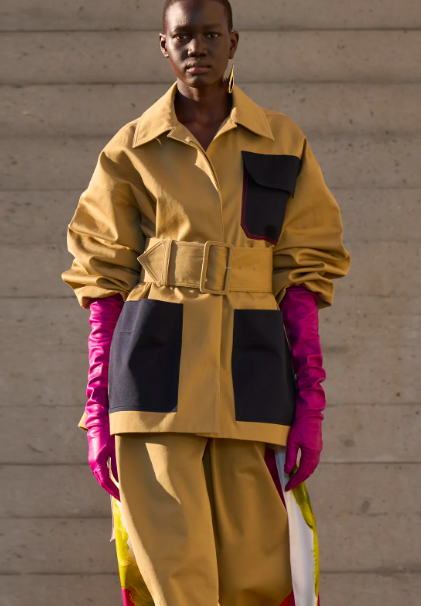

At Roksanda
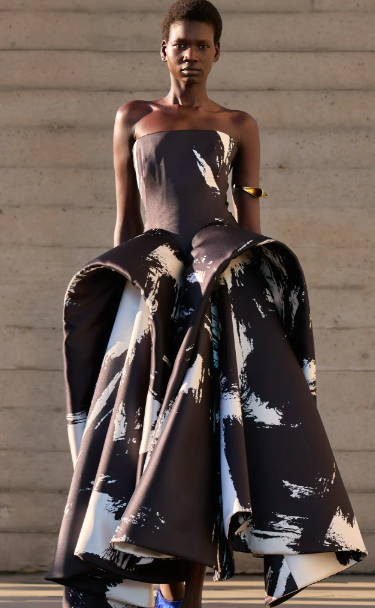

At Roksand
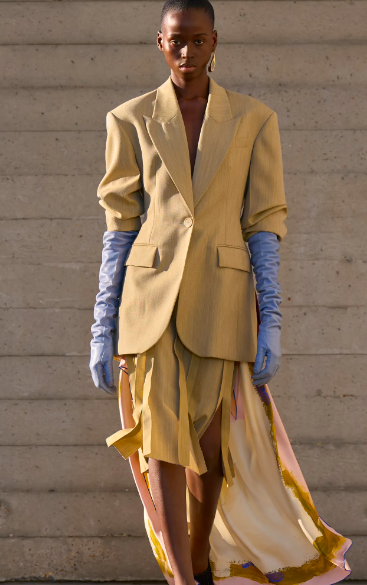

At Roksanda
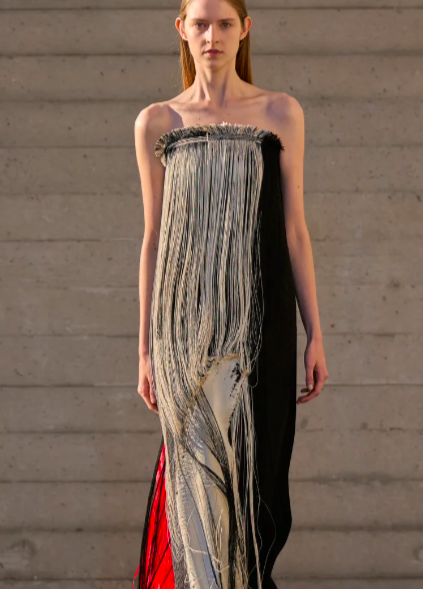

At Roksanda
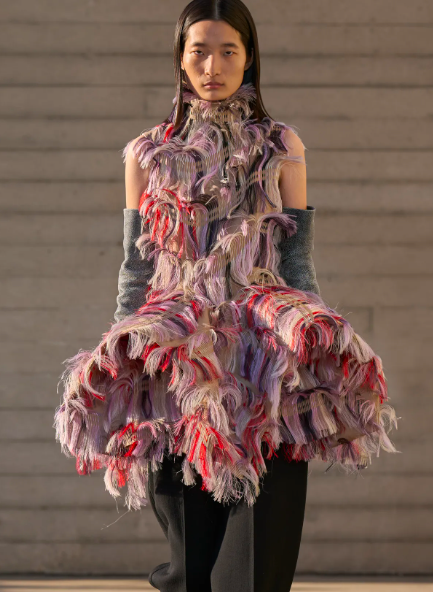

At Roksanda
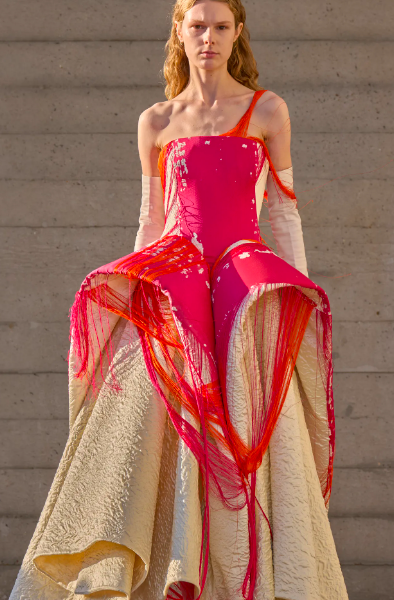

At Roksanda
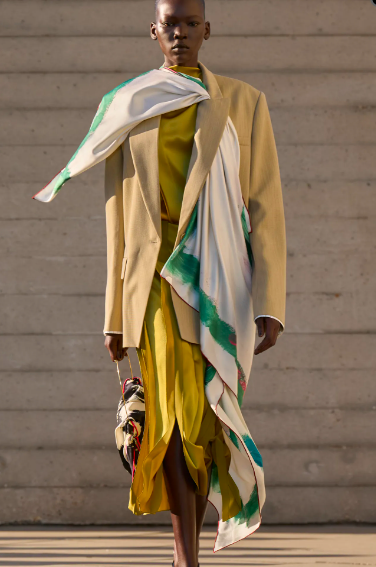

At Roksanda
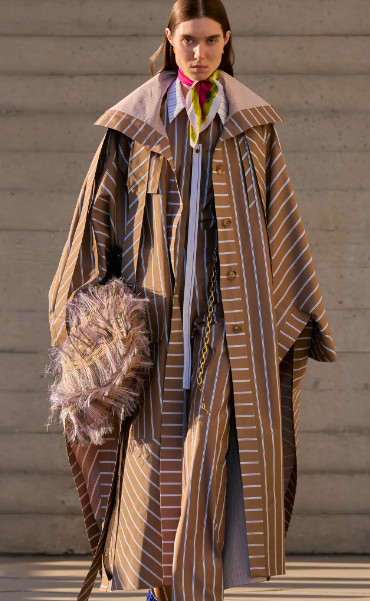

At Roksanda
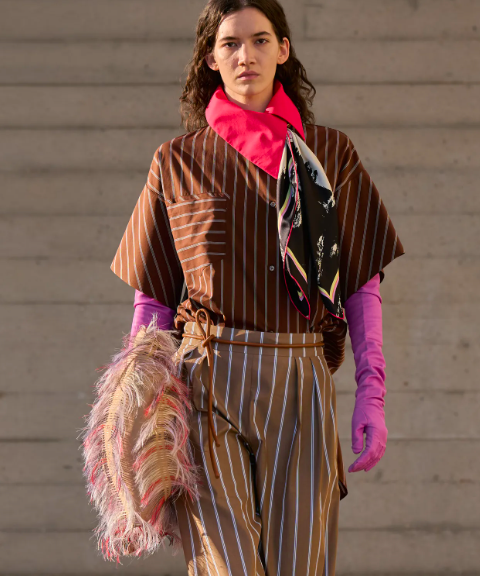

At Roksanda
EMILIA WICKSTEAD
Emilia Wickstead homed in on the 1940s American Abstract Expressionist artist Lenore “Lee” Krasner (artist Jackson Pollock’s wife) as her key inspiration for a collection that she chose to make a film of, rather than show on the runway.
The interplay between the shades of the various pastel-coloured rooms in which the film was shot (inside the designer’s Sloane St store) and the actual clothes made for a very interesting dialogue. As the film moves from room to room, changing from dull green to bright yellow, from lavender to sky blue, the colour of the clothes also got a fascinating new interpretation. The stripy fabrics of the shirts and gowns, in particular, looked very ‘1940s seaside chic’ against these backdrops.
There was no doubt that artist Leonore Krasner was the key inspiration for this endearing collection: the thread runs right through the collection. The floral patterning (Krasner loved nature), the fit and flare silhouettes of the dresses together with the interesting necklines were all very classic Emilia Wickstead, but with a definite nod to Krasner. What was new was the slightly frayed chiffon trims to give that rather ‘undone’ feel to it – apparently Krasner always liked things a little ‘unravelled. The yellow, pink and beige cotton tweed that was used to weave the dresses, skirts and pants echoed Krasner’s painting ‘Prophesy’ (1956). Krasner also liked to have a hand in styling and reinventing her own clothes – again, there was a recognition of this in the long dresses with bibs that can be folded up or down, or styled n an asymmetric fashion. Some of the dresses even had pockets “for paint brushes!”.
A fun new development for Emilia Wickstead’s many followers to marvel over is her use of feathers: a boucle tweed minidress, for example, came with a bold, removable band of feathers. This versatility and playfulness will most certainly attract the attention of many younger fans. What fun one can have with these!
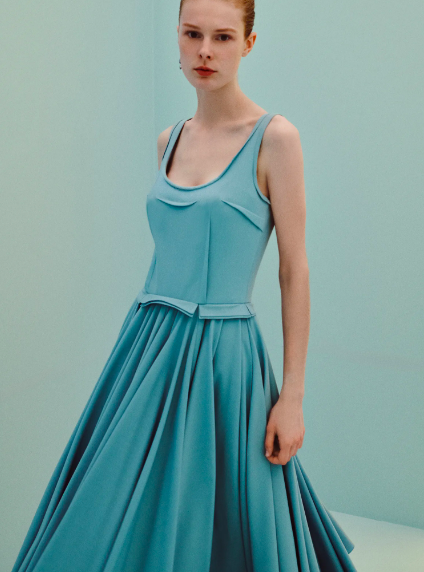

At Emilia Wickstead
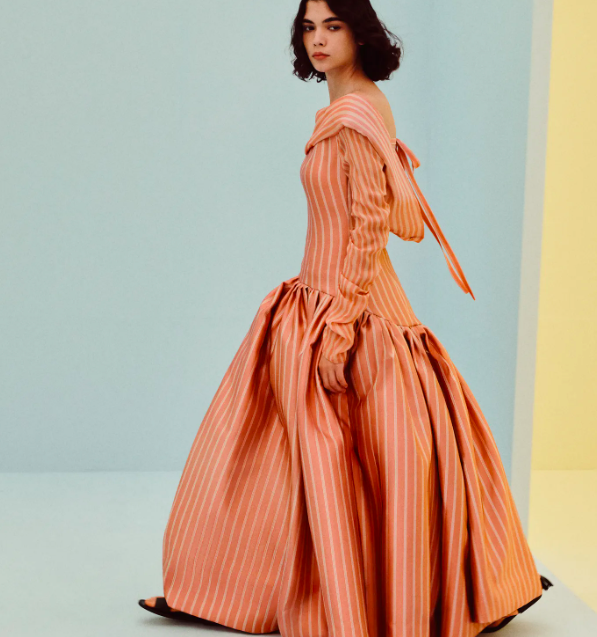

At Emilia Wickstead
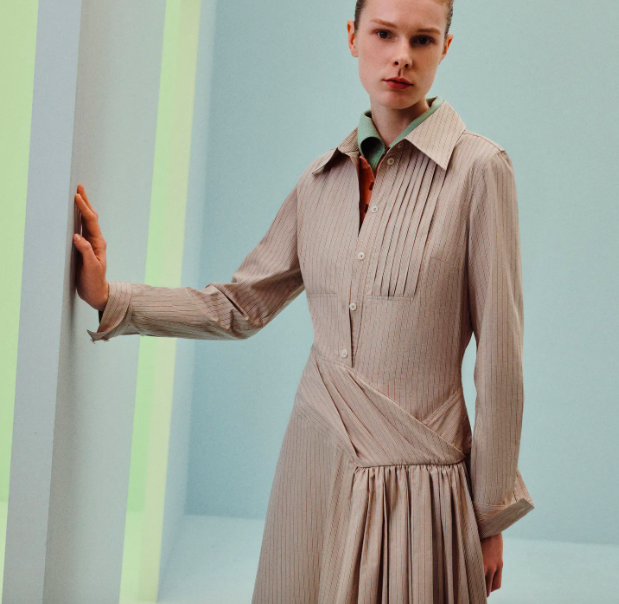

At Emilia Wickstead
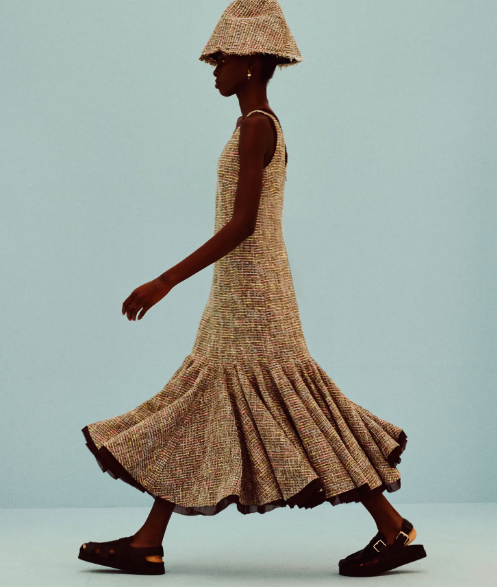

At Emilia Wickstead
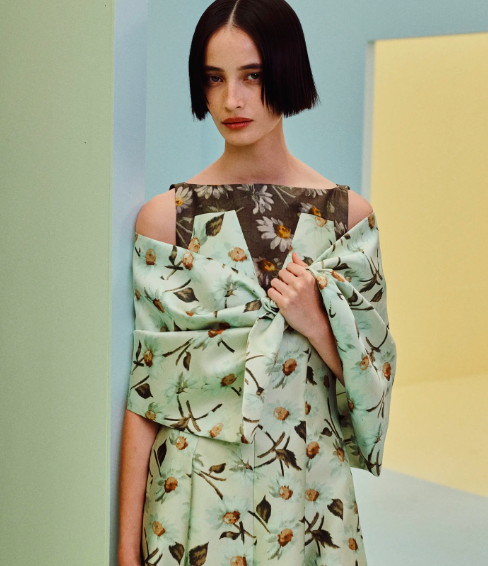

At Emilia Wickstead
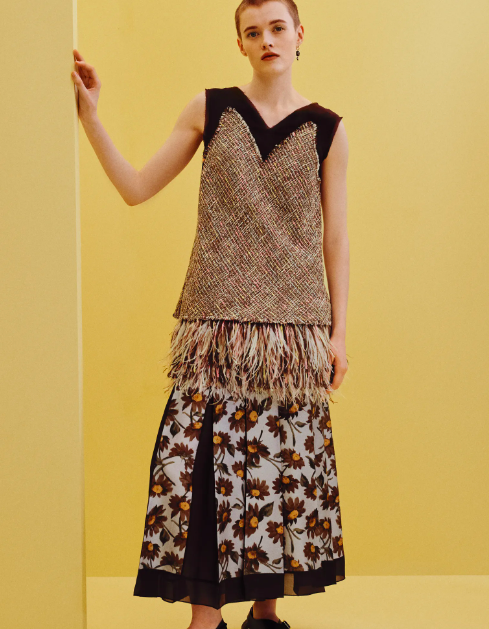

AT Emilia Wickstead
HARRIS REED
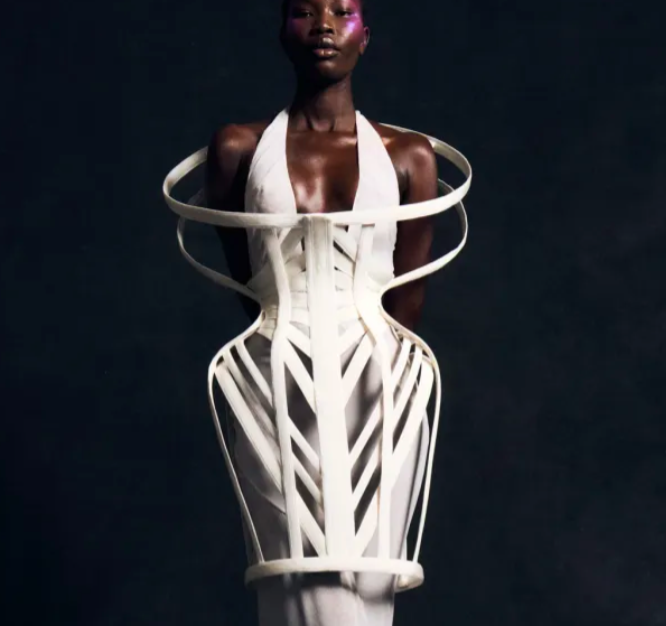
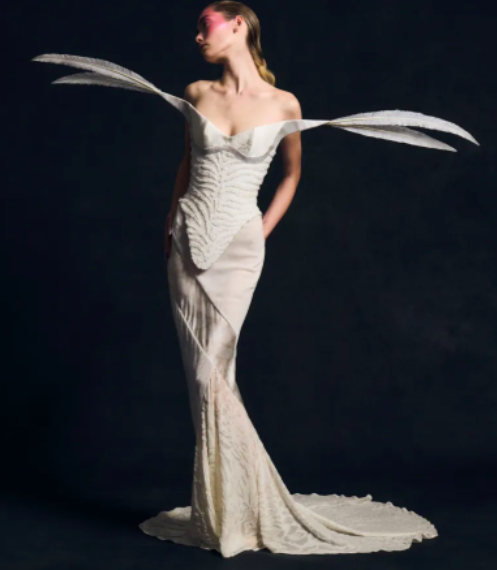
There was high drama at Harris Reed – or perhaps, ‘period’ drama would be a more apt description. The drama queen vibes were very Queen Elizabeth 1 and Queen Victoria – even Marie-Antoinette. These uber-sculptural pieces were nothing but wearable art. Piece after piece made one gasp for air.
A rather ‘modest’ jacket and skirt ensemble opened proceedings – the jacket’s leg of mutton sleeves so exaggerated they brushed against the model’s ears. Then came ballgowns with corseted bodices and sculptural ‘wings’ – some as wispy as a dragonfly’s wings, others like angels’ wings.
Sheer and exquisite fishtail skirts followed. A sculptural dress with an ‘ectomorph’ corset followed. Some pieces resembled moulded classic Greek statues – all jaw-droppingly stunning.
The monochrome palette – ranging from virginal white to ivory and beige – suited this theatrical offering down to the ground, as colour may have distracted from all this beauty. Instead the texture of the jacquard, satin, embroidery and lace did what was needed to perfect these fabulous chiseled silhouettes.
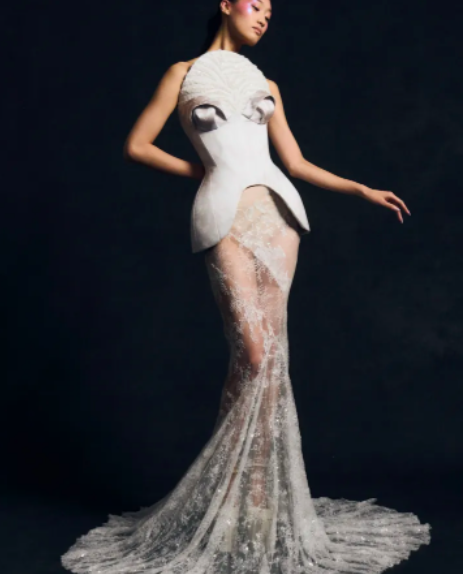

At Harris Reed
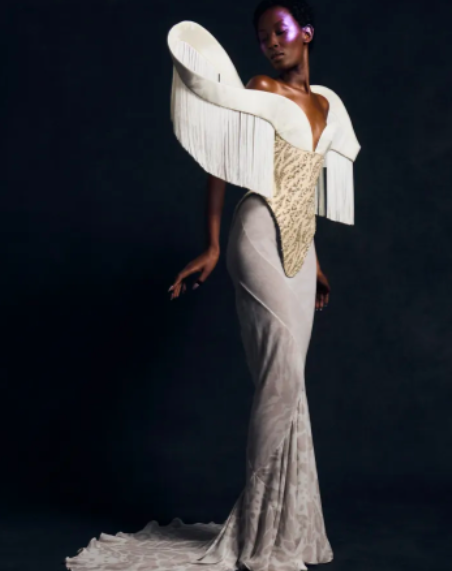

At Harris Reed
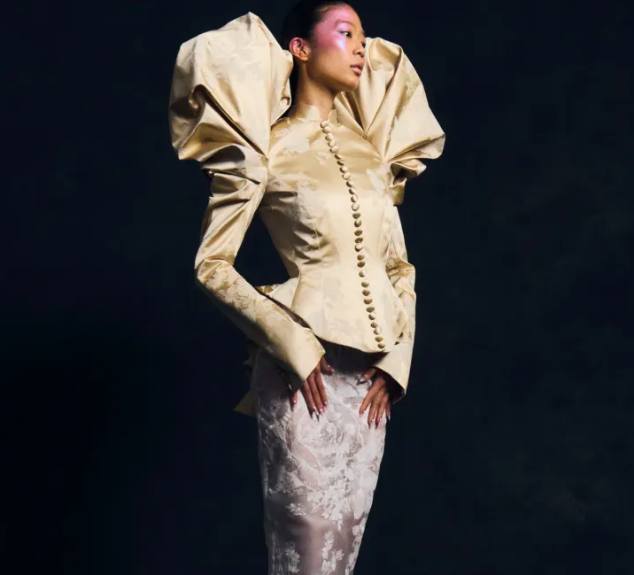

At Harris Reed
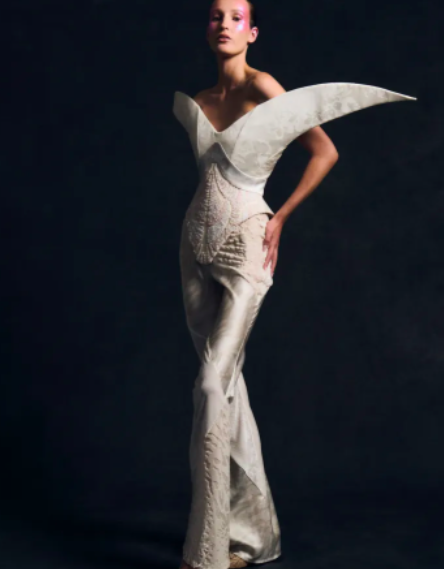

At Harris Reed

At Harris Reed

At Harris Reed
For any questions/feedback regarding the above mentioned products/brands, please do contact us anytime by clicking here
You must be logged in to post a comment Login