Gaming
Old Meets New: Square Enix Opens Up Its Past While Wrestling With Final Fantasy’s Future

Final Fantasy has always been a franchise caught between reinvention and nostalgia, but this week that tension is on full display in two very different corners of Square Enix’s business: a quarter-century-old MMORPG finally loosening its grip on new players, and a much-anticipated remake project still trying to figure out what kind of game it wants to be.
Final Fantasy XI, the series’ original foray into massively multiplayer online gaming, launched on the PlayStation 2 in 2002 during the same gold rush that produced World of Warcraft. It never matched that scale of success, and in the years since, its younger sibling Final Fantasy XIV has become the undisputed face of the franchise’s online ambitions. But XI never really went away. Despite sparse updates, the game has retained a loyal community, buoyed in part by a 2025 Final Fantasy XIV questline that tied directly back into XI’s story and reportedly drew a fresh wave of curious players to the original.
Now Square Enix is giving those curious newcomers a much easier way in. The game’s free trial, long mocked by fans for being stingy compared to XIV’s famously generous offering, has been overhauled. Previously, trial players were capped at level 50 and given just 14 days before a subscription became mandatory. Under the new terms, there’s no time limit at all, and the level cap has been raised to 75 — enough to meaningfully experience the base game before any expansion content kicks in.
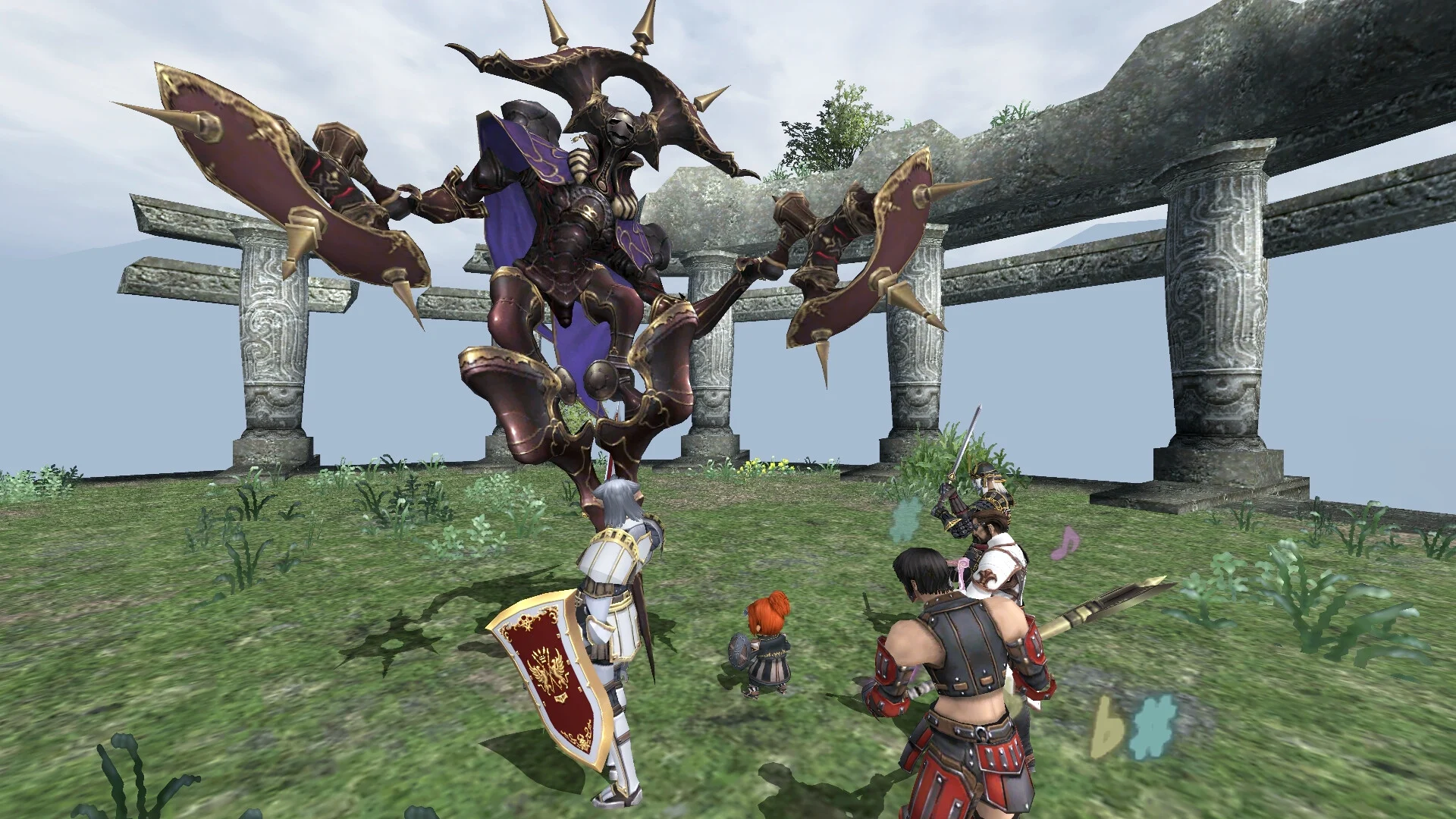

It’s not a completely open door. Trial accounts are still restricted to base-game content, limited to holding 100,000 gil at a time, and barred from using the in-game auction house or trading with other players. Players can join parties but can’t form their own. Still, for a 24-year-old game that has outlived two console versions and watched its own servers shut down once already — the Xbox 360 and original PlayStation 2 editions were discontinued back in 2016 — the move is a significant gesture toward keeping the game’s door open rather than letting it quietly fade into obscurity.
There’s something almost touching about a PS2-era MMO still finding ways to welcome new blood in 2026, long after the genre it helped popularize has moved on to live-service battle royales and loot-driven shooters. Square Enix clearly sees value in letting that history breathe rather than sealing it off as a museum piece.
That instinct to honor the past sits in interesting contrast with what’s happening on the other end of the Final Fantasy timeline, where the long-running FF7 Revelation project — the next chapter in the Final Fantasy VII remake trilogy — continues to generate headlines less about nostalgia and more about uncertainty. Director Naoki Hamaguchi has been candid in recent interviews about how unresolved some of the game’s core design questions still are, including how to strike a balance between real-time action and the series’ traditional turn-based combat roots. According to comments from the game’s battle lead, there’s still no agreed-upon “correct” formula for blending the two systems — and, notably, that open-endedness is framed not as a problem but as part of what keeps the creative team engaged with a trilogy that’s been years in the making.
It’s a telling admission for a project under this much scrutiny. The original Final Fantasy VII Remake and its sequel, Rebirth, already took liberties with the source material’s turn-based combat, folding in real-time action while keeping strategic menu-based elements for abilities and magic. Revelation appears to be pushing that experiment even further, with Hamaguchi reportedly wanting to prove that “Final Fantasy doesn’t have to be a traditional-style JRPG.” Square Enix has also confirmed the game will include free level boosts for players who’d rather focus on story than grinding, and that it will ship as a digital download rather than a multi-disc physical release — a decision the studio says is meant to protect the game’s visual fidelity, even as it arrives amid broader industry pushback over the shrinking availability of physical games.
Taken together, the two stories paint a picture of a franchise trying to serve two very different audiences at once. On one side are veterans who’ve stuck with Final Fantasy XI through sixteen years of dwindling support, now being rewarded with an easier on-ramp for friends and newcomers. On the other is a flagship remake trilogy still actively negotiating what “Final Fantasy” even means mechanically in 2026, unafraid to admit it hasn’t nailed the formula yet.
Whether that uncertainty pays off remains to be seen — Revelation is still without a confirmed release date — but it’s a reminder that even one of gaming’s most tradition-bound franchises is still willing to question its own rules, while making sure the door to its oldest worlds stays open for whoever wants to wander back in.
You must be logged in to post a comment Login