Gaming
Reigns Studio Nerial Shuts Down as Founders Step Back “To Our Roots”

Nerial, the small but celebrated studio behind Reigns, Card Shark and The Crush House, is closing its doors after thirteen years, the company’s founders announced this week. Staff have been laid off as part of what the studio is calling a move into “hibernation mode,” a euphemism that does little to soften the blow for a team whose compact, idiosyncratic games earned outsized acclaim in an industry increasingly dominated by blockbusters.
The news came in a joint statement from CEO Tamara Alliot and creative director François Alliot, who said the decision was reached in consultation with Devolver Digital, Nerial’s longtime publishing partner. “We have decided together with our partners at Devolver to end development at the studio,” the pair wrote, framing the closure less as a failure and more as a deliberate pause after over a decade running the company.
“While this marks the end of Nerial as we know it, it’s not the end of game dev for us,” the Alliots continued. “We’re going back to our roots. François’ unrelenting drive to make games is as strong as ever, but first we need to take a break and reflect on everything that’s happened, before coming back with a new perspective.” On LinkedIn, François Alliot described his next chapter more bluntly: a return to “being pure indie.”

Tamara Alliot used her own LinkedIn post to publicly vouch for the colleagues now out of work, naming seven staff members affected by the closure and urging other studios to snap them up: Oscar Harrington-Shaw (narrative and writing), Helen O’Dell (art direction), Neil Goodman (lead programmer), Gordon Speirs (programmer), Ben Obikoya (senior programmer), Neil Bull (QA lead), and AJ Kerr (senior producer). “Nerial has been a huge part of François Alliot’s and my life for the past 13 years,” she wrote. “It’s with great sadness that we are stopping now, as we have the best team in the world, but we are also keen to take a bit of time off.”
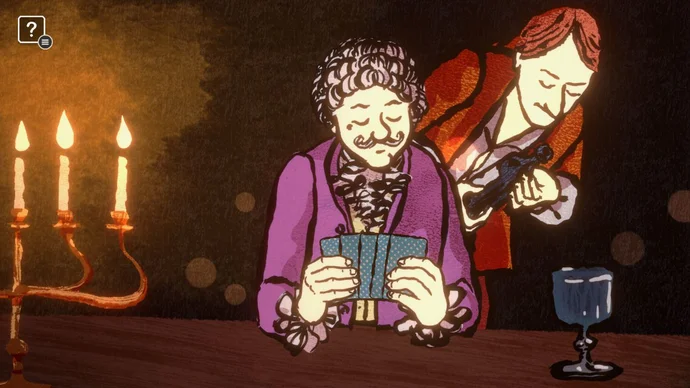
Founded in 2013, Nerial built a reputation disproportionate to its size. Reigns turned the swipe-right mechanics of dating apps into a darkly funny monarchy simulator, spawning several sequels and spin-offs. Card Shark, released in 2022, cast players as an 18th-century cardsharp’s apprentice, folding sleight-of-hand mechanics into a tightly plotted period piece. More recently, The Crush House offered a queasy satire of reality television and surveillance culture, filtered through the lens of a fictional streaming show. Across its catalogue, the studio distinguished itself with games that were short, sharp and conceptually bold rather than sprawling or formulaic.
Neither the Alliots nor Devolver have offered much detail on what prompted the closure beyond the desire for change after thirteen years at the helm. But the timing is hard to separate from Devolver’s own turbulence. In August, the publisher told shareholders it intended to delist from the London Stock Exchange, citing what it called a “period of significant disruption and volatility” across the games industry, along with “several impairments of underperforming titles amid an increasingly competitive and unpredictable market environment.”
That broader context has become grimly familiar to anyone following games industry news over the past few years, as layoffs and studio closures have swept through companies big and small, from AAA publishers to scrappy independent outfits like Nerial. Even teams with critical goodwill and a track record of distinctive, well-reviewed releases have found themselves unable to weather shifting publisher priorities, cooling investment and an increasingly risk-averse market.
For now, Nerial’s story ends not with a definitive shutdown notice but with a studio “hibernating” and a founding duo promising to return, eventually, to making games on their own terms. Whether that resurfacing takes the shape of a new studio, a solo project, or something else entirely remains unclear. What is certain is that a team responsible for some of the smartest, most playful games of the past decade is now out of work, and an industry that can’t find a way to keep that kind of talent employed has, once again, come up short.
You must be logged in to post a comment Login