





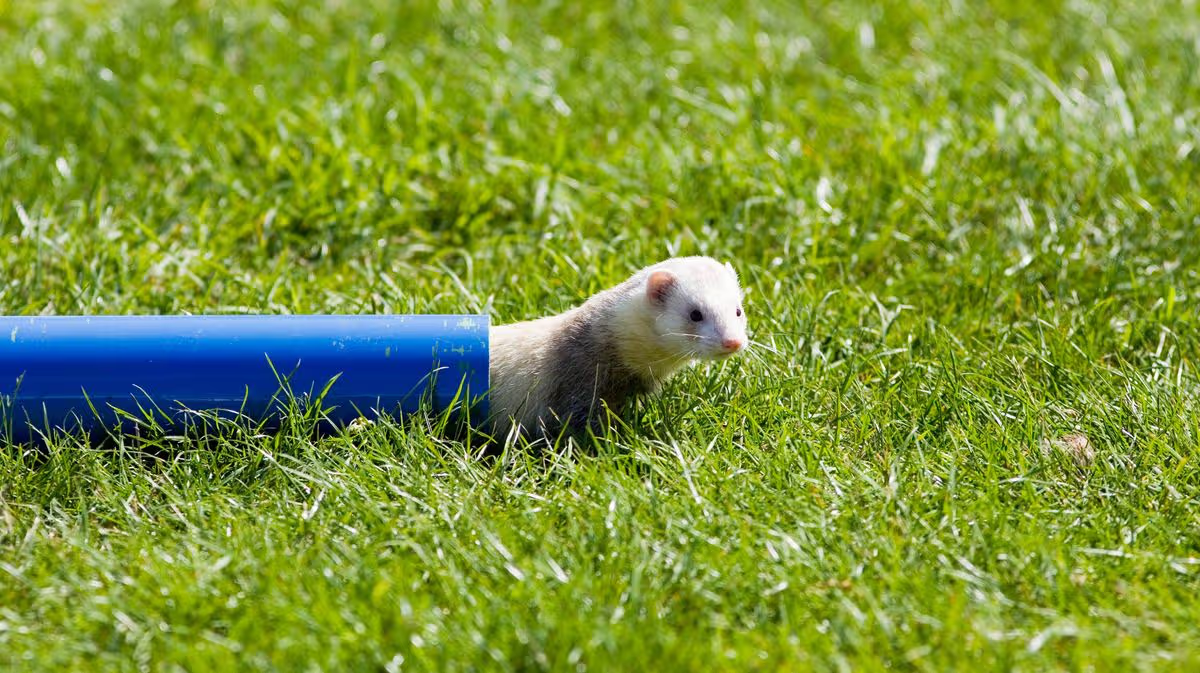
Rathlin is home to Northern Ireland’s biggest seabird colony, with more than 250,000 birds including puffins, razorbills, guillemots and Manx shearwaters
A “world-first” conservation scheme has successfully eradicated feral ferrets from a Northern Irish island to protect thousands of seabirds.
Rathlin Island, off the north coast of County Antrim, is home to Northern Ireland’s biggest seabird colony, with more than 250,000 birds including puffins, razorbills, guillemots and Manx shearwaters breeding and nesting there each year and providing a major nature tourism draw.
It is also home to a population of corncrakes – a ground-nesting bird which is extinct in the rest of Northern Ireland.
But the birds have been under severe pressure from a population of feral ferrets, which have been on the island since being introduced in the 1980s and which prey on eggs, chicks and even adult birds.
The “LIFE Raft” partnership, led by the RSPB and working closely with the community on the island, has used trapping, camera and thermal drone surveillance and a detection dog called “Woody” to eradicate the animals, a domesticated relative of polecats.
While island eradication programmes have previously targeted the likes of invasive rats on South Georgia and invasive mice on Gough Island, in the Atlantic, to protect native birdlife, the team said it is the first time in the world a scheme has successfully removed ferrets from an inhabited island.
The LIFE Raft scheme is also working to remove brown rats – another threat to ground-nesting birds – from Rathlin Island.
LIFE Raft programme manager Erin McKeown said the “large-scale, ambitious partnership”, which has operated with significant involvement and support from the island’s community of around 150 people, had been years in the making.
Before the eradication there were an estimated 100 ferrets on Rathlin Island, with the potential to do serious damage to bird populations – with evidence of one animal getting into the puffin colony and killing up to 27 birds in a two-day period.
“They put a really high pressure on this place the seabirds have to breed and raise their young,” Ms McKeown said.
They also affected the local community, with ferrets getting into chicken coops on the island.
The project to eradicate them officially started in 2021, and has involved 30 staff and 60 volunteers, working mostly in the autumn and winter to avoid disturbing breeding seabirds and facing cold, wet, icy and stormy conditions.
Five years on, it has been declared a success, with efforts now focused on biosecurity – keeping ferrets and any other non-natural predators off Rathlin.
Already positive signs include Manx shearwaters breeding on the island for the first time in 20 years.
“From a wild bird perspective, this is one of the most robust, critical lifelines we can give our seabirds on our islands across the UK and the island of Ireland,” Ms McKeown told the Press Association.
She said seabirds were declining across the globe, and on Rathlin Island there had been a 74% decrease in the puffin population since 1999.
“If we don’t act now in this way, we could lose some of these island populations.
“This is one of the most urgent things we can do, and we know the benefits will be far-reaching for the community too,” she added.
Joanne Sherwood, RSPB NI director, said: “This is an extraordinary moment for Rathlin, for Northern Ireland, and for conservation globally.
“The successful, world-first eradication of ferrets means that puffins and other seabirds can now nest and raise their young more safely on Rathlin for the first time in generations.
“We are already seeing encouraging signs of recovery, and we expect to see populations rebound in the coming years.”
And she said: “This project is a testament to community and would not have been possible without the incredible support and commitment of the people of Rathlin, who have embraced this vision for their island’s future, ensuring protection of nature and the island’s heritage for generations to come.”
Marina McMullan, chairwoman of Rathlin Development and Community Association, said islanders would be able to raise poultry again, while the programme had provided employment, boosted local trade and brought new skills.
“It will be a delight to see some of those once-familiar birds able to flourish in the fields and cliffs of our island again,” she said.
“It’s much more than the excellent environmental win – it’s been a genuine boost to our community spirit,” she added.
The £4.5 million project received funding from the EU LIFE scheme, the National Lottery Heritage Fund, the Department of Agriculture, Environment and Rural Affairs (DAERA), and the Garfield Weston Foundation.
It was led by RSPB NI, in partnership with the Rathlin Development and Community Association, Causeway Coast and Glens Heritage Trust, DAERA and the Causeway Coast and Glenns Borough Council.
For all the latest news, visit the Belfast Live homepage here and sign up to our daily newsletter here.












































You must be logged in to post a comment Login