For obvious reasons, the secretive world of intelligence agencies and the people who revolve in its orbit remains opaque. So much so, that some of those people may not even be aware of any involvement in the secret world.
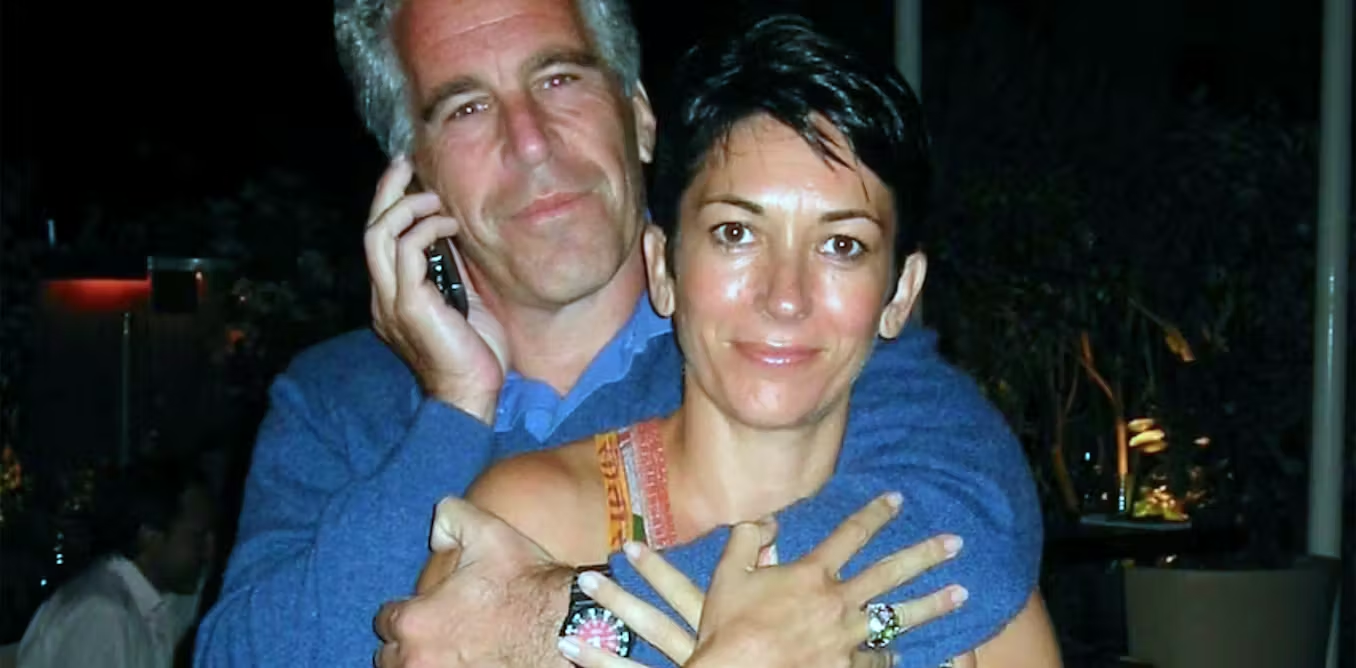
The Epstein papers have thrown up speculation about whether the late financier and sex offender might have performed services for one or another of the big intelligence agencies. And in the wake of that speculation, it has been noted that the father of Epstein’s one-time girlfriend, Ghislaine Maxwell, was the late Robert Maxwell, well-known as a larger than life publisher and newspaper proprietor in the UK from the 1950s to the early 90s. He, too, was the subject of much speculation that he might have been involved in intelligence work.
Epstein is now better known for his sex trafficking network and Maxwell for stealing from his employees’ pension funds. But their examples point to how intelligence, high finance and influence work.
Generally speaking there are three main classes of people involved in state intelligence gathering. “Officers” are full-time employees of state intelligence agencies such as MI6. They run their groups of “agents”, who are not formally employed by the state but who deliberately and knowingly gather intelligence and perform tasks for intelligence officers. And there are what is known as “intelligencers” (or sometimes assets) who may not even know they are providing information to a spy agency.
Advertisement
The currency of human intelligence is access, knowledge and often the ability to compromise officials and influential people.
We often think that intelligence agencies and their agent runners seek to directly recruit people with the access and motivation to pass on state secrets. While this is undeniably the case – and the examples of the American Aldrich Ames and the Briton Melita Norwood provide good evidence of this – intelligence agencies are equally interested in recruiting what’s known as “access agents”.
Access agents
The value of an access agent is not the secrets they have access to, but the social and professional access they provide to people who do. People in high-end society, scientific research, banking, politics and culture make excellent targets for access agents. And from an agency’s point of view, the best thing is that these agents are deniable and under the radar.
Intelligence officers and their operatives require funding, mobility and a credible back story (known as a legend). Businessmen like Robert Maxwell and Jeffrey Epstein had plenty of all three, making them excellent candidates to theoretically serve the needs of intelligence agencies.
Advertisement
But rather than indulging in speculation about Epstein and Maxwell, which is unlikely ever to be conclusively confirmed or denied, it’s more instructive to look at what we know about access agents. They are often business people, sometimes academics or journalists with a reason to travel and the opportunity to meet people in influential circles in the course of their legitimate business.
It’s worth remembering that Kim Philby, the most notorious of the Cambridge spy ring, cut his teeth as a reporter in Spain during the civil war, before embarking on a career as an MI6 officer (and Soviet double agent). Australian journalist, Richard Hughes – who appeared lightly disguised in novels by Ian Fleming and John le Carre – was believed by many to be an agent for British intelligence, working in southeast Asia during the upheavals of the 1960s and 1970s.
Perhaps the most famous businessman-agent was Cyril Bertram Mills who combined being the director of the Bertram Mills Circus with a four-decade career spanning the years before and after the second world war with British intelligence. Travelling widely in Europe, ostensibly to seek out circus acts, he provided his spymasters with evidence of German rearmament in the 1930s. He also recruited Garbo, one of the most successful double agents, who was instrumental in convincing Germany that the D-Day landings would be in Calais, not Normandy.
An access agent is trained “to be the friend the informant doesn’t have”. They can provide what their contact needs and cannot get hold of: whether that’s useful inside information of some kind, an introduction to someone important, a sexual partner or finance for one of their ventures.
Advertisement
MI5 is quite open about this on its website: “Agents operate by exploiting trusted relationships and positions to obtain sensitive information. They may also look for vulnerabilities among those handling secrets.
Publishing tycoon Robert Maxwell with British born US ambassador to France, Pamela Harriman, in 1989 . mark reinstein/Shutterstock
Secrets and lies
Determining truth in intelligence is complicated. Very rarely do we see a single piece of incontrovertible evidence that proves someone’s intelligence status or the ethics or efficacy of their actions. But then as we know, all of this is shrouded in secrecy and supposition.
In Maxwell’s case, historical scholarship and TV documentaries have provided unverified hints. In Epstein’s we have indicators such as the claim by former US attorney, Alexander Acosta that he was told Epstein “belonged to intelligence”, when he negotiated his plea deal. But it’s unlikely we’ll ever know the truth about either.
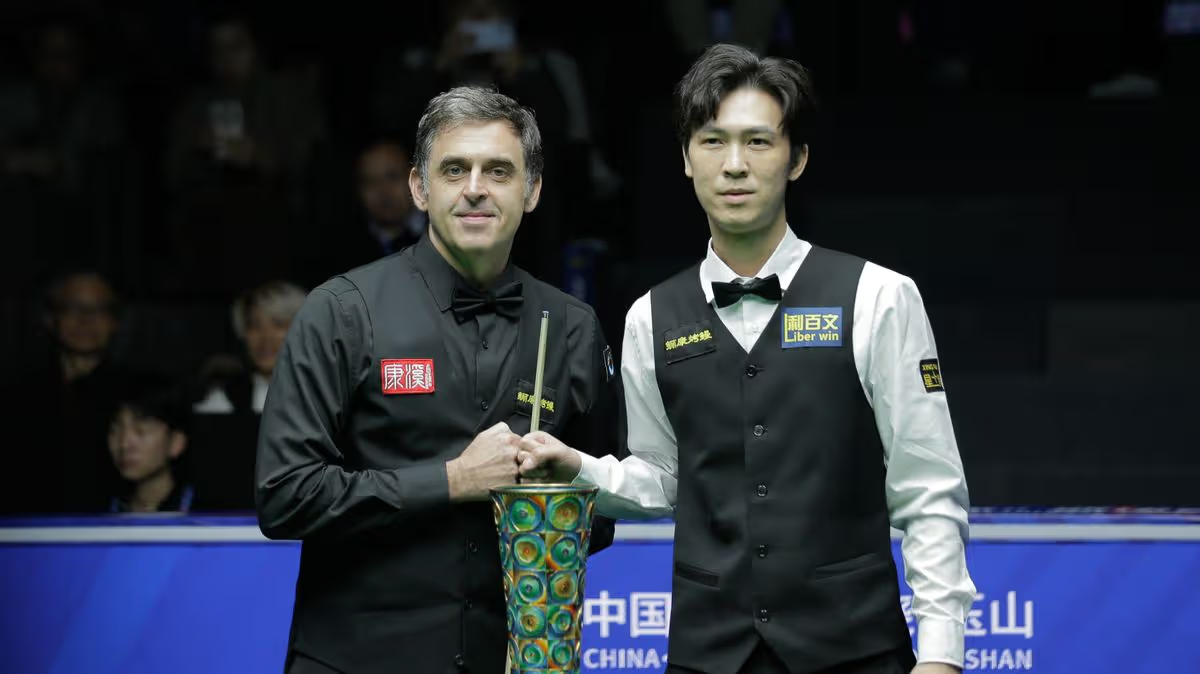
Snooker icon Ronnie O’Sullivan was swiped aside in snooker’s World Open final by a stunning comeback from Thepchaiya Un-Nooh, who recorded a 147
Ronnie O’Sullivan refused to make excuses and admitted that he got a ‘good hiding’ in the World Open final, but is happy to be in a much better place than earlier in the month. Thepchaiya Un-Nooh, 40, produced a majestic performance to win just his second ranking title in a 10-7 victory over the Rocket.
Advertisement
O’Sullivan led the final in Yushan, China, 4-0 before Un-Nooh found his groove to play some bewildering snooker. The Thai snooker star recorded a 147 in the penultimate frame of the showpiece event as Un-Nooh won six consecutive frames to claim an impressive comeback.
Seven-time world champion O’Sullivan was in search of his first title win since January 2024 but could only watch on as his opponent clocked significant breaks at the decisive moment. The 50-year-old, who made history earlier in the tournament with the sport’s first 153 break, could not hide how impressed he was with Un-Nooh and his journey.
“I just want to say well done to Thepchaiya today – unbelievable snooker,” said O’Sullivan, “I watched him last night against Judd [Trump in the semi-finals], and I was like, ‘Wow.’ Judd’s obviously the No.1 in the world and he made him look second best. I was hoping that he didn’t play like that again today but he did.
“He gave me a good hiding really. I was sitting in that chair for quite a long time. But well done to Thepchaiya, brilliant, amazing talent.”
The tournament’s 41st seed was ‘far too good’ O’Sullivan claimed. Nevertheless, the Rocket believes reaching the final showed he was now in a much better place, though he is taking each day as it comes.
“I just want to say well done to Thepchaiya today – unbelievable snooker,” said O’Sullivan.
”I watched him last night against Judd [Trump in the semi-finals], and I was like, ‘Wow.’ Judd’s obviously the No.1 in the world and he made him look second best. I was hoping that he didn’t play like that again today but he did.
Advertisement
“He gave me a good hiding really. I was sitting in that chair for quite a long time. But well done to Thepchaiya, brilliant, amazing talent.”
He added: “Thepchaiya was flowing and had every shot in the book. I have to accept that is how it is.
“If I found that bit extra I could have made it tougher than him. I am in a much better place than I was even two weeks ago. I’m taking each day as it comes.”
Advertisement
Un-Nooh, who pocketed £175,000 for taking the victory, emphasised how much of an honour it was to beat a player of O’Sullivan’s calibre.
“It is like a double dream final now,” he said. “This has always been my dream, to lift the title against Ronnie O’Sullivan in the final. For the rest of my life this is something I’m not going to forget.
“I went to the practice room in the interval, spoke to myself and managed my emotions. After being sat on my chair watching Ronnie make three centuries, I told myself this is a great final and to enjoy it. I don’t know how what happened after the interval came true.
Advertisement
“I can’t believe it. I’m still stunned with my performance. How did I do that? Sometimes snooker is one-way traffic. To make a 147 in the final against Ronnie O’Sullivan in a final is a great honour. “
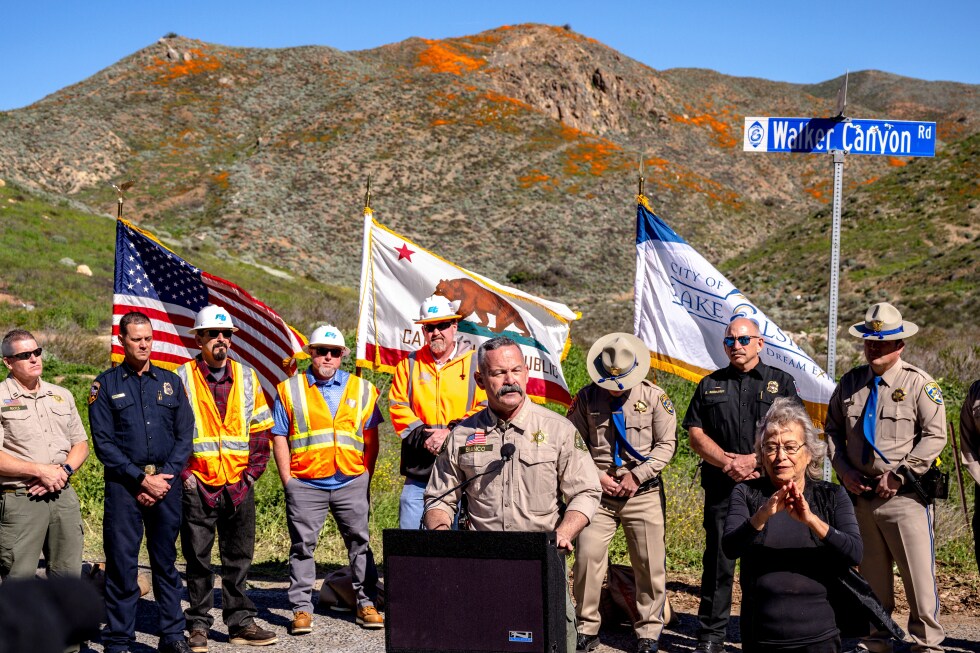
RIVERSIDE, Calif. (AP) — A California sheriff running for governor has seized more than half a million ballots cast in a November special election from county election officials, saying he’s investigating a ballot count discrepancy.
County elections officials have disputed the claims by Riverside County Sheriff Chad Bianco, a Republican. California Attorney General Rob Bonta, a Democrat, called Bianco’s move unprecedented and says it is designed to sow distrust in elections.
Bianco held a news conference Friday saying his office had launched the investigation after receiving a complaint from a local citizens group about the ballot count from a November 2025 special election on redistricting.
In the special election, voters approved a measure to redraw congressional district lines to favor Democrats in the upcoming midterm election. The measure passed in the county by a margin of more than 80,000 votes.
Advertisement
Bianco seized ballots in Riverside County, the inland California county of 2.5 million people where he has twice been elected sheriff. He called the effort “a fact-finding mission.”
“This investigation is simple: Physically count the ballots and compare that result with the total votes reported,” he said Friday.
Bianco is one of two prominent Republicans running for governor in a crowded June primary that includes more than half a dozen Democrats. California runs a top-two primary system that puts all candidates on the same ballot, regardless of party, and sends the two candidates who get the most voters onto the November general election.
Leading California Democrats are worried that their party has so many candidates, they risk splitting the vote and sending Bianco and Steve Hilton, another top Republican, onto the general election. That would be a stunning outcome in the heavily Democratic state.
Advertisement
Bianco said the investigation had “absolutely nothing to do” with his campaign for governor.
“I have a duty to investigate alleged crime in Riverside County,” he said.
The effort came as President Donald Trump has repeatedly disputed the results of the 2020 election, citing unsubstantiated instances of fraud. His administration recently seized ballots and other documents from an election office in Georgia. Some Republicans have mirrored Trump’s rhetoric on voting in their states.
Bonta has repeatedly sent letters to Bianco’s office over the last two months saying his staff is not qualified to conduct a recount. In one of the letters, Bonta wrote that the ballot seizure was “unacceptable” and “sets a dangerous precedent and will only sow distrust in our elections.”
Advertisement
The letters said Bianco seized nearly 1,000 boxes of ballots and elections materials from the county’s elections office with a warrant in February. At issue, Bianco said, is a discrepancy a citizen group reported between the handwritten ballot intake logs and the number of votes reported to the state.
Bianco said the alleged discrepancy amounted to about 45,800 votes — a difference elections officials have refuted at county meetings, saying the machine count and the final count submitted to the state differed by about 100 votes. They argue the handwritten rolls, which were not relied on to check the count, were being kept by temporary elections workers who had worked long days and may have made mistakes.
Bianco said Friday that the count had started and stopped, but would now resume under the supervision of a special master appointed by a judge.
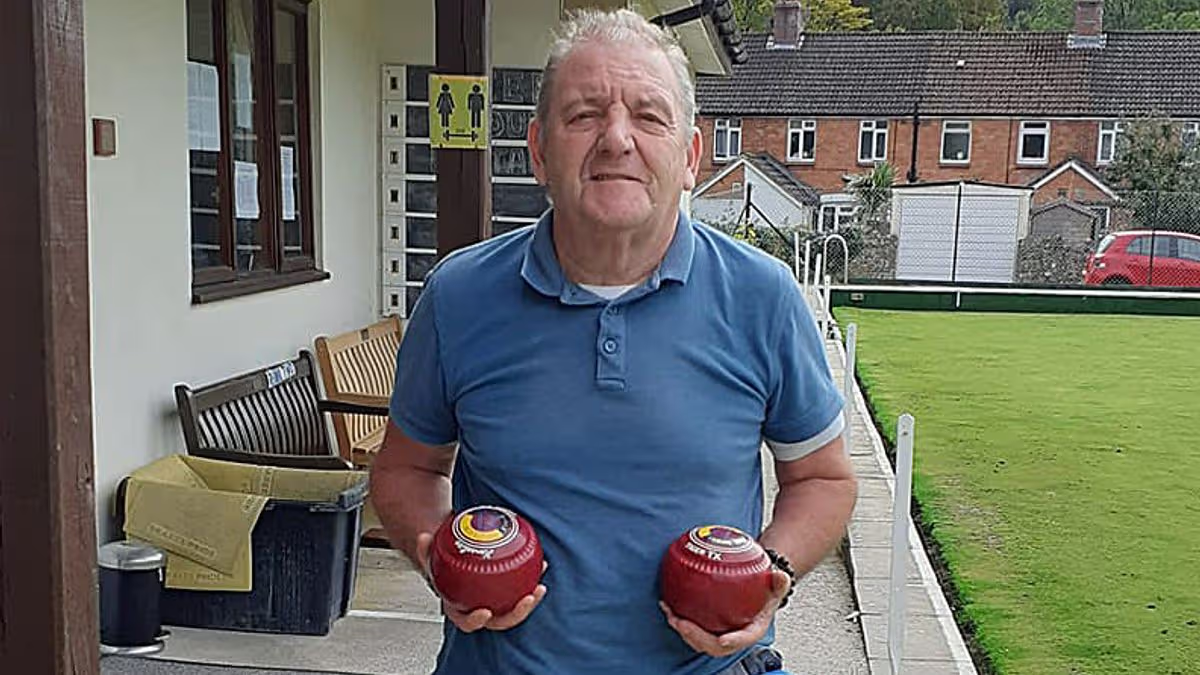
British pensioner Billy Eastment, accused of drug smuggling, is ill in a prison in Chilean, with desperate legal efforts to free him stalling amid attempts to contact family
The British bowls-playing pensioner accused of acting as an international drug runner is fighting for his life behind bars in Chile as desperate legal efforts are launched to free him before it’s too late.
Advertisement
William ‘Billy Boy’ Eastment, who has been locked up since May, is said to be in rapidly deteriorating health after suffering repeated bouts of pneumonia while in custody. Sources close to the case say the 80-year-old has endured four separate episodes of the lung infection since his arrest, on top of a series of serious underlying health conditions.
One insider said: “His health isn’t good at all. He’s very vulnerable, and being in prison is making everything worse. There’s real concern about how much longer he can cope.” Now, his legal team is scrambling to strike a deal with prosecutors to avoid a full trial, in a process described as similar to a plea bargain.
“They are negotiating a shortened trial and process,” a source explained. “It’s essentially an attempt to resolve the case more quickly, given his condition.”
Eastment remains locked inside the notorious Santiago 1 Penitentiary in Chile, where he has been held since his arrest after authorities allegedly found £200,000 of methamphetamine concealed in his luggage. The Welsh-born bowls and fishing enthusiast was arrested after landing on a flight from Mexico, saying scammers tricked him into thinking he had won a prize.
But hopes of bringing the retired heavy goods vehicle and bus fitter home to Britain have been dashed. Extradition, which could have seen him returned to the UK, is not on the table, with officials warning it could take years to arrange.
“The ideal scenario would have been for the prison sentence to be replaced with expulsion from Chile,” the source added. “That does happen in some cases. But under Chilean law, that simply isn’t an option for drug offences.”
Advertisement
Instead, lawyers are now pursuing a last-ditch compromise that could see Eastment, whose detention stunned neighbours in the quiet cul-de-sac of Milborne Port, Somerset, released from jail but only under strict conditions.
Under the proposal, he would remain in the country under surveillance, likely subject to regular monitoring and required to report to authorities. “They are trying to negotiate his release under supervision,” a source said. “He wouldn’t be free to leave, but it would at least get him out of prison, where his health is deteriorating.”
However, even that plan is hanging by a thread. A major obstacle is Eastment’s medical situation. Because he entered Chile as a tourist, he is not eligible for the country’s national health system, leaving him exposed to mounting medical bills. To secure his release, officials require a financial guarantor to cover those costs.
“The problem is he needs a family member to step forward and act as guarantor for his healthcare bills,” the source revealed. “Without that, he cannot be released. The problem is that they are having trouble tracking down close family’. It’s not like it is that much money is needed to be his guarantor.”
Efforts are now underway to track down other relatives willing to take on that responsibility. “They are trying to contact anyone in his family,” the source added. “If no one comes forward, he will remain in prison.” The situation is made even more desperate by Eastment’s financial plight.
Before his arrest, his only income was his UK state pension. But after spending more than three months outside the country, payments have effectively been cut off.
“He’s no longer receiving his pension and has no way of accessing it from Chile,” a source said. “He doesn’t have any income at all.”
Advertisement
It leaves the pensioner trapped in a brutal Catch-22 – too ill to remain in prison, but unable to secure release without financial backing he does not have. It’s not looking good for him.”
They added: “Everything now depends on whether someone steps forward and whether the authorities agree to the deal. Without that, he’s stuck.”
Eastment has told prosecutors he had been receiving emails he thought were from International Monetary Fund bigwigs. He alleged that a woman called Carolina approached him during a layover in Mexico and said he was headed for Australia.
Eastment’s lawyer said: “In these emails, a person named Carolina, whose surname he does not remember, informed him that one of his relatives in New Zealand had died and that in order to access that person’s inheritance, he had to travel to Auckland, New Zealand, to sign certain documents at a public notary’s office.”
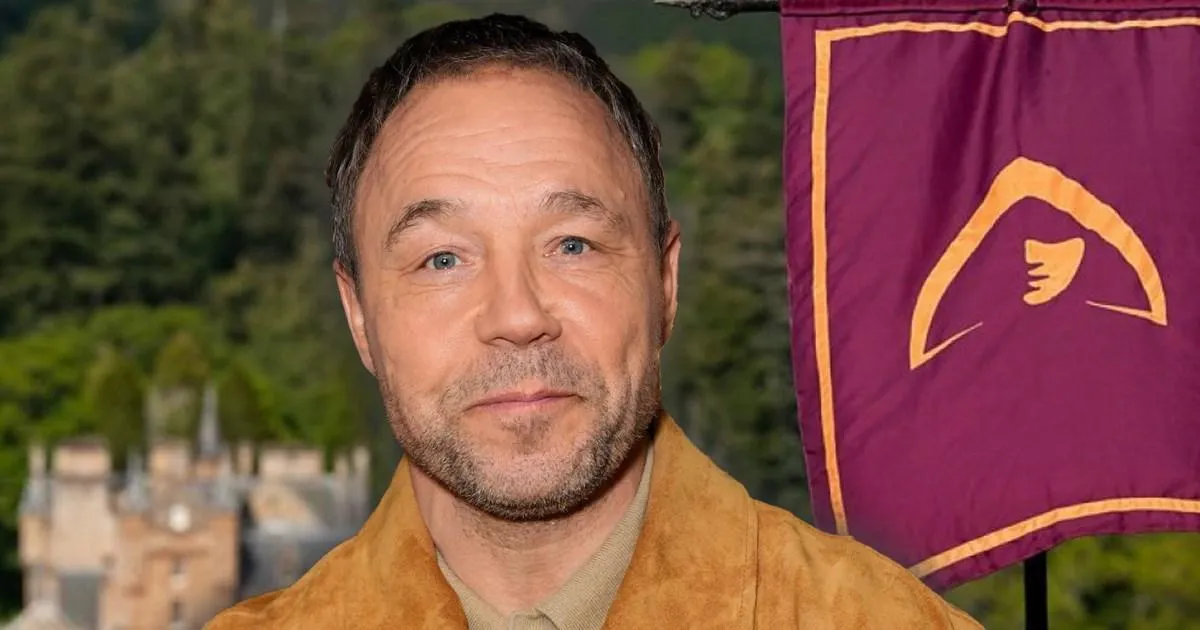
Could Stephen Graham be heading into the Scottish castle? (Picture: PA/BBC)
Months after a nail-biting finale in The Traitors series 4, speculation is rife as to who will take part in the second season of the celebrity edition.
However, the Traitors certainly didn’t make it easy, with Jonathan Ross, Cat Burns, and Alan Carr donning the iconic green cloaks and murdering their fellow stars in the dead of night, one by one.
In the end, the winning moment made for truly historic television, with Chatty Man’s Alan fooling his competitors right to the end, as the unlikely (often chaotic) Traitor stole the win and bagged a mega £87,500 sum.
Advertisement
So, as we turn our attention to series 2, which has already been green-lit after series 1’s storming success, who do you want to see in the castle?
The rumoured lineup is looking promising, with one legend of film and TV rumoured to be in the running alongside a rock icon, EastEnders actor and This Morning star.
Stephen Graham
Stephen Graham would be a force to reckon with (Picture: Shutterstock)
According to Daily Mail, the BBC are ‘absolutely desperate’ to score actor Stephen Graham for the show’s second celebrity outing.
Get even more Traitors gossip
Want to get all the latest news and predictions for the best and most dramatic show this new year?
Sign up to our TV Daily newsletter to get a personalised selection of the hottest takes, latest theories and big behind-the-scenes news every morning. Don’t to forget to select ‘The Traitors’ when you enter your email.
Advertisement
Or join our The Traitors WhatsApp channel for live episode coverage, juicy gossip and a place to recover from all the cliffhangers.
Simply click on this link, select ‘Join Chat’ and you’re in! Don’t forget to turn on notifications!
Advertisement
The publication’s insider continued: ‘He is one of the most formidable actors of our generation, and the nation adores him, but no one really knows what he’s like as a person, so there is a definite hunger among viewers to see what he is like in a more reality-based setting.’
The 53-year-old is riding high after creating and co-starring in last year’s Netflix hit Adolescence, which prompted nationwide debate about toxic masculinity and the dangers of the ‘manosphere.’
The show went on to win eight Emmy awards and nine Golden Globes.
Responding to a question from a fan on X who asked if he would ever go on The Traitors, Liam replied: ‘I’ve been asked.’
While the singer has not confirmed his involvement, fans have already been getting carried away online.
Responding beneath, Karen wrote: ‘Oh my god you’ve got to do it… You’d make a great traitor’, while Lexi exclaimed: ‘You’d bring so many viewers.’
As for Oasis fans, we can only hope that the show secures his brother Noel following their shock reunion last year after several years of estrangement.
Advertisement
Bob Mortimer
Would I Lie to You favourite Bob Mortimer was a fan favourite to appear in season 1 (Picture: Amazon Prime UK)
One name on everyone’s lips last year was comedian Bob Mortimer, who proved to be many fans’ ultimate pick to appear on Celebrity Traitors.
There’s still the chance that he could appear in Celebrity Traitors’ second series though, with executive producer Sarah Fay telling Metro: ‘If Bob wanted to do it next year, we would absolutely love it.’
Bob can currently be seen on the second season of Last One Laughing, defending his crown from the likes of David Mitchell, Romesh Ranganathan and Mel Gedroic.
Advertisement
Louis Theroux
Is that Claudia on the phone, Louis? (Picture: Getty)
Documentary filmmaker and podcaster Louis Theroux is used to weird weekends, but would he be a good fit in Claudia’s castle?
Well, according to the bookmaker Coral, he’s an early contender for season two. They’ve currently got him at 3-1 odds to be on the next season
“Louis Theroux is among the early favourites to be on the next series of Celebrity Traitors,’ said Coral spokesperson John Hill.
‘The popular documentary maker would make for a great faithful or traitor, so it would be no surprise if he is at the top end of the show’s wish list.’
Could Cheryl be using Celebrity Traitors to launch her comeback? (Picture: Karwai Tang/WireImage)
Girls Aloud icon Cheryl is reportedly considering a showbiz comeback, and surely The Celebrity Traitors is the perfect way to do it?
The pop star, 42, has kept a low profile since becoming a mum to son Bear, dipping out of public life completely in October 2024 following the death of his father and her ex-partner, Liam Payne.
Now, it’s been claimed that Cheryl is itching to get back to work, but there could be one thing holding her back from committing to a stint in the castle, as she doesn’t want to spend too much time away from her eight-year-old.
A source told The Sun: ‘Cheryl is taking baby steps about returning to the limelight. Bosses know she would be a huge draw.
‘They think she would be brilliant at playing the game. Especially as she is so straight-talking.
Advertisement
‘Of course, filming over several weeks would take her away from her son, which could be a reason she turns it down.
‘Bookers are keen for the best stars to take part and not reality-TV has-beens.’
Jamie Oliver
(Picture: Neil P. Mockford/Getty Images)
Celebrity chef Jamie Oliver is also on the menu if recent reports are to be believed.
The Sun reports that producers think the cheeky cook’s charisma alone makes him a perfect fit for the castle.
‘Jamie would be a brilliant choice,’ an insider told the paper. ‘He’s well liked by the public, with a natural charm that could bamboozle contestants.’
Advertisement
‘They wouldn’t be sure if he was a Faithful, or really a Traitor hiding behind his nice guy persona — much like the 2025 winner, Alan Carr.’
As exciting as this is for viewers, I think this might be a savvy move by the production team to improve catering in the castle.
Carol Kirkwood
Could Carol be swapping the red sofa for a red cloak?(Picture: BBC Breakfast/PA Wire)
Casino Beats has given the presenter 9/1 odds of appearing on the next series of Celebrity Traitors, with a spokesperson adding the Scottish presenter will ‘feel at home’ in the castle.
Steve Pemberton
Taskmaster star Steve Pemberton loves a challenge (Picture: WireImage)
Steve Pemberton, of League of Gentlemen and Inside No 9 fame, is also reportedly in the frame for season 2. The Lancashire-born funnyman is apparently a huge fan of the show and is keen to visit Claudia’s castle.
An insider told The Sun that the BBC is hoping the 58-year-old award-winning actor will be a Jonathan Ross-style ‘Big Dog’, as he’ll understand the game better than other celebs taking part.
Advertisement
‘As an award-winning actor who can transform himself from one character to another, Steve would be a similar figure [to Jonathan] and a formidable contestant for the players to contend with,’ the source said.
Here’s hoping he can convince Reece Shearsmith to come with him…
Amanda Holden
Where Alan goes, Amanda may follow (Picture: Lia Toby/Getty Images)
Alan Carr’s best mate, Amanda Holden, is also rumoured for a Celebrity Traitors stint. According to The Sun, BBC bosses think the Britain’s Got Talent judge will be ‘comedy gold’, and they’re keen to sign her up.
However, there’s a small wrinkle. The Celebrity Traitors is apparently filmed at the same time as the BGT semi-final,s which may make her appearance a bit of a juggling act for the producers.
Danny Dyer
Danny Dyer would surely make a ruthless Traitor (Picture: Jeff Spicer/Jeff Spicer/Getty Images)
Also throwing his hat in the ring is EastEnders star Danny Dyer – we can totally see him ripping into people at the roundtable and taking no prisoners.
It’s believed the BBC eyed up Danny for series 1, only for him to snub them. Now he’s singing a different tune.
Advertisement
A source told The Sun: ‘Danny was always top of The Celebrity Traitors wish list but had zero interest until seeing the fun and games last autumn.
‘As soon as his tune changed, it was all systems go.’
His change of heart came after he watched chat show Traitor Jonathan in action in the Scottish Highlands.
Speaking on his Live And Let Dyers podcast with daughter Dani Dyer, he declared: ‘I’m into it.’
Advertisement
‘They did sniff round me about it,’ Danny revealed. ‘It was a no from me because, for one, I hadn’t seen it, but now I’m into it.
‘If you’re going to do it, if you’re famous, it needs to be an indulgence project — you have to love the game.
‘It’s quite a simple game. I thought it was too complicated, but it’s actually just about people manipulating each other and a lot of lying.’
The soap actor said he was ‘enjoying’ the first celebrity series, predicting that it’s actually harder to be a Faithful as players risk ‘overacting’ and it ‘backfiring’.
Advertisement
Does that mean he would make a good Traitor? Something tells us Danny would have no qualms about taking on that role.
Alison Hammond
Alison Hammond has reportedly been approached by the BBC (Picture: Joe Maher/Getty Images for the NTAs)
Beloved broadcaster Alison Hammond is reportedly on the BBC’s ‘hit list’.
In fact, they’re hoping she could take the baton from Alan and continue providing us with iconic moments, which certainly isn’t impossible given Alison’s already colourful history with memes and viral videos.
A source added to The Sun that Alison herself is ‘keen’ to get involved.
‘The Beeb think she could be comedy gold, just like Alan Carr. Alison is naturally very funny, and they think she could end up being hugely successful,’ they said.
Advertisement
However, understandably, celebs are lining up in droves to play the game, with the insider teasing that ‘the pot of talent wanting to take part is overflowing’, meaning execs ‘have a lot to weigh up’ if they want to make the best telly.
‘The first series of The Celebrity Traitors was dynamite, so the second series needs to have the same weight.
‘Contracts won’t be signed until closer to the start of production, but the BBC are already keen to get Alison on board.’
Ruth Jones
We know her best as Nessa, but we could see Ruth Jones herself enter the Scottish castle (Picture: Toffee International Ltd/Tom Jackson/PA Wire)
While we’d give anything for Nessa herself to play The Traitors, we’ll accept that having actress Ruth Jones is the next best thing.
The Gavin and Stacey favourite has reportedly already been approached by bosses, who are eager to make the series 2 cast as ‘impressive’ as it can be.
Advertisement
‘Ruth would be an incredible addition to the cast if she can fit it into her schedule,’ added the insider.
However, the Welsh star has dampened rumours that she might join the cast, telling The Mirror: ‘I want to address this. I was asked about doing it. I do love the show and did think: “Wouldn’t it be great?”
‘But then I thought: “Oh, gosh, I’d have to swim in a lake, put on a wetsuit.” So I’d rather watch it. I’m not doing it.’
The Bafta winner has got plenty to keep her busy elsewhere, as it was recently revealed that she and Smithy actor James Corden have signed a big-money deal with AppleTV.
Advertisement
So, if she can find time to squeeze some cloak-and-dagger activity into her packed itinerary in the next year or so, we’d be majorly thankful.
Daisy May Cooper
Daisy May Cooper would bring the comedy (Picture: Fred Duval/SOPA Images/REX/Shutterstock)
If anyone is guaranteed to bring the laughs, it would be Daisy May Cooper.
It’s said that the This Country actress was due to take part in series 1; however, after the birth of her son, Benji, she dropped out to avoid being away from home.
Could it be second time lucky for casting execs?
‘Daisy is telly gold. She’s hilarious and would be perfect,’ teased a source.
Advertisement
‘Show bosses are pulling out all the stops to make this happen.’
Don’t miss a TV review! Add us as a Preferred Source
As a loyal Metro TV reader, we want to make sure you never miss our articles when searching for stories. Our TV experts are here to bring you all the latest reviews, streaming updates, videos, and exclusive interviews, with a vibrant community of highly engaged readers.
Click the button below and tick Metro.co.uk to ensure you see stories from us first in Google Search.
Tom Hiddleston has made it known he’s a big Traitors fan (Picture: Millie Turner/Invision/AP)
How these things tend to work is that show bosses will communicate with a celebrity’s team and basically entice them with various promises and fees, right?
Well, that hasn’t been the case with The Celebrity Traitors, as the A-listers themselves are begging to take part.
Enter Tom Hiddleston, who even sent a come-and-get-me plea to the BBC as he declared himself a ‘massive, massive fan’ of both The Traitors and Strictly Come Dancing.
Following his revelation on the campaign trail for the new series of The Night Manager, the rumour mill began swirling.
Advertisement
Saying he would ‘absolutely’ love to take part, insiders reckon a Celeb Traitors stint – which films for one month – is more likely than four months of Strictly training.
‘What an absolute gift to his BBC bosses to hear their leading man is up for both,’ they said.
The Traitors is available to stream on BBC iPlayer.
A version of this article was first published on January 17, 2026.
Advertisement
Got a story?
If you’ve got a celebrity story, video or pictures get in touch with the Metro.co.uk entertainment team by emailing us celebtips@metro.co.uk, calling 020 3615 2145 or by visiting our Submit Stuff page – we’d love to hear from you.
The annual Chocolate and Cheese festival will be welcomed once again to Ramsbottom Civic Hall around the urn and church gardens in celebration of two dairy-based delights.
The event will be held on Sunday, March 29, from 11am to 4pm with a selection of food traders offering a wide variety of chocolate and cheese.
Alongside them will be a selection of local makers with more savoury and sweet options.
Ramsbottom Chocolate and Cheese Festival (Image: Danny Crompton)
In addition, the day boasts a calendar jam-packed with entertainment such as live music within the Civic Hall and a roaming magician who will perform in and around the town centre.
Advertisement
Organisers say the festival aims to bring people into the town for a relaxed day out while supporting independent businesses such as chocolatiers and cheesemongers.
The event is expected to attract visitors from across Greater Manchester and further afield and adds to the town’s growing programme of community events.
A spokesperson for the event said: “It’s about creating something simple that brings people into Ramsbottom and supports local traders.
Ramsbottom Chocolate and Cheese Festival (Image: Danny Crompton)
“There’ll be a good mix of food and a bit of entertainment across the day, so people can come down, have a wander and enjoy the town.”
Advertisement
Entrance will cost £1 per adult.
Last year’s event, held in April, proved to be a sweet success and attracted crowds of hundreds to the town.
Visitors came from as far as Leeds and Sheffield for the occasion, eager to try new and quirky flavour combinations of salty and sweet.
The crowd-pulling event began in 2009 as solely a chocolate festival.
Advertisement
It then evolved to incorporate other foods before its current focus on chocolate and cheese.
The pandemic saw it being put on hold for a couple of years before a very welcome return in 2023.
Fans lined the Tottenham High Road to welcome the Spurs team.
Supporters scaled railings and sat on the top of bus shelters as their struggling side arrived to face relegation rivals Nottingham Forest.
The coach drove through a haze of blue and white smoke surrounded by thousands of fans as it crawled to the Tottenham Hotspur Stadium.
Protests had been shelved in recognition of the magnitude of the game, one which would have seismic repercussions on Spurs’ season.
Advertisement
Goals from Teddy Sheringham, Jurgen Klinsmann, Harry Kane and Heung-min Son were played on the big screens pre-game before Cristian Romero delivered a message: “We’ll fight for everything, all together.”
Just under 90 minutes later fans streamed out of the stadium after Taiwo Awoniyi scored Forest’s third.
They went from a parade to pointless. Tottenham are in deep trouble.
The players responded to the fans for 45 minutes. Igor Jesus hit his own bar, Richarlison pressed and harried and Mathys Tel produced one of his better displays.
Advertisement
Yet Igor Jesus’ header in first-half injury time – followed by Morgan Gibbs-White’s strike – increased Spurs’ relegation woes.
Gibbs-White, of course had to have a say in the game after his aborted move to north London last summer.
It was a prelude to the chaos and calamity that was to come this season.
Advertisement
Awoniyi’s late third sparked an exodus – some fans had already started leaving with 20 minutes left – and those who remained booed the team off.
The togetherness seen outside the stadium had evaporated, with Spurs fans only united in concern about the future.
“From Tottenham‘s point of view, there was a lot of fighting spirit in the first half, encouraged by a jubilant crowd who wanted to support their team,” former Spurs and England goalkeeper Paul Robinson told BBC Radio 5Live.
“But, when you go to support your team like that you have to give something back, which didn’t last.
Advertisement
“In the second half they were tactically weak, they were devoid of ideas, and the manager changed the personnel two or three times, and there was nothing there today to suggest that they can get out of that mess.”
Xavi Simons’ relegation to the bench baffled seasoned Spurs viewers, following his best performance and two goals in Wednesday’s win over Atletico.
Tel was lively and hit the bar immediately after Igor Jesus’ opener but faded in the second half with Forest’s defence – expertly marshalled by Nikola Milenkovic – repelling everything.
Forest made their hosts wait on the pitch almost four minutes before emerging for the second half, Tottenham will have wished they had stayed in the dressing room.
Advertisement
“I don’t see a structure,” said Robinson. “A gameplan, or a way of playing. I don’t see a tactical idea.
“They look devoid of ideas, and a manager who is looking for something that he is yet to find, and no time to find it.”
Former Wales U20s star Beddall got his head on the wrong side of a tackle as he attempted to bring down Stormers back rower Evan Roos and took the full force of the South African’s knee to the side of his head.
He lay motionless on the ground as referee Andrew Brace blew his whistle to stop the game and medics immediately rushed to his aid to begin treatment.
The game in Cape Town was then halted for around five minutes as the 21-year-old was treated on the field before being carried off on a medical cart and replaced by Thomas Young.
In a promising sign, Beddall had managed to raise his hand to give up a thumbs up to the medical staff and, following full-time at the DHL Stadium, the Dragons issued an encouraging update on the young star.
“Thanks for all the messages about Harry Beddall,” the club wrote on its X account. “Pleased to report he’s up and around in the changing rooms, conversing with players and staff, and being looked after by the medical team.”
Filo Tiatia’s side were beaten 29-21 by their hosts in Cape Town, with Springboks superstar Sacha Feinberg-Mngomezulu contributing 19 points, including two first-half tries.
Advertisement
French rugby in mourning
The French Rugby Federation (FFR) says “the entire rugby family is in mourning” following the death of beloved and “indispensable” staff member Christian Babassud.
Babassud served as the head of the FFR’s volunteers division for 18 years, helping to organise France Test matches, sevens tournaments and the 2023 Rugby World Cup. He also volunteered at the Paris Olympics in 2024.
He was at the Stade de France last Saturday to watch Les Bleus retain their Six Nations title with a dramatic victory over England, but has now sadly passed away.
In a statement issued on Sunday, the FFR said: “It is with immense sadness that we learned today of the passing of Christian Babassud, our head of the volunteers division at the Federation for over 18 years.
Advertisement
“Since 2008, when he joined the FFR after organizing the World Cup, Christian was one of those indispensable behind-the-scenes figures without whom nothing would be possible.
“For nearly two decades, he worked with passion to mobilize, structure, and support our thousands of volunteers at the biggest events we organize, such as the matches of our #XVdeFrance or our Sevens tournaments.
“He also had the privilege of participating, once again as a volunteer, in the #Paris2024 Games, where he still embodied that kindness and joy that defined him.”
The statement continued: “Everyone who crossed his path will cherish the memory of his dedication and his infectious smile.
Advertisement
“He was still with us last Saturday at the Stade de France, helping make that victorious Crunch possible, sharing in the Blues’ joy and this new title in the Six Nations Tournament.
“A discreet but essential craftsman, deeply appreciated by all, he fully embodied the values of solidarity and sharing that are the strength of our sport.
“Today, the entire rugby family is in mourning. We extend our most heartfelt thoughts to his loved ones, his family, as well as to all the volunteers and colleagues who had the privilege of crossing his path. Thank you for everything, Christian. You will leave an indelible mark on our history.”
Tiatia pleased with character
Dragons boss Filo Tiatia was pleased with his side’s character despite their 29-21 defeat to the Stormers in Cape Town.
Advertisement
The hosts at the DHL Stadium secured a bonus-point win with two tries in either half, but the Welsh region have come away with the match with plenty of positives, having scored three tries of their own against a team pushing for the title.
While they were, in Tiatia’s own words, “exposed” at their set-piece, the Dragons held their own in collisions in open play and would have come away with at least one losing bonus point if a disallowed try had stood.
Following the full-time whistle, the head coach said: “I was really happy with the character and staying in the fight. The last passage of play when we kept them out was a real Gwent mentality, it’s staying in it, Stormers had momentum, but we snuffed some things out.
“We didn’t start well and the Stormers did a good job around the aerial game and we just couldn’t get the ball. We didn’t scrap enough around it. We gave two penalties early for side entry and we are not learning quickly enough and adapting fast enough. We have got to be more agile around the law, but when we got it right, we built pressure and showed we could score tries.
Advertisement
“It’s about how we hold onto possession and have pride around creating pressure,” Tiatia added. “We didn’t get much of roll today with disallowed tries, it could have been different.
“We should have been 14-14 at the break or us in front, but we weren’t because we weren’t accurate enough when the opportunities arose. We didn’t execute. We’ve got to keep instilling belief and trust and keeping moving forward and growing.”
We all agreed it was one of our most fun nights out to date
Nights out are getting competitive in South Belfast and I’m here for it.
Advertisement
The Doyen, which sits facing the historic Kings Hall off the Lisburn Road, unveiled a new state-of-the-art gaming floor earlier this month and we were invited down to try our hand at some of the interactive games.
The top floor has been transformed into One Up, complete with interactive darts, shuffleboard, pool, plenty of TVs for the sport and a karaoke booth I swore I wouldn’t be going into (you can already tell where this is going…)
The four of us headed down on a Friday night and it was actually quite nice being able to avoid the stress of getting a taxi or bus into town as The Doyen is on their doorstep.
Advertisement
Apart from all the fun activities going on, the transformation of the bar itself is worthy of a visit, even just for a pint. I wasn’t in the upstairs of The Doyen before but there was a cool vibe and gorgeous marble bar which gives One Up a distinctive identity from downstairs.
Initially, we intended to just pop down for a few quiet pints and play a round of darts and shuffleboard but we just were having such a good time, we ended up making it a full-fledged night out – hangovers the next day and all to prove it!
I haven’t tried out any of the other gaming bars in the city just yet, but the four of us never laughed so much on a night out as we did when visiting One Up.
Watch our TikTok from One Up below…
Advertisement
Content cannot be displayed without consent
We took the shuffleboard WAY too seriously as none of us had ever played it before and I think this was probably our favourite part of the night. We had no idea what we were doing, but the staff were brilliant in showing us how the system worked and the best way to play.
On a Friday night, an hour of shuffleboard is £6 per person or you can add a pint on for £10 per person, which we thought was a really good deal given the price of pints in Belfast these days.
Now I do think it could be more expensive at the weekends but you can book online in advance and check out what they have on offer.
All that slabbering to each other over who’s puck knocked who’s off the board made us peckish and we ended up buying a food platter to share. It was £40 – so a tenner each – and had all the classics you want from some picky bits when you’re having a few pints.
Advertisement
Surprised that we all were still mates after some serious ‘friendly’ competition in shuffleboard and darts (the quiz game was our favourite), we decided to just go full send and try everything that One Up had to offer.
This is where we apologise to anyone who had to listen to us sing Olivia Dean, Take That and Carrie Underwood in the karaoke booth…
We all left agreeing that it was one of the funniest nights out we’d had together and that we’ll be back to do it all again soon – if we aren’t barred for our dodgy karaoke tunes!
WASHINGTON (AP) — Federal immigration agents newly ordered to U.S. airports by President Donald Trump to help relieve security line congestion may guard exit lanes or check passenger IDs as a budget impasse has air travelers frustrated over hourslong waits and screeners angry about missed paychecks.
Trump made clear on Sunday, a day after saying he would use immigration officers for airport security starting Monday unless Democrats agreed on a bill to fund the Department of Homeland Security, that he was going ahead with the plan to assist the Transportation Security Administration.
White House border czar Tom Homan, named by Trump to lead this effort, has also been meeting with a bipartisan group of senators in recent days over the partial shutdown and while he characterized those sessions as “good conversations,” he said they were “not at a point yet where we’re in total agreement.”
Advertisement
The Senate, convening in a rare weekend session, was expected to advance the nomination of Sen. Markwayne Mullin, R-Okla., to be Trump’s next homeland security secretary. A vote on the confirmation could come as early as late Monday as Mullin has tried to make the case that he would be a steady hand after the tumultuous tenure of Kristi Noem, Trump’s first DHS secretary.
Meantime, Homan said in Sunday news show interviews that the increased role of U.S. Customs and Immigrations Enforcement at airports — specific duties and numbers — was subject to discussions with the leadership of TSA and ICE “to find out where we can fit in.”
He pledged to have “a plan by the end of today, where we’re sending — what airports we’re starting with and where we’re sending them. … So it’s a work in progress.” The priority, Homan said, was “the large airports where there’s a long wait, like three hours.”
Immigration officers, as an example, could cover exits currently monitored by TSA agents, freeing them to work screening lines.
Advertisement
“ICE agents are assigned at many airports across the country already. They do a lot of investigation, criminal investigation on smuggling at airports,” Homan said, adding that “certainly, a highly trained ICE law enforcement officer can cover an exit and makes sure people don’t go through those exits, entering the airport through the exits. And stuff like that relieves that TSA officer to go to screening and to reduce those lines.”
Another option, he said, was having ICE agents check identification before people enter screenings areas.
“We’re going to be a force multiplier,” Homan said.
While saying to help “wherever we can provide extra security,” Homan said there were limits. “I don’t see an ICE agent looking at an X-ray machine, because we’re not trained in that,” he said.
Advertisement
Trump said in a social media post that on Monday, “ICE will be going to airports to help our wonderful TSA Agents who have stayed on the job” despite the partial government shutdown. He further criticized Democrats.
Travelers at some airports worried about reaching their gates Sunday.
At Atlanta’s Hartsfield-Jackson International Airport, lines wrapped from one end of the airport to the other.
“Everyone just seems to be accepting it for what it is, said 43-year-old Blake Wilbanks, who showed up 2 1/2 hours early for his morning flight to Salt Lake City after reading about the shutdown.
Advertisement
“Hopeful I’m gonna make it,” he said as he waited in a winding security line.
The scene appeared more chaotic at John F. Kennedy International Airport in New York. Large big crowds of anxious travelers piled toward security checkpoints, and TSA staff shouted through megaphones to tell people not to push one another.
For Transportation Secretary Sean Duffy, one concern is the uncertainty that passengers are facing over possible wait times at any airport on any given day.
“Do I have to come an hour and a half early? Do I have to come four hours early? They don’t know until the day of or the afternoon of their flight,” he said. “So if we can alleviate that, again, the president wants to take away that leverage point for Democrats and make travel easier for the American people.”
Advertisement
House Democratic leader Hakeem Jeffries of New York said “the last thing that the American people need are for untrained ICE agents to be deployed at airports all across the country” after criticism about their conduct as part of Trump’s immigration enforcement operations in Minnesota and elsewhere.
Homan appeared on CNN’s “State of the Union” and “Fox News Sunday,” while Duffy was interviewed on ABC’s “This Week” and Jeffries spoke on CNN.
___
Associated Press writers Collin Binkley in West Palm Beach, Fla., Anthony Izaguirre in Lindenhurst, N.Y., Yuki Iwamura in New York and Nicholas Riccardi in Denver contributed to this report.
Chappell Roan has been banned from performing at a the Todo Mundo festival in Rio de Janeiro by the Mayor of the city, following reports that she made an 11 year old girl cry
Eduardo shared the statement following reports that Roan’s security guard made former Arsenal and Chelsea midfielder Jorginho’s step-daughter, Ada, cry. The Italian ace claims that the singer’s security guard interrupted his wife and daughter’s breakfast in an aggressive manner after his 11-year-old had walked past Roan to check if it was her. Jorginho is married to Catherine Harding, who shares daughter, Ada, with actor Jude Law.
Advertisement
Mayor Eduardo wrote online: “I mean that as long as I’m in charge of our city – this young lady @ChappellRoan will never perform at Todo Mundo no Rio! I doubt that Shakira @shakira @Shakira_Brasil would do that! By the way, @FrelloJorginho your little one is already the guest of honor from the organization in May!”
**Ensure our latest headlines always appear at the top of your Google Search by making us a Preferred Source. **Click here to activate** or add us as your Preferred Source in your Google search settings.**
Advertisement
Premier League ace Jorginho claimed that young Ada saw Chappell at their hotel and walked past the star and smiled to work out if it was actually her. But moments after, a security guard, who claimed to work with Chappell, spoke to Cat and Ada in “an extremely aggressive manner,” before Chappell’s performance at Lollapalooza in Sao Paulo, Brazil
Roan, 28, rose to extreme fame in 2023 with breakout hits ‘Hot to Go’ and ‘Good Luck, Babe’ and is known for bold, drag-inspired performances. The Grammy-winner is a major name on the festival scene, but it looks like she will not be attending the Todo Mundo festival.
Following the incident, Chappell Roan took to social media to share her side of the story. She said in a video where she was lying on a bed with her head on a pillow: “I’m just going to tell my half of the story of what happened today with a mother and child who were involved with a security guard who is not my personal security”.
The Pink Pony Club singer added: “I didn’t even see, I didn’t even see a woman and a child like… No one came up to me, no one bothered me like I was just sitting at breakfast in my hotel. I think these people were staying at the hotel as well.
“So, the fact that, like a security guard, who was – I did not ask the security guard to go up and talk to this mother and child, I did not. They did not come up to me. They weren’t doing anything; it’s unfair for security to just assume someone doesn’t have good intentions when they have no reason to believe, because there’s no action even taken.”
Chappell went on to say that she does ‘not hate people’ who are fans of her music and that she does “not hate children.” “I’m sorry to the mother and child that someone was assuming something, that you would do something, and that… if you felt uncomfortable, that makes me really sad. You did not deserve that.”
Jorginho said on Instagram: “This morning, my daughter woke up incredibly excited, she even made a sign because she was so happy to see an artist she really admires, or used to admire. @chappellroan.
“By coincidence, they’re staying at the same hotel as this artist. During breakfast, the artist walked past their table. My daughter, like any child, recognised her, got excited, and just wanted to make sure it was really her.
“And the worst part is she didn’t even approach her. She simply walked past the singer’s table, looked to confirm it was her, smiled, and went back to sit with her mum. She didn’t say anything, didn’t ask for anything. What happened next was completely disproportionate. A large security guard came over to their table while they were still having breakfast and began speaking in an extremely aggressive manner to both my wife and my daughter, saying that she shouldn’t allow my daughter to ‘disrespect’ or ‘harass’ other people.”
He went on to write: “He [security] even said he would file a complaint against them with the hotel, while my 11-year-old daughter was sitting there in tears. My daughter was extremely shaken and cried a lot.”


















































You must be logged in to post a comment Login