Connect with us

NewsBeat

A whiff of espionage around the Epstein files points to how intelligence and influence interact

Published

on

A whiff of espionage around the Epstein files points to how intelligence and influence interact

For obvious reasons, the secretive world of intelligence agencies and the people who revolve in its orbit remains opaque. So much so, that some of those people may not even be aware of any involvement in the secret world.

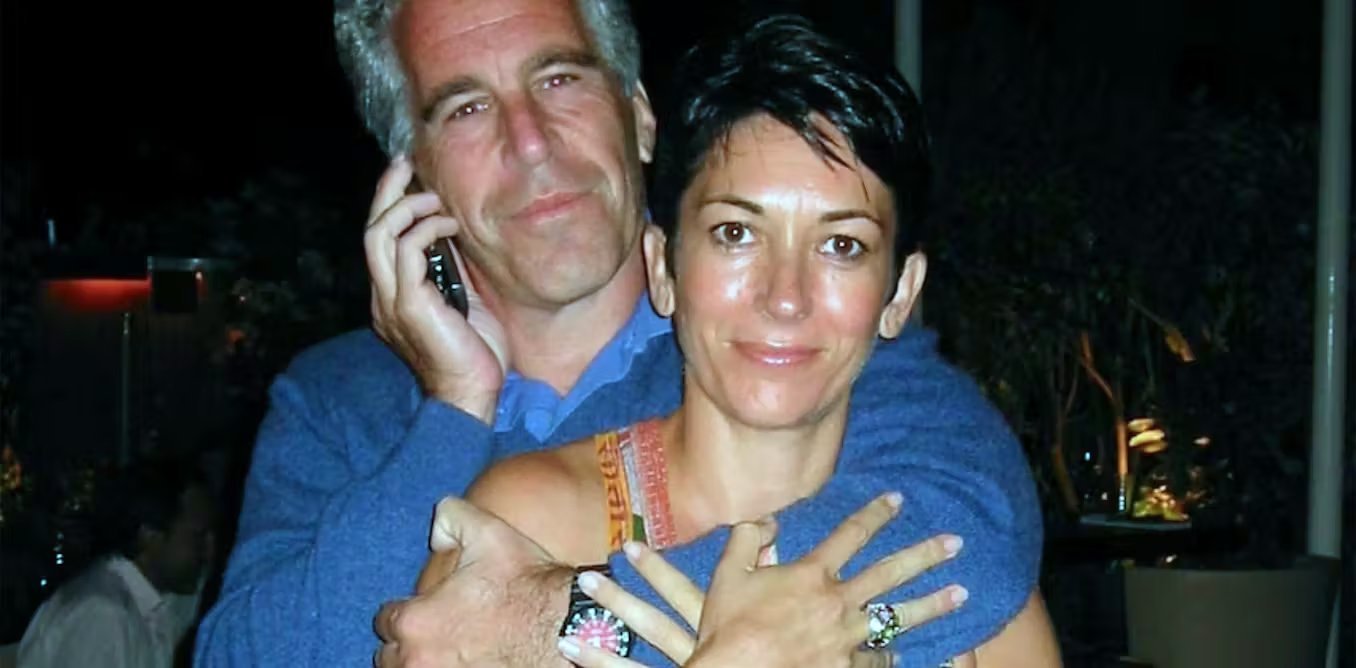
The Epstein papers have thrown up speculation about whether the late financier and sex offender might have performed services for one or another of the big intelligence agencies. And in the wake of that speculation, it has been noted that the father of Epstein’s one-time girlfriend, Ghislaine Maxwell, was the late Robert Maxwell, well-known as a larger than life publisher and newspaper proprietor in the UK from the 1950s to the early 90s. He, too, was the subject of much speculation that he might have been involved in intelligence work.

Epstein is now better known for his sex trafficking network and Maxwell for stealing from his employees’ pension funds. But their examples point to how intelligence, high finance and influence work.

Generally speaking there are three main classes of people involved in state intelligence gathering. “Officers” are full-time employees of state intelligence agencies such as MI6. They run their groups of “agents”, who are not formally employed by the state but who deliberately and knowingly gather intelligence and perform tasks for intelligence officers. And there are what is known as “intelligencers” (or sometimes assets) who may not even know they are providing information to a spy agency.

Advertisement

The currency of human intelligence is access, knowledge and often the ability to compromise officials and influential people.

We often think that intelligence agencies and their agent runners seek to directly recruit people with the access and motivation to pass on state secrets. While this is undeniably the case – and the examples of the American Aldrich Ames and the Briton Melita Norwood provide good evidence of this – intelligence agencies are equally interested in recruiting what’s known as “access agents”.

Access agents

The value of an access agent is not the secrets they have access to, but the social and professional access they provide to people who do. People in high-end society, scientific research, banking, politics and culture make excellent targets for access agents. And from an agency’s point of view, the best thing is that these agents are deniable and under the radar.

Intelligence officers and their operatives require funding, mobility and a credible back story (known as a legend). Businessmen like Robert Maxwell and Jeffrey Epstein had plenty of all three, making them excellent candidates to theoretically serve the needs of intelligence agencies.

Advertisement

But rather than indulging in speculation about Epstein and Maxwell, which is unlikely ever to be conclusively confirmed or denied, it’s more instructive to look at what we know about access agents. They are often business people, sometimes academics or journalists with a reason to travel and the opportunity to meet people in influential circles in the course of their legitimate business.

It’s worth remembering that Kim Philby, the most notorious of the Cambridge spy ring, cut his teeth as a reporter in Spain during the civil war, before embarking on a career as an MI6 officer (and Soviet double agent). Australian journalist, Richard Hughes – who appeared lightly disguised in novels by Ian Fleming and John le Carre – was believed by many to be an agent for British intelligence, working in southeast Asia during the upheavals of the 1960s and 1970s.

Perhaps the most famous businessman-agent was Cyril Bertram Mills who combined being the director of the Bertram Mills Circus with a four-decade career spanning the years before and after the second world war with British intelligence. Travelling widely in Europe, ostensibly to seek out circus acts, he provided his spymasters with evidence of German rearmament in the 1930s. He also recruited Garbo, one of the most successful double agents, who was instrumental in convincing Germany that the D-Day landings would be in Calais, not Normandy.

An access agent is trained “to be the friend the informant doesn’t have”. They can provide what their contact needs and cannot get hold of: whether that’s useful inside information of some kind, an introduction to someone important, a sexual partner or finance for one of their ventures.

Advertisement

MI5 is quite open about this on its website: “Agents operate by exploiting trusted relationships and positions to obtain sensitive information. They may also look for vulnerabilities among those handling secrets.

Publishing tycoon Robert Maxwell with British born US ambassador to France, Pamela Harriman, in 1989 .
mark reinstein/Shutterstock

Secrets and lies

Determining truth in intelligence is complicated. Very rarely do we see a single piece of incontrovertible evidence that proves someone’s intelligence status or the ethics or efficacy of their actions. But then as we know, all of this is shrouded in secrecy and supposition.

In Maxwell’s case, historical scholarship and TV documentaries have provided unverified hints. In Epstein’s we have indicators such as the claim by former US attorney, Alexander Acosta that he was told Epstein “belonged to intelligence”, when he negotiated his plea deal. But it’s unlikely we’ll ever know the truth about either.

Advertisement

Source link

Continue Reading
Click to comment

Leave a Reply

Your email address will not be published. Required fields are marked *

NewsBeat

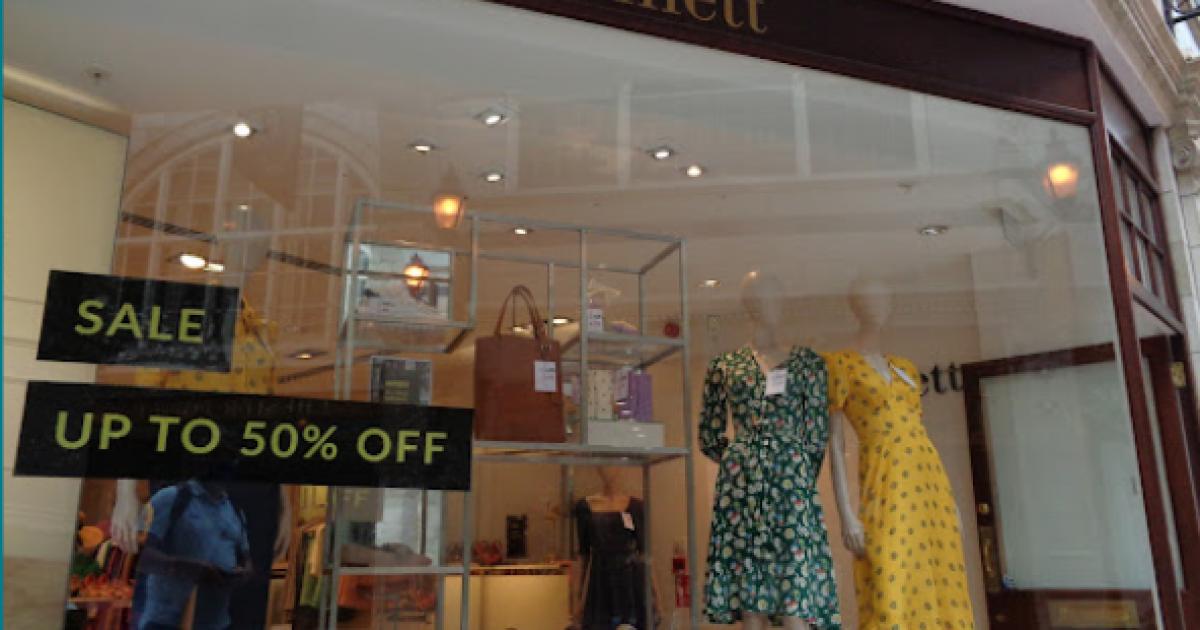
LK Bennett at Trafford Centre to shut down amid closures

Published

on

LK Bennett at Trafford Centre to shut down amid closures

LK Bennett currently operates a concession at John Lewis in the Trafford Centre, alongside nine standalone stores and 13 concessions across the UK and Ireland.

The retailer has been acquired by US investment firm Gordon Brothers, which also owns Laura Ashley and Poundland.

However, the deal did not include LK Bennett’s physical stores or concessions.

Advertisement

Administrators have confirmed that the outlets will continue trading for up to three months, with all remaining stores and concessions expected to close by spring 2026, likely around April.

A statement published on the LK Bennett website said: “John Noon and Mark Firmin of Alvarez & Marsal Europe LLP were appointed Joint Administrators of LK Bennett Fashion Limited on 27 January 2026 pursuant to paragraph 22 of Schedule B1 to the Insolvency Act 1986.

“Immediately following their appointment, the LK Bennett brand and related intellectual property were sold to LKB IP Holdings, LLC, a Gordon Brothers-affiliated entity.

“The LK Bennett stores were not included in the transaction and continue to trade under the administration.

Advertisement

“Online sales via the LK Bennett website continue for the foreseeable future.”

The closures could lead to up to 89 redundancies, according to retail trade publication Drapers.

LK Bennett employs around 145 staff across the UK and Ireland, with 89 roles linked to its store and concession estate.

Founded in London in 1990 by Linda Bennett, the brand rose to prominence in the 1990s and early 2000s and became a favourite of the Princess of Wales, contributing to its reputation as a premium British fashion label.

Advertisement

Shoppers in Trafford and across Greater Manchester will still be able to visit the John Lewis concession in the short term, but it is expected to close permanently once the administration trading period ends.

Source link

Advertisement
Continue Reading

NewsBeat

Michael Carrick happy with his start as Manchester United boss

Published

on

Manchester United striker Benjamin Sesko (left)

Carrick’s initial victories over title challengers Manchester City and Arsenal were unexpected. The ones against Fulham and Tottenham were anticipated but did not arrive without problems that had to be solved.

Combined with the failings of Chelsea and Liverpool, the end outcome is United are fourth, with a handy, but by no means pivotal, advantage in the hunt for a Champions League return, something few could visualise in the wake of Ruben Amorim’s dismissal following the draw at Leeds on 4 January.

“We know how hard it is to put a run together in this league,” said Carrick, whose side are now unbeaten in nine league games, which spanned three managers, including initial interim Darren Fletcher.

“Sometimes it comes naturally, it flows and everything clicks. You look really dangerous and there’s a spark. Sometimes it’s a little bit stodgy.”

Advertisement

The question being asked of Carrick is whether his side can deliver winning performances against opposition they are expected to beat.

Many felt West Ham were in that category, even though Nuno Espirito Santo’s side were aiming for their fourth win in five league games and they had led Chelsea 2-0 in the one that got away.

Carrick did not manage a victory.

What he did do was take a risk to try and get something from a game that appeared lost.

Advertisement

When Manchester United drew against West Ham at Old Trafford in December, Amorim’s only substitution involving an offensive player was Mason Mount for Joshua Zirkzee, 12 minutes from time.

His last change was one defender, Lisandro Martinez, for another, Luke Shaw. Midfielder Kobbie Mainoo and young forward Shea Lacey remained on the bench.

At London Stadium, Carrick gambled. Not so much with Sesko, who replaced Matheus Cunha, who had been ineffective, a charge that could be levelled at all United’s attacking players on this occasion.

It was through his introduction of Zirkzee for full-back Diogo Dalot eight minutes from time where the risk and reward element came.

Advertisement

Carrick switched to a back three and pushed men forward.

He knew there was a chance of conceding a second. It didn’t happen, thanks to two superb saving tackles from another substitute, Leny Yoro, and a Senne Lammens save.

It meant as the clocked ticked past five minutes of injury-time played of the seven added, Carrick’s side still had a chance. Sesko’s brilliant finish ensured they did not head home empty handed.

“It’s always worth it to try and get something out of the game,” said Carrick of his substitution.

Advertisement

“We all want the perfect kind of performance, to be the best we can be.

“Sometimes it doesn’t quite happen, but it doesn’t mean you give up.

“Obviously we went for it, with three at the back and the rest all attacking basically to try and find that goal. That’s the way we should do it.”

It’s an attitude straight out of the Sir Alex Ferguson playbook. He was always prepared to gamble in order to get a desired outcome and felt it was why he enjoyed so many late successes in his stellar career.

Advertisement

An 87th-minute winner against Arsenal, a 90th-minute winner against Fulham, and now a 95th-minute equaliser against West Ham.

Carrick is pleased with 13 points out of 15 from his first block of games.

As he regroups before the next run of three matches, he will be just as delighted at the spirit and never-say-die attitude that helped to get them.

Source link

Advertisement
Continue Reading

NewsBeat

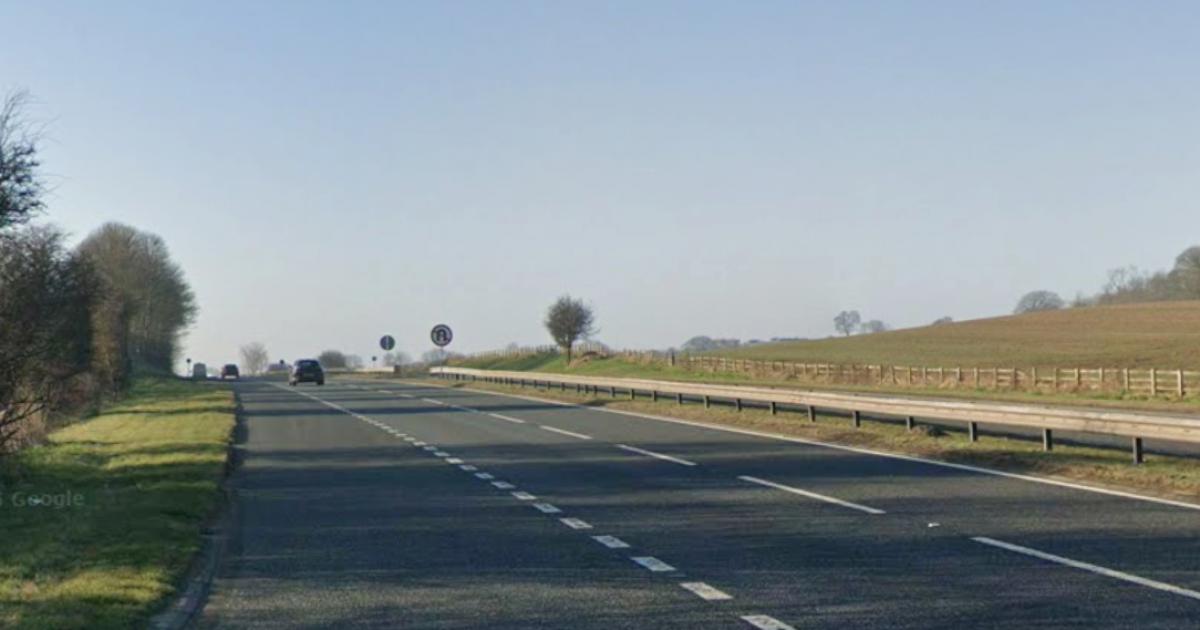
Cab of fertiliser wagon bursts into flames on A19 near Osmotherley

Published

on

Cab of fertiliser wagon bursts into flames on A19 near Osmotherley

Emergency services were called to the major road near Osmotherley on Tuesday (February 10) after the lorry set on fire around 3.15pm.

Firefighters used two hose reel jets to douse the flames at the cab, while the trailer of the wagon remained in tact.

Two crews from the North Yorkshire Fire and Rescue Service attended alongside North Yorkshire Police and the Yorkshire Ambulance Service.

Advertisement

The road was closed on both sides of the carriageway, sparking severe delays north and south. Traffic was released on both sides just before 5pm.

The Yorkshire Ambulance Service has confirmed it attended but nobody required any medical assistance. 

A spokesperson said: “An ambulance crew came across an incident on the A19 near Osmotherley around 3.25pm on Tuesday afternoon, but no-one required medical assistance.”

Advertisement

Source link

Continue Reading

NewsBeat

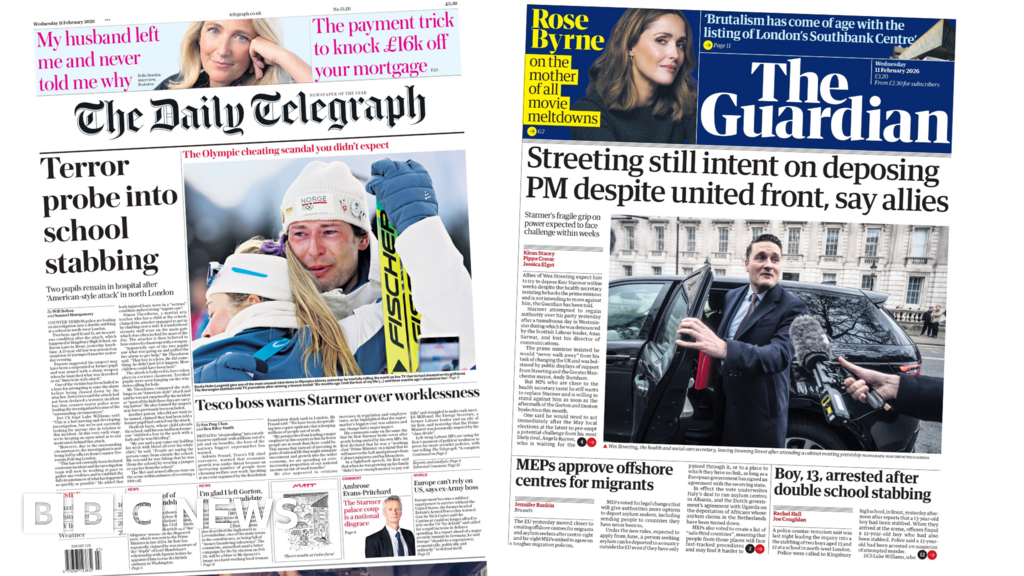
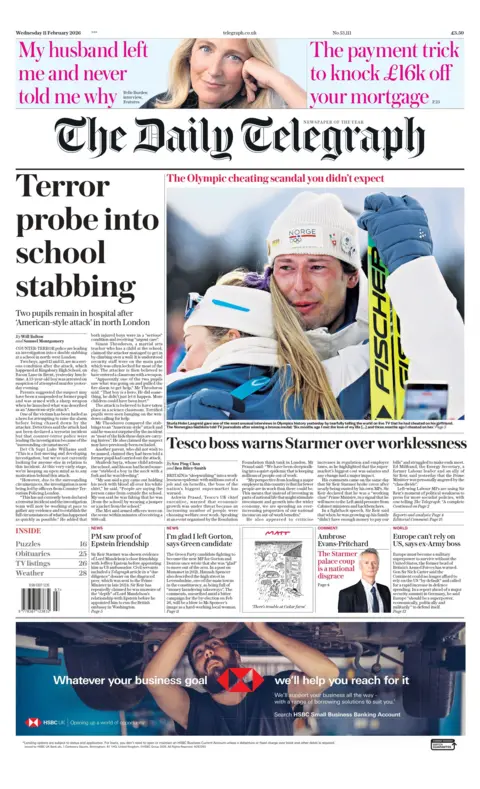
‘Terror probe into school stabbing’ and ‘Streeting still intent”

Published

on

'Terror probe into school stabbing' and 'Streeting still intent''
BBC "Terror probe into school stabbing" reads the headline on the front page of the Daily Telegraph.BBC

“Terror probe into school stabbing” is the headline in the Daily Telegraph following an attack on two boys, aged 12 and 13, in North London. The two pupils remain in hospital. A 13-year-old boy has been arrested on suspicion of attempted murder, the paper writes. A picture of teary-eyed Norwegian Olympic athlete Sturla Holm Lagried also makes the front page in “the Olympic cheating scandal you didn’t expect”. Lagried told press he had cheated on his girlfriend after winning a bronze medal in “one of the most unusual interviews in Olympic history”.

Source link

Continue Reading

NewsBeat

‘Hidden gem’ historic village with eerie past where hundreds died just an hour from Manchester

Published

on

Manchester Evening News

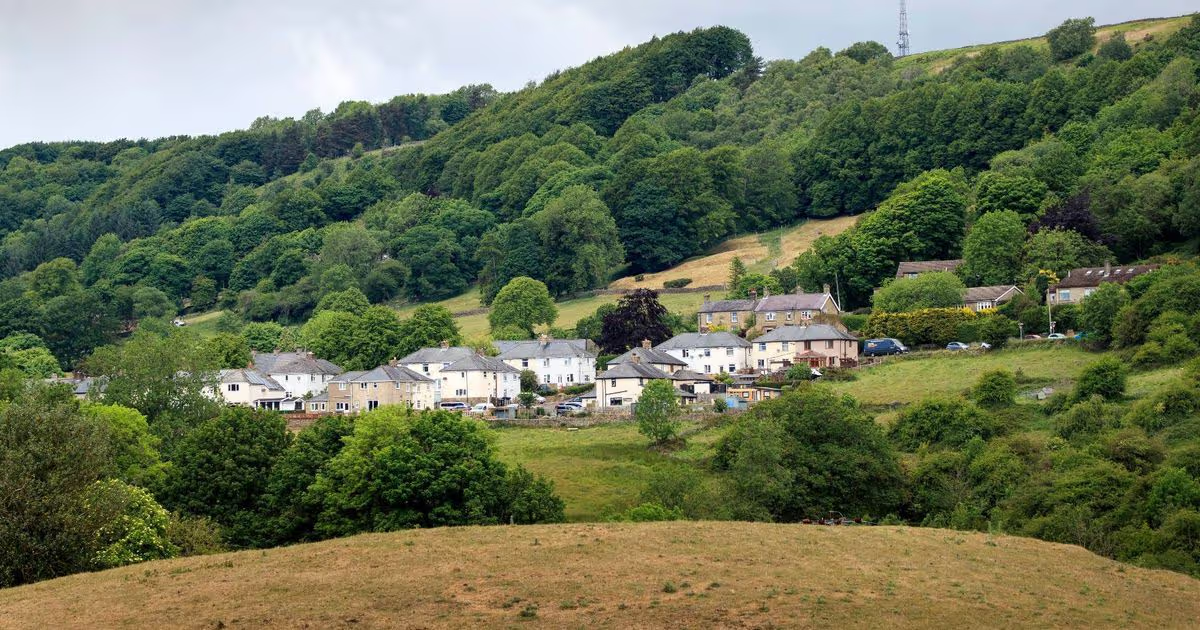
The Derbyshire village decided on a voluntary quarantine in 1665 to stop the deadly disease spreading further

Tucked away in the Derbyshire countryside lies a charming village, rich in history and often referred to by visitors as a true “hidden gem”.

Advertisement

But the quaint cottage-filled village of Eyam hides a much darker past. During the horrifyingly dark days of the Great Plague in the 1600s, when the entire country was in chaos, the villagers of Eyam chose to defy convention.

Across Britain, people were abandoning their homes in a desperate bid to flee from infection. However, when the plague reached Eyam in August 1665, the villagers resolved to do the opposite and stay put.

It’s believed the disease was introduced to the village through a parcel of cloths, transported from London to a local tailor. The tailor’s assistant died a few days after airing the damp cloth, and the disease rapidly spread throughout the village.

Best Peak District holiday cottage deals

Advertisement
This article contains affiliate links, we will receive a commission on any sales we generate from it. Learn more
Sykes Cottages

From £32 per night

Sykes Cottages

See the deals

Famous for its dramatic landscapes of rolling hills, limestone dales, gritstone edges and picturesque villages, the Peak District is perfect for walking and outdoor adventures. Popular with visitors from all over the world, Sykes Cottages has plenty of places to stay with prices from £32 per night.

In a collective decision, the villagers opted for voluntary quarantine, believing that fleeing would only spread the plague further across the region. The rules were stringent – no one was to leave or enter the village – a policy that persisted for a gruelling 14 months.

Despite these measures, the village suffered a significant loss of life, with an estimated 260 losing their lives to the terrible illness, decimating a substantial portion of its population.

Advertisement

In fact, it’s reported that one villager tragically had to bury six of her children and her husband within a mere eight-day period.

Visitors can now discover the village’s importance during this dark period at Eyam Museum, which serves as an ideal starting point for exploring the area. Numerous sites across the village share poignant stories connected to the plague and its devastating impact.

A recent visitor described the venue as a “hidden gem”. Another wrote on TripAdvisor: “Really enjoyed our visit to the Eyam Museum. Staff were welcoming and friendly.

Advertisement

“Lots to see within the museum despite it being quite small; a good variation of visual displays about the Plague and also the history of the residents of Eyam. We’d certainly recommend a visit.”

Meanwhile, one person shared: “This museum was really interesting- much better than expected from a small museum! The history is fascinating and very well laid out – they manage to bring it to life by the stories of the individuals and families who both survived and died.”

The village is also home to Eyam Hall and Courtyard, a manor house from the 17th century featuring magnificent gardens alongside a venue to shop and dine at Bloom Bar and Grill.

Advertisement

Following a visit, someone said: “A beautiful venue for a wedding! Such a gorgeous, peaceful village with stunning surroundings and grounds. This made for an incredibly memorable evening.”

Where to eat and drink

Following a visit to the cafe on the premises, another individual said: “We dropped into Bloom looking for a light lunch.

“We settled for a coffee and a Margarita pizza, which definitely exceeded expectations – my friend said it was the best pizza she had ever tasted. Service was attentive, and the ambiance was calm and peaceful.”

If you fancy something stronger, The Miner’s Arms in the heart of the village is cosy pub serving lunch Thursday through to Sunday and evening meals Monday to Saturday.

Advertisement

Source link

Continue Reading

NewsBeat

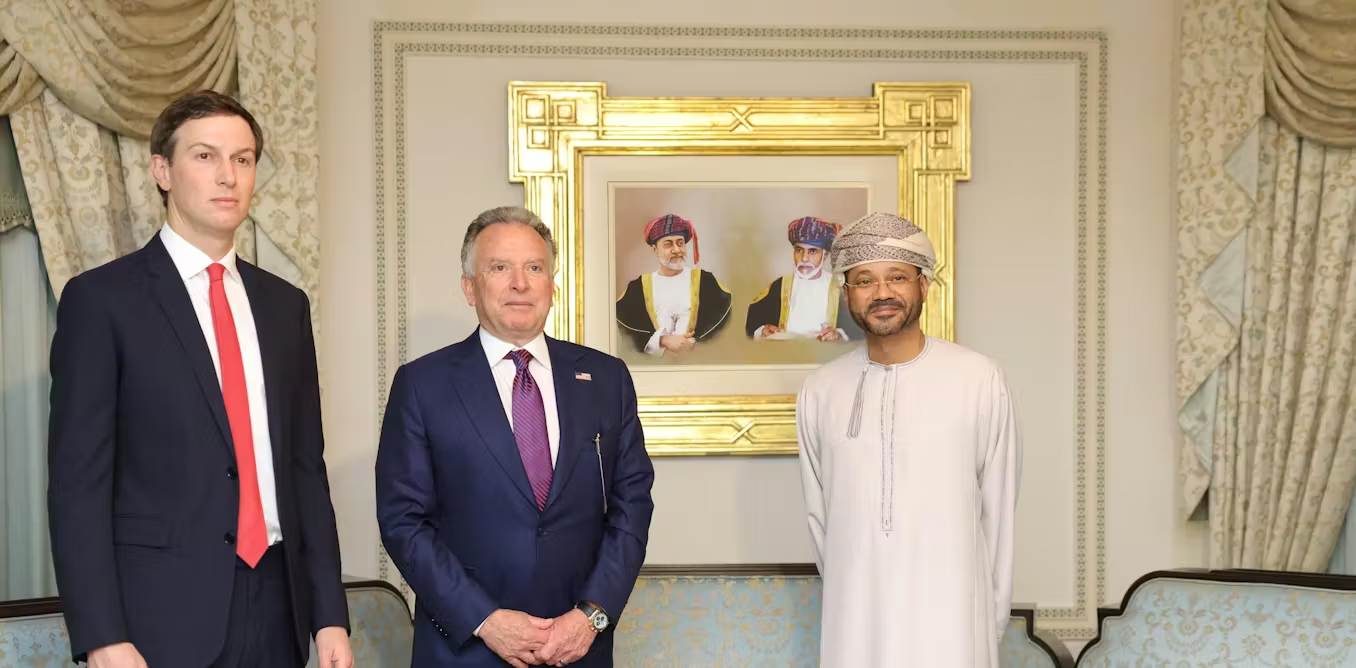
US-Iran talks are not a countdown to conflict

Published

on

US-Iran talks are not a countdown to conflict

When Iranian and US officials met for talks in the Omani capital of Muscat on February 6, many journalists and analysts were speculating as to whether diplomacy will fail and whether war will inevitably follow. But that framing misses the deeper reality of this moment. The more important question is why both sides have returned to the negotiating table at all, despite years of hostility, sanctions, proxy conflict and open threats.

The anxiety that has surrounded the talks is understandable. Washington warned its citizens to leave Iran hours before the talks took place, fuelling speculation about military strikes. US officials outlined sweeping demands that go far beyond wanting to curb Iran’s ambition to possess nuclear weapons. And recent history offers no shortage of examples where negotiations have collapsed into violence.

But treating the talks as a countdown to conflict misunderstands diplomacy and the balance of power in the Middle East today. Negotiations are not a single test of resolve, nor a one-off gamble on peace. The talks in Oman were not a final reckoning but an opening move. They reflect a shared recognition in Washington and Tehran that 15 years of coercion, pressure and force have failed to produce decisive outcomes, and that escalation now would be vastly more dangerous than before.

Iran’s foreign minister, Abbas Araghchi, arrives in Muscat for talks with the US on February 6.
Iranian Foreign Ministry / EPA

As diplomacy scholar Geoffrey Berridge has long argued, the first stage of any serious diplomatic process is the establishment of common ground on key points. Only once this groundwork is laid can substantive negotiations begin. The talks in Oman should thus be understood as an opening phase rather than a decisive round.

Advertisement

The purpose was to clarify positions, communicate red lines and test whether a workable diplomatic pathway exists. Iranian officials described the atmosphere as constructive, noting that the two sides communicated their concerns and views through their host, Oman’s foreign minister Badr Albusaidi. This is precisely how diplomacy begins, not how it ends, and Iranian and US officials have both subsequently called for talks to continue.

For Tehran, engaging a US delegation in talks is significant. Iran has consistently sought recognition as a legitimate regional player rather than a state to be coerced or isolated. The willingness of Iran’s foreign minister, Abbas Araghchi, to attend the talks personally signals how seriously Iran views this moment and how invested it is in a diplomatic outcome that confers mutual respect.

For Washington, the incentives are equally clear. Over the past 15 years, the US has applied nearly every available tool of pressure against Iran. These have included sanctions, cyber operations, targeted strikes, the killing of senior Iranian figures, the degradation of Iran-aligned groups across the region and direct support for Israel during its brief 2025 war with Iran. Yet none of this has delivered regime change, capitulation or lasting regional stability.

Sanctions have devastated the Iranian economy and Tehran’s regional network has been weakened. Hezbollah has faced mounting pressure and economic strain in Lebanon, Hamas has been severely battered in Gaza and Houthi forces in Yemen have been constrained by international military patrols. Even so, Iran’s core political system remains intact.

Advertisement

Domestic unrest has also failed to produce collapse. Recent protests, met with intense and often violent repression, did not topple a regime that has been deliberately built to survive external pressure since 1979. This highlights a central paradox: Iran may be weaker than at any point in recent decades, but it is not as fragile as many external observers assume.

Washington’s negotiating position

Statements from US officials insisting that talks should encompass Iran’s ballistic missile programme, its regional alliances and its domestic governance represent the high end of any negotiating position.

This is not unusual. In diplomacy, opening demands are often maximalist by design. They are intended to create leverage rather than define an achievable endpoint, something the US president, Donald Trump, is known for. The risk lies in treating these demands as simultaneously attainable.

From Tehran’s perspective, these issues are not equivalent. Iran has consistently signalled that nuclear weapons are the only area it is prepared to engage meaningfully over. This is because its nuclear programme has already been internationalised through treaties, inspections and prior agreements.

Advertisement

Iran’s leadership has also repeatedly pointed to Supreme Leader Ayatollah Ali Khamenei’s religious decree declaring the production and use of nuclear weapons forbidden under Islamic law. Western policymakers are sceptical of the decree’s legal enforceability. But it nonetheless provides Tehran with an ideological framework that allows nuclear restraint to be framed domestically as principled rather than imposed from outside.

In contrast, Iran views the existence of its ballistic missile arsenal as non-negotiable. In a region where Iran faces nuclear-armed adversaries and an overwhelming conventional military imbalance, missile capabilities are central to its deterrence strategy. Likewise, Iran’s regional alliances are not simply tools of influence. They are an extension of this defensive posture that has been shaped by decades of war, sanctions and isolation.

Domestic governance is even more sensitive. No Iranian negotiating team could accept external constraints on how the Islamic Republic governs itself without calling into question the legitimacy of the system they represent. Attempts to fuse diplomacy with demands for internal political reform are therefore perceived not as bargaining positions, but as existential threats.

Bundling nuclear limits, regional retrenchment and internal transformation into a single negotiating framework thus risks overreach. Progress is far more likely through sequencing: addressing the nuclear issue first, building confidence through verification and reciprocity, and only then exploring narrower forms of deescalation elsewhere. Understanding this helps explain why talks can proceed despite sharp rhetoric and military signalling.

Advertisement
Iranians display a portrait of Ali Khamenei and mock missiles during an anti-US rally.
Iran views the existence of its ballistic missile arsenal as non-negotiable.
Abedin Taherkenareh / EPA

Mutual risk, mutual opportunity

Araghchi’s description of the talks in Muscat as a “good beginning” where both sides were able to convey their interests and concerns, as well as his subsequent expression of hope for further negotiations, suggests that diplomacy remains preferable for Iran. The same probably applies for the US.

Military intervention has rarely produced stable outcomes in recent Middle Eastern and North African history. The removal of Saddam Hussein in Iraq, Muammar Gaddafi in Libya and the collapse of state authority in Syria did not bring immediate peace or genuine democracy. They produced power vacuums, proxy wars, mass displacement and chronic instability.

Iran is larger, more institutionalised and more deeply embedded in regional dynamics than any of those cases. A conflict involving the Islamic Republic would be longer, more destructive and far harder to contain.

The real danger is not that diplomacy between Iran and the US will fail, but that it will be dismissed too quickly. Negotiations are incremental, often frustrating and rarely linear. But in this case, they may reflect the only viable strategy available to both sides.

Iran avoids an unwinnable war. The US avoids another Middle Eastern quagmire. And the region gains a fragile but vital opportunity to move away from permanent crisis. In that sense, the talks themselves may already represent the most meaningful progress possible.

Advertisement

Source link

Continue Reading

NewsBeat

UK weather: Flooding concerns remain after record January rain

Published

on

A van and a car left abandoned in a flooded ford in Watery Gate Lane, Thurlaston, Leicestershire. The water rises to the vehicles' front windows.

Why so wet?

Around 17 January a blocking area of high pressure developed in Scandinavia and it’s still there to this day.

This has prevented areas of low pressure from moving beyond the UK, so they’ve become slow-moving, bringing very wet weather, with south-west winds to the south of the UK and south-easterly winds to the north of the UK. This wind pattern is responsible for the distribution of rain.

It’s worth pointing out that it hasn’t been wet everywhere.

Advertisement

North-west England and west Scotland had a much drier January than normal, and parts of the Highlands have only recorded 1mm of rain so far this month.

The Scandinavian blocking area of high pressure is finally going to budge this week, allowing our weather to turn colder with some hill snow in the north later this week.

Next week our weather patterns will become more typical for the time of year with the Atlantic jet stream returning to the north-west of Scotland, rather than taking an unusual position near Morocco.

There will still be rain around as we’d expect in winter, but some of the wettest weather will return to west Scotland. The rain won’t be as extreme in east Scotland. In the southwest of England, it won’t rain every single day, there will be drier and sunnier days between our weather systems.

Advertisement

Heading towards the end of February, there are hints that an area of high pressure may visit our shores, bringing some more settled weather conditions. It’s a long way off, but it’s the least we deserve given just how wet and dull it’s been over recent weeks.

Source link

Continue Reading

NewsBeat

Susan Collins announces reelection bid for Maine Senate seat

Published

on

Susan Collins announces reelection bid for Maine Senate seat

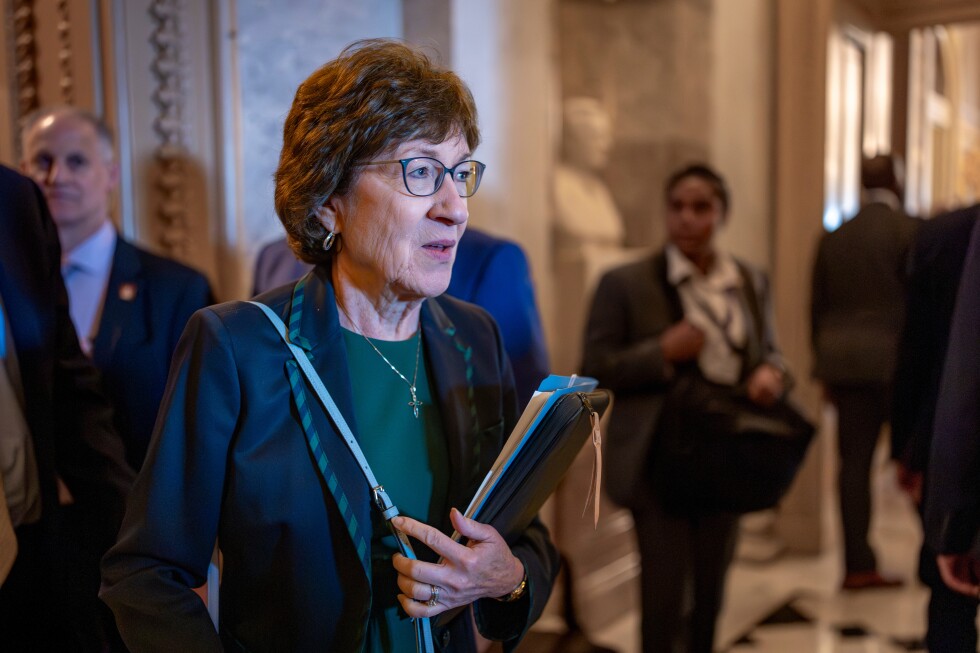
PORTLAND, Maine (AP) — Republican Sen. Susan Collins announced her reelection bid Tuesday, betting that she can hold onto her coveted Maine seat despite a renewed Democratic effort to oust her in a race that could determine control of the U.S. Senate.

The campaign will test Collins’ political survival skills. The 73-year-old has won five terms by casting herself as a reflection of Maine’s independent spirit, occasionally clashing with President Donald Trump while also largely supporting his agenda.

“I have always worked across the aisle to solve problems. Maine needs experienced, steady leadership that focuses on getting things done,” Collins said in a Tuesday statement.

As she seeks a sixth term, Collins faces outrage over immigration enforcement tactics that could become a political liability for Republican candidates across the country. A recent operation in Maine led to hundreds of arrests but also criticism that people were being rounded up even if they didn’t have criminal records.

Advertisement

Collins has taken credit for stopping the surge of federal agents in Maine after she spoke directly with Department of Homeland Security Secretary Kristi Noem.

However, Democrats accused Collins of not going far enough, pointing to her refusal to call for Noem’s ouster and her vote in favor of a bipartisan Homeland Security funding bill. The party needs to net four seats to retake the Senate majority, and they are aiming to do that in Maine, North Carolina, Alaska and Ohio.

Gov. Janet Mills and oyster farmer Graham Platner are among Collins’ top Democratic challengers. While many establishment Democrats and influential left-leaning groups have backed Mills, Platner has gained traction with his anti-establishment image and economic equality message. He’s campaigned aggressively while facing revelations of problematic social media posts and having to cover up a tattoo resembling a Nazi symbol.

Mills has accused Collins of governing “without any courage” shortly after the Republican voted in favor of funding the DHS and several other agencies in January. She repeated that charge Tuesday.

Advertisement

“Seniority without a backbone is just tenure, and after decades in Washington, Senator Collins has failed to demonstrate the leadership required in this dangerous moment in history,” she said in a statement.

Platner has demanded that Immigration and Customs Enforcement, which is part of DHS, be dismantled and said he did not believe Collins or the Trump administration’s promise to leave Maine. He said Tuesday in a post on the social platform X that Collins should have kept her promise to serve just two Senate terms.

“That’s just one of a hundred reasons she doesn’t deserve a sixth term,” he wrote.

Platner recently outraised both Mills and Collins, according to the latest federal filings. The first-time candidate collected nearly $4.6 million, while Mills raised $2.7 million. Collins, who had not yet officially launched her campaign during the filing period, had more than $8 million in cash on hand at the end of 2025.

Advertisement

Collins, who has said she didn’t vote for Trump in 2016, voted to convict the president after his 2021 impeachment over his role in the Jan. 6 Capitol riot. After Collins joined a handful of Republican colleagues in backing a failed effort to limit the president’s ability to unilaterally use force in Venezuela, Trump said on social media that they “should never be elected to office again.”

But Collins has also broadly backed Trump’s agenda, including his tax and spending bill, and his nominees.

Notably, Collins voted to confirm Robert F. Kennedy Jr. as Trump’s choice to be secretary of Health and Human Services. Kennedy has since espoused anti-vaccine policy and ousted public health officials at the Centers for Disease Control and Prevention.

She has faced down tough challenges before. Democrat Sara Gideon raised $69 million in 2020, outspending Collins in a bid to help take back the Senate during a presidential election year when the Democrats won the top of the ticket. Collins defeated Gideon by more than 8 points.

Advertisement

Collins has remained in office despite Maine becoming increasingly blue. The proportion of registered Democrats has increased since her last reelection campaign, when “unenrolled” independent voters outnumbered Democrats in 2019 but now trail them in 2026. Republicans have trailed both groups for years.

___

Kruesi reported from Providence, Rhode Island.

Advertisement

Source link

Continue Reading

NewsBeat

Woman admits passing over drugs package to inmate at HMP Deerbolt

Published

on

Woman admits passing over drugs package to inmate at HMP Deerbolt

Louise Stabler will appear at Durham Crown Court later this month for sentencing after pleading guilty to bringing drugs into a prison, in Barnard Castle.

The serial shoplifter admitting an array of theft offences, most in breach of a criminal behaviour order (CBO) put in place by magistrates last May. The 37-year-old, of Shinwell Crescent in Thornley, admitted 29 thefts and 26 breaches of her CBO.

She will also be sentenced for trying to bring/throw drugs into a prison.

Advertisement

Stabler admitted trying to pass alprazolam tablets over on a visit to HMP Deerbolt, near Barnard Castle, on May 17 last year.

She was seen on CCTV handing over a package, found to contain the Class C drugs, to a prisoner.

Stabler was taken into custody, shown the CCTV and replied no comment in interview.

But having now admitted the offence, she will be sentenced along with all other matters at the crown court, on Thursday February 26.

Advertisement

PC Rob Booth, of Barnard Castle neighbourhood policing team, said: “This is a great result, demonstrating that we will take action and target anyone involved in the supply of drugs in and out of prisons.

“We’re working closely with our prison partners to keep drugs out by dismantling illegal activity and ensure those responsible are held accountable, like Stabler.”

He urged anyone aware of any form of criminal activity, or with concerns, to contact police on 101.

Advertisement

Source link

Continue Reading

NewsBeat

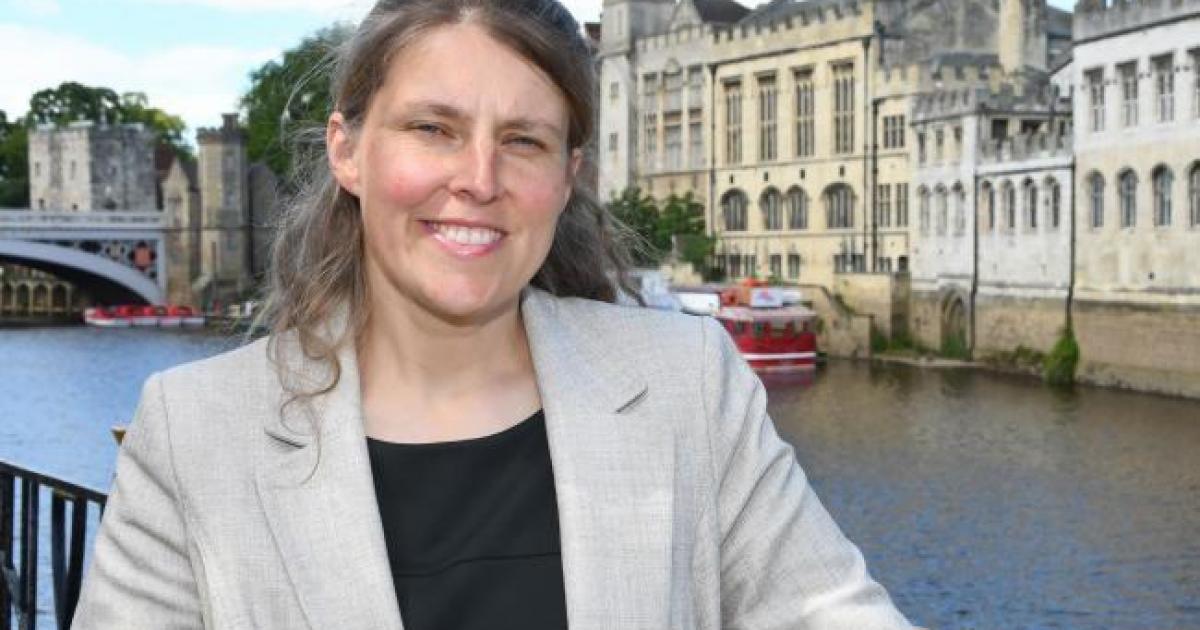
Rachael Maskell and Luke Charters comment on Starmer as PM

Published

on

Rachael Maskell and Luke Charters comment on Starmer as PM

The Press has approached Labour MPs in the region as to whether or not they support the Prime Minister.

In their responses yesterday, neither Luke Charters or Rachael Maskell expressed direct support for Sir Keir with Ms Maskell saying she would wait to hear what the PM would say to Labour MPs that evening.

Earlier that day both Selby MP Keir Mather and Scarborough and Whitby MP Alison Hume said they were backing Sir Keir staying on as PM.

RECOMMENDED READING:

Advertisement

This afternoon, Rachael Maskell told the Press: “I was pleased that the Prime Minister spoke with Members of the Parliamentary Labour Party yesterday, to own the decisions that he took and to show regret of the reprehensible behaviours of Peter Mandelson and the repugnant abuse of the women survivors of Jeffrey Epstein.

“Rightly there was deep scrutiny as the stakes are so high for Labour to get governing right. There was optimism raised over the change that must now happen to prevent further occurrences and to reform the operations of the Labour Party.”

“Luke (Charters) continues to support the Labour Government led by Keir Starmer as Prime Minister.” (Image: Pic supplied)

The statement from Ms Maskell, who represents York Central, continued: “He now has got to propel this confidence across the country.”

 “I will be backing Labour every step of the way to succeed, because if we do not change as a result, we let down the very people we are here to fight for, the survivors of sexual abuse; and those gaslit by powerful men.

Advertisement

“Harriet Harman was right to call this out, as I did last week, and to call for candour. I am glad the Prime Minister heeded that call.

“He now needs to change the culture of the Labour Party so it is open, transparent and inclusive; as accountability prevents such errors reoccurring.”

A spokesperson for York Outer MP Luke Charters told the Press this afternoon: “He would not be giving a daily commentary on leadership matters. Luke continues to support the Labour Government led by Keir Starmer as Prime Minister.”

As previously reported, Mr Starmer told Labour MPs last night: “Every fight I’ve been in, I have won.”

Advertisement

In extracts shared by Downing Street, he also said: ‘I’m not prepared to walk away from my mandate and my responsibility to my country, or to plunge us into chaos, as others have done.”

He added: “I’ll tell you this, as long as I have breath in my body, I’ll be in that fight, on behalf of the country that I love and I believe in, against those that want to tear it up.

“That is my fight, that is all of our fight, and we’re in this together.”

However, Thirsk And Malton Conservative MP Kevin Hollinrake told ITN on Monday that Sir Keir’s position is ‘untenable’ after the PM’s advisor Morgan McSweeney resigned.

Advertisement

Mr Hollinrake, who is Conservative Party Chairman, also told BBC Breakfast Sir Keir is “living on borrowed time” and his “tenure is coming to an end.”

The MP also posted on X an interview with LBC radio where he said: “Politics doesn’t like a weak leader and Starmer is the weakest we’ve seen for a long, long time.”

Source link

Advertisement
Continue Reading

Trending

Copyright © 2025