

The few remaining residents are determined to stay until they die.
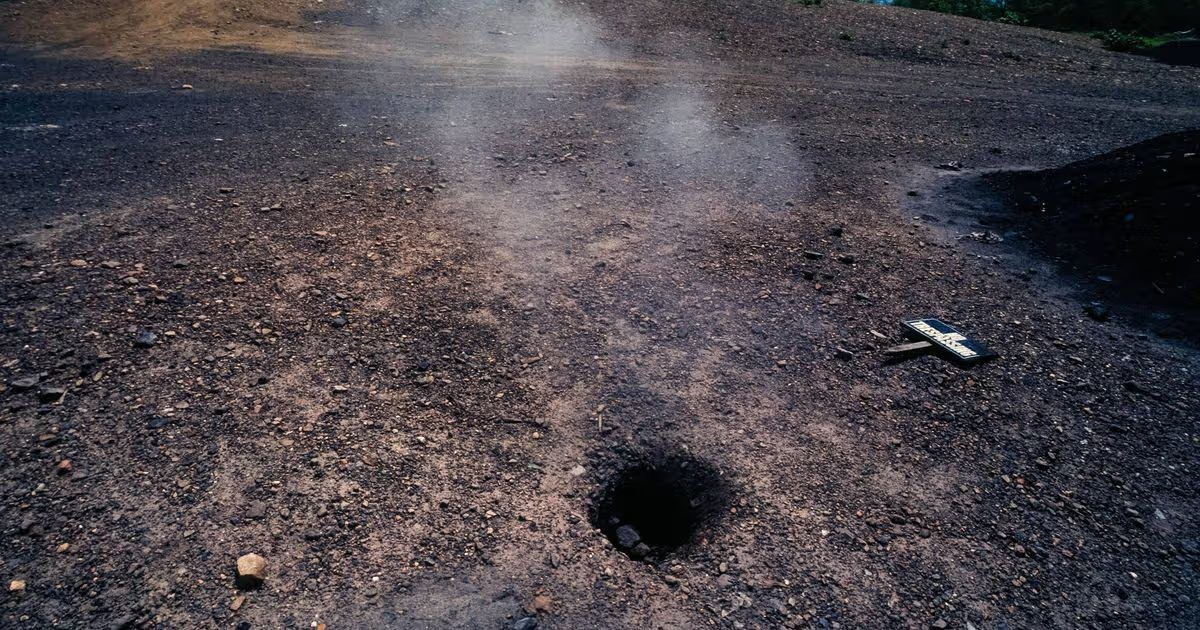
Were it not for the steam billowing like mist from fissures in the ground, motorists could easily drive through this formerly prosperous settlement without realising they’d entered and exited it.
Centralia in Pennsylvania is an unsettling spectacle. Wilderness is gradually reclaiming what was once inhabited land — nearly all residents departed years ago, whilst the few who remain are determined to stay until they die.
This abandoned settlement hides an underground inferno that has raged for decades and is predicted to continue burning for centuries to come. Previously a thriving mining community, Centralia was inhabited by thousands.
Its coal mines opened in 1856, providing livelihoods for local families. During its peak in 1890, Centralia’s population reached 2,761, and the settlement boasted numerous churches, hotels and drinking establishments, alongside theatres, a bank and a post office.
Yet everything started shifting during the 1960s as mining operations dwindled and the town’s fortunes declined, reports the Express.
The precise origins of the subterranean blaze remain unclear. Some theorise it ignited when local authorities commissioned the volunteer fire service to eliminate rubbish from the municipal landfill, situated in a disused strip mine.
The firefighters torched the refuse and allowed it to burn, but the flames never extinguished. An unprotected opening enabled the fire to penetrate the maze of antiquated tunnels running beneath the settlement.
An alternative theory proposes the fire started when a waste collector deposited smouldering coals into the exposed rubbish pit adjacent to the mine. Regardless of its origins, the blaze established itself beneath the surface and continued to spread.
Plumes of smoke started seeping upwards through the earth as firefighters struggled to quench the flames. At first, they believed they’d been successful, but unknown to them, the inferno had extended far beyond anyone’s expectations.
For years, residents viewed the fire as a troublesome but controllable problem. A persistent reek of sulphur and smoke permeated the atmosphere, forcing some inhabitants to abandon their properties due to the poisonous fumes in the late 1960s.
A decade on in 1979, the situation reached a critical juncture. Mayor John Coddington, who also operated a petrol station, made a shocking discovery during a standard inspection — the fuel in his underground storage tanks had reached an alarmingly high temperature of 77.8C.
Two years afterwards, 12-year-old Todd Domboski narrowly avoided disaster when a sinkhole abruptly tore his back garden apart. He plunged into the 150-foot chasm and only survived by grabbing hold of a tree root.
The cavity released lethal concentrations of carbon monoxide into the atmosphere.
Despite clear indications that Centralia was becoming hazardous, locals remained divided over whether the town remained habitable. By 1983, authorities had earmarked over $42 million for relocation initiatives, with nearly all residents accepting the compensation.
Over 1,000 residents relocated and 500 structures were razed to the ground. Census data reveals that by 1990, a mere 63 inhabitants remained.
Fast forward two years, and the entire town was condemned, with only five homes left standing by 2010.
Despite the relentless flames raging beneath their homes, the remaining residents were adamant about not leaving. They contested a court order mandating their departure but remained defiant.
Eventually, in 2013, a settlement was reached allowing the last seven residents to remain in Centralia until their demise, after which their properties would be seized.
Currently, the fire has ravaged an area spanning over 13km. If it continues to burn at its present pace, it could persist for another 250 years or more.
Nowadays, Centralia is largely deserted, with nature reclaiming the streets once teeming with life. The only remnants of the former town are an old church and a highway winding through the verdant landscape.
Warning signs about toxic gases, unstable terrain, and fires are scattered across the area.
The only vestige of this once-thriving town is the steam that billows from the earth’s cracks when rain seeps into the ground, meeting the ever-waiting flames below.

















































You must be logged in to post a comment Login