NewsBeat
Afghan forces fire on Pakistani jets over Kabul as tensions between South Asian neighbours escalate

Afghan air defences targeted Pakistani aircraft over Kabul before dawn on Sunday, as fighting between the two countries escalated into what Pakistan’s defence minister has described as “open war”.
Explosions reverberated across parts of the Afghan capital in the early hours, followed by bursts of gunfire. It was not immediately clear what had been struck or whether there were casualties.
Zabihullah Mujahid, spokesperson for Afghanistan’s Taliban administration, said the blasts were the result of Afghan forces engaging Pakistani jets above the capital. “Air defence attacks were carried out in Kabul against Pakistani aircraft. Kabul residents should not be concerned,” he said.
There was no immediate statement from Pakistan’s prime minister’s office, information ministry or military.
The exchange marks the fourth consecutive day of hostilities between the neighbours, whose 2,600km (1,615-mile) frontier has seen some of the heaviest violence in years.

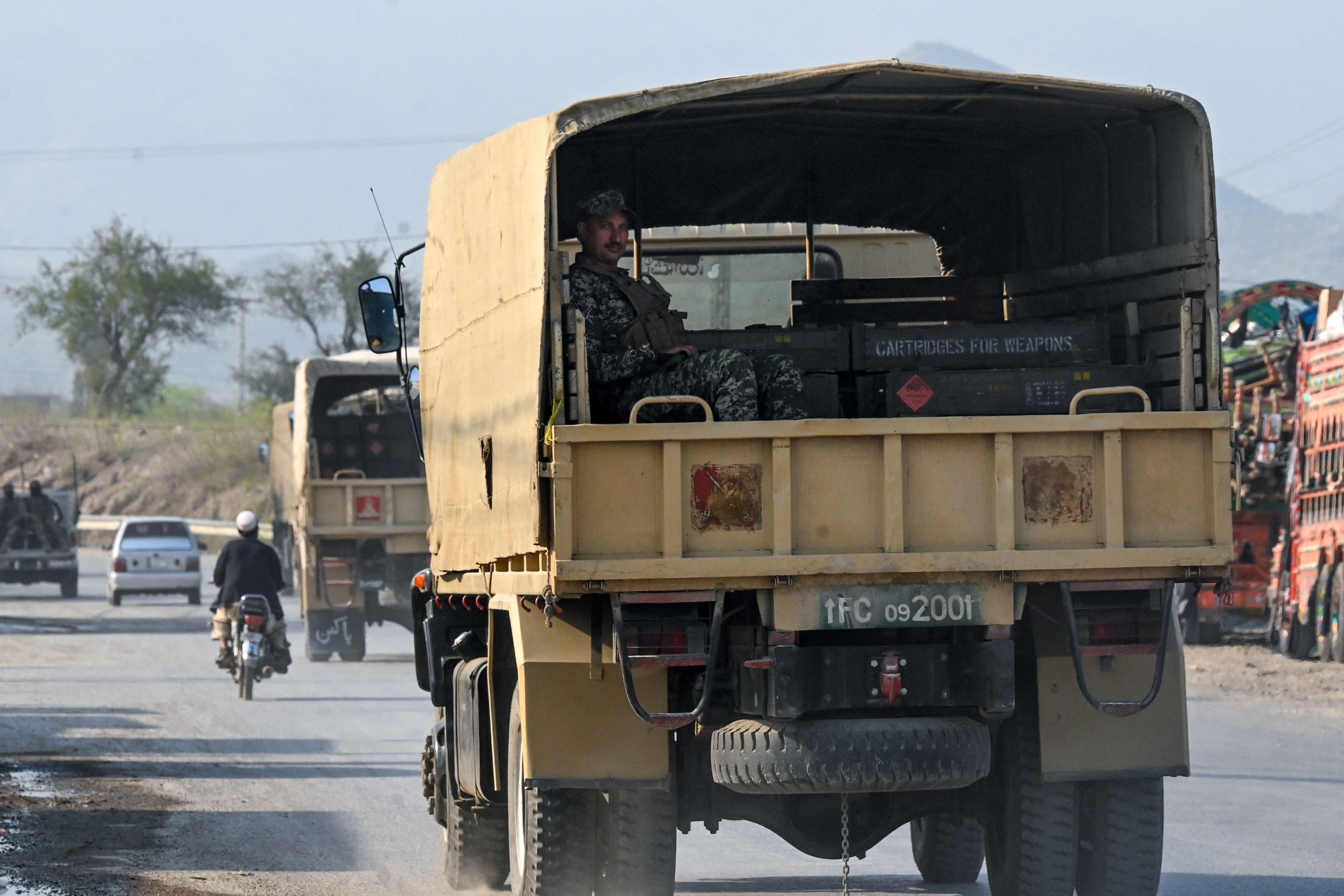
The latest clashes follow Pakistani air strikes inside Afghanistan last Sunday. Islamabad said it was targeting infrastructure linked to Tehreek-e-Taliban Pakistan (TTP), an outlawed militant group fighting an insurgency inside Pakistan that is closely allied with Afghanistan’s ruling Taliban.
Kabul said the strikes killed only civilians and denounced them as a violation of its sovereignty, announcing retaliatory operations along the shared border.
Pakistan’s defence minister, Khawaja Mohammad Asif, declared on Friday: “Our patience has now run out. Now it is open war between us.”
Pakistani information minister Attaullah Tarar said on Saturday that more than 331 Afghan forces had been killed and over 500 wounded in ongoing strikes inside Afghanistan. He said Pakistan had destroyed 102 Afghan posts, captured 22 and destroyed 163 tanks and armoured vehicles at 37 locations.

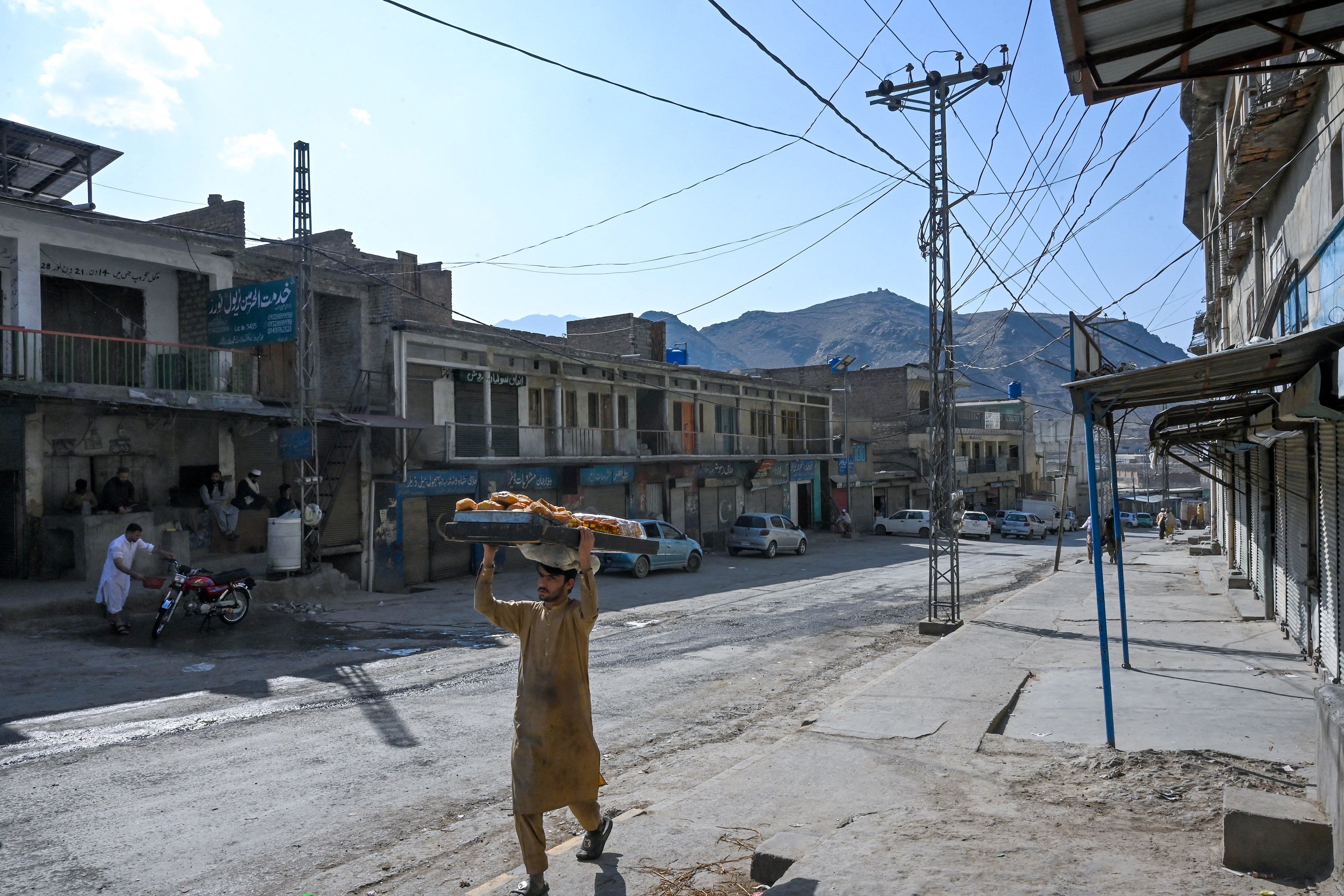
Kabul dismissed those figures as inaccurate. Afghanistan’s defence ministry said Afghan forces had killed 110 Pakistani soldiers and captured 27 Pakistani posts, reported the Associated Press.
Enayatullah Khawarazmi, a ministry spokesperson, wrote on X that the operations were continuing. There was no immediate response from Islamabad to that claim.
Pakistan’s army spokesperson, Lt Gen Ahmed Sharif Chaudhry, said on Friday that 12 Pakistani soldiers had been killed in the fighting. On the same day, Mr Mujahid said 13 Afghan forces were killed and 22 wounded, and that 55 Pakistani soldiers had died.
Neither side’s casualty figures have been independently verified.
Afghanistan’s deputy government spokesperson, Hamdullah Fitrat, accused Pakistan on Saturday of striking civilian areas in the provinces of Paktika, Khost, Kunar, Nangarhar and Kandahar, as well as refugee camps in Torkham and Kandahar. He said 52 people had been killed, most of them women and children, and 66 wounded.
In eastern Afghanistan, the department of information and culture said Pakistani attacks had destroyed homes and killed at least 11 civilians. Pakistan has said it is targeting only military installations.
The United Nations wrote on X that major Afghan cities were reportedly bombed by the Pakistani military on Friday, calling it a new escalation and warning of risks to civilians already living under Taliban rule.
Pakistan’s state-run media reported that its air force had carried out strikes on key military installations in eastern Afghanistan. Afghan officials said their forces launched overnight attacks on Pakistani bases in Miranshah and Spin Wam, destroying installations and inflicting heavy casualties in response to Pakistani air strikes.
Mullah Taj Mohammad Naqshbandi, a commissioner on the Afghan side of the Torkham crossing, said in a statement that the “brave forces of the Islamic Emirate destroyed the Pakistani military regime’s commissariat, military units, and three important security towers”.
Mr Mujahid said Afghan attacks on Pakistani military targets were intended as “a message that our hands can reach their throats and that we will respond to every evil act of Pakistan”. He added: “Pakistan has never sought to resolve problems through dialogue.”
Pakistan’s army spokesperson said the Afghan government must choose “TTP or Pakistan.”

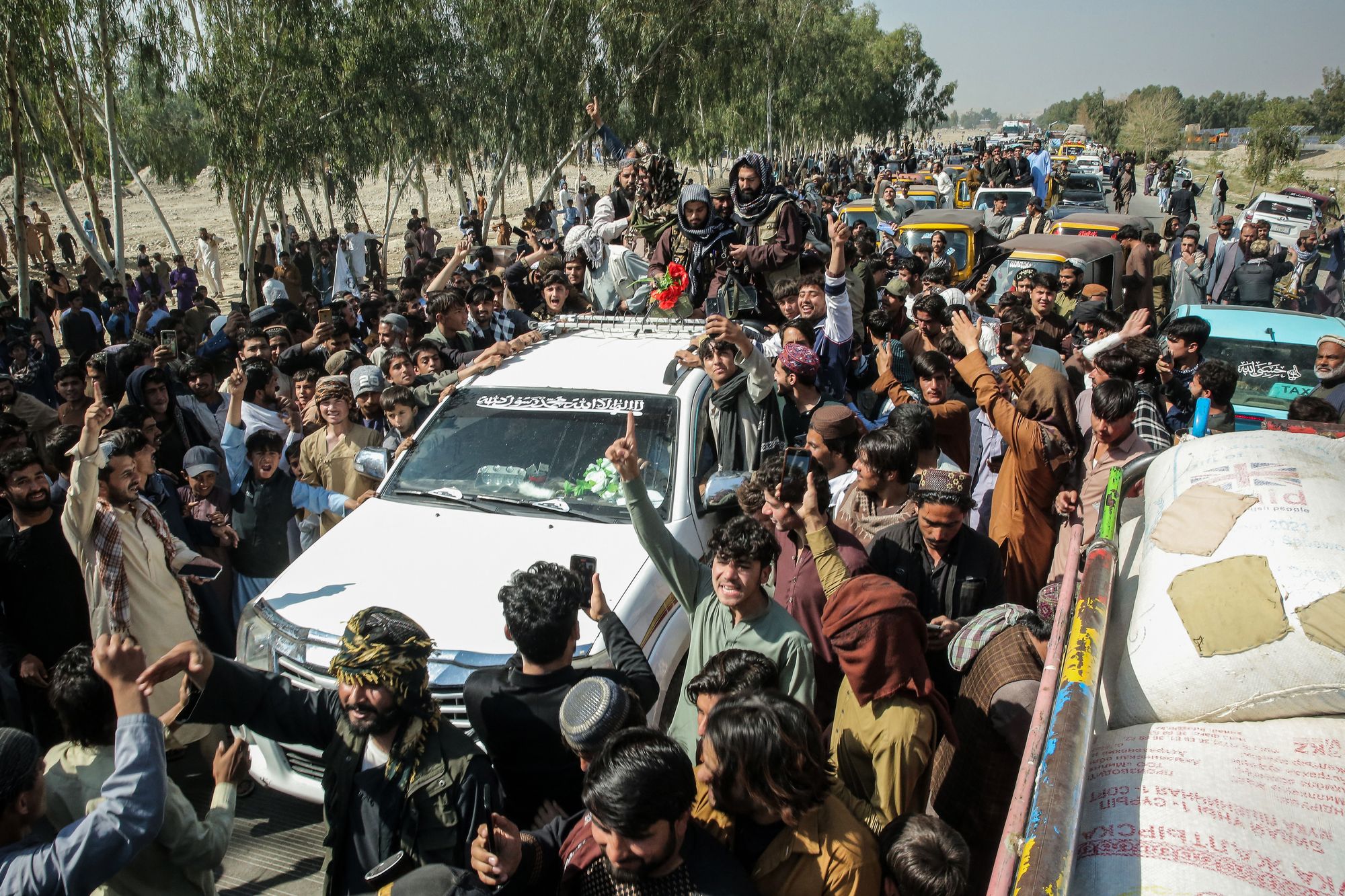
Islamabad has long accused Kabul of harbouring TTP militants, an allegation both the group and Afghanistan’s Taliban authorities deny. Afghanistan says it does not permit its territory to be used against other countries and describes Pakistan’s security challenges as an internal matter.
The fighting has displaced civilians near the northwestern Torkham border crossing, with Pakistani authorities saying hundreds of residents have fled. In recent days, Pakistan has also deported dozens of Afghan refugees to Torkham.
Ejaz Ul Haq, an Afghan refugee stranded near the crossing with his family, said he could not return to Afghanistan because of the clashes. He said many were struggling to secure food during the fasting month of Ramadan.
Tensions between the two countries have simmered for months.
In October, border clashes killed dozens of soldiers, civilians and suspected militants before a Qatar-mediated ceasefire halted intense fighting. Subsequent peace talks in Turkey in November failed to secure a lasting agreement, and sporadic exchanges of fire continued despite the truce largely holding until last week’s Pakistani strikes.
Since the latest escalation, Saudi Arabia, Russia, China, the European Union and the United Nations have urged restraint and called for talks. Turkey, Saudi Arabia, Qatar and China are among the countries offering mediation.
The United States has said it supports Pakistan’s right to defend itself.
Iran, which borders both Afghanistan and Pakistan, had offered to help facilitate dialogue before coming under attack on Saturday from Israel and the US.
Afghanistan’s interior minister, Sirajuddin Haqqani, said the conflict would be “very costly” and that only front-line forces had so far been engaged, adding that the country had yet to fully deploy its military.
Operation “Ghazab Lil Haq”, meaning “Wrath for the Truth”, is ongoing, according to Pakistani security sources, who say Afghan posts and camps have been destroyed.