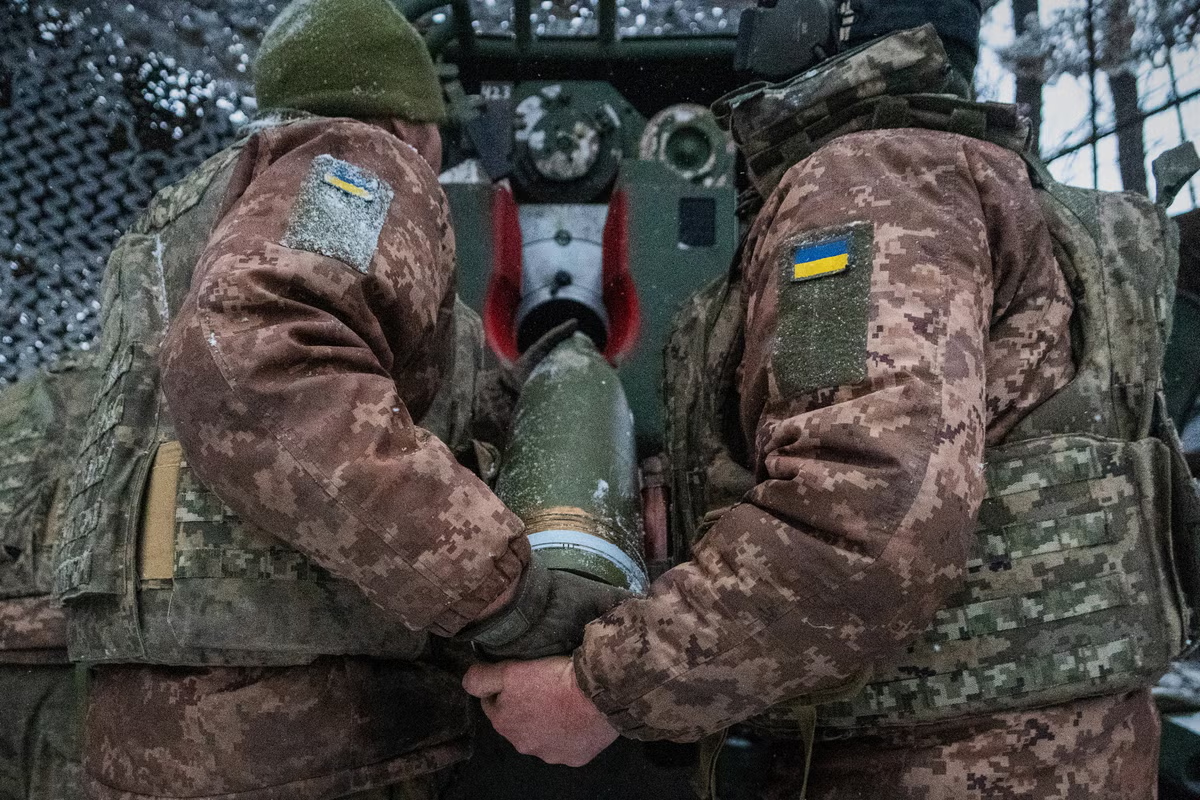
When Russia’s full-scale invasion of Ukraine surpassed 1,418 days last month, it officially exceeded a historic milestone — the same span of time it took Moscow to defeat Nazi Germany in World War II.
And unlike the Red Army that pushed all the way to Berlin eight decades ago in what it called the Great Patriotic War, Russia‘s 4-year-old, all-out invasion of its neighbor is still struggling to fully capture Ukraine’s eastern industrial heartland.
After Moscow failed to seize the capital of Kyiv and install a puppet government in February 2022, the conflict turned into trench warfare with tremendous cost. By some estimates, nearly 2 million soldiers are dead, wounded or missing on both sides in Europe’s most devastating conflict since World War II.
Russia has occupied about 20% of Ukrainian territory since illegally annexing Crimea in 2014, but its gains after the Feb. 24, 2022, invasion have been slow. NATO Secretary-General Mark Rutte this month likened Moscow’s advance to “the speed of a garden snail.”
Advertisement
Russian troops have moved only about 50 kilometers (about 30 miles) into the Donetsk region of eastern Ukraine in the past two years in a grinding battle for control of a few strongholds.
Despite the slow pace and high cost, President Vladimir Putin has maintained his maximalist demands in U.S.-mediated peace talks, saying Kyiv must pull its forces from the four Ukrainian regions that Moscow illegally annexed but never fully captured. He has repeatedly brandished his nuclear arsenal to prevent the West from boosting military support for Kyiv.
A war of attrition
Initially involving quick movements of large numbers of troops and tanks in Russia’s opening blitz and Ukraine’s counteroffensive in fall 2022, the fighting morphed into bloody positional warfare along the 1,200-kilometer (750-mile) front line.
Advertisement
The Washington-based Center for Strategic and International Studies estimated Russian military casualties at 1.2 million, including 325,000 killed. It put Ukrainian troop casualties at up to 600,000, including up to 140,000 killed.
“Russia has suffered the highest casualty rate of any major power in any war since World War II, and its military has performed poorly, with historically slow rates of advance and little new territory to show for its efforts over the last two years,” it said, noting Russian troops were advancing an average of 70 meters (76 1/2 yards) a day in two years to capture the transport hub of Pokrovsk.
For the first time in military history, drones are playing a decisive role, making it effectively impossible for either side to covertly mass significant numbers of troops.
Since early in the conflict, Ukraine has relied on drones to offset Moscow’s edge in firepower and stem its advances, but Russia has drastically expanded drone operations and introduced longer-range optical fiber-tethered drones to avoid electronic jamming. They widened the kill zone to 50 kilometers (about 30 miles) from the front, leaving the terrain tangled in strands of filament.
Advertisement
The mixture of high-tech drones and World War I-style trench fighting has seen small groups of infantry — often just two or three soldiers — try to infiltrate enemy positions into towns flattened by Russian heavy artillery and glide bombs. Ferrying supplies and evacuating the wounded is a major challenge as drones target supply routes.
Long-range attacks
Ukrainian officials described this winter as the most challenging of the war. Russia exponentially increased its strikes on the country’s energy system, causing blackouts in Kyiv where power supplies to many were cut to a few hours a day amid bitter cold.
Russia also has increasingly targeted power lines aiming to halt energy transfers and split Ukraine’s power grid into isolated islands, increasing pressure on the grid.
Advertisement
Ukraine retaliated with long-range drone attacks on oil refineries and other energy facilities deep inside Russia, aiming to drain Moscow’s export revenues.
Its drones and missiles sank several Russian warships in the Black Sea, forcing Moscow to redeploy its fleet from Russia-occupied Crimea to Novorossiysk. And in an audacious attack code-named “Spiderweb,” Ukraine used drones from trucks to hit several air bases hosting long-range bombers across Russia in June, a humiliating blow to the Kremlin.
US pressure, conflicting demands
U.S. President Donald Trump, who once promised to end the war in a day, has pushed to end the fighting, but mediation efforts have run into sharply conflicting demands.
Advertisement
Putin wants Ukraine to pull its troops from the part of the Donetsk region it still controls, abandon its bid to join NATO, curb its military and grant official status to the Russian language, among other demands Ukraine has rejected.
Russia left the door open to Kyiv’s prospective European Union membership, but it firmly ruled out any European peacekeepers deployed to Ukraine as part of a settlement.
Ukrainian President Volodymyr Zelenskyy wants a ceasefire along the existing line of contact, but Putin rules out a truce, demanding a comprehensive peace agreement.
“The territorial issue is important to the Kremlin, but the war has a more ambitious goal: to create a Ukraine that would be entirely within Russia’s sphere of influence and not perceived by Moscow as ‘anti-Russia,’” observed Tatiana Stanovaya of Carnegie Russia Eurasia Center.
Advertisement
Ukraine and its allies accuse Putin of dragging out talks while he seizes more territory. The Kremlin accuses Kyiv and its European supporters of trying to undermine a tentative agreement reached by Trump and Putin at their Alaska summit.
While sticking to their positions, Putin and Zelenskyy have praised U.S. mediation and tried to curry favor with Trump.
After a disastrous White House meeting a year ago, Zelenskyy has adopted a more practical negotiating stance, emphasizing Ukraine’s goodwill.
After Trump called for a presidential election in Ukraine, Zelenskyy signaled readiness for it even though it’s banned under martial law. The election could be coupled with a referendum on a peace deal, he said, but insisted the vote was only possible once a ceasefire is established and Ukraine gets security guarantees from the U.S. and other allies.
Advertisement
Elusive settlement
Zelenskyy said the White House has set a June deadline for the war’s end and will likely pressure both sides to meet it. But even as Trump appears eager for a peace deal before the U.S. midterm elections, challenges remain.
With Putin insisting on Ukraine’s pullback from Donetsk and Zelenskyy ruling it out, a quick deal appears unlikely. Zelenskyy also expressed skepticism about a compromise U.S. proposal to turn the eastern region into a free economic zone.
The Kremlin expects its attacks eventually will force Kyiv to accept Moscow’s terms. Ukraine hopes it can hold on until Trump loses patience and increases sanctions on Russia, forcing Putin to halt his aggression. But Trump often appears to be losing patience with Zelenskyy instead.
Advertisement
The war and Western sanctions have increasingly strained Russia’s economy. Growth has slowed to a near halt, due to persistent inflation and labor shortages. The latest U.S. sanctions on Russian oil exports have added to the strain.
But even with the economic challenges, Russia’s defense plants have increased weapons output and its government has shielded key social groups like soldiers and industrial workers from hardship.
“Its economy is poorer, less efficient and less promising than it might otherwise have been,” wrote Richard Connolly of the Royal United Services Institute. “But it remains capable of sustaining the war. Its elites are more dependent on the regime, not less. Its political system is insulated from the transmission of economic discontent into pressure for regime change.”
How to watch Livingston v Rangers on TV today – channel and kick-off time | Wales Online
Need to know
Rangers travel to bottom-placed Livingston in the Scottish Premiership title race with no margin for error after leaders Hearts won on Saturday
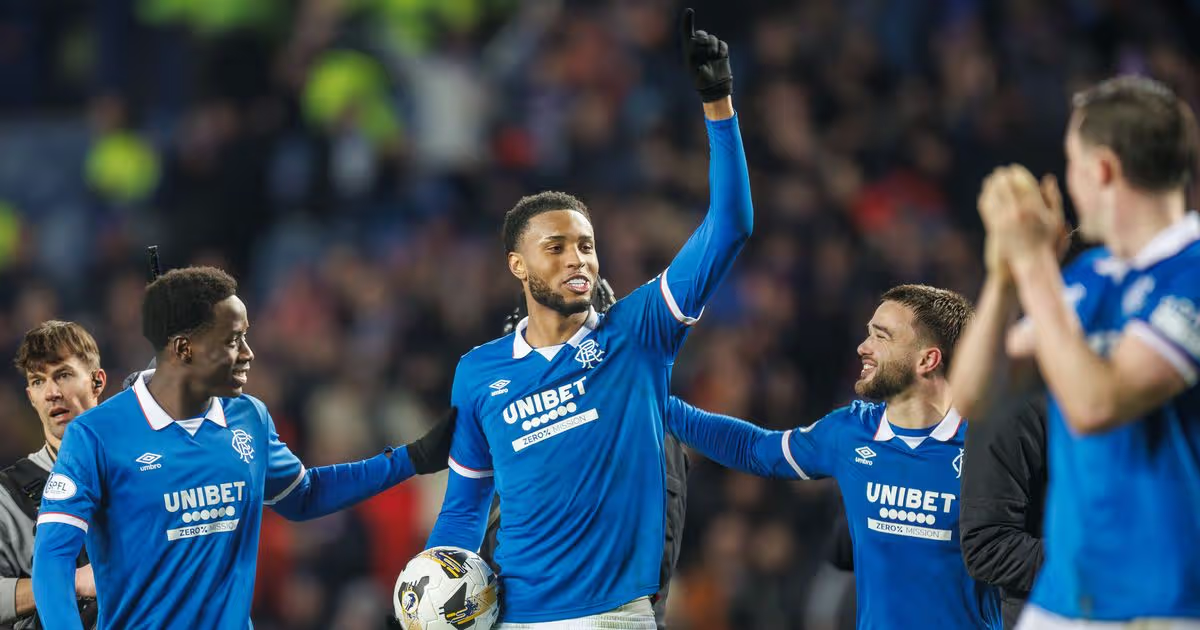
Rangers face bottom club Livingston this afternoon (Image: WM Sport Media/Getty Images)
Rangers face crucial clash with Livingston in tight Premiership title race
Rangers face a crucial away trip to Livingston on Sunday as the Scottish Premiership title race intensifies.
The Light Blues cannot afford any slip-ups after leaders Hearts secured victory against Falkirk on Saturday. Rangers need three points to keep pace in what has become an unexpectedly tight championship battle.
Livingston, under new manager Marvin Bartley, are fighting relegation and will be desperate for points. The Lions could still cause problems for the title chasers despite their lowly league position.
The match kicks off at 3pm on Sunday, February 22 and will be broadcast live on Sky Sports Football. Coverage begins at 2.30pm, with streaming available via Sky Go and NOW TV apps.
Rangers have injury concerns with Ryan Naderi doubtful and Dujon Sterling ruled out. Livingston could hand debuts to new signings Barrie McKay and Joel Nouble.
Both teams have several players sidelined through injury, adding to the tactical challenges for both managers.
Rangers boss Danny Rohl: “After every result we will think, ‘ah, maybe it could be this team, it could be this team’. I’m totally convinced that it’s now about consistency. Who takes the most points until the split, I think this is also a part of it. You have to prepare for the final five games with the next six games. If you do well [before the split], then you have a great opportunity. And in the final five games, everything is possible because you have the teams around you. But it’s crucial now, you can think it is just three points but it’s massive because it can really decide if it’s [a gap of] two, five or eight points [by the split]. Two points looks at the moment good but we are still not in the first position, we are still in second position.”
Marvin Bartley: “Rangers were up against it on and off the park when they came to our place last September so I expected them to put everything into the time added on. Likewise Celtic when they were playing at home and brought on a quality player in Alex late in the game to see what he could do to help them out of a spot. All I can say is I’ll be delighted if we’re on level pegging with Rangers after regulation time has ended on Sunday. I’ll take my chances after that.”
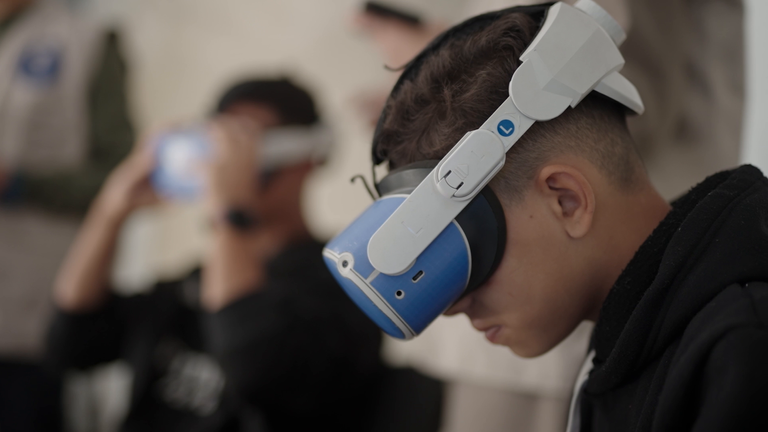
In a small office space in Gaza City, a child stands still, wearing a virtual reality headset.
A therapist asks seven-year-old Razan what she can see. She names objects as they appear in front of her: a train, toys, animals, the sea.
Image: Seven-year-old Razan wears a VR headset at a displacement camp in Gaza City
The prompts are gentle: reach for the cube, use the hand you can, tell me what you are feeling. It is therapy, but it looks like play.
Razan was injured last year when she went outside to get water for her family. A shell landed nearby, the shrapnel careering into her leg.
Advertisement
A series of surgeries followed, including one reconstruction attempt that failed. The injury is still impossible to miss – Razan’s leg is misshapen where a chunk of her flesh and muscle has gone.
Image: Razan has had a series of operations on her leg
Doctors told the family there was little more they could do for her inside Gaza, where medical facilities have been so badly affected by two years of war.
Only by leaving the Strip and seeking treatment abroad was there hope of a proper recovery, they said. For a young child, the news felt like a second attack.
Advertisement
Her mother, Rana Abu Harbid, says the trauma was so severe that Razan stopped eating for days, surviving only on water before collapsing and being taken back to hospital. Nightmares still wake her.
Now, after months of support from this team, Razan’s mental health is improving. But it is slow progress, with no guarantees.
“She slowly began to improve, and she started to forget, little by little,” says Rana. “But the nightmares still come back, and she wakes terrified, shaking, feeling like the ground is moving.”
Image: ‘The nightmares still come back’ for Razan, her mother, Rana Abu Harbid, says
During the sessions, a group of children sit in a circle and are given headsets to wear along with hand-operated controllers.
Virtual reality allows them to feel like they are entering new places, without moving out of the chair.
Advertisement
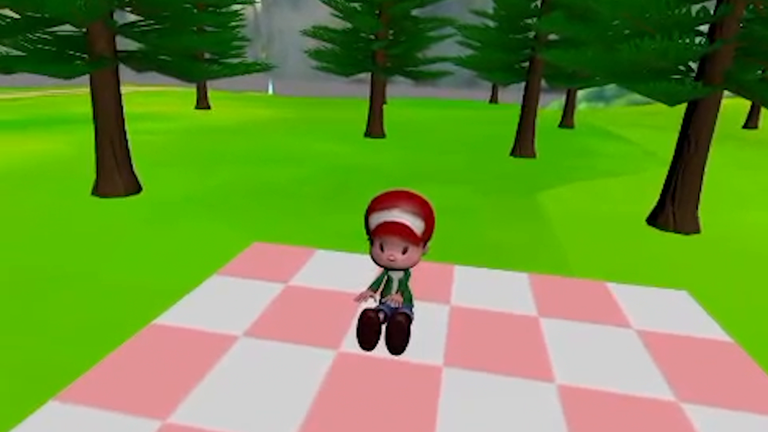
Suddenly, from Gaza’s grey world of rubble, dust and destruction, a child can find themselves watching animals roam, fish swim, or cartoon characters cavort happily.
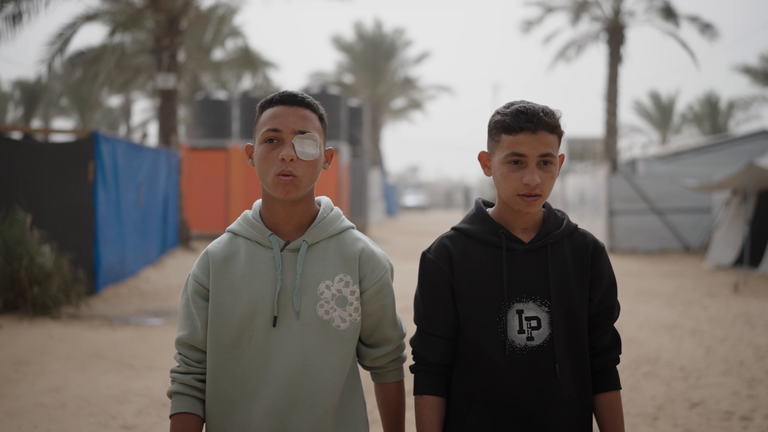
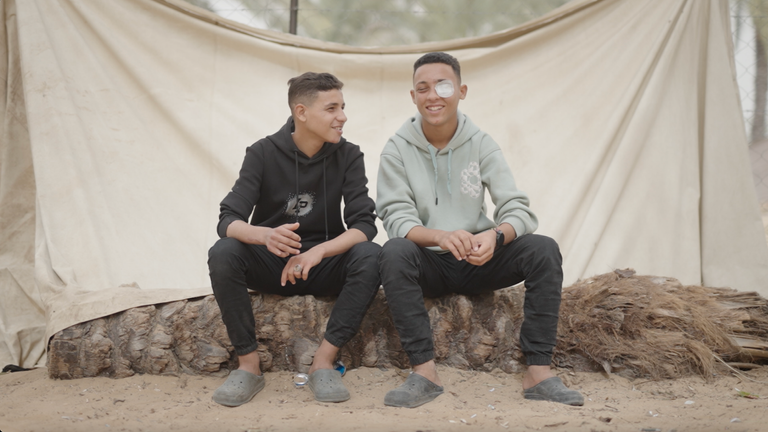
In the same office, two brothers, Ahmad and Amjad, 17 and 13, talk about what the VR sessions give them.
Image: Ahmad (left) and Amjad, 17 and 13, were both injured in the war in Gaza
Ahmad says that when the pressure of the war closes in on him, the headset helps him feel able to breathe again. Amjad says it takes him from war and destruction into a world of nature.
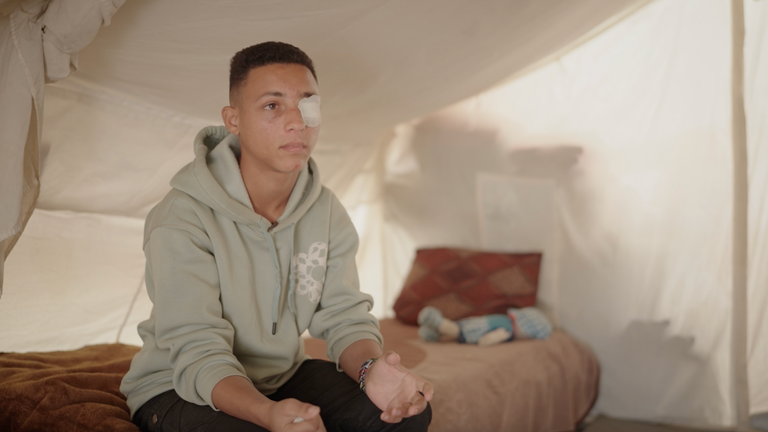
Theirs, too, is a story of lives that were ripped apart in a moment when an Israeliairstrike hit their home. Ahmad says he was thrown into the air “like a piece of paper”.
Shrapnel hit him, some going into his face. He’s now blind in one of his eyes.
Image: Ahmad’s twin brother had been killed earlier the same year he was injured
He says he thought he was going to die because his twin brother had been killed earlier that year, and death felt close.
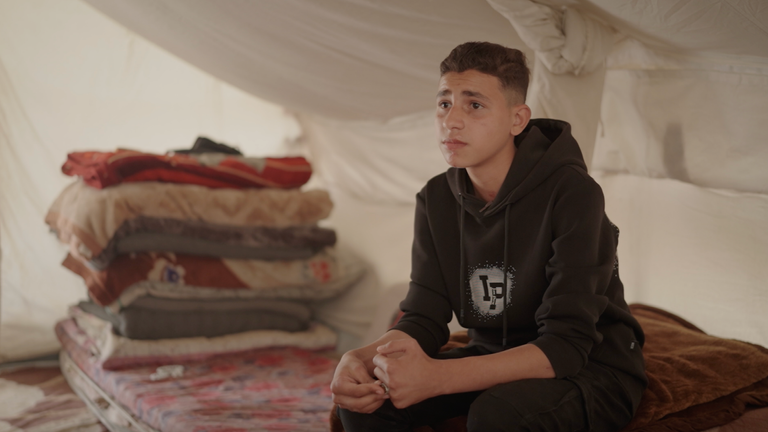
Amjad’s injuries were even more severe. He was taken straight into surgery.
Advertisement
Later, he was wrapped in a blanket and taken toward the hospital mortuary, assumed to be dead, until he was able to move his hand to show he was alive.
Image: Amjad says the headsets take him away from war and destruction
Their mother, Nissma, describes waking up to dust and rubble. The place where the boys had been sleeping was buried under stones.
She found Ahmad covered in blood and realised his eye was gone. She then went looking for Amjad, believing he was trapped beneath the debris.
Months later, both boys are still being treated. Shrapnel remains in their bodies.
Amjad says there is nothing more doctors in Gaza can do for some of his injuries and that he needs to travel outside the Strip for surgery.
For many families here, that possibility feels distant.
The VR sessions are part of a project run by TechMed Gaza.
A staff member, Lama Abu Dalal, explains that the idea began after a child injured in the war showed severe psychological symptoms, refusing to eat or drink, avoiding people, crying constantly.
Advertisement
VR was tried as a way to reduce those symptoms, with positive results.
Since then, the project has worked with around 180 cases, using structured sessions inside the headset, breathing exercises, walking exercises, and natural environments.
Image: Lama Abu Dalal says some children who could not walk because of fear take their first steps wearing the headset
Lama says they have seen children who could not walk because of fear take their first steps while wearing the headset, showing that the barrier was psychological, not physical.
The work is limited by what they have. There are only a few headsets. When one breaks, there are no replacement parts.
With crossings closed, no new equipment comes in. Fewer headsets means fewer children can be seen.
Advertisement
Image: Pic: AP
Image: Pic: AP
All of this is happening against a backdrop of ongoing instability. A ceasefire announced late last year is still officially in place, but it is fragile.
As the Winter Olympics end, the World Anti-Doping Agency (WADA) is investigating whether to add weight loss jabs to the banned list for the next Summer Olympics in 2028.
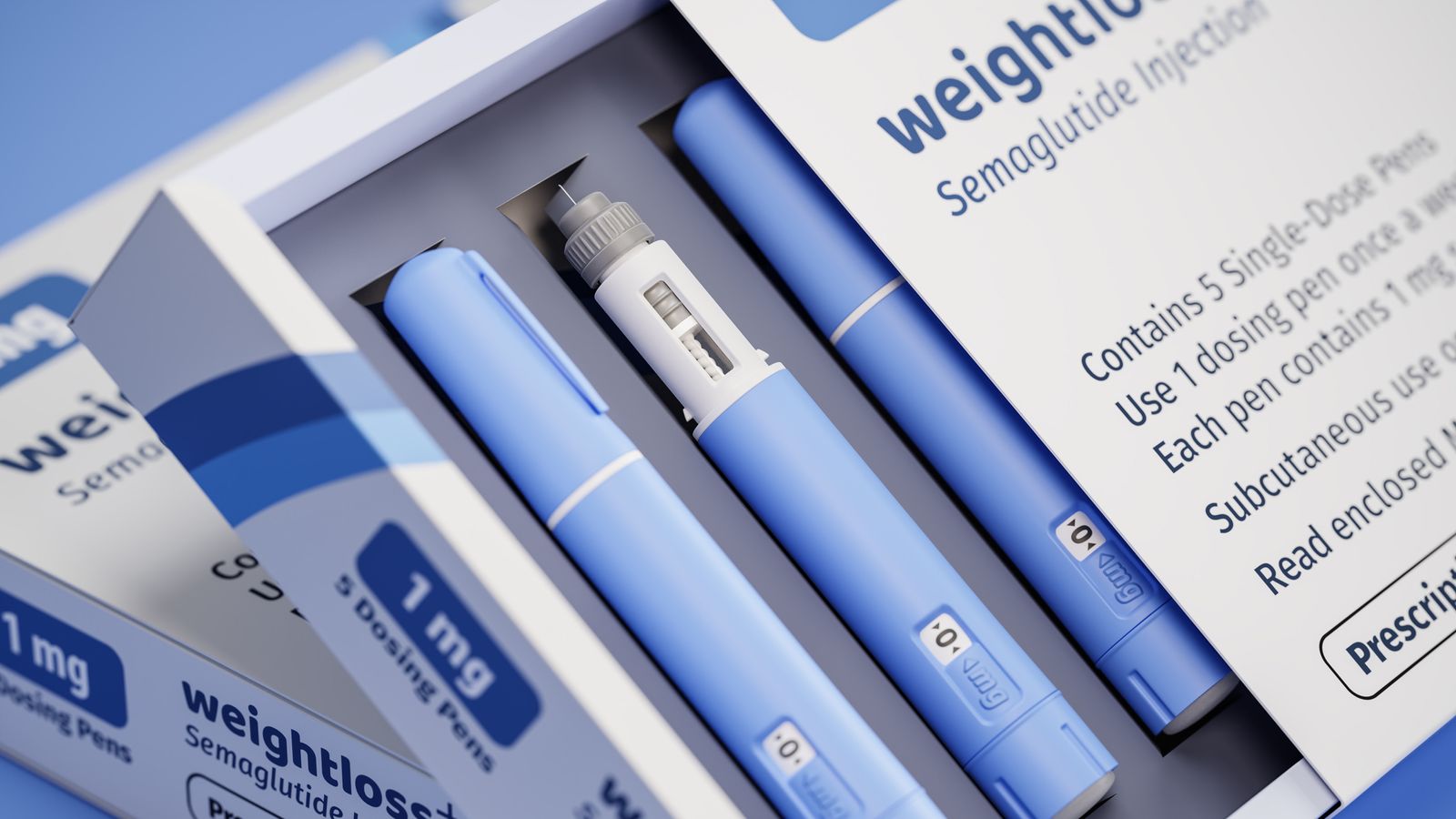
The agency is monitoring Semaglutide, which is the active ingredient in popular GLP-1 medication, including Ozempic, to see if it is being abused by athletes to cheat.
“We want to see whether we detect patterns of abuse of this drug or this class of substances in sport,” Dr Olivier Rabin, WADA’s senior director of science and medicine, told Sky News.
“So we keep an eye on them because there’s been a change in paradigm in the way weight can be controlled because of those drugs. So there is an interest from all sides, from the performance enhancing aspects and health protection of the athletes with this class of substances [and] will they end up being on the [banned] list.”
Advertisement
Image: Pic: iStock
WADA would need to find that athletes are using the drugs to boost performances and that their health is being risked or the spirit of fair sport is being violated.
Dr Rabin said in a recent interview that a decision could be taken by the end of this year or in 2027, adding: “Possibly before the Olympic Games in Los Angeles.”
Experts say endurance athletes could benefit most.
The drugs make you feel fuller, so you want to eat less, and that can cause energy deficiency. It means muscles might not absorb enough nutrients and other necessary drugs.
Advertisement
Advertisement
What happens when you come off weight loss jabs?
But there are welfare issues too, with athletes facing pressure to take the drugs.
Kate Seary, co-founder of the Kyniska Advocacy for safe sport, said: “In many ways a more invisible issue is GLP-1s being used to control the weight of athletes.
“There are toxic environments where the idea that thin equals fast, thin equals powerful, or even thin equals beautiful in sport are still really present.
Advertisement
“And that is because they’re under a number of wider pressures within the sport system. I think I would always go along the lines of banning it until we know the long-term consequences.”
The jabs are also a concern for Dr Ian Beasley, the former medical chief for England football teams and a Team GB Olympics physician.
“When you’re trying to look for minimal gains and try to get up to the next step, you might try it,” he said.
Advertisement
“If you wanted to cheat, could you take it during a close season and then reap the benefits during the season? And how would you be able to measure that? I think these are the questions that WADA are grappling with that make life very difficult.”
Exemptions could be granted for athletes really needing anti-obesity jabs, for example, in cases of diabetics to control weight issues.
But the fear is that the authorities are playing catch-up with athletes potentially already using the medication.
Arne Slot’s side can take advantage of slip-ups yesterday for Aston Villa and Chelsea as the race for Champions League qualification hots up.
But the Reds face a tough test against a Forest side buoyed by the appointment of Vitor Pereira, who had an impressive win away at Fenerbahce in their Europa League on Thursday.
Here’s everything you need to know ahead of the game…
Date, kick-off time and venue
Advertisement
Nottingham Forest vs Liverpool is scheduled for a 2pm GMT kick-off on Sunday, February 22, 2026.
The match will take place at the City Ground.
Where to watch Nottingham Forest vs Liverpool
TV channel: In the UK, the game will be televised live on Sky Sports. Coverage starts at 1pm GMT on Sky Sports Main Event.
Advertisement
Live stream: Sky Sports subscribers can also catch the contest live online via the Sky Go app.
Live blog: You can follow all the action on matchday via Standard Sport’s live blog.
Nottingham Forest vs Liverpool team news
Willy Boly, Matz Sels, Chris Wood and John Victor, however, will all miss out through injury.
Advertisement
Murillo returned from a knock to score in the win over Fenerbahce but Nicolo Savona is a doubt with a knee issue.
Liverpool emerged from the 3-0 win over Brighton last week unscathed, though Ryan Gravenberch and Hugo Ekitike are expected to return to the starting XI after being named on the bench for the FA Cup tie.
Slot does have a decision to make at right-back as the game comes too soon for Jeremie Frimpong who has missed the last four games with a hamstring injury. This could result in a start for Joe Gomez, unless Dominik Szoboszlai or Curtis Jones get the nod there.
Hugo Ekitike is expected to lead the line for Liverpool against Nottingham Forest
Advertisement
AFP via Getty Images
Nottingham Forest vs Liverpool prediction
Liverpool can take confidence from their 1-0 win over Sunderland last time out in the league and a similar test awaits on Sunday, facing a side likely to attempt to frustrate them for long periods.
Forest, playing at home for the first time under their new manager, will look to start fast but if Liverpool can weather the early storm then we expect them to leave the City Ground with all three points.
Igor Tudor will take charge of Tottenham for the first time in Sunday’s derby (Credits: Shutterstock)
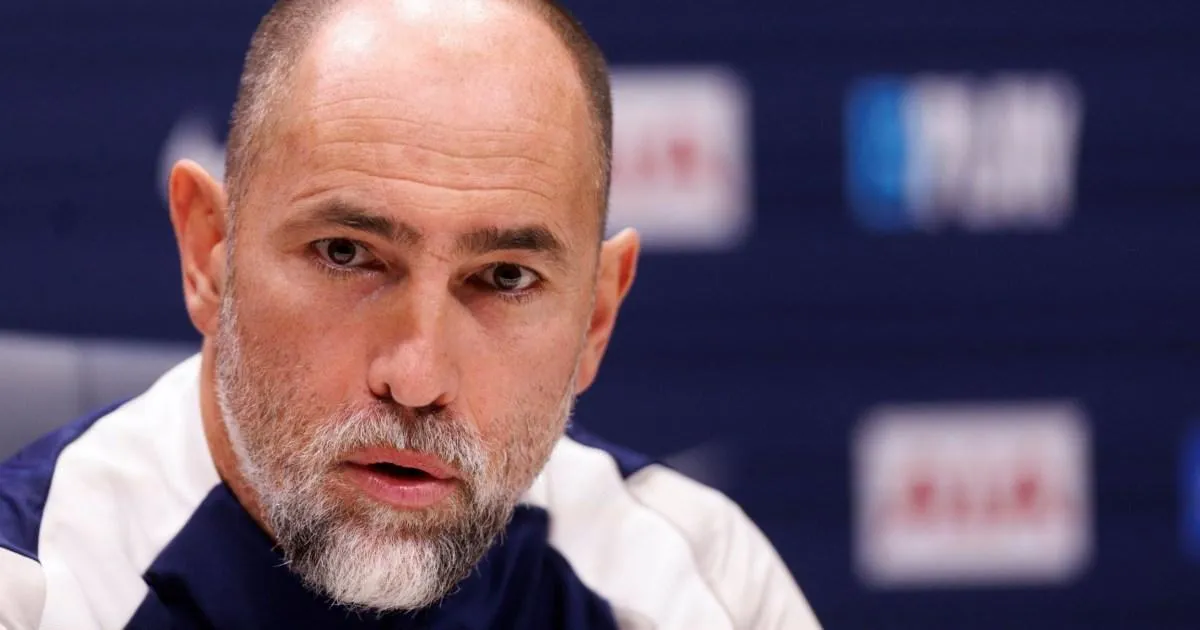
I’ve been thinking a lot about charisma this week, after Igor Tudor’s first interview as Tottenham boss. He said all the right things but that’s not why the reception from Spurs supporters has been so positive.
Tudor is an emergency manager. Appointed to restore morale, patch together a thin squad and keep Tottenham in the Premier League. A humiliating sentence for a Spurs fan to write but here we are.
On the evidence, the Croatian does a good line in rescue jobs. Sure, getting Juventus and Lazio the European finishes they expected feels a little more decorative than saving Spurs from the drop but still.
He’s used to being a short-term appointment but, that said, 11 jobs in 12 years is not much of a recommendation, even in football.
Advertisement
Since few Spurs fans know a huge amount about Tudor’s management style, this gives little to hold onto heading into the final third of the season. But we at Tottenham are desperate for scraps. So the warmth engendered by his first interview was perhaps to be expected.
Given the reception, when I went to watch it I expected to be blown away by his charisma, Pep Guardiola style. That didn’t happen. The way Tudor presented was focused, low-key and tough, with an underlying clarity. Like all charismatic people, he drew the eye, absorbed you into his moment. He came across as certain, but not bullish.
What I realised is this more restrained style is proof of his charisma, rather than a lack of it. In different situations audiences value different styles. A major component of the quality is vocal range.
Get your football fix
Don’t want to miss the week’s biggest football stories? Metro’s exclusive football newsletter, In The Mixer, is your essential guide.
Advertisement
From the latest transfer rumours and managerial moves to analysis of the biggest games and a lot more, our experts have you covered.
Charismatic individuals are able to inflect their voices with different tones to fit their environment and this makes them more persuasive. That’s exactly what Tudor was doing: matching his tone to the task.
Advertisement
Simply put, in times of crisis, fearful people want hard men who are busy getting things done. Look at politics around the world if you don’t believe me. Now compare this to Thomas Frank’s demeanour. He was open, affable, honest.
At risk of making imperfect national generalisations, the Danes are the second-happiest nation on Earth. Denmark has a high level of trust in its society, they invented hygge – wellbeing achieved by indulging in rest and cosiness, even in times of struggle.
Igor Tudor is used to staging rescue acts and helped Juventus qualify for Europe (Picture: Getty)
At Brentford, Frank took time out and had periods away from his phone. These are all good things, and they particularly work in a long-term appointment who is trying to set a new workplace culture. But as this season came crashing down, he was infected by fear, and it affected his ability to match tone to situation.
Short-term impact football management requires charisma. The pinnacle of this is Jose Mourinho. His success was built on using huge charm to sell the deep analysis he produced, to persuade footballers to join his cult of personality.
He’s also a scary example of how great personal charisma can stop you questioning yourself, something which played out this Tuesday in the latest vicious episode of racism towards Vini Jr.
Advertisement
Thomas Frank failed to win over Tottenham fans before he was sacked (Picture: Getty)
You’re right to think charisma can also sit in tandem with great good looks – welcome to the chat Thierry Henry – but fairly often hotties haven’t had to develop any.
Footballers without charisma are always surprised when they can’t manage. People want to talk to them no matter what. Great fame or talent brings a spotlight that can feel like being in the presence of the quality, but it’s something else entirely.
Tudor has got charisma nailed. The quality is vital in negotiating big characters and bringing the fans with you. Don’t mistake this for a positive column about the future of Tottenham Hotspur, however.
People over-value charisma because anyone can see it, and it’s extremely useful in job interviews. Will it be enough to harness a team with barely 11 fit players? Funnily enough one man’s personal traits aren’t enough for that – just watch Ange Postecoglou on the Overlap.
Sam Dudley was killed by a train at a level crossing while he was out running on August 24 last year – his phone was found to have been displaying a warning that his music was too loud
Ben Haslam and Mariam Khan
09:49, 22 Feb 2026
A man was struck by an oncoming train at a level crossing and died after his phone issued a warning, an inquest heard.
Sam Dudley was out running in Formby on the morning of August 24 last year when the tragedy unfolded at Hoggs Hill level crossing.
Advertisement
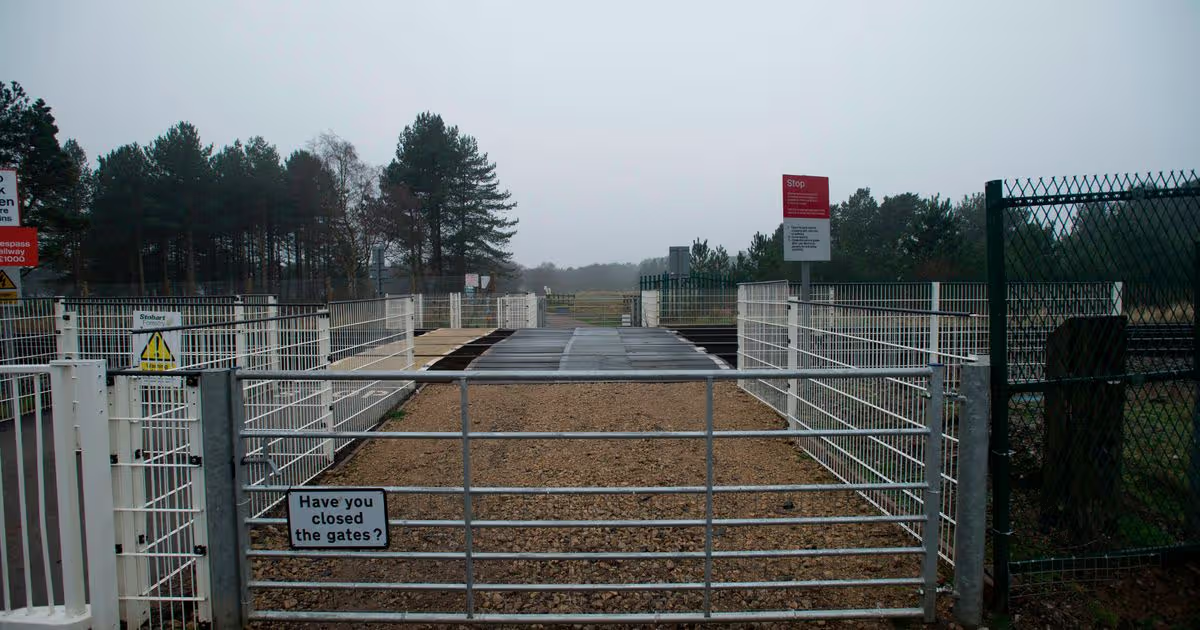
The 29-year-old was wearing headphones when he entered the crossing shortly before 11.07am. Before reaching the tracks, the site is fitted with signage and a traffic light system that shows red or green depending on whether a train is approaching.
Ensure our latest headlines always appear at the top of your Google Search by making us a Preferred Source. Click here to activate or add us as your Preferred Source in your Google search settings.
When a train nears the crossing, the light flashes red and klaxon sounds to warn pedestrians of the danger, Liverpool Echo reports.
Advertisement
CCTV footage shown at the inquest captured Sam running onto the track before appearing shocked as he realised a train was approaching. The footage showed him attempting to jump backwards moments before impact but it was too late.
An investigation found Sam had entered the track through the pedestrian gate while the red light was flashing and the klaxon was sounding. After the gate, further signage warns users of oncoming trains. When Sam’s phone was recovered, it was found to have been displaying a notification warning that his music volume was too loud.
A prevention of future deaths report, published on February 10 following the conclusion of the inquest on February 3, sets out the findings of senior coroner Anita Bhardwaj. The report states the crossing “was safe, compliant, and operating as designed” and confirms there “were no causal or contributory failings identified in the inspection, maintenance, or management of the crossing”.
Ms Bhardwaj concluded that the likely explanation was that Sam did not hear the warning signals because he was running while listening to loud music through his headphones.
Advertisement
She said: “It is more likely than not that Sam did not hear the klaxon because he was running whilst listening to loud music through his headphones… In all the circumstances it is more likely than not Sam was distracted, not fully attentive and proceeded onto the track.”
Despite finding no fault with the crossing itself, the senior coroner for Sefton, St Helens and Knowsley identified wider safety concerns around warning signage.
She noted that while signage exists once pedestrians pass through the gate, there is limited warning displayed directly on the gate which sits only a short distance from the critical “decision point” where users choose whether to continue.
In her report, Ms Bhardwaj said: “Nationally there is signage once individuals pass through the gate, but there is limited signage on the gate itself as people enter the walkway, only a short distance from the ‘decision point’.”
Advertisement
With more people wearing headphones they are less aware of their surroundings. Ms Bhardwaj suggested that clearer pictorial signage at the gate, such as an image of earphones crossed out, could improve awareness at the point people make a decision to cross.
She added that visual warnings often attract attention quickly, while sound cues create stronger emotional responses, and argued a combination of both could improve safety communication.
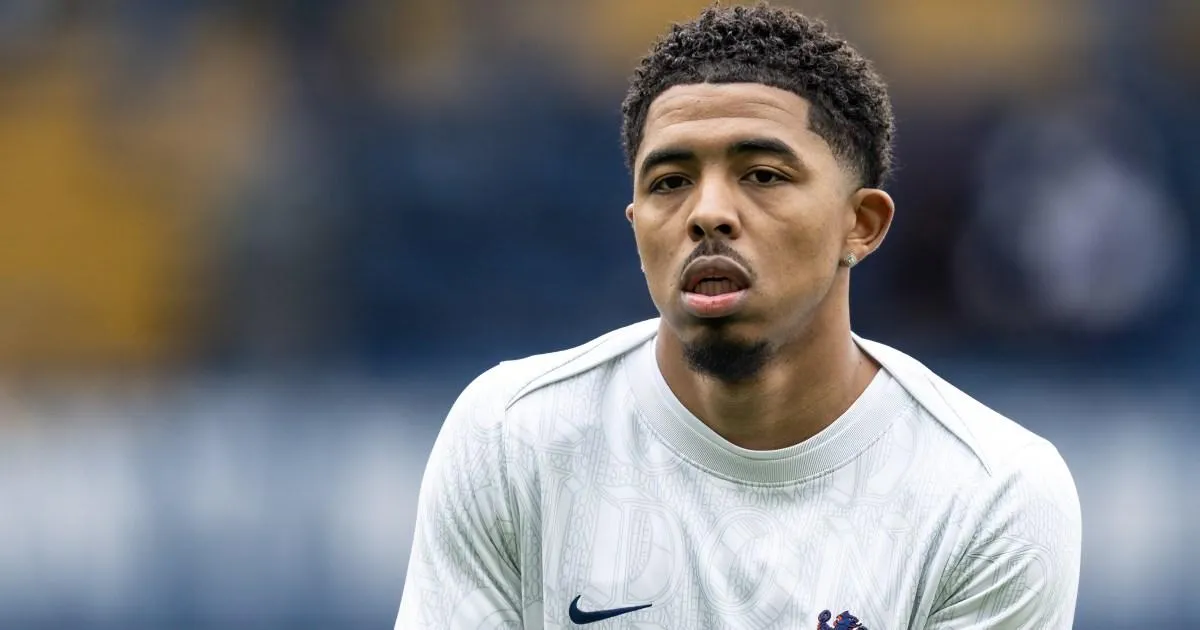
Wesley Fofana suffered racist abuse in the wake of Chelsea’s 1-1 draw against Burnley (Picture: Getty)
Chelsea defender Wesley Fofana said ‘nothing changes’ and ‘people are never punished’ after he and Burnley’s Hannibal Mejbri were sent racist abuse following Saturday’s 1-1 draw.
Both players were targets of online attacks in the hours after the Premier League match at Stamford Bridge and shared images of messages they had been sent privately over Instagram.
On Saturday night, Fofana – who had been sent off late in the game for two yellow cards – posted screenshots of messages he had been sent and wrote on Instagram: ‘2026, it’s still the same thing, nothing changes. These people are never punished.
Advertisement
‘You create big campaigns against racism, but nobody actually does anything.’
Mejbri had earlier also shared abusive messages he had received and wrote on his Instagram story: ‘It’s 2026 and there are still people like that. Educate yourself and your kids, please.’
Chelsea said the abuse ‘is completely unacceptable and runs counter to the values of the game and everything we stand for as a club,’ and that ‘there is no room for racism’.
Get your football fix
Don’t want to miss the week’s biggest football stories? Metro’s exclusive football newsletter, In The Mixer, is your essential guide.
Advertisement
From the latest transfer rumours and managerial moves to analysis of the biggest games and a lot more, our experts have you covered.
Bunrley’s Hannibal Mejbri was also racially abused following Burnley’s 1-1 draw against Chelsea (Picture: Getty)
A club statement added: ‘We stand unequivocally with Wes. He has our full support, as do all our players who are too often forced to endure this hatred simply for doing their job.
‘We will work with the relevant authorities and platforms in identifying the perpetrators and take the strongest possible action.’
Burnley said: ‘There is no place for this in our society and we condemn it unreservedly.’
We stand alongside Wesley Fofana and Chelsea in condemning the vile racist abuse he has received on social media.Racism has no place in our game or anywhere in society and we will continue to do all we can to support players who are subjected to discriminatory abuse.Football… https://t.co/Ddie91qkjB
The match on Tuesday was halted for 10 minutes early in the second half after Vinicius refused to return to the pitch after becoming suddenly and visibly upset with something apparently said to him by Prestianni, who covered his mouth with his shirt during the incident.
Saturday’s Premier League game ended level after Burnley’s Zian Flemming headed a stoppage-time equaliser to deny Chelsea, who dominated up until Fofana’s red card.
The defender was dismissed in the 72nd minute for a second booking after making a late challenge on James Ward-Prowse.
Advertisement
Earlier, Joao Pedro had scored in the fourth minute to seemingly put Liam Rosenior’s side on course of victory but as so often this season under successive managers they lacked killer instinct and failed to finish off Scott Parker’s struggling team
Manchester United will be heading into the summer without a permanent manager on their side, so free agents could be their best friend
Manchester United are likely going to need to add a number of fresh faces to their squad come the summer. With no permanent manager at the helm, the club are set to make a decision on their next permanent boss and back whoever they choose in the market to make their stamp on the squad.
Advertisement
With funds stretched, that could lead to the club looking at free agents to add more quality and depth. Signing players who are without a club seems like a calculated risk for the Premier League giants.
United have long relied on academy graduates and rising stars to bolster their squad, but this may change in a few months’ time. Michael Carrick has been a breath of fresh air at Old Trafford, winning four out of five matches upon his interim return and fans have been calling for his temporary head coach role to be made permanent once the 2025/26 season ends.
However, with plenty of moving parts in the United dressing room, the club’s hierarchy may want to bide their time before hiring someone permanently.
Ensure our latest sport headlines always appear at the top of your Google Search by making us a Preferred Source. Click here to activate or add us as Preferred Source in your Google search settings.
Free agents could become United’s saviour during this uncertain period. Here, Mirror Football takes a look back at some of United’s most daring free transfers.
Michael Owen
Michael Owen sent shockwaves through the football world when he signed for United after his Newcastle contract expired in 2009. The former Liverpool star, who clinched the 2001 Ballon d’Or during his stint on Merseyside, ruffled many feathers by penning a two-year deal with their arch-rivals.
Advertisement
To add insult to injury, Ferguson handed Owen the club’s iconic number seven shirt.
The then-29-year-old forward had struggled to regain his top form since departing Anfield and had experienced relegation with Newcastle the previous season. However, Owen’s knack for goal-poaching remained intact.
The former England striker netted a memorable 4-3 winner against Manchester City and also scored as United triumphed over Aston Villa in the 2010 League Cup final. After an impressive debut season, Owen made enough appearances to earn a Premier League winner’s medal in 2011 but saw his playing time dwindle before departing United in 2012.
Advertisement
He scored 17 goals in 52 appearances for the club.
Victor Valdes
In 2014, United made a statement signing by bringing in Barcelona icon Victor Valdes as backup to David De Gea. The goalkeeper had been without a club for several months as he recovered from a knee injury after leaving Barcelona, eventually penning an 18-month deal with United in January 2015.
Valdes won six La Liga titles and three Champions League trophies with his boyhood club and knew United boss Louis van Gaal from his time at Camp Nou. Having completed the recovery from his knee injury at United, the 32-year-old was happy to compete with De Gea and made his first team debut in May.
Advertisement
However, Valdes was later placed on the transfer list after it was reported that he had refused to play in a reserve game. The Spain international made just two appearances for the club before joining Standard Liege on loan in January 2016 and later signing for newly-promoted Middlesbrough on a free transfer.
Paul Scholes
One of the most extraordinary moves during Sir Alex Ferguson’s legendary reign as manager was coaxing Paul Scholes out of retirement. The midfielder called time on his career at the end of the 2010/11 season but made a stunning comeback, coming off the bench in an FA Cup victory over Manchester City in January 2012.
Scholes’ return was revealed just an hour before the Manchester derby as United grappled with an injury crisis, with Darren Fletcher and Tom Cleverley sidelined. Ferguson was convinced Scholes had retired prematurely, and his judgement was vindicated as the midfielder featured 21 times that campaign.
Advertisement
Scholes penned a contract extension and was part of the United squad that won the Premier League in Ferguson’s final season at the helm before hanging up his boots for good.
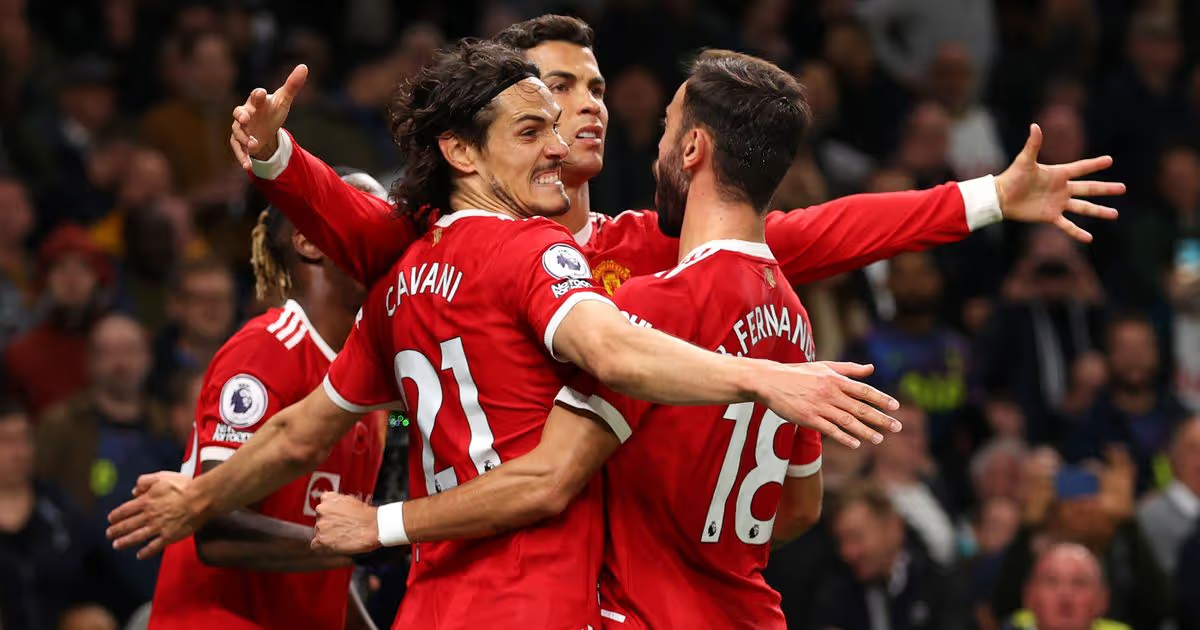
Edinson Cavani
United snapped up former PSG legend Edinson Cavani on transfer deadline day in October 2020, several months after his departure from the French club. The then-33-year-old had become PSG’s record goalscorer during his seven-year spell in Paris, netting 200 goals in 301 outings.
Upon his arrival at Old Trafford, Cavani was handed the iconic number seven shirt and would have hoped to replicate his former team-mate Zlatan Ibrahimovic’s immediate impact on the club a few years prior. Cavani bagged 17 goals in his debut season as Ole Gunnar Solskjaer’s side finished 2nd in the Premier League and lost the Europa League final on penalties.
Advertisement
Regrettably for Cavani, who had renewed his contract in May 2021, United were unable to build on that progress as Solskjaer was succeeded by temporary manager Ralf Rangnick that December.
The Uruguayan forward had relinquished his number seven jersey to a returning Cristiano Ronaldo and witnessed his game time drastically cut before departing the club in the summer of 2022.
Sky Sports discounted Premier League and EFL package
This article contains affiliate links, we will receive a commission on any sales we generate from it. Learn more
Sky has slashed the price of its Essential TV and Sky Sports bundle ahead of the 2025/26 season, saving members £336 and offering more than 1,400 live matches across the Premier League, EFL and more.
Sky will show at least 215 live Premier League games this season, an increase of up to 100 more.
The new trail will only be at the National Trust site for a few weeks.
This article contains affiliate links, we will receive a commission on any sales we generate from it. Learn more
Advertisement
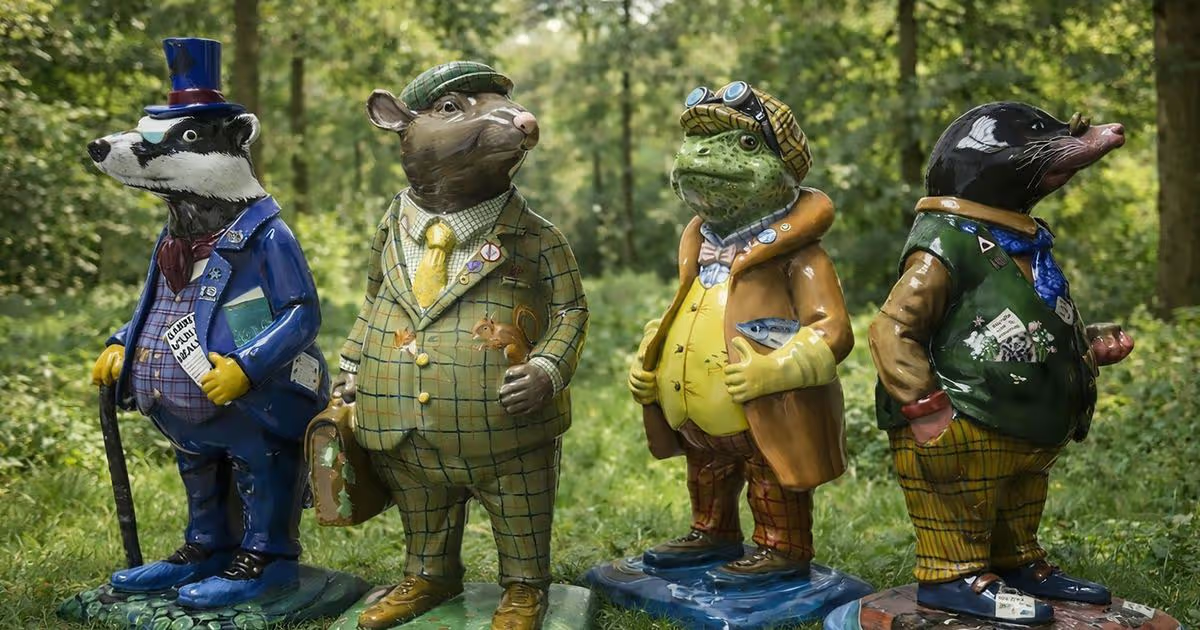
A National Trust site in Cambridgeshire has announced a new trail will be opening in the spring inspired by a famous children’s book. Anglesey Abbey has revealed it will have a new sculpture trail for families to visit at the start of spring.
The trail will bring the “much-loved” characters from The Wind in the Willows to life around the gardens of the National Trust site. The trail will follow Kenneth Grahame’s characters Badger, Toad, Mole, and Ratty the Water Vole on a “modern-day adventure”.
The trail will also feature a “cast of newly introduced species”. While walking around the gardens, you will learn more about how wildlife, farming, people, and the environment are all connected making the experience quite educational.
All of the sculptures have a unique design and have been placed in “key locations” around the gardens to allow visitors to explore “while engaging with art, storytelling, and nature”. The sculptures cover themes like biodiversity and conservation.
Advertisement
Visitors will be able to use trail maps to guide them around the gardens. The map will also feature more information about the characters, artists, and ideas that inspired the new trail.
Meghan Curteis, Experience and Visitor Programming Manager at Anglesey Abbey, said: “We’re delighted to welcome the Wind in the Willows sculpture trail to Anglesey Abbey this spring. It’s a wonderful way for visitors to explore the gardens, enjoy some fantastic artwork and reflect on the important connections between nature, wildlife and people, all while spending time outdoors with family and friends.”
The trail has been created by Wild in Art in collaboration with the Animal and Plant Health Agency (APHA). The trail is part of a “wider programme of public activities” to celebrate the 50th anniversary of wildlife research at APHA.
Advertisement
Charlie Langhorne, Managing Director and Co-found, Wild in Art said: “We’re delighted to be partnering with the Animal & Plant Health Agency and the National Trust to bring this much-loved story to life in such a beautiful and inspiring setting.
“The trail will be a spectacular celebration of artistic talent, using sculpture as a three-dimensional canvas to spark curiosity, open up conversations and create moments of connection with nature and the environment for people of all ages. We hope visitors will enjoy discovering each one and the stories they tell.”
The trail will only be available at Anglesey Abbey from Saturday, March 28, until Tuesday, May 5. Entry to the National Trust site costs £19 for adults and £9.50 for children between the ages of five and 17.
Advertisement
Anglesey Abbey is around a 21 minute drive away from Cambridge via the B1102. The site has a car park that is free to use for all visitors.
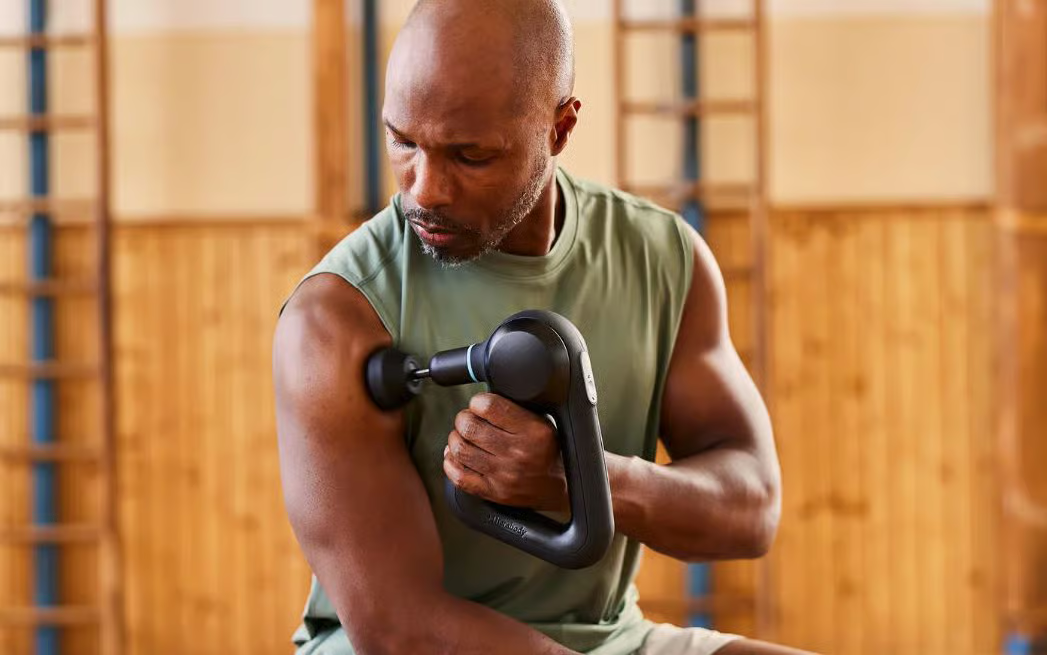
A foam roller may be basic, but it’s also one of the highest-impact recovery tools you can have in your arsenal, especially for relieving tight glutes, hamstrings, calves and upper back. This one’s designed with a textured, trigger-point style surface to mimic hands-on pressure, which helps you target stubborn knots rather than just rolling around.
For the price, it’s a great entry point if you’re starting to take recovery seriously, and it’s simple enough to use while watching TV. Pair it with slow breathing, and you’ll feel your body downshift.