NewsBeat
Air India struggles to win back India-UK passengers after fatal 2025 crash

Twisha Sharma flies internationally at least twice a year. But she never travels with Air India.
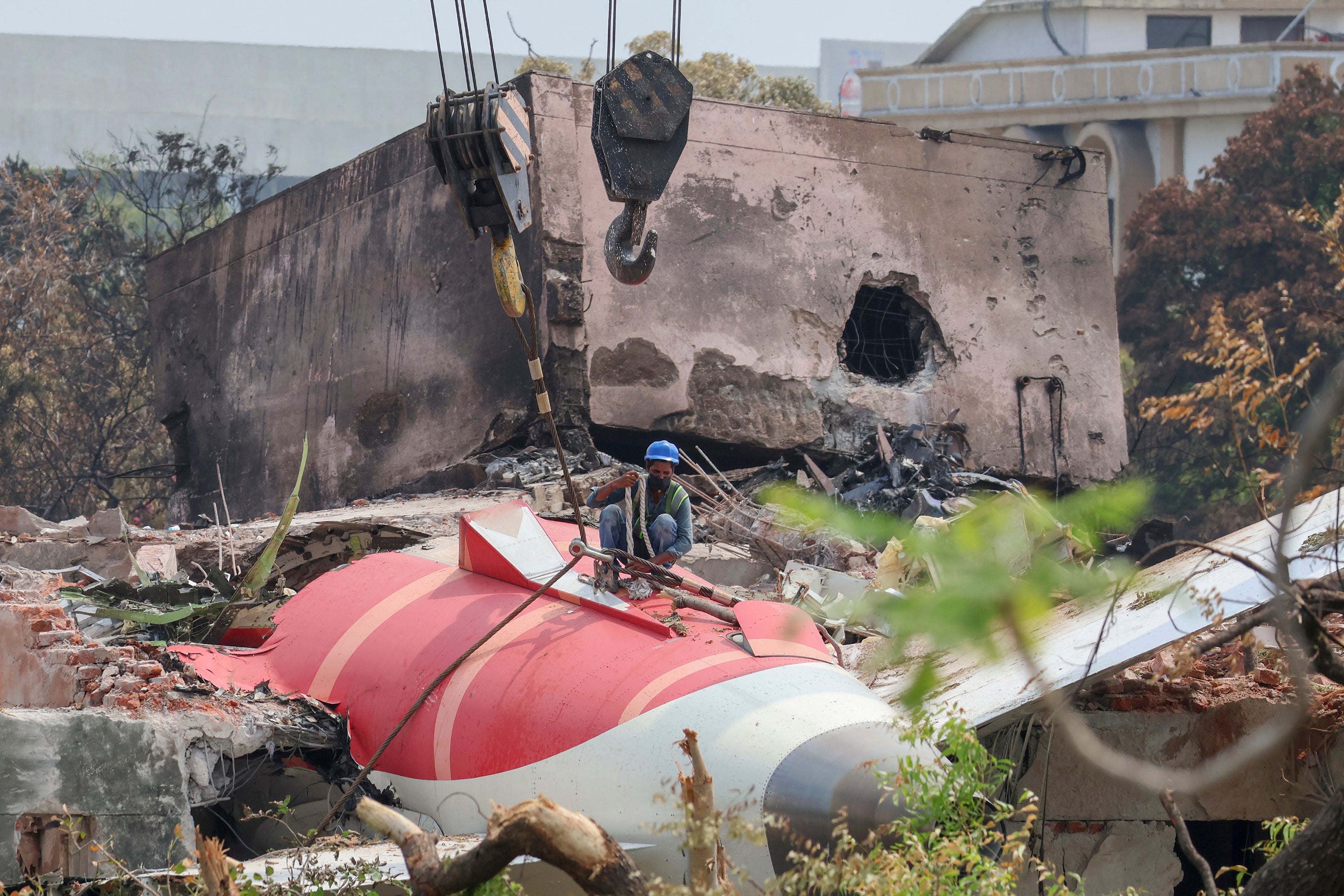
Her reluctance to use the airline only hardened after a London-bound Air India flight crashed shortly after take-off in Ahmedabad last summer and killed 260 people.
“Since the crash there have been a lot of news articles about how the airline continues to not uphold good safety standards,” Sharma tells The Independent. “Maybe because of extra scrutiny, and maybe these things happen with every airline, but the fear factor has kind of set in.”
Her concerns reflect a broader shift in passenger attitudes towards Air India on the India-UK route in particular, according to data shared exclusively with The Independent by Cirium, an aviation analytics company.
The data shows a sharp drop in Air India’s performance on the route. The airline had posted strong year-on-year growth in passenger traffic in the first five months of 2025 but the crash reversed the trend.
Between January and May 2025, Air India flew 18 to 32 per cent more passengers on the India-UK route a month than in the corresponding months of 2024. While the numbers were still marginally higher year-on-year in July 2025, they fell every month from August to December.

The decline was particularly pronounced between August and October. Air India carried 85,024 flyers on the route in August 2025, down from 96,576 a year earlier. In September, the number fell from 100,559 to 81,291, before dropping by 14 per cent in October. The figures suggest that the fall in demand was greater than the reduction in Air India’s capacity on the route.
In August and September, the number of seats operated by Air India fell by 4 per cent year-on-year, while passenger numbers declined by 11 per cent and 19 per cent respectively.
In October, the contrast was starker. The airline operated slightly more seats than a year earlier but carried nearly 14,000 fewer passengers.
There were signs of a partial recovery during the winter season. The number of flyers rose to 107,568 in November 2025, leaving Air India only 0.7 per cent below the level recorded in the same month the previous year. In December, the number was 7 per cent lower year-on-year.
“That period is a heavy travel season – Christmas and holiday season – so the spike is noticed,” says Rajiv Mehra, general secretary of the Federation of Associations in Indian Tourism and Hospitality.
“This is normal, particularly for the India-UK sector. The Indigo issue may have contributed, but not much as Indigo doesn’t have a major presence on the route,” he says, referring to the cancellation of roughly 4,600 Indigo flights in December owing to problems with crew rostering and a transition to stricter pilot rest-time rules.

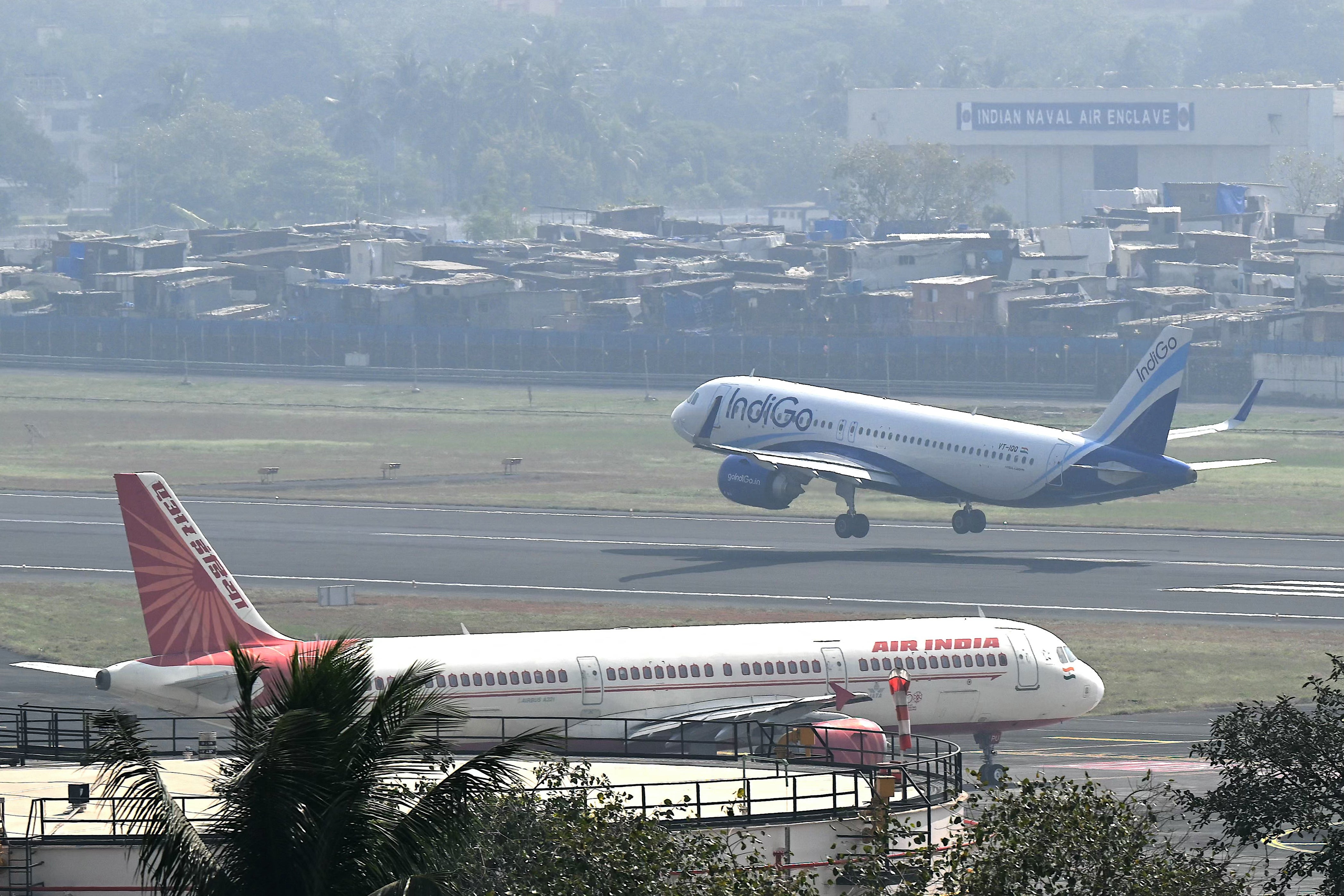
For passengers such as Asha Raj, the Indigo disruption was indeed the reason to use Air India. Raj, who works in corporate communications, had been a loyal IndiGo customer but switched to the competitor in the wake of the disruption.
“I knew about the Air India crash but I think the Indigo strike probably turned me off more,” she says.
“I had friends who were gonna come in for a music festival and there were so many people who were stranded during that time. It was very difficult and there was a lot of uncertainty,” she continues.
“There was a lot of money lost. So after that I remember when I was travelling, I actively chose not to take Indigo.”
Why is she still choosing Air India? “One of the main reasons I do Air India is because of their pricing,” Raj says. “Even during the Indigo crisis, they kept it on time and didn’t really inflate the costs.”
In spite of a competitor’s troubles, Air India maintained a year-on-year passenger deficit in November and December. Fellow international carriers on the India-UK route, on the other hand, saw substantial growth. Their passenger numbers rose by 11.9 per cent year-on-year for both months, while capacity increased by 10.3 per cent and 10.99 per cent respectively.
The data for 2026 suggests Air India is yet to return to the pre-crash rapid growth. Passenger numbers were lower year-on-year in each of the first five months for which figures were made available.
The decline was relatively modest in January, February and March before widening sharply in April and May.
In April, Air India carried 77,822 passengers on the India-UK route, about 27 per cent fewer than in April 2025, despite reducing the number of seats by less than 10 per cent.
The pattern continued in May, when the number of passengers fell almost 25 per cent year-on-year, to 74,499, while capacity only dropped about 11 per cent.

Mehra argues that the recent decline cannot be attributed to the crash alone, pointing to geopolitical tensions and restrictions on Indian carriers using Pakistani airspace. “Clearly the Iran-US war and the continued closure of Pakistani airspace to Indian carriers have contributed to this situation. Foreign airlines are not constrained by restrictions on use of Pakistani airspace, so they have been impacted much less.”
According to data released this month by India’s aviation regulator, DGCA, Air India’s global passenger carriage plunged 36 per cent in the April-June quarter.
The Air India Group, comprising Air India and the low-cost carrier Air India Express, carried about 2.76 million international passengers to and from the country during the quarter, down from 4.33 million in the same period last year. In contrast, foreign airlines saw their passenger carriage to and from India rise by 7 per cent. Emirates carried 1.48 million passengers during the quarter as against 1.28 million the year before, while Lufthansa carried 370,000, up from 350,000. Etihad’s traffic remained broadly stable at about 850,000 passengers.
“I know Air India will save me about six hours because my layover in Dubai is six hours, but I still choose Emirates because I am a very nervous flier and on top of that, sitting in an Air India plane does not help,” says Sharma.
Air India, unlike many of its more popular foreign rivals, offers direct flights between Delhi and London.
Namit Kabra, a consultant at Ernst and Young, preferred Air India for flights from India to London, or Birmingham before the crash because of its “price compatibility”. But, he says, he no longer trusts the airline since the crash.
“I don’t think they have made anything significantly better so that their passengers can ease out on the anxiety. Apart from reducing prices after the crash, I do not feel there is any difference in how the staff treated you before and now,” he complains. “Other airlines are far better.”
Falling passenger traffic only increases the financial pressure as Air India attempts a sweeping overhaul of its operations.
The airline is reportedly seeking about $1.5bn in fresh equity from its owners, Tata Sons and Singapore Airlines, months after posting a record annual loss.
Air India and Air India Express posted combined losses of $2.33bn in the financial year ended March, more than double the losses recorded the year before.
The Independent has contacted Air India for comment.
N Chandrasekaran, the outgoing chair of Tata Sons, previously said that Air India’s turnaround could take up to a decade, citing persistent supply-chain disruptions and the need to overhaul the carrier’s legacy systems, culture and fleet.
The airline nevertheless continues to invest heavily in expansion and fleet modernisation. It plans to add about 100 aircraft across the group in 2027 and 2028 and is retrofitting 16 Boeing Dreamliners.
“See, Indian aviation is growing and booming,” Mehra explains the expansion plans. “Yes, there are temporary blips, but long-term growth remains intact. That explains the order for the new aircraft.”
You must be logged in to post a comment Login