NewsBeat
Andy Burnham: The ‘King of the North’ with No 10 in his sights

There aren’t many good jokes about politicians, and fewer suitable for publication, but one doing the rounds in Westminster should provoke a wry smile. Goes like this: “A Blairite, a Brownite, and a Corbynite walk into a bar. The barman says: ‘What are you drinking, Andy?’”.
It’s funny because it’s true, as they say, and it gets directly to the essence of Andy Burnham’s great strength and his great weakness as a prospective replacement for Sir Keir Starmer. The attraction is that he is one of politics’ more flexible players, and his supporters can read what they will into current vague lefty vibes. The negative is that his record suggests he might not be any more devoted to principle than the openly pragmatic Keir Starmer.


No one, however, doubts his ambition for the premiership, even though it has taken him on a circuitous route – via the North. In fact, it would not be the first time that the mayor of a big city went on to become head of their country’s government, though it’s unusual. Three US presidents have done so (Andrew Johnson, Grover Cleveland, Calvin Coolidge), and in Europe there are the highly notable examples of Chancellor Willy Brandt (graduating from West Berlin), and Jacques Chirac (Paris). Here, of course, we saw Boris Johnson perfecting his populist skills in London before, in due course, graduating to the premiership. The question for 2026 is whether Andy Burnham can make a similar journey from his mayoral HQ at the Tootal Building in Manchester to 10 Downing Street. The by-election in the usually safe Labour seat of Gorton, well inside Burnham’s northern fiefdom, opened up at least the possibility that Burnham might repeat Johnson’s feat. His candidature was, though, blocked by Labour’s National Executive Committee. The good reason was that he might not have won, and, even if he did, his candidature would trigger a by-election for the Greater Manchester mayoralty – and risk the loss of a powerful Labour fiefdom. The more tawdry cause for him being blocked was that Starmer was frightened of having such a rival or critic sitting on the benches behind him, or even around the cabinet table and an obvious replacement for him. Arguably, given that Burnham is still not an MP, and cannot replace Starmer until he is one, Starmer’s Stalinist tactic worked. On the other hand, perhaps Starmer’s Labour would be stronger now and there’d be no leadership crisis. Hypotheticals; but some kind of psychodrama developing in due course was likely.
Burnham, a minister in the Blair and Brown governments and who served in Ed Miliband and Jeremy Corbyn’s shadow cabinets, reborn as the mayor of Greater Manchester since 2017, has already been almost prime minister, you know. He may presently be the “King of the North”, enjoying marginally better ratings than the party nationally, but he could now be trying, for the third time, for a rather more exalted position – leader of the Labour Party, and with it, the premiership. It was a laughable proposition for almost the whole of Sir Keir Starmer’s period of previously unassailable dominance, but suddenly, before last autumn’s party conference, in a panicky mood, the Labour Party seemed to have caught what might be termed “the Tory disease” – the delusion that a change of leader can solve all its problems, coupled with an addiction to plotting. Burnham, away from Westminster for most of the past decade, seemed to be the nearest thing they have to a fresh start. Now that there has been a fresh outbreak of that disease, in a far more virulent variant, his name has become prominent in all the speculation once again.

Last time round, didn’t go that well for our Andy. He seemed to wilt under the heat of media attention, never quite managing to answer that perennial question “will you rule out becoming leader” – an impossible one, to be fair. Then, as now, he refuses to be drawn, a little too obviously torn between a certain vestigial preference for straight talking, his obvious ambition (having tried for the leadership twice before) and some genuine hesitation about the timing – not least because he he’s not an MP and there is no such thing as a safe Labour seat into which he can be dropped. Burnham might have built up some more momentum if he’d had anything more substantial than a sort of vague “soft left” agenda, summed up in the amorphous term “Manchesterism”, which hasn’t exactly caught on. Lucy Powell, fair to say a friend of his, beat Starmer ally Bridgette Philipson for the deputy leadership, which confirmed the membership’s preference for a tilt to the shoft left, but nothing much came of that after.
Last year, despite more government U-turns, more scandals and resignations and ever more dismal poll ratings over the autumn, there was a feeling that Labour had stared into the abyss of a leadership contest, and drawn back. The possible unprovoked attack on another leadership rival, Wes Streeting, by a rogue No 10 spinner seems to confirm that the picture of a leader surrounded by rivals willing to wound but afraid to kill. Neither Streeting nor Burnham, nor the latest party star, Shabana Mahmood, nor Angela Rayner have presented a convincing alternative to Starmer’s policies, and there’s no overwhelming evidence that they’d transform the party’s electoral prospects. Starmer is weak, but his enemies are divided.
That is still true, but they all seem to be much more in earnest these days. Burnham’s ally, Clive Lewis, has published a sort of manifesto making the case for more government borrowing. Given that no one’s taken any notice of it, it’s only fair to quote a key chunk about fiscal responsibility:
“Bond markets do not have ideological preferences. They have functional ones. They prefer clarity, credible revenue streams, productive investment, and a state with a plan. What they punish is not public ambition but incoherence. A properly designed productive state programme would not be a leap into fiscal fantasy. It would be an attempt to end the much costlier fantasy that Britain can keep borrowing to compensate for broken markets while refusing to repair them.”
In any case, this would surely be his final throw of the dice. Even Burnham must be tired of being Labour’s perennial “nearly man”. It feels distant now, but way back in 2015, after Ed Miliband had led Labour to a poor election result and quit the leadership, Burnham was the favourite to succeed him. Had some Labour MPs – who should have known better – not “lent” their nominations to put Jeremy Corbyn on the ballot, Burnham might well have won, beating Yvette Cooper and Liz Kendall. As it was, Burnham lost miserably to Corbyn – 19 per cent to 59 per cent. It was not much better than when he fought, and lost, the leadership election after the 2010 defeat when Gordon Brown stood down. He got 9 per cent and finished behind Ed Miliband, David Miliband, and Ed Balls, and only just ahead of Diane Abbott.

.jpg)
In 2010, Burnham was too young, but in the 2015 contest, his defeat was his own fault. A late tilt leftwards came too late to rescue him from the Corbynite wave, yet alienated some in his own camp. Then again, he was, and remains, an ill-defined proposition; “soft left” is such an amorphous concept, after all. Still, probably thanks to being vague, Burnham has spotted the opportunity presented by Starmer’s unpopularity in the country – Labour’s 16 per cent opinion poll rating is scarcely believable – and among parliamentarians.
It’s no accident that Burnham was one of the prominent voices in opposition to the government’s attempts to reform welfare, in stark contrast to Angela Rayner’s doomed attempt to strike a deal with the backbench rebels. Rayner, however – the once undisputed Queen of the North – is no longer a rival to Burnham’s ambitions. Burnham could have killed off the destabilising speculation about a leadership challenge last year with one simple, unequivocal statement. Instead he has dodged the question, just as he has so often in the past.
Far from declaring his support for Starmer, Burnham has been busily building up his own support network, Mainstream, for “radical realists”. It’s a leftish version of the Starmerite Labour Together grouping, a Burnham fan club thinly disguised as a think tank or pressure group. Even more audaciously, Burnham virtually launched Lucy Powell’s campaign for the deputy leadership in a television interview shortly after Rayner resigned.
But it came to nought. The pattern in Burnham’s surprisingly long career is that he strikes to wound without thus far having had any success in finishing off his opponents. Even now, it is possible – there’s some wild speculation out there – that Ed Miliband, who could become leader immediately, could overtake him, or somehow recruit Burnham as an ally. The atmosphere is febrile, and memories of Ed’s doomed general election campaign in 2015 are fading. Maybe Ed still believes that “Hell yes, I’m tough enough”.

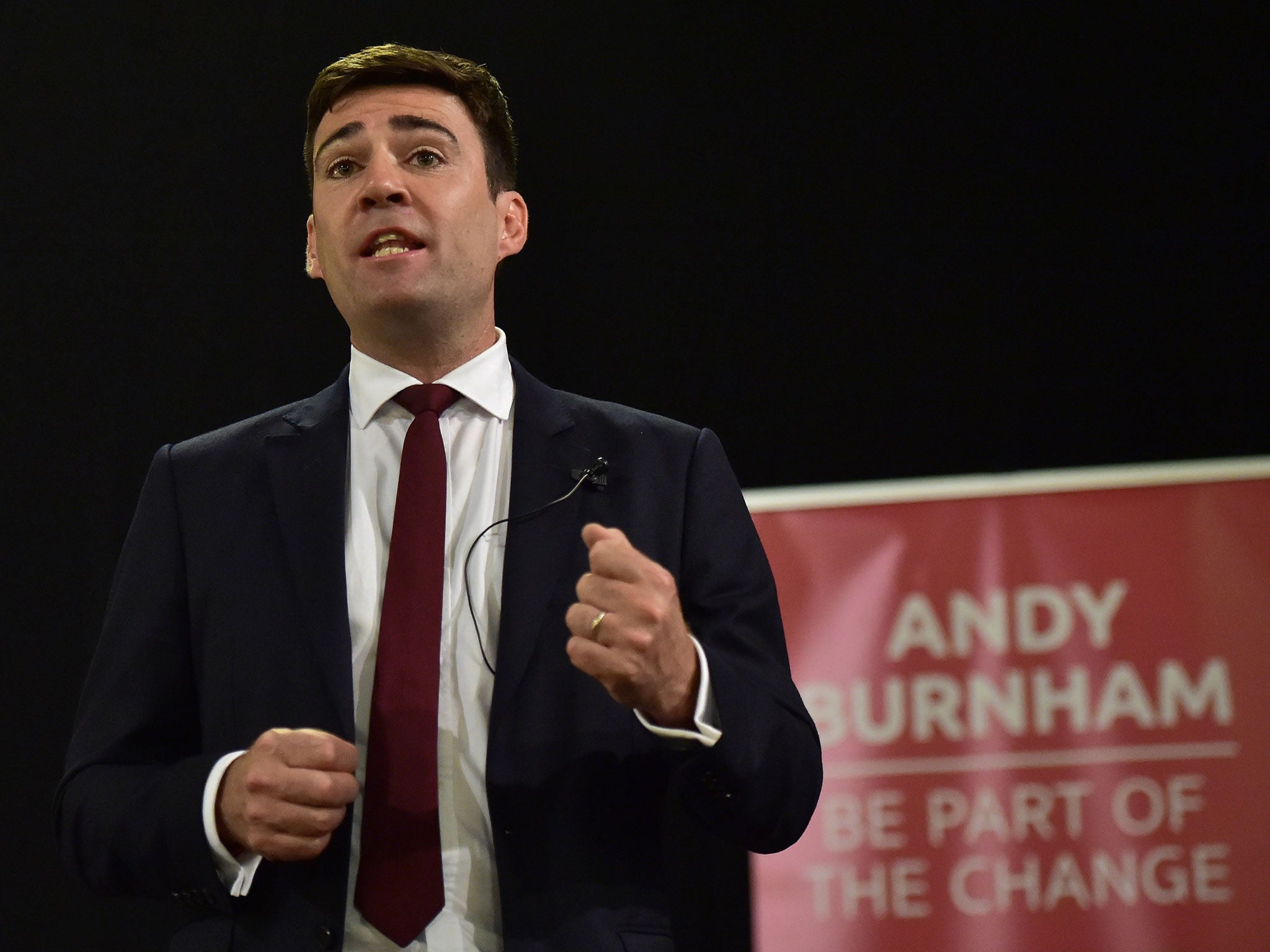
His two failed attempts to be Labour leader hurt Burnham, who has a peculiar quality of personal sensitivity that is rare in a front-rank politician, yet is allied to extraordinary resilience. It must be self-belief. He tried to put the best spin he could on being beaten by Corbyn a few years later, once he was safely ensconced in power as elected mayor of Greater Manchester: “It’s hard – especially being the frontrunner– but nothing is a given in politics, hence why I fell out of love with Westminster.
“The defeat was bruising; leadership elections always are. Getting rejected [by] people you know was tough, but it epitomised the shallowness of Westminster. I was always the loyal Labour person, a team player, and thought it would serve me well, but it didn’t come my way, and it exposed the fickleness of politics at a national level.”
After a brief spell as Corbyn’s shadow home secretary – this once-rising New Labour star (and now former Starmer loyalist) is ideologically flexible – he ran to be the first mayor of Greater Manchester: in effect, the voice of the North. It has plainly been the making, or at least the refashioning, of Andy Burnham.
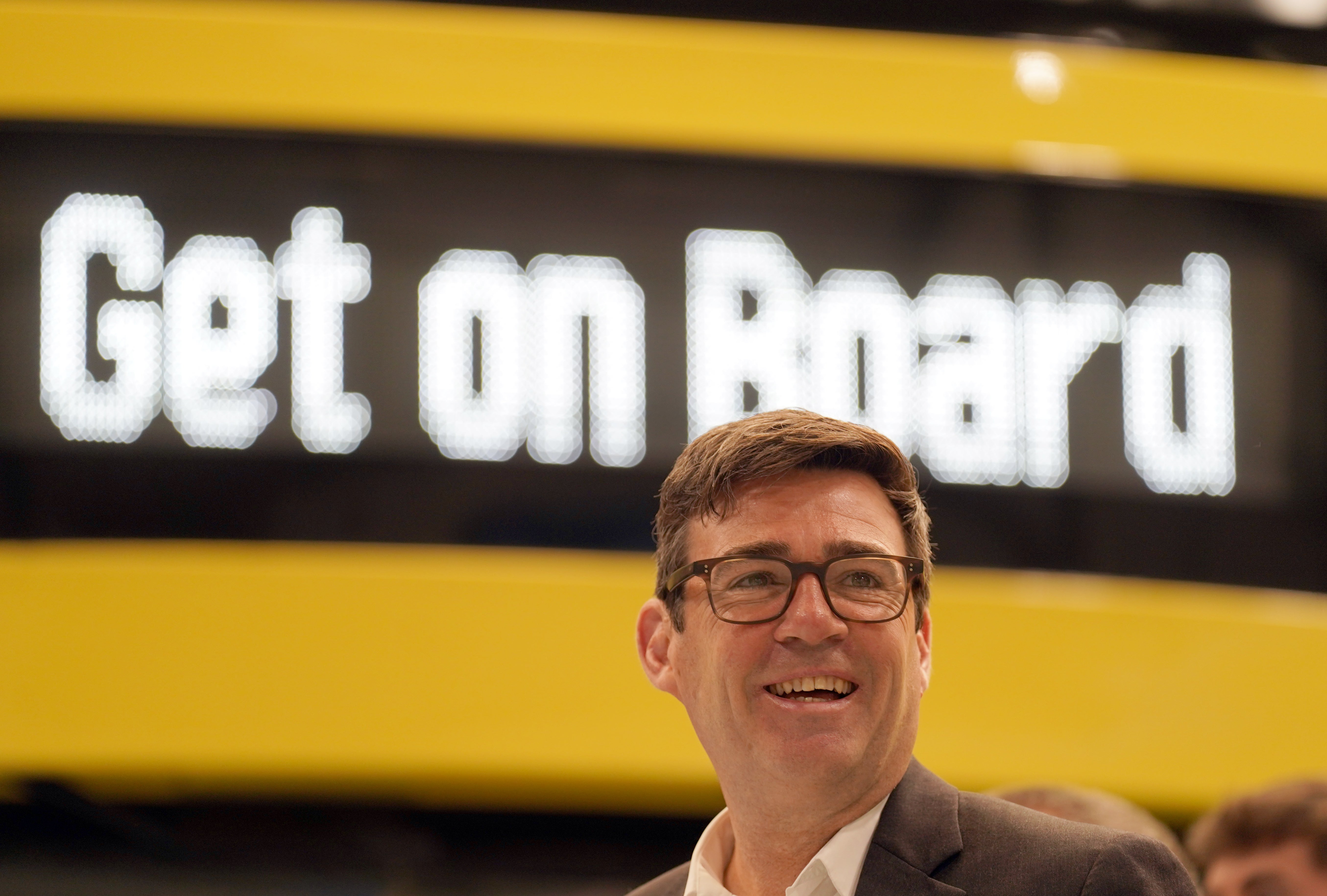
Consciously or not, he looks different these days. In his diaries, Alastair Campbell wrote of a 38-year-old Burnham in 2008, shortly after he’d been promoted to Gordon Brown’s cabinet: “Andy seems so young. He needs to get himself some decent suits.” Burnham never looked particularly comfortable in any business wear, and he’s been transformed these days into a rather hip-looking Mancunian, all smart-casual with fashionable specs and the old monobrow neatly bifurcated. He still comes across as a bit needy and put upon, but it suits the new persona, and the new political dynamic, perfectly. If Oasis – Manchester’s favourite sons – can come back, why not Andy?
The impassioned speeches Burnham delivers also sound different from the old New Labour automaton – emotional but authentic, with a real political edge to them. It’s just as well he’s kept his accent. He found a ready audience for the message that his region was being cheated of its financial rights for the sake of a quibble with Boris Johnson over £5m. The North was not going to be picked off on the cheap by a government that was “grinding communities down through punishing negotiations”, nor its citizens “treated as the canaries in the coal mine for an experimental regional lockdown strategy”.
Having said that, Burnham was knocked sideways as Johnson demolished the red wall in the 2019 general election. There is as yet no clear reason to believe that Burnham will stop a similar assault by Nigel Farage and Reform UK, in the North or nationally.
Burnham understands populism, even if he’s not the best exponent of it. He carefully refers to those who work in pubs, and bookies, and drive taxis as “people too often forgotten by those in power”. He has skilfully forged a broad, if fragile, cross-party regional front against the prime minister. “The North, c’est moi” might sum up Burnham, so completely has he merged his identity (and interests) with those of 5 million disparate people in a disparate region.
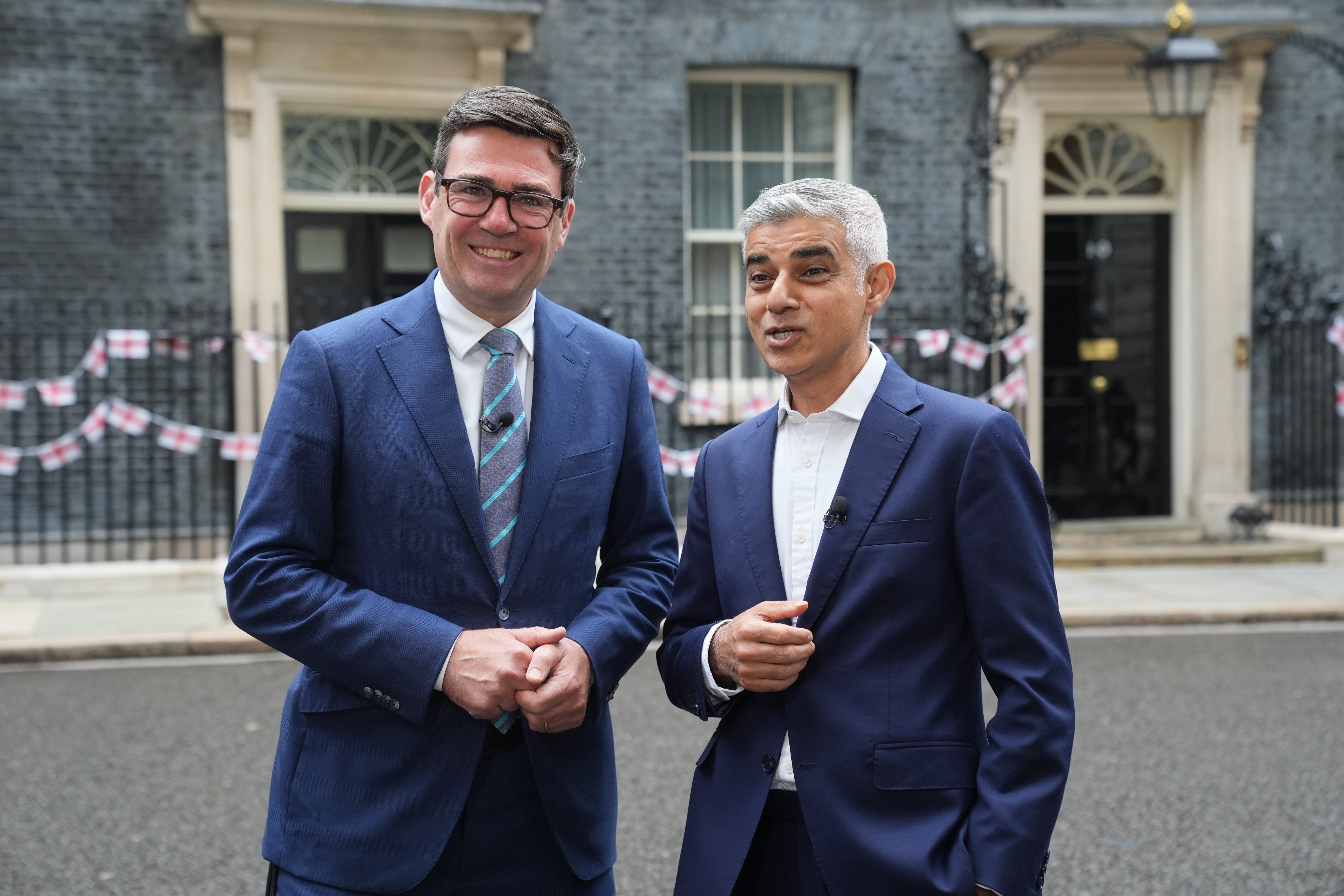
Within what passes for the United Kingdom these days, only Sadiq Khan is a match for him in this new game of territorial politics. The reborn Baron Burnham is a national figure to be reckoned with. His future, whether regional or national, looks brighter these days. After all, Johnson proved his campaigning ability as a two-term mayor of London. As in the US and France, a mayoralty can be an enviable base for a politician on the make (provided Burnham can get a Westminster seat).

If Burnham wants to return to national politics, he now has the best chance he’s ever had – though the party and the government he seizes might be irreparably damaged by the resulting divisions. In the past, Burnham has complained about not being invited to address the Labour conference, and being left out of the 2019 election campaign. These days he has no difficulty finding a platform: he’s more box office, has some momentum, and is getting harder for the leadership to ignore.
He is a professional northerner, if not yet a master craftsman in the Geoffrey Boycott/Michael Parkinson/Peter Kay league. The placenames on the Burnham CV are evocative, though he’s never claimed, Rebecca Long-Bailey style, to have been born virtually on the pitch at Goodison Park (he’s a lifelong Evertonian). Maybe a racecourse, though: Andrew Murray Burnham was born in Aintree on 7 January 1970. The family lived in Formby, and his mum (a receptionist) and dad (a telephone engineer) met at Maghull phone exchange. They were Protestant and Catholic respectively, but sectarian doubts about Burnham’s father being a suitable husband were assuaged when his girlfriend’s dad realised they’d both been to support Everton against Blackburn.
Burnham was brought up a Catholic, and he holds to the faith – a surviving example of an older type of working-class Labour MP, often as not with Irish Catholic roots and a tendency to social conservatism. Burnham has sometimes been embroiled in controversies about LGBT+ rights. He says his political heroes are the late Paul Goggins (Catholic Labour) and David Blunkett, whose instincts were (and remain) very old-fashioned. There’s a contrast there, in Labour culture, between the metropolitan liberalism of Corbyn or Starmer and the more cautious approach of Blunkett or Burnham.
In due course, the family moved to Leigh, Greater Manchester – at the time a solid Labour seat, which Burnham would proudly represent in the Commons from 2001 to 2017. His first unpaid job was as a newspaper reporter on the Middleton Guardian. Grandad drove a lorry for Tate and Lyle.
His socialism was sparked early on, when he was only nine: “I remember very clearly going to Chester Zoo, not long after the 1979 election. There was a sticker on the car in front that said ‘Don’t blame me, I voted Labour’, and I asked my dad what it was. I remember him saying, ‘Well, there’s a woman called Maggie… ’.” By 14, Burnham had joined the Labour Party, just in time for the miners’ strike.
He says he got his ambition from his gran, who sounds a bit of a proto-Thatcherite: “She grew up in Great Mersey Street and worked for the brewery as a cleaner or in the kitchens. One day she walked over the fields, unbeknown to my grandad Jimmy, and put a deposit down on one of the new houses being built. He couldn’t believe what she had done.” Perhaps it wasn’t such a surprise that Burnham’s doomed 2015 leadership bid had the theme “aspirational socialism”.

He was certainly socially mobile, and has become quietly cosmopolitan. He met his Dutch wife, Marie-France van Heel, known as Frankie, when he was studying English at Fitzwilliam College, Cambridge. Married in 2000, they have three children.
Curiously, Burnham is unlike many of the Labour Party’s modern-day household names in that he can be described as a typical “professional politician”. He was a parliamentary researcher and special adviser before getting his seat and ministerial office. He worked for Tessa Jowell, Chris Smith, David Blunkett and Patricia Hewitt, and was a Treasury minister, culture secretary and health secretary under Gordon Brown. Although he often protests that he’s never been part of the Westminster in-crowd, he certainly gives the impression of it.
In an interview with The Spectator in 2006, after winning the magazine’s “Minister to Watch” award, he admitted to knowing the Miliband brothers, James Purnell, and other youthful outriders of the Blair cult, but tried to imply a certain distance when asked about cosy meals at their homes in Primrose Hill. “The thing that excites me at the moment is a chip shop I’ve found which sells both mushy peas and gravy,” he said. “That’s more me than Primrose Hill. And that is where I do not fit the archetypal New Labour mould.” Like I say, a professional northerner.
To be fair, though, in that same interview you can see how Burnham detected a mood swing in the North that was later to do so much damage to Labour, and urged his party to pause and reflect on people who had become “lost along the way”. Criticising David Cameron, he made a sensitive point about the coming culture wars: “Most of my constituents can’t afford wind turbines on their houses. I sense the metropolitan world being very much wooed. But the larger country is asking, ‘What the hell is this all about?’.”
When he was in government, in the course of quite a long and varied career, Burnham wasn’t too heavily tested. After he was booed at a 20th-anniversary commemoration of the Hillsborough disaster, he persuaded Brown to set up the inquiry that eventually led to justice for the 96. Now, after much lobbying and a change of government, Starmer is reportedly ready to introduce the Hillsborough Law, compelling a duty of candour on public officials. It’s the right thing to do, and partly a result of Burnham’s pressuring for it, but it does handily spike Burnham’s guns a bit.
As health secretary he was accused of failings in the Mid Staffs hospital scandal, but was never officially censured. His two leadership bids were disappointments. The capture of Labour by the Corbynites, the scale of which was aided by Burnham’s lacklustre campaign, left him isolated and at a dead end. Yet the Manchester job has turned out to be much more than some cushy early retirement gig. Weeks after he took over as mayor, he had to respond to the terror attack at the Manchester Arena, which he did in a dignified way, and his recent struggles with Whitehall have given him a national profile. No matter that Johnson just bypassed Burnham and dished out £60m directly to the individual boroughs in Burnham’s fiefdom, Burnham had the better of the politics of it all.


People say Burnham is a bit of a flip-flop, but to have survived anywhere near the top of Labour politics in the past couple of decades requires a degree of pragmatism, and Burnham has certainly been all over the place on Brexit – but who hasn’t? Burnham has enjoyed success in fighting Covid, and has done his best to secure better transport links for his region and the North more widely – the cancellation of the Northern extension portion of HS2 was a bitter disappointment. He has, though, taken the best innovative features of integrated public transport in London and applied them to Greater Manchester.
He is popular there, and continues to pursue a war on homelessness in his city region, in the past condemning the “top-down London-centric Labour Party” and banging on about converting the House of Lords into a PR-elected chamber. Rather late in the day, he has added his voice to those calling for a proper public inquiry into the rape gangs scandal.
Probably the best thing that ever happened to him was losing the Labour leadership in 2015 and avoiding the internal traumas of the past decade. At just 55 years of age, Burnham is younger than Starmer, let alone Farage, with whom he shares a certain “authentic” appeal. He’s fond of the band The Courteeners, and once, perhaps tellingly, tweeted the lyrics to their single “Take Over the World”: “I’m only a paperboy from the North West/ But I can scrub up well in my Sunday best.”
Having been a bit of an underperformer, could it at last be coming true for Our Andy? Yes, in a purely tactical sense. The real question remains – why would Burnham would necessarily do things better than Starmer? How would he fix the public finances? Make the economy grow faster? Reform social security? Stop the boats? Placate Trump? It’s time for Andy to once again speak up.
You must be logged in to post a comment Login