
Connect with us
DAPA Banner
DAPA Coin
DAPA
COIN PAYMENT ASSET
PRIVACY · BLOCKDAG · HOMOMORPHIC ENCRYPTION · RUST
ElGamal Encrypted MINE DAPA
🚫 GENESIS SOLD OUT
DAPAPAY COMING

NewsBeat

Anissa Helou’s new cookbook highlights Lebanese villages scarred by war

Published

on

Anissa Helou's new cookbook highlights Lebanese villages scarred by war

BALLOUNEH, Lebanon (AP) — Before becoming one of the Middle East’s most acclaimed cooks and food writers, Anissa Helou had no intention of either path. She entered the world of cooking and writing almost by accident when she was in her late 30s.

Now 74, Helou has a wide following in the region and elsewhere and has released nearly a dozen books since the 1990s about food in the Middle East and beyond. Last month she received Britain’s prestigious Guild of Food Writers Lifetime Achievement Award.

The daughter of a Lebanese mother and a Syrian father, Helou was born into a Christian family and grew up watching her mother, grandmother and paternal aunt cooking. It opened her eyes to the food traditions of the two countries, both widely known in the region for their varied and flavorful cuisine.

“I was always fascinated by the kitchen, by their movements (and) by how they put things together, by the chopping,” Helou said about her mentors. “I love being in the kitchen with them and of course I loved eating.”

Advertisement

Helou’s latest book, “Lebanon: Cooking the Foods of My Homeland,” was officially released in late June in Beirut in a ceremony at Lebanon’s Tourism Ministry attended by scores of people including food critics and restaurant owners.

An homage to the cuisine of Lebanon’s war-battered south

The book, which comes as the country has been battered by two wars in the past three years between Israel and the Hezbollah militant group, includes a section about food in some of the southern Lebanese villages that have suffered the worst destruction.

During her repeated visits there, most recently in October 2023, she found residents had their own regional variations of traditional cuisine. They include mujadara, a dish mainly consisting of lentils that is often cooked with rice, but in southern Lebanon is more likely to be made with bulgur.

“I discovered more, like, variations and added dishes, rather than something that was a complete revelation,” Helou said.

Advertisement

She has picked walnuts from a tree growing along the giant wall separating southern Lebanon from northern Israel and met residents who have lost their homes and businesses in the Hezbollah-Israel conflict.

Helou recalled Moussa Ibrahim from the southern village of Dibbine, which has been the site of intense clashes between Israel troops and Hezbollah fighters. Fighting there in 2024 caused Ibrahim to lose his business producing mouneh: vegetables, fruits, grains and dairy preserved with traditional Lebanese techniques including sun-drying, salting, pickling or submerging in olive oil.

Representing the Middle East and Muslims through recipes

Helou, who has traveled the world to sample food, said she loves Korean and Japanese in addition to Middle Eastern cuisine.

“Lebanese, Iranian and Moroccan are among the greatest cuisines,” Helou said earlier this month in her late mother’s apartment in the Mount Lebanon town of Ballouneh.

Advertisement

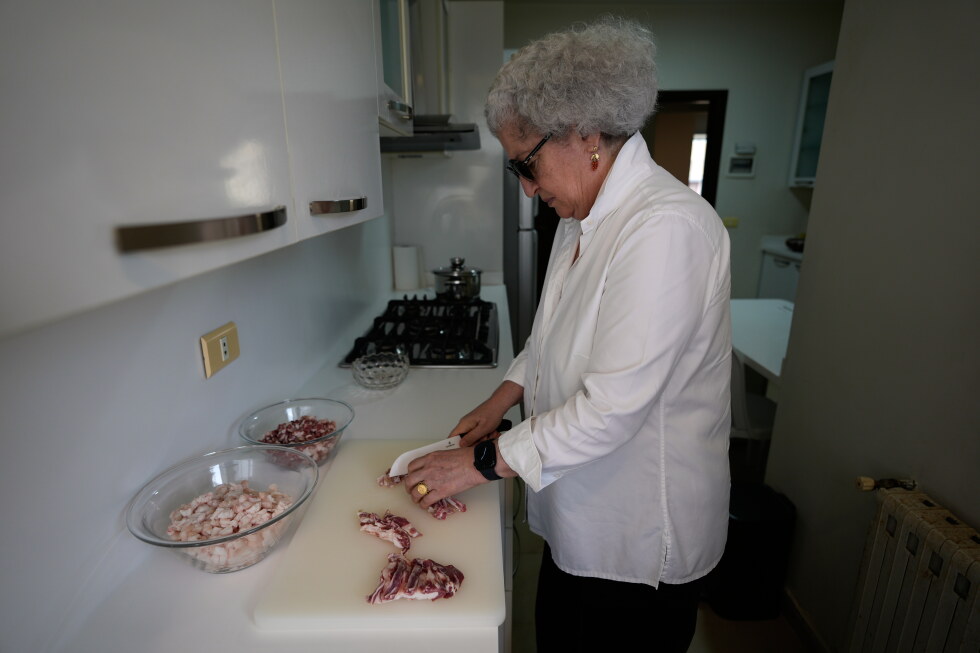
“Lebanese cuisine is kind of a little bit more sophisticated, a lot fresher, more vibrant” compared with some other Middle East food, Helou said as she prepared a traditional Lebanese lamb confit called awarma.

Asked for the home of the region’s best food, Helou did not hesitate to move outside Lebanon and name Syria’s largest city, Aleppo.

Advertisement

Famed for its centuries-old covered market, which was badly damaged during Syria’s civil war beginning in March 2011, Aleppo is known for varied and elaborate cuisine with influences from Persia, North Africa and Armenia.

“I think that Aleppo is undoubtedly the gastronomic capital of the Middle East, regardless of me being Syrian,” she said.

Global anti-Islamic sentiments rose dramatically after the Islamic State group took large parts of Syria and Iraq and declared a caliphate in 2014, launching deadly attacks in the region and the world.

Helou responded with a book of about 300 recipes of dishes from Muslim countries.

Advertisement

“I was thinking, one way of presenting Islam and Muslim people positively could be through their foods,” she said.

Starting late in the world of cooking

Helou, who left Lebanon at the age of 21, holds citizenship in Lebanon, Syria and the United Kingdom and has spent much of her time in Britain and Italy. She still regularly visits Lebanon, cooking and asking people how they make specific dishes.

Helou refused to cook for years while she was a young woman and told her partner at the time not to expect her to make meals.

“I didn’t want to be domesticated. I was like a feminist and so I didn’t cook for a very long time,” she said.

Advertisement

One day a friend prepared a meal at their home and Helou saw the happiness it gave her partner, prompting her to think she should start cooking.

Her decision to become a food writer came in 1992 when a discussion with a group of Lebanese living abroad gave Helou the idea of filling a gap in Lebanese cookbooks with a collection of her mother’s recipes. As it happened, there was a publisher looking for someone to write such a book.

“That’s how I started, by sheer coincidence,” Helou said.

Advertisement

Source link

Continue Reading
Click to comment

You must be logged in to post a comment Login

Leave a Reply

NewsBeat

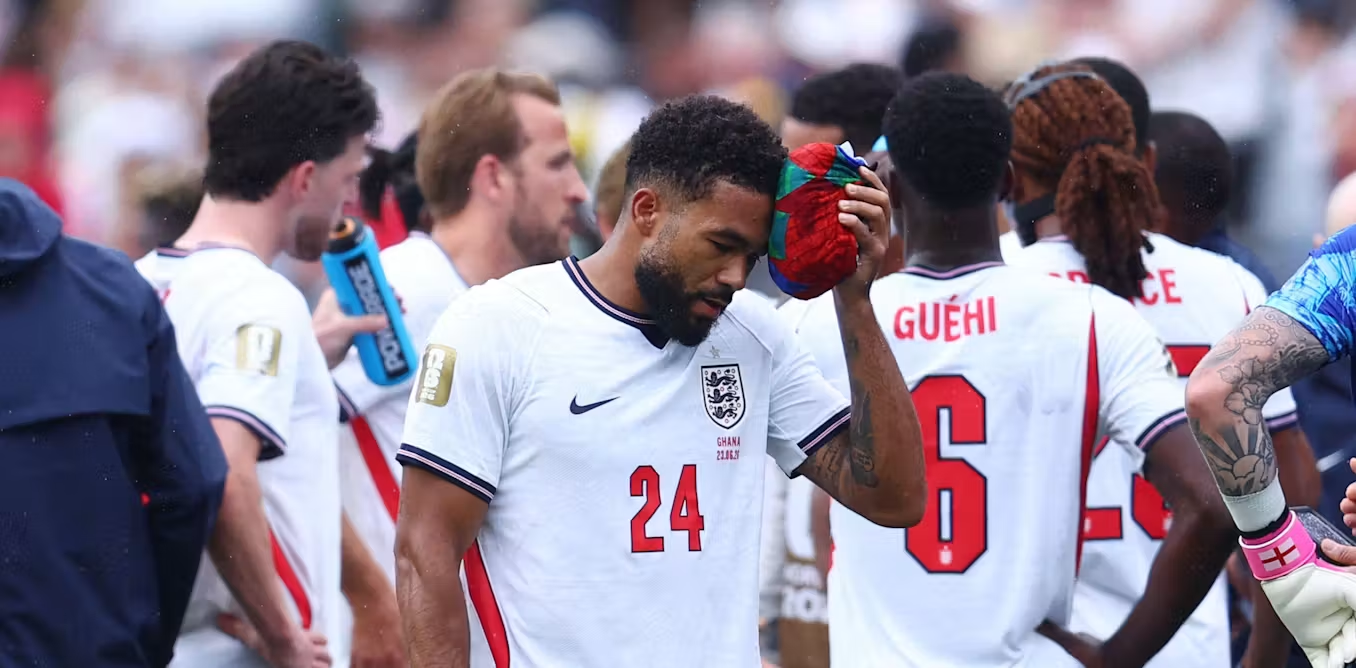
What World Cup football can teach us about managing fatigue in extreme conditions

Published

on

What World Cup football can teach us about managing fatigue in extreme conditions

A football player standing over a penalty in a hot, high-altitude stadium is dealing with more than pressure. His body is trying to keep cool. His heart and breathing may be working harder. Less oxygen is reaching his muscles. One poor decision can end his team’s World Cup.

The 2026 men’s World Cup has made fatigue harder to ignore. Some matches are being played in heat and humidity, while Mexico City’s Azteca Stadium sits more than 2,200 metres above sea level. Heat and altitude make sport uncomfortable, and they also change how the body and mind work under pressure.

Heat makes the body work harder to keep its core temperature stable. Humidity adds strain because sweat does not evaporate as easily, making it harder to cool down. At altitude, lower air pressure means less oxygen reaches the blood and muscles. Together, these conditions can affect endurance, recovery between sprints, concentration and decision-making.

Fatigue is not one state. Sport science is good at separating different kinds of fatigue because performance depends on knowing what is going wrong. Our research emphasises this point. Is the athlete slowing because muscles are tired, heart rate is high, body temperature is rising, sleep has been poor or concentration is slipping?

Advertisement

The answer changes the response. Heavy legs may call for pacing, which means slowing down or spreading effort so the body can cope. Fluid loss may call for cooling and replacing what has been lost through sweat. Slipping concentration may call for a mental reset, such as slowing breathing or refocusing on the next action. Dizziness or confusion means stop.

This is where sport offers a useful public lesson. The same run, tackle, pass or decision can feel much harder when the body is also fighting heat, humidity or thinner air. Research on footballers shows that heat exposure can reduce physical and cognitive performance.

The same principle applies beyond sport. Delivery drivers, nurses, teachers, care workers, chefs, builders and cleaners may also have to think, move and make decisions while working in difficult conditions. Fatigue is sometimes treated as weakness or lack of motivation. Preparation, fitness and recovery may be part of the story, but fatigue is usually more complex.

Advertisement

It is best understood by bringing together psychology, physiology (how the body works), medicine and neuroscience (the study of the brain and nervous system). Fatigue emerges when the body signals that effort is becoming costly, while the person still wants or needs to keep going.

In sport, this is well understood. Coaches do not usually tell players to “try harder” in extreme conditions. They plan through training, recovery, hydration, cooling, clothing, timing and warning signs.

They also train psychological skills. Players learn how to pace effort, control attention, manage emotions and use self-talk. These skills help them decide whether a sensation is expected discomfort, a cue to adjust, or a warning sign.

That distinction can decide performance. Heavy legs, a racing heart and discomfort may be expected in the heat or at altitude. Treating every unpleasant sensation as failure can damage performance. Some discomfort may need to be managed.

Advertisement

But discomfort is different from danger. Dizziness, confusion, nausea, clumsiness or feeling faint are warning signs. These are not signs to push through. The skill is knowing when to keep going and when to stop, cool down and get help.

Athletes playing in difficult conditions will usually have prepared, or at least they should have. Staff may monitor body weight, sweat loss, sleep, mood, soreness and running data. Players may use cooling towels, cold drinks, shaded recovery areas, pacing plans and mental routines.

Even then, fatigue can still bite. A match that goes to extra time adds another layer. A team that survives extra time and wins may carry that physical and mental cost into the next game.

Lessons beyond football

This is where the football example becomes useful beyond sport. The lesson is not to demand toughness every time. It is to judge when effort is useful, when it is costly and when it becomes unsafe.

Advertisement

In sport, that might mean staying composed when the body is screaming to stop. In other settings, it might mean a nurse finishing urgent care, a firefighter rescuing someone or a worker completing a task that cannot safely be abandoned.


Andrew Lane, Author provided (no reuse)

But effort in heat has a cost. Athletes know this. Extra effort is followed by recovery: cooling, fluids, food, sleep, lighter training and monitoring. The hard effort is not ignored once the competition is over.

Workplaces should treat heat in the same way. If people have to push through because the goal is urgent, the organisation should carry the recovery cost. That may mean cover from colleagues, longer breaks, shorter exposure, lighter duties later and permission to report symptoms without being seen as weak.

This is also a productivity issue. Research on occupational heat exposure links workplace heat with health risks, reduced productivity and greater strain on workers. The basic protections are familiar: water, rest, shade, cooler work areas, adjusted schedules and sensible task planning.

Advertisement

The lesson is not that workers should act like elite footballers. It is that if people are expected to work in athlete-like conditions, organisations need athlete-like planning.

Practical coping still helps. A person working in heat could drink before thirst becomes intense, use shade early, slow the pace where possible, share heavy tasks, check on colleagues and use a phrase such as “slow down, cool down, reset”.

These strategies do not replace safe working conditions. They are ways of coping when heat has already arrived and perfect protection is not available.

In the World Cup, teams that measure fatigue well, adapt their tactics and recover properly may gain an advantage. Teams that misjudge heat or altitude may find tired legs and slower decisions appearing when pressure is highest.

Advertisement

For everyone else, the lesson is closer to home. Fatigue is information. But information only helps when people can interpret it, and when they have the power to act before the heat has already taken over.

Source link

Advertisement
Continue Reading

NewsBeat

after 1,700 years, why did Polynesians suddenly sail east?

Published

on

after 1,700 years, why did Polynesians suddenly sail east?

The same question drives both the plot of Moana and decades of archaeological research: why, after centuries of relative stability, did Polynesian voyagers suddenly begin settling islands thousands of kilometres away across the Pacific?

The latest Moana movie is a live-action adaptation of a Disney animated movie of the same name. While the films are fictional, they draw inspiration from the rich seafaring heritage of Polynesian peoples, whose ancestors undertook one of the greatest episodes of maritime exploration in human history.

New climate evidence may help us understand why they embarked on these voyages.

The backdrop to Moana is the mystery of the “long pause”. This was a period when Polynesian ancestors, the Lapita people, sailed east into the Pacific as far as the island archipelagos of Samoa and Tonga, arriving around 3,000 years ago. They brought with them distinct pottery styles and an island-based culture.

Advertisement

Human migrations into the Pacific:

Ancestral Polynesians only moved beyond Samoa and Tonga after a 1700-year ‘long pause’. The remaining island archipelagos were then settled rapidly.
David Sear

Yet, for the next 1,700 years, there was little voyaging further east. Archaeological evidence suggests that populations in Tonga and Samoa grew and developed their own distinct post-Lapita culture.

Then, between 900 and 1100 AD, ancestral Polynesians suddenly undertook a massive phase of eastward migration. Over the next century, voyagers in huge double-hulled sailing canoes reached Hawai’i, Aotearoa (New Zealand) and Rapa Nui (Easter Island). The spread of sweet potatoes around Pacific islands indicate they probably made contact with the continental Americas too.

Advertisement

When European navigators finally arrived centuries later, they were astonished to find even the smallest atolls peopled by communities sharing deep cultural and linguistic commonalities.

The mystery of the ‘long pause’

For generations, anthropologists and historians have debated what ended the long pause. Was it new sailing technology able to combat the easterly trade winds? Was it driven by social pressures and growing populations? Or was there a physical, environmental catalyst behind their choice?

Still from live action Moana

Polynesians settled the eastern Pacific in just a century or so.
Disney

To answer this, we have to look at the physical factors that make survival on a Pacific island possible: fresh water and food. As populations grow, resource demands intensify.

While ancestral Polynesians were highly adaptable and accustomed to seasonal droughts; prolonged and severe droughts during times of high population density might mean an island could no longer support its human population. Ultimately, island survival hinges on a single critical resource: rainfall.

Advertisement

Unlocking the climate record

People in swamp

The authors collecting mud samples from a swamp in Polynesia.
David Sear

Until recently, scientists lacked evidence from the Tonga and Samoa region of what the climate was like in this critical migration era. But we were able to reconstruct these past changes by analysing hydrogen isotopes – slightly different forms of the same element – preserved in ancient mud from swamps and lakes.

In the tropics, the isotopic composition of rain water reflects the amount of rainfall. As algae and plants grow and absorb this water, they lock this chemical signature into molecules that can survive in sediment for thousands of years, providing a natural archive of past rainfall.

Using this technique, we found evidence of a sustained, severe dry period in the southwest tropical Pacific between 850 and 1200 AD. Our results, recently published in the Journal of Pacific Archaeology, indicate this was the driest period the region had experienced in the past 2,000 years. Crucially, this drought coincided with a time when island populations were larger.

The great migration into the eastern Pacific coincided with a dry climate in the western Pacific:

Advertisement
graphs

Humans mostly arrived in the eastern Pacific soon after a dry period (marked orange) of long-term climate conditions further west (top graph) and a series of sudden ‘dry shocks’ (marked orange, in the middle graph).
David Sear

Why would some islands experience a decades or centuries-long drought? Rainfall in the tropical South Pacific depends on the position of the South Pacific Convergence Zone or SPCZ, a major belt of clouds and rain that shifts east and west over time, driven by patterns of sea surface temperature. Short-term shifts are linked to El Niño and La Niña, but the SPCZ can also move over much longer timescales, bringing decades of unusually dry or wet conditions to different parts of the Pacific.

All this matches up with genetic data that indicates Samoa’s population rapidly increased around 1000 AD, perhaps thanks to the arrival of new people. This suggests several factors aligned – severe climate stress, expanding populations, better canoe technology – to prompt daring exploration eastwards.

The story of Polynesian expansion is remarkable in its own right. As Moana introduces new audiences to Pacific voyaging traditions, scientists are continuing to deepen our understanding of the environmental challenges these extraordinary navigators faced – and how they responded with ingenuity, resilience and exploration on an oceanic scale.

Advertisement

Source link

Continue Reading

NewsBeat

Suspects arrested for explosions during Macron’s Syria visit

Published

on

Suspects arrested for explosions during Macron's Syria visit

DAMASCUS, Syria (AP) — Syrian authorities said on Thursday they have arrested several suspects accused of a string of recent explosions in Damascus, including the bombings during French President Emmanuel Macron’s visit earlier this week.

Security forces carried out raids in the Syrian capital and the surrounding areas, and “succeeded in dismantling the entire cell responsible” for the bombings, the Interior Ministry said in a statement. It did not give any information on the identity or affiliation of the suspects.

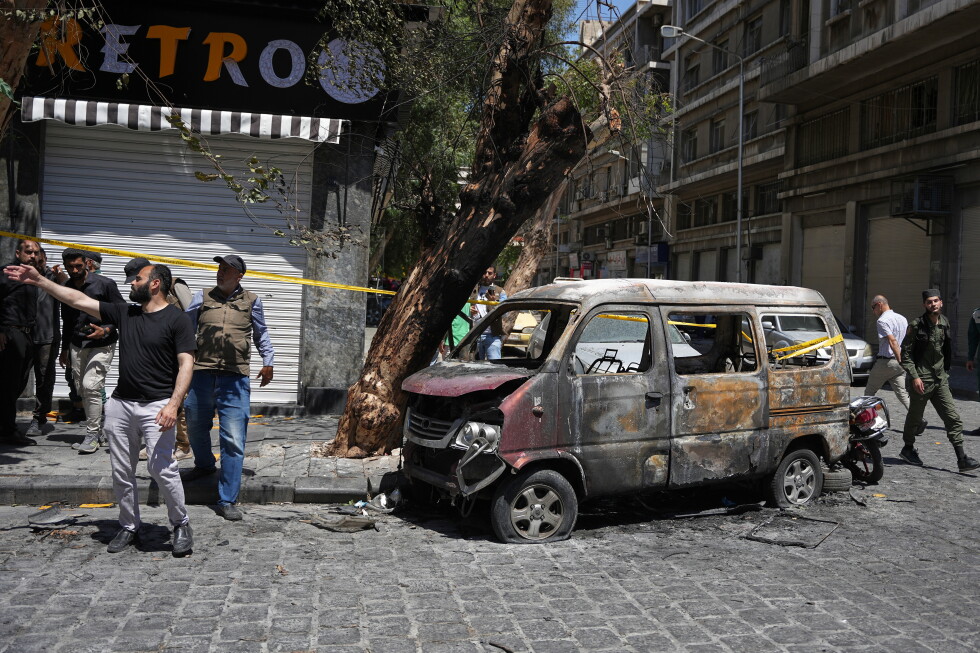
On Tuesday, explosive devices were planted in a garbage bin and a parked car during Macron’s landmark visit to Syria, a country rebuilding from years of civil war. Macron, who was in the presidential palace when the blasts happened, was not harmed and continued with his meeting with Syrian President Ahmad al-Sharaa.

The explosions killed one person and wounded 36 others, according to the final casualty toll announced by Syria’s Ministry of Health.

Advertisement

Last week, an explosive device detonated in a cafe near Damascus’ main judicial complex, killing at least 10 people and wounding more than 20.

No group claimed responsibility for either attack.

The explosions are a challenge to al-Sharaa, who has pushed to assert full control over Syria. He has appealed to minorities skeptical of his government’s Islamist-led rule and sought to win support of Western governments concerned about his past leadership of the formerly al-Qaida-linked group known as Hayat Tahrir al-Sham.

His government has promised political and economic reform after decades of autocratic rule of the Assad family, which ended when former President Bashar Assad was ousted in an insurgent offensive in December 2024 led by al-Sharaa.

Advertisement

The nearly 14-year civil war in Syria killed nearly half a million people and displaced millions, leaving much devastation and infrastructure in ruins. While other nations and businesses have made large investment pledges, the country still needs hundreds of billions of dollars to rebuild and lift millions out of poverty.

Source link

Advertisement
Continue Reading

NewsBeat

ITV forced to abandon insane World Cup studio ahead of France’s clash with Morocco as New York is hit by storms

Published

on

ITV were forced to abandon their swanky New York studio due to storms in the United States
  • How much is David Beckham set to pocket from his World Cup brand deals? Take on our quiz in our newsletter HERE
  • See more Daily Mail on Google – save us as a Preferred Source

The ITV presenting and punditry team were forced to abandon their swanky New York World Cup studio on Thursday due to storms in the area.

Advertisement

Laura Woods and Co have received plaudits for their set-up in the United States for the summer tournament, particularly after the BBC opted to host coverage from Manchester.

But they have, at times, had to abandon the studio, which has a backdrop of New York, to move to an inside studio as the country has battled storms throughout the World Cup.

And conditions on Thursday evening during coverage of France’s quarter-final clash with Morocco meant the team were rushed inside to take cover for the broadcast.

Presenter Marc Pougatch welcomed viewers to the broadcast initially from the outside studio, but the anchor, alongside pundits Roy Keane, Ian Wright and Patrick Vieira were swiftly moved inside.

Advertisement

ITV showed pictures of the storm close to them, with heavy rain on show in Brooklyn. Matches, meanwhile, are delayed by half an hour as soon as a strike of lightning is recorded within an eight-mile radius of a stadium.

ITV were forced to abandon their swanky New York studio due to storms in the United States

The likes of Ian Wright (right) and Roy Keane (second left) were ushered inside for coverage of France vs Morocco

The likes of Ian Wright (right) and Roy Keane (second left) were ushered inside for coverage of France vs Morocco

Advertisement

Those tuning in to ITV’s coverage have been greeted to a stunning view of the New York skyline. ‘Welcome to our New York loft apartment, home for six weeks of coverage of the World Cup,’ said Pougatch, ITV anchor, ahead of the first game of the competition. ‘It is to be ITV’s home for the duration of the tournament.

Roy Keane and Wright both praised the location, with the latter lauding ITV’s decision to invest in a grand studio to fit the occasion of the World Cup. 

‘Amazing, fantastic,’ Keane said.

Wright added: ‘It’s amazing, unbelievable set. It’s the World Cup, it should be this, it should be grand, massive.’

Advertisement

In contrast to ITV, the BBC’s coverage has been led from a state-of-the-art studio in Salford, with the corporation taking the decision to save millions of licence fee money.

‘Right now, I’m incredibly happy with it,’ the BBC’s director of sport Alex Kay-Jelski told Daily Mail Sport. ‘To have what would probably be an extra couple of hundred people out there – and that’s before you build a studio – you’re talking millions.

‘If I was standing here saying everything is going to be done from a studio in Dallas, you would rightly be saying to me, ‘How can you justify that expense?’.

‘I don’t think the answer from a financial sustainable point of view is to say everyone can go. I don’t think that is a very clever way of me to spend licence fee money.’

Advertisement

The BBC had floated the idea of jetting out for the quarter-finals, but have again opted to stay home.

How much is David Beckham set to pocket from his World Cup brand deals? Take on our quiz in our newsletter HERE

Advertisement

Source link

Advertisement
Continue Reading

NewsBeat

Does Trump Have A Plane Problem?

Published

on

Does Trump Have A Plane Problem?

!function(n){if(!window.cnx){window.cnx={},window.cnx.cmd=[];var t=n.createElement(‘iframe’);t.display=’none’,t.onload=function(){var n=t.contentWindow.document,c=n.createElement(‘script’);c.src=”//cd.connatix.com/connatix.player.js”,c.setAttribute(‘async’,’1′),c.setAttribute(‘type’,’text/javascript’),n.body.appendChild(c)},n.head.appendChild(t)}}(document);(new Image()).src=”https://capi.connatix.com/tr/si?token=19654b65-409c-4b38-90db-80cbdea02cf4″;cnx.cmd.push(function(){cnx({“playerId”:”19654b65-409c-4b38-90db-80cbdea02cf4″,”mediaId”:”989d2b81-9380-45ad-a750-bc5443d53bf4″}).render(“6a500037e4b0aaa37424bf17”);});

Source link

Continue Reading

NewsBeat

Tehran launches more strikes after explosions reported in southern Iran

Published

on

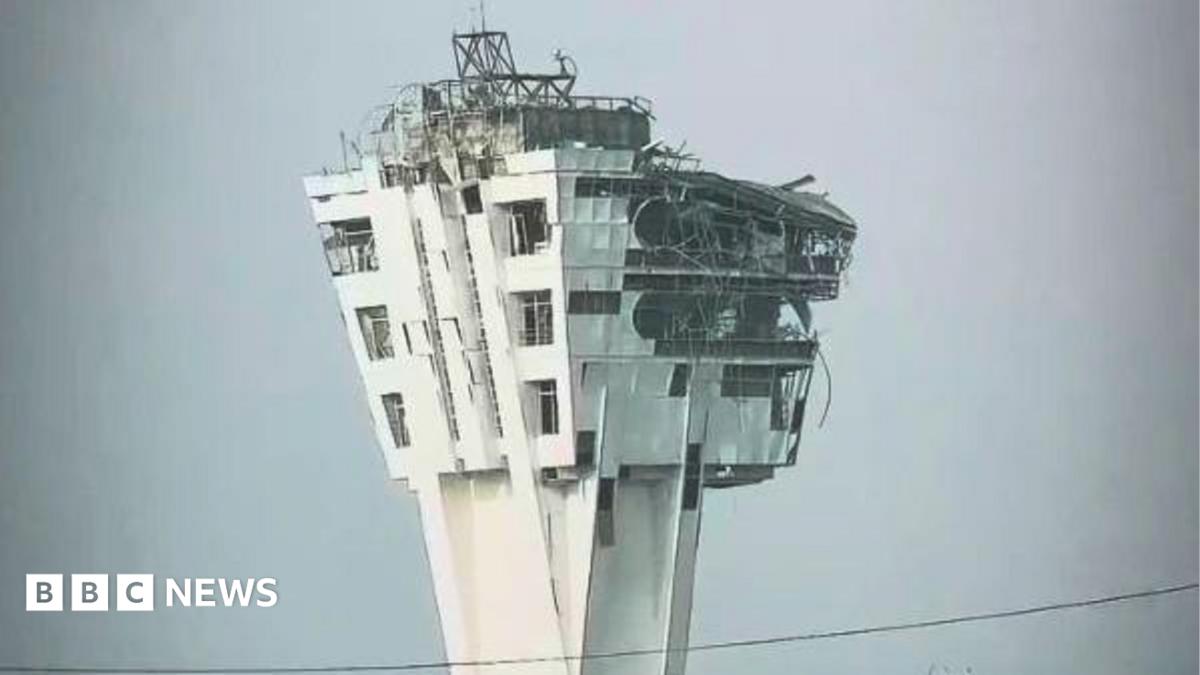
A large control tower is shown with windows blown out and the exterior crumbling

The US and Iran have traded strikes for a second night, as observers report a “dramatic” drop in the number of ships travelling through the Strait of Hormuz.

The US says it hit 90 military targets, some near the Strait. Iran says 14 people have been killed in the past two days.

State media also reported that targets near the Bushehr nuclear power plant were hit, citing the deputy governor of the province. The US has not commented on the latest strikes.

Iran said it targeted US assets in Kuwait, Bahrain and Qatar in response. Later on Thursday, Tehran launched more strikes on sites in Kuwait, Jordan and Iraq, state-linked media reported.

Advertisement

Separately, huge crowds have gathered for the burial of Iran’s late supreme leader, Ayatollah Ali Khamenei, after six days of funeral events.

Crowds massed on the streets of Mashhad in north-eastern Iran waving Iranian flags, while some were pictured holding signs carrying deaths threats directed at US President Donald Trump.

Khamenei was killed on 28 February during the first hours of US and Israeli strikes against Iran.

Iran’s foreign ministry denounced the latest US strikes as a “grave war crime”, describing the US administration as “evil and psychopathic”

Advertisement

Bridges and a railway route connecting Tehran to the city of Mashhad, where the late supreme leader’s funeral is being held, were also damaged, the foreign ministry said.

Iran’s health ministry says 14 people have been killed during this latest round of fighting.

Hossein Kermanpour, head of public relations at the ministry, said US attacks targeting five provinces in Iran over 8 and 9 July have also injured 78 people, of whom 47 remain in hospital.

Gulf nations reported Iranian attacks following the US strikes, with explosions in Bahrain’s capital Manama, Kuwait intercepting missiles and drones, and Qatar issuing a security alert.

Advertisement

Source link

Continue Reading

NewsBeat

Lamborghini seized in Burnley after dangerous driving

Published

on

Lamborghini seized in Burnley after dangerous driving

Burnley Neighbourhood Policing Team said the bright orange vehicle was stopped following reports of excessive speed and anti-social driving.

Officers issued a warning under Section 59 of the Police Reform Act 2002 — but quickly discovered the car had already been flagged within the past 12 months.

As a result, the vehicle was seized at the roadside.

Advertisement

Under Section 59 powers, police can act against vehicles driven in a manner causing alarm, distress or annoyance, with repeat offences leading to seizure — regardless of whether the current driver was responsible for the original warning.

Police said there was “no excuse” for dangerous driving, adding that action will continue to be taken against motorists who put others at risk.

A spokesperson added: “Although the weather is beautiful, it is no excuse for driving in a dangerous manner — but if you do, at least don’t make it as easy as this driver did in a bright orange supercar.”

Advertisement

Source link

Continue Reading

NewsBeat

Burnham Guaranteed To Be Next Prime Minister After Avalanche Of Support From Labour MPs

Published

on

Burnham Guaranteed To Be Next Prime Minister After Avalanche Of Support From Labour MPs

Andy Burnham is guaranteed to be the next prime minister after 322 Labour MPs nominated him to take over from Keir Starmer.

The huge level of support means that only 81 Labour MPs have not nominated him so far, the minimum needed to get on to the leadership ballot.

But as Starmer is not expected to nominate anyone, it is impossible for anyone else to get the level of support required to mount a challenge.

Burnham will therefore become Labour leader unopposed on July 17, and prime minister on July 20.

Advertisement

In a post on X, the Makerfield MP said: “I am deeply grateful to the 322 Labour MPs who have put their trust in me and nominated me for leader of the Labour Party.

“Their support comes from across the PLP (Parliamentary Labour Party) and reflects a shared belief that Britain needs a new approach to politics. That is the circuit breaker I am offering: power out of Westminster, an economy rewired for ordinary people, and good growth in every postcode.

“I want to empower MPs to bring the experiences of their constituents into the heart of government, and harness the full breadth of our Labour movement, drawing on all its traditions and beliefs in pursuit of a common purpose.

“I want to thank every colleague who has nominated me for their commitment to that vision.”

Advertisement

Eighteen members of Starmer’s cabinet, including chancellor Rachel Reeves, deputy prime minister David Lammy and foreign secretary Yvette Cooper, are among those who nominated Burnham.

Other backers included former health secretary Wes Streeting, who ditched his plan to run for the leadership last week.

Meanwhile, Burnham set out more of his vision for British foreign policy and signalled a tougher stance towards Israel over its military operations in Gaza.

In a video on social media, he apologised for Labour’s previous stance, saying his party “didn’t get it right” and the UK had been “too slow to call for a ceasefire”.

Advertisement

Mr Burnham suggested that his government would “do more to strengthen our approach”, including “looking at further sanctions, both on those involved in the violence in Gaza, but also looking at measures to ban trade in goods with illegal settlements”.

His comments followed an article in The Times in which he said he would seek stability in foreign policy, setting out his commitment to Nato, the nuclear deterrent, maintaining close ties with the US and support for Ukraine as well as closer relations with the EU.

Listen to Commons People, the podcast that makes politics easy. Every week, Kevin Schofield and Kate Nicholson unpack the week’s biggest stories to keep you informed. Join us for straightforward analysis of what’s going on at Westminster.

Advertisement

Source link

Continue Reading

NewsBeat

Travis Kelce’s brother Jason breaks silence on secretive Taylor Swift wedding

Published

on

Daily Mirror

Travis Kelce’s brother Jason has made his first comments about the sports star’s wedding to global pop star Taylor Swift after the pair got married at Madison Square Garden

Jason Kelce has spoken for the first time about his brother Travis’ wedding to Taylor Swift. The pair got married in a secretive ceremony on 3 July at Madison Square Gardens.

Advertisement

Jason, the 38-year-old Philadelphia Eagles player, made his first comments about the wedding whilst at the 2026 ACC Golf Championship.

Whilst walking to the course, a fan asked him about the wedding, which guests reportedly had to sign NDAs about. He responded: “It was a good time”.

Later, he added that it was “great”, and when asked about how much he drank during the party, he admitted he went “way over” 15 beers. Jason was the best man for the wedding, while Taylor’s brother Austin was the man of honour.

Guests reportedly had to surrender their phones before the wedding to ensure details didn’t get out. However, fans were still able to piece together bits and pieces about the wedding from what they could see going in and out of the venue. The roads around the stadium had been closed to allow the set up to happen the day before.

Employees were seen taking in set pieces to construct a castle in the arena, while vans were seen supplying food to the venue. The menu for the buffet was believed to include lobster and fries.

The guest list was also said to be over a 1000 people long and several guests were seen on their way to the wedding. Bradley Cooper, Zoe Kravitz, Hugh Grant and Ethan Hawke were all seen there, as were Taylor’s friends Gigi Hadid and Selena Gomez.

Karlie Kloss, who was thought to be in a feud with Taylor until recently was also seen heading to Madison Square Garden in a gold dress.

Other celebs there included Lena Dunham and her ex and Taylor Swift collaborator Jack Antonoff – who turned up with his sister rather than his wife Margaret Qualley. The two are now thought to have split.

Fans and the people of New York were alerted to the moment Travis and Taylor said “I do”, as big signs reading “JUST&T MARRIED” were displayed around the venue.

After the ceremony, some guests posted details to Instagram. One post showed a Chanel bag that a guest had one in a raffle. The other gifts up for grabs included a Cartier watch and a car.

In another post, a guest revealed that the pair had given out handkerchiefs as a wedding favour. The gifts were embroidered with two Ts and the quote “So it’s going to be forever…”. The lyric comes from Blank Space, a song by Taylor about a messy breakup. The lyric that immediately follows the one stitched onto the wedding favour is “or it’s going to go down in flames”.

Like this story? For more of the latest showbiz news and gossip, follow Mirror Celebs on TikTok , Snapchat , Instagram , Twitter , Facebook , YouTube and Threads .

Advertisement

Source link

Continue Reading

NewsBeat

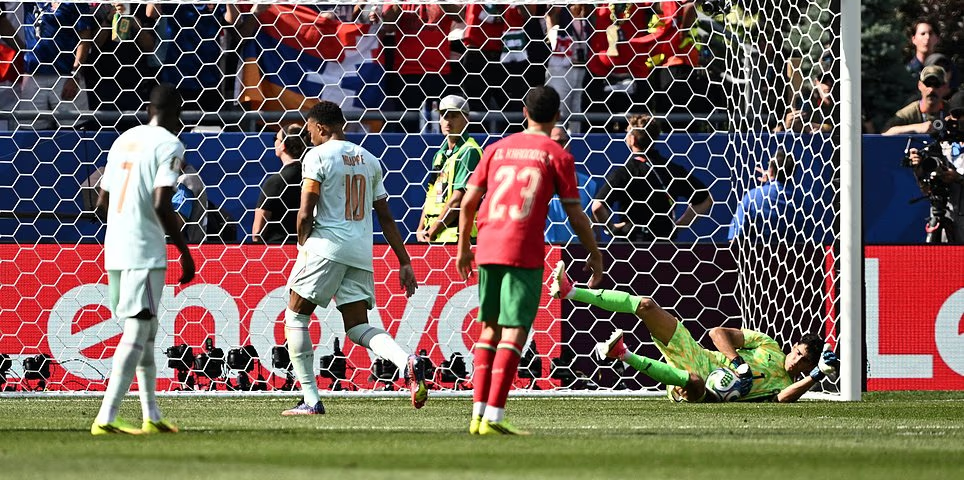
France vs Morocco – World Cup quarter-final LIVE: Kylian Mbappe MISSES from the penalty spot after lengthy VAR delay in Boston

Published

on

France vs Morocco - World Cup quarter-final LIVE: Kylian Mbappe MISSES from the penalty spot after lengthy VAR delay in Boston

Advertisement

Follow Daily Mail Sport’s live coverage of the latest updates as France take on Morocco in the quarter-finals of the World Cup in Boston. 

Advertisement

Source link

Advertisement
Continue Reading

Trending

Copyright © 2025