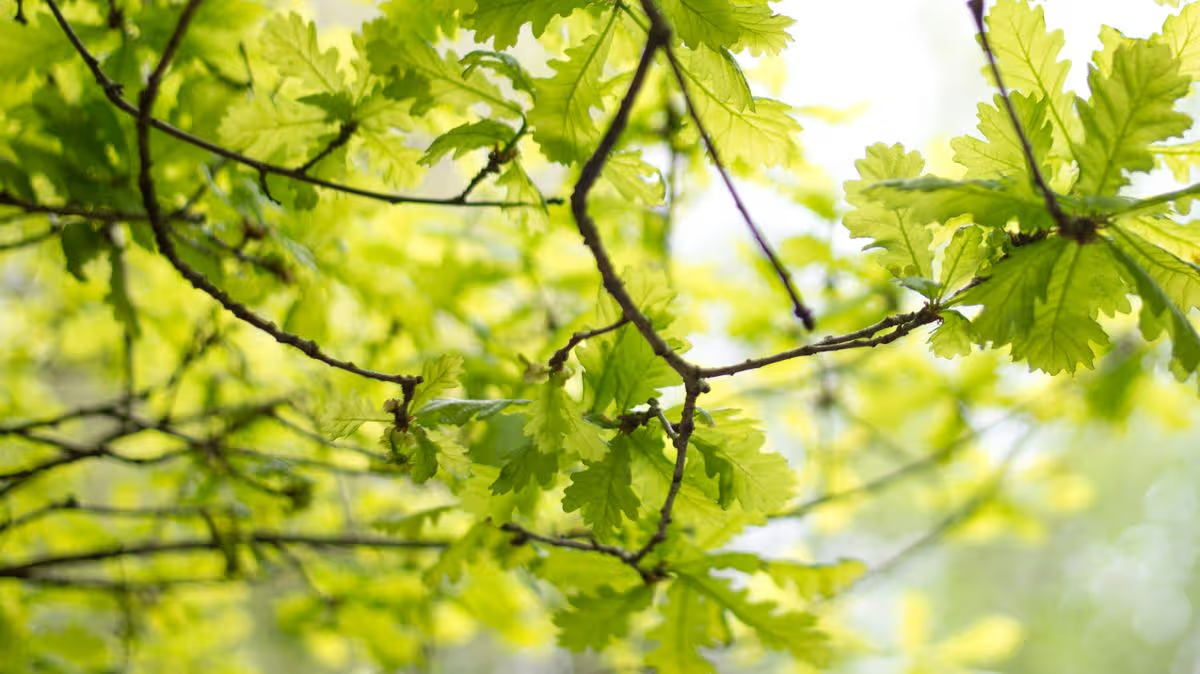
The UK’s two native oak species, sessile oaks and pedunculate oaks, support more wildlife than any other native tree
British oaks are facing multiple threats which could spell “disaster” for the UK’s most important tree and the wider natural world, experts warn. The head of the Action Oak partnership of charities, landowners, research organisations and government bodies, says the UK must pay attention to the “warning signs” about the state of oaks, as the organisation releases a new report on the situation.
Action Oak’s director Annabel Narayanan said the emblematic trees were facing a litany of pressures including acute oak decline which can kill a tree in three to six years and “we cannot allow what has happened with Dutch elm disease and ash dieback to happen” to oaks.
The UK’s two native oak species, sessile oaks and pedunculate oaks, support more wildlife than any other native tree in the UK, playing host to more than 2,300 species, including 326 species that depend entirely on them for their survival.
The country’s 170 million oak trees also store carbon, provide an important hardwood resource and are a key natural icon in British culture.
The UK has more than 250,000 hectares (600,000 acres) of oak woodlands, much of it in England, as well as in hedgerows, parkland and standing sentinel in fields as remnants of old hedges and wood pasture.
Hundreds of thousands of oaks are found in London, while tens of thousands grow in cities such as Belfast and Cardiff. But, a new report from Action Oak warns, the country’s oaks are facing pressures from climate change bringing higher temperatures and extremes such as drought, diseases and pests including invasive and non-native species, damage from deer browsing and grey squirrels bark stripping.
Some woodlands are also under threat from infrastructure, housing and business developments, with large areas of oak woodlands set to be destroyed by the HS2 rail route.
The most prominent threat is acute oak decline, an interaction of several native bacteria and a native beetle, against a backdrop of environmental stress such as drought.
The condition, which can be seen with weeping lesions and cracks in the bark with dark fluid seeping out, can kill trees that would live for a thousand years in a handful of years making it a “serious condition that threatens the long term resilience” of oaks, says chief plant health officer Nicola Spence.
As of 2023, there were 394 sites recorded with acute oak decline in the UK. While oaks appear to cope relatively well under climate change scenarios as a species, research suggests, individual trees and woodlands may be stressed by drought – making them susceptible to disease – while rising temperatures will reduce growth and increase the risk of wildfires, the report said.
Other threats include oak powdery mildew, the knopper gall wasp which was introduced to Britain in the 1960s and the oak processionary moth which was introduced into the UK about 20 years ago and has spread through London and the South East.
And new threats such as the oak lace bug could be coming to the UK, the report says.
Ms Narayanan said: “What we are seeing with oak is not a single threat, but a convergence of pressures acting at the same time.
“Ageing trees, failed regeneration, climate stress, pests and disease.
“Each one on its own might be manageable, but together they are pushing the UK’s most important tree towards a tipping point, this is a slow-burn ecological disaster.”
And Geraint Richards, head forester to the King and Duchy of Cornwall, said the failure of a species that supports more wildlife than any other in Britain and stores 31 million tonnes of carbon would have national consequences.
“Long term surveys show fewer young oaks establishing, while mature trees dominate the landscape,” he warned.
“Without regeneration, today’s ageing oak population becomes tomorrow’s ecological cliff edge.”
Ms Narayanan also pointed to the presence of nearly 50,000 ancient and veteran oaks in the UK – more than the whole of the rest of Europe combined.
“It’s a really significant ecological resource that we have and so we do need to look to the future and make sure that in the future, we have protected the space that the new ones are coming into,” she said.
Conservationists also want to see better protection for ancient and veteran trees – with Ms Narayanan pointing to the illegal destruction of the Sycamore Gap tree, the felling of the centuries-old Whitewebbs Park oak and the threat to the 550-year-old Darwin oak in Shropshire to make way for a road.
Action Oak also says it is important to do more research into the threats facing oaks, and to keep watch on the emerging pests and diseases to prevent them taking hold.
People who are concerned about the fate of the country’s oak trees can get involved in citizen science projects, or report anything that does not look right to the authorities through schemes such as Observatree, Ms Narayanan added.
Professor Spence said: “Oak trees are a cornerstone of the UK’s landscapes, supporting a wide range of species and enriching our cultural and natural heritage.
“Yet our native oaks are increasingly under pressure, including from Acute Oak Decline – a complex and serious condition that threatens the long‑term resilience of this iconic species.”
“The ‘State of the UK’s Oaks’ provides an important evidence base to help us understand these challenges and focus our collective efforts to ensure that future generations continue to enjoy the immense environmental and societal benefits that healthy oak trees bring.”