



Buying into shoe trends might sound like fun, but some styles can cause more harm than they’re worth, an expert has claimed.
This summer alone has seen multiple shoes styles under the spotlight, including split-toe, thanks to Maison Margiela’s Tabi shoes, as well as ballet flats, with shoppers looking everywhere from Chanel to M&S to snag a pair.
But according to shoe designer Lisa Kay, who founded Sole Bliss, some trends are worth skipping, especially for certain foot types.
Speaking to the Daily Mail, Lisa said: ‘After 25 years working alongside podiatrists to develop Sole Bliss’ Miracle Comfort Technology, I can tell you the single biggest mistake women make is buying a shoe because it looks right, not because it’s built right.
‘A toe-box that’s too tight, a heel that’s the wrong height, a sole with no give at all – these aren’t minor annoyances. Left unchecked, they’re what turns a bunion into a painful one, or leaves someone… unable to walk comfortably by the end of the day.’
To guide shoppers in making informed decisions, the expert has delivered her verdict on different trending shoes and revealed which silhouettes cause little to no harm for their wearers – and the others that are likely to cause issues.
Read on to discover Lisa’s verdict on everything from split-toe shoes to boots and mules.
Split-toe shoes
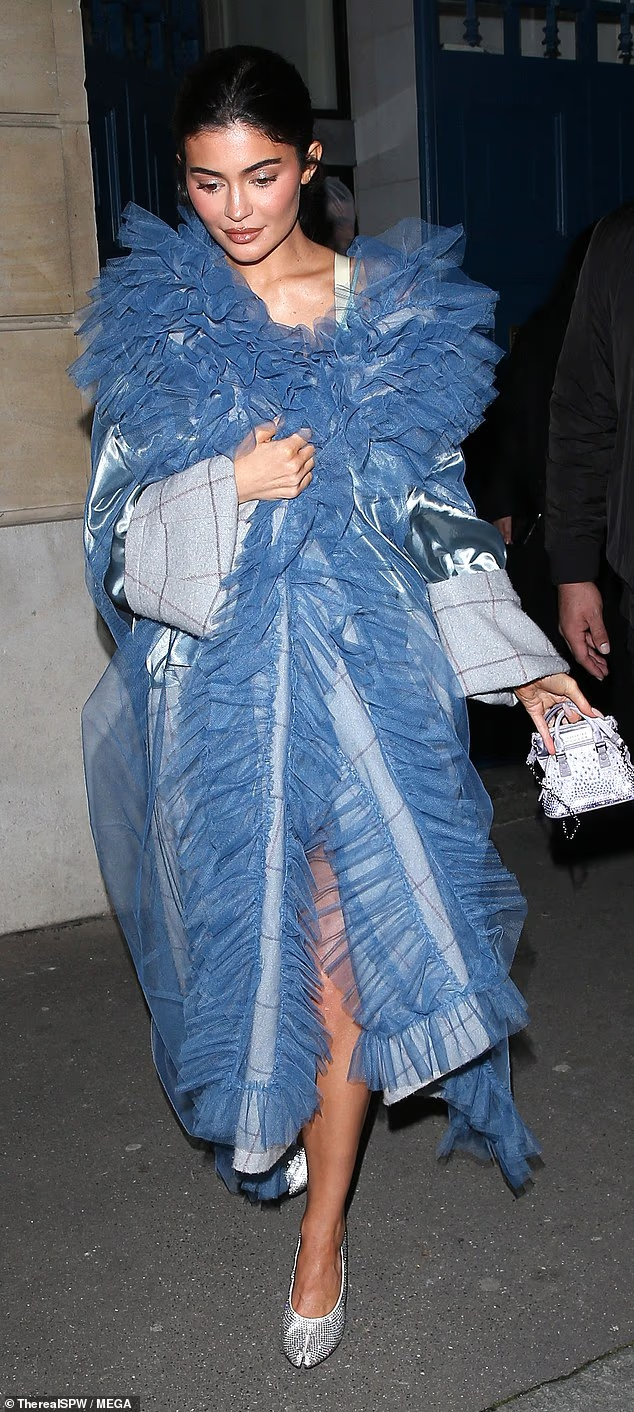
Split-toe shoes are all the rage these days, with everyone including Kylie Jenner (pictured) owning a pair – but according to Lisa, they’re not suitable to all foot types
Love them or hate them, split-toe shoes have seen a monumental rise – thanks to Maison Margiela.
Fashion’s leading women from Zendaya to Dua Lipa and Anya Taylor-Joy own a pair of the brand’s Tabi Shoes, but according to the expert, not everyone should join the trend.
Lisa’s verdict: ‘Forcing a gap between the first and second toes puts direct load on a bunion joint and can irritate a neuroma (thickening of nerve tissue in the foot).
‘For anyone with diabetic neuropathy (nerve damage caused by long-term high blood sugar) in particular, I’d steer well clear – reduced feeling in the feet makes it much harder to notice rubbing before real damage is done.’
SUITABLE FOR: Slim feet and feet without significant width concerns can generally tolerate the divided toe shape
UNSUITABLE FOR: Bunions, hammer toes, wide feet, Morton’s neuroma, diabetic neuropathy
Stilettos

They might look good, but not everyone can survive the evening in high heels like pop star Dua Lipa
Not everyone dares to wear the stilettos for fear of breaking a bone, and Lisa says there’s good reasoning for it.
Lisa’s verdict: ‘A standard stiletto is one of the least forgiving shapes there is. A high, narrow heel tilts the body’s full weight forward into a pointed toe box, which can crush your toes together.
‘However, stilettos and comfort don’t have to be mutually exclusive. Look for heels with a wide toe-box, which give your feet room to breathe.
‘A cushioned footbed and stretch panels around problem joints can make a real difference for bunions, hammer toes and wide feet, even at four inches.
‘Heels with arch support will help flat feet, over-pronation and plantar fasciitis (inflammation at the foot base) too.’
(CAN BE) SUITABLE FOR: Individuals with foot conditions if the stiletto is specifically designed for comfort
UNSUITABLE FOR: All individuals with foot conditions
Mules

Isla Fisher sported a pair of mules at the 2026 Wimbledon Tennis Championships at the All England Lawn Tennis and Croquet Club
They come and go as the fashion cycle turns, but mules are very much in right now among the fashion-conscious.
And while the style might look comfortable, mules are, in reality, only suited to certain individuals.
Lisa’s verdict: ‘Without a strap to anchor the foot, narrower feet tend to slide forward, jamming the toes into the front of the shoe.
‘This can exacerbate issues like Morton’s neuromas (a condition that thickens the tissue around a nerve leading to the toes, causing sharp burning pain).’
SUITABLE FOR: Wide feet, flat feet, arthritic joints, bunions
UNSUITABLE FOR: Slim feet, Morton’s neuroma
UGG boots

Pictured: Chrissy Teigen wearing a pair of UGG boots in Los Angeles, California, in April 2024
UGG boots have long been a staple in thousands of wardrobes, but what if the comfort boot was wreaking havoc?
Lisa’s verdict: ‘The soft sheepskin lining is forgiving on sensitive skin and swollen joints, with generous room for wide feet throughout.
‘That same softness is a problem for several other foot issues. Uggs essentially have no structure or arch support, so women with plantar fasciitis, over-pronation (when your feet move inwards as you walk) or bunions may find symptoms worsen if they wear Uggs for too long.’
SUITABLE FOR: Wide feet, arthritic joints, diabetic neuropathy
UNSUITABLE FOR: Bunions, flat feet, over-pronation, plantar fasciitis
Ballet flats

Ballet flats have come back in trend, and the Duchess of Sussex is a fan of the silhouette
For many, ballet flats are the shoe of the summer – but some wearers have complained that the trending style, although it might look good, is painful to walk in.
Lisa’s verdict: ‘A well-made, supportive ballet flat can work for lots of foot conditions. For those with plantar fasciitis, avoid any ballet flats which are too flat – choose styles with supportive underfoot cushioning instead
‘Unpadded ballet flats can send the impact of every step straight up through the foot, which is not what you want with plantar fasciitis or flat feet. Most ballet flats tend to lack sufficient arch support for these foot conditions too.’
SUITABLE FOR: Bunions, wide feet, slim feet, hammer toes, diabetic neuropathy
UNSUITABLE FOR: Plantar fasciitis, flat feet, over-pronation, arthritic joints
Wedges

Wedges are ‘kinder to the foot,’ said Lisa (pictured: Bryce Dallas Howard in New York City in 2024)
Wedges are widely considered the perfect, comfortable heeled shoe for every wearer, and according to Lisa, that mostly rings true.
Lisa’s verdict: ‘When you wear wedges, your bodyweight is spread across a much larger surface area than a stiletto, which makes them kinder to the foot.’
But she added: ‘Wedge soles typically have no real flex, and this rigidity can be unsuitable for women who over-pronate.’
SUITABLE FOR: Bunions, wide feet, arthritic joints, hammer toes, most conditions
UNSUITABLE FOR: Over-pronation
Mary Janes

Sunday Rose Kidman is seen wearing T-strap Mary Jane shoes during New York Fashion Week Autumn/ Winter 2026
They’re a classic silhouette, and many consider them ideal for everyday office wear, and according to Lisa, Mary Janes typically offer all the support one needs.
Lisa’s verdict: ‘Mary Janes are one of the best shoe types for those who need to take extra care of their feet.
‘The strap sits across the instep rather than the forefoot, so it holds the shoe securely without compressing a bunion, a neuroma or a sensitive area.
‘For arthritic finger joints, the strap is generally far easier to manage than tying and untying laces.
‘In some cases, the Mary Jane strap can be too short for those with a high instep. It’s always worth checking.’
SUITABLE FOR: Most wearers
UNSUITABLE FOR: High instep (having extra vertical height on the top of the foot)
Loafers

Aubrey Plaza is seen wearing loafers while exiting ‘The Drew Barrymore Show’ in New York City last year
Another classic shoe, loafers continue to be popular – and come in various formats, from having a chunkier sole to being backless.
Lisa’s verdict: ‘No laces, no straps, just slip on and go – loafers are ideal for anyone whose joints make fiddly fastenings a chore.
‘The rounded toe shape generally allows for width too. Loafers are often available in a variety of width fittings for those with bunions, wide feet or slim feet.
‘Like ballet flats, some loafers have very flat soles which don’t provide enough cushioning and support for those with plantar fasciitis. If you have flat feet or over-pronate, look for loafers with built-in arch support.’
SUITABLE FOR: Most people with foot conditions, including bunions, wide feet, slim feet, arthritic joints, hammer toes, diabetic neuropathy
UNSUITABLE FOR: Plantar fasciitis, flat feet, over-pronation
Kitten heels

Pictured: Emma Stone is seen arriving in kitten heels at ‘The Late Show With Stephen Colbert’ in New York City last year
Despite falling out of fashion for a number of years, kitten heels have made a comeback because they’re easier to wear than higher alternatives but still look elegant.
Lisa’s verdict: ‘A low, stable heel is a smart middle ground – dressier than a flat, but nowhere near the strain a stiletto puts through the joints.
‘Even a small heel shifts weight onto the ball of the foot, so plantar fasciitis and neuromas can still flare, especially in a pointed toe. Look for kitten heels with padded insoles and plenty of underfoot cushioning to avoid this.’
SUITABLE FOR: Bunions, wide feet, slim feet, arthritic joints, hammer toes, diabetic neuropathy (all foot conditions)
UNSUITABLE FOR: Plantar fasciitis, Morton’s neuroma
Ankle boots

Kate Moss opted for heeled ankle boots at the the Los Angeles premiere of Sandiwara in February
As the Autumn months draw closer, ankle boots will start making a reappearance, and according to Lisa, they’re often a suitable choice.
Lisa’s verdict: ‘Ankle boots tend to be suitable for most foot conditions. Look for boots with a wide toe-box to avoid foot cramping and plenty of underfoot cushioning for all-day wear.
‘Boots with laces or a zip mean the fit can flex around width or swelling, and the ankle support can genuinely help with joint instability.’
SUITABLE FOR: Bunions, wide feet, slim feet, arthritic joints, hammer toes, diabetic neuropathy, Morton’s neuroma, flat feet (all foot conditions)
UNSUITABLE FOR: None
Knee-high boots

Pictured: Taylor Swift arriving at ‘The Late Show With Stephen Colbert’ on December 10, 2025 in New York City
A fashion staple while providing additional warmth as the temperatures drop, knee-high boots have long been a popular choice – but Lisa said they’re not suited to everyone.
Lisa’s verdict: ‘A close fit up the leg can actually add stability for anyone dealing with joint issues.
‘Knee high boots are often cut for an average calf and foot, which means they can dig in on wider calves and wider feet. This can be a real issue for women with diabetic neuropathy.’
SUITABLE FOR: Slim feet, arthritic joints, flat feet and over-pronation
UNSUITABLE FOR: Wide feet, diabetic neuropathy
Flip-Flops

Singer Carolina Cerezuela sporting flip flops in Mallorca, Spain
They’re a universal staple, but treating flip-flops as an everyday choice during summer is not recommended, says Lisa.
Lisa’s verdict: ‘Honestly, this is the style I’d tell most people to limit. The toe post sits right where difficult feet want to avoid pressure, and with zero structure or arch support, the foot has to do all the work itself – hard going for plantar fasciitis and flat feet.
‘It can exacerbate bunions too. The exposed design is also a genuine risk for diabetic neuropathy, where an unnoticed cut or rub can become a bigger issue.’
SUITABLE FOR: Slim feet, occasional wear
UNSUITABLE FOR: Bunions, hammer toes, plantar fasciitis, flat feet, over-pronation, Morton’s neuroma, diabetic neuropathy, arthritic joints
Platform Shoes

According to Lisa, platforms can be a solid choice (pictured: Florence Pugh in France in 2022)
Platform shoes are perhaps a more daring fashion choice, but according to Lisa, they can be a good alternative to thinner heels.
Lisa’s verdict: ‘I always recommend platforms to women who aren’t used to wearing heels.
‘A platform reduces the overall incline through the foot compared with a regular heel, which helps you handle the height and takes real pressure off the ball of the foot, bunions or any difficult joints.
‘A flat platform on its own does nothing to control the ankle rolling inward. Without dedicated arch support engineered into the sole, over-pronation isn’t addressed just because the shoe feels more level.’
SUITABLE FOR: Bunions, wide feet, slim feet, plantar fasciitis, arthritic joints, hammer toes, Morton’s neuroma
UNSUITABLE FOR: Over-pronation (unless the sole has structured arch support built in)
Crocs

Brooke Shields made a statement in yellow Crocs at the 77th Annual Tony Awards in New York in 2024
Originally a choice for those prioritising comfort, Crocs have now become a fashion choice for some, too.
Lisa’s verdict: ‘Roomy, soft and easy to get on and off – Crocs can be a good casual choice for swollen feet.
‘There’s plenty of room but very little structure, so support is lacking where it’s needed most, and narrower feet can find them slipping about. Bunions often rub in Crocs too.’
SUITABLE FOR: Wide feet
UNSUITABLE FOR: Bunions, plantar fasciitis, flat feet, over-pronation, slim feet
Thicker sole trainers

Thicker sole trainers, including Natalie Portman’s Hoka shoes, have increased in popularity recently
With brands like Hoka on the rise, thicker sole trainers have increased in popularity recently, with claims that they can aid sports activity and comfort – and according to Lisa, this is largely true.
Lisa’s verdict: A deep, cushioned sole absorbs impact with every step and often comes with arch support, making this one of the best everyday choices for conditions that require shock absorption.
‘Some models run generously through the forefoot, so slimmer feet may want to size down or look at a narrower fit.
SUITABLE FOR: Bunions, wide feet, plantar fasciitis, flat feet, over-pronation, arthritic joints
UNSUITABLE FOR: Slim feet (can feel bulky)
Thinner sole trainers

Pictured: Hailey Bieber is seen on February 19, 2023 in Los Angeles, California
Trainers with a normal, relatively thin sole are an everyday choice for many – and there’s good reason for it.
Lisa’s verdict: ‘A flatter, more flexible sole sits closer to the ground and suits anyone who doesn’t need extra correction underfoot.
‘Not every thin-soled trainer skips on support, though. Sole Bliss trainers keep that lower, sleeker profile while still building genuine cushioning into the sole, so it’s always worth checking what’s happening underfoot rather than ruling the style out on looks alone.
But the expert added: ‘Thin-sole trainers with minimal cushioning means minimal support, so the foot absorbs far more impact.’
SUITABLE FOR: Bunions, wide feet, slim feet, plantar fasciitis, flat feet, over-pronation, arthritic joints
UNSUITABLE FOR: Plantar fasciitis, flat feet, over-pronation


















































You must be logged in to post a comment Login