



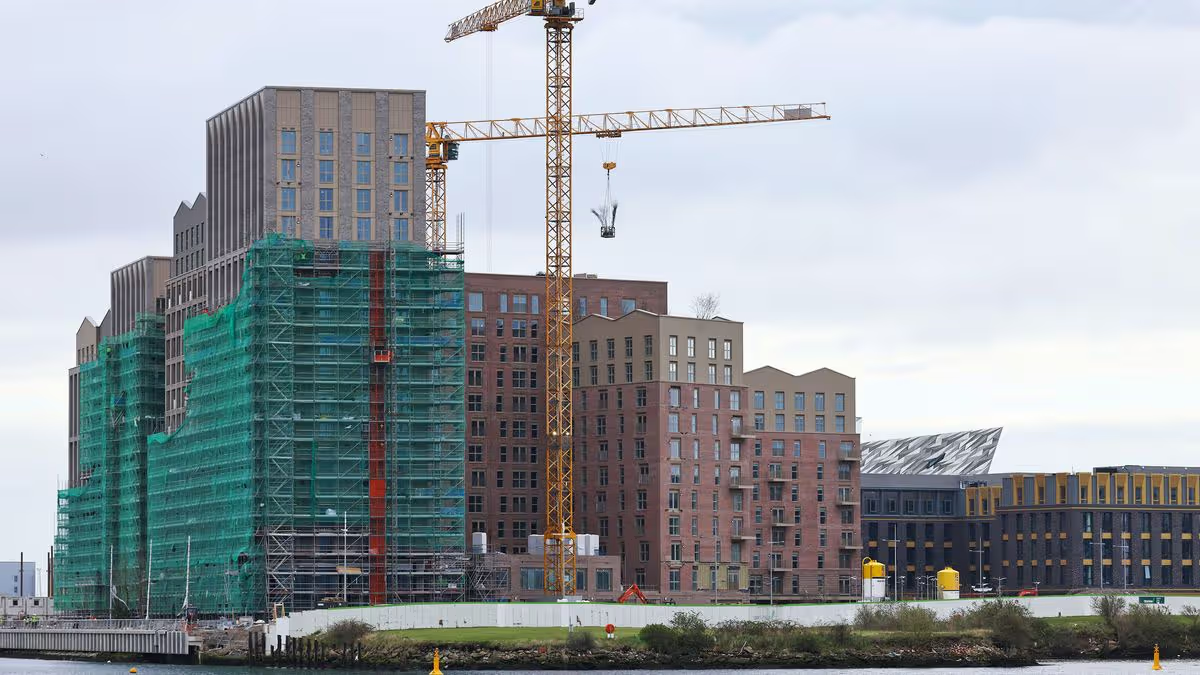
I had a sneak peek at what the Loftlines development will bring to Belfast when it opens in the Titanic Quarter this summer
Construction work is due to be completed this summer on Loftlines – a landmark development that will bring 778 new homes to Belfast city centre.
Set within the iconic Titanic Quarter, Loftlines is one of Northern Ireland’s most ambitious regeneration projects and will be the city’s first major residential scheme to be built in 25 years. The development is home to Northern Ireland’s first Build-to-Rent (BTR) homes.
Ahead of the scheme opening to the public in July or August, Belfast Live was given the opportunity to spend some time in a similar scheme in England. Build-to-Rent schemes have massively increased in popularity across England over the last decade, with many opting to move into similar developments in places like Liverpool, Manchester and London.
The scheme in Belfast has been created by Legal and General, which owns a development in Leeds called Tower Works, where I stayed for a couple of days to get a feel for what living in one would be like. This development, much like Loftlines in Titanic Quarter, is pretty central but not directly in the middle of the city, so it didn’t feel too busy around it.
What can people expect?
I stayed in a studio apartment in the Canalside building, and, like many BTR schemes, it is one of a few buildings in the development. While the apartment was not massive by any stretch of the imagination, it was very modern and really well presented throughout. The finishings on it were great and had a lot of storage for such a small space, which definitely helped make it feel bigger.
Even though this was a studio, it was designed so the bedroom still felt separate, not the kind where you felt like you were sleeping in the kitchen. It is worth noting that the apartment range spans from studios to three bedrooms, and the best fit depends on lifestyle and needs.
From the moment we arrived, it was noticeable staff were very friendly, and the front-of-house team at reception were on hand for anything we needed. This concept, in itself, is a little alien to Belfast, with few developments offering a full-time receptionist to help with any needs.
Something equally as handy was that they were on hand for any parcels you might be having delivered, which are then kept in a secure room for you to collect when you’re ready. This in itself will save so much time trekking to the post office for another missed parcel, and something many would find very handy.
While there, I was shown around the amenities, in both Tower Works and Tura, a new BTR scheme in Leeds, to see what was on offer. There was a gym on-site and it was definitely high-end, but it was something we could see in other developments throughout Belfast.
However, it was the other amenities, like the large private dining facilities you can rent for you and a group to host dinner parties, that showed this is bringing something brand new.
It didn’t stop there; there were communal ‘living spaces’ where groups could gather to watch TV on large screens, which would be great for things like the World Cup. There were also pool and shuffleboard tables you could play on at any time.
On top of this, there were also places to work ‘from home’, but also feel like you were getting out of your apartment. These amenities went a long way toward expanding your living quarters beyond the apartment you were in to the entire building.
Often, a complaint about apartment living is the lack of outdoor space, and once again, these schemes try to tackle this issue. While they don’t have private gardens, they do have large communal courtyards and rooftops that anyone can use to catch a few rays during the warmer months.
However, these spaces are completely redundant if no one uses them as they are intended. During our stay, there was a community event to celebrate Eid with a wreath-making class. I went along to see how much interest there was among residents in these events and to find out from them what it was like to live here long-term.
About 20 people showed up and the activity took place at a large table, so everyone had an opportunity to chat. I spoke to one group and asked them openly whether it was as good as I had perceived so far. This group all came to live in this development as strangers, but were now firm friends as a result of resident events.
They were all from different walks of life and ages, but were able to actually bond as neighbours, which is something that rarely happens these days. They now all arrange to go to these events together and also meet up outside of resident events.
A community has clearly been created there through the hard work of the staff, who all arrange and put on these events. Most of which are free, and those that aren’t carry a small charge, depending on what it is. These friendships were real and would not have happened had they not lived here. It is not easy to bring people together anymore, and this scheme has succeeded in doing so.
BTR is brand new for the local market, and before now, the two most popular avenues for housing were private rental or home ownership. This differs in the sense that every apartment within the building will remain in Legal and General’s hands and only ever be rented out, but not like a typical private rental with a landlord.
Loftlines in Belfast is making fast progress ahead of its planned opening this summer, so I visited the site and compare what I had seen in England. While there is still some way to go before it is habitable, the show apartments matched the quality of those in Leeds and really lines up with the strategy they have in other schemes.
Like Leeds and other BTR schemes, Belfast will have on-site staff available at all times. Much of the same amenities like a gym, private dining room, games area and outdoor space. It also now has some incredible views of one of the best parts of Belfast, the Titanic Quarter.
Iconic site ‘overshadowed’
Steeped in history, the Titanic Quarter, before Loftlines, was home to the Titanic Museum – named the world’s leading tourst attraction in 2016 – and hotel, but not much else. There was very limited development there prior to this, except for The Arc, which meant it had some wide-open spaces. Loftlines has come under fire for being quite an imposing addition to our skyline and blocking the view of the architectural spectacle that is the Titanic Museum.
While it would be ideal to always have uninterrupted views of such buildings, it was always in the plan to develop the area and add more housing.
When renting one of the apartments, a basic set of furniture, including a dining table, chairs, a sofa, a bed, and a mattress, will be provided. On top of this, residents are free to, and encouraged to, decorate as they please. This includes hanging things on the wall and painting if they wish. If a tenant wishes to decorate but doesn’t fancy DIY, the scheme can provide someone to paint at a cost. There will also be maintenance on site, which means that if any issues arise with your apartment, they will be solved quickly in-house.
The Loftlines development has supported 650+ jobs and local businesses through the construction and delivery of the scheme. £92 million has already been spent locally within 40 miles of the scheme, with 90% of the supply chain partners being local. In addition, around 50% of personnel working on the scheme are from BT1-BT17 postcodes.
There are further plans for the development, which include a convenience store and a restaurant. This will serve the general public and add further employment opportunities for the city.
One fear is that, in developing this, there would be no sympathy for the area’s, the city’s, and indeed the country’s history. So when posed with the question about whether it was considered when planning the scheme, I was told that “the interiors were designed by one of the UK’s most experienced BTR interior design specialists, Lister + Lister, who were inspired by the rich heritage of the area and authentic colour palettes found in Belfast’s iconic dry docks and this can be seen in what has been delivered so far”.
Major step forward
We are in the midst of a housing crisis throughout the country, and this is a major step forward in addressing Northern Ireland’s housing shortage. It also provides market choice for those who want elevated city living. It will also go some way toward addressing the issue of a large number of student accommodation units in the city, leaving young professionals moving out of those areas with more choice about where to go next.
Belfast experiences high levels of ‘brain drain’ as it stands, so it will be interesting to see whether this trend helps reduce it.
This scheme will not only plug a gap in the housing market but also raise the standards of the private rental market, as it will have to compete with Loftlines and the amenities it offers. It isn’t perfect, but it marks a new era for the city and will bring it into line with other major cities, offering people elevated living in the heart of Belfast.
At the time of publishing, pricing for Loftlines was unavailable, but Belfast Live was told “it will be competitive”.
For all the latest news, visit the Belfast Live homepage here and sign up to our daily newsletter here



















































You must be logged in to post a comment Login