


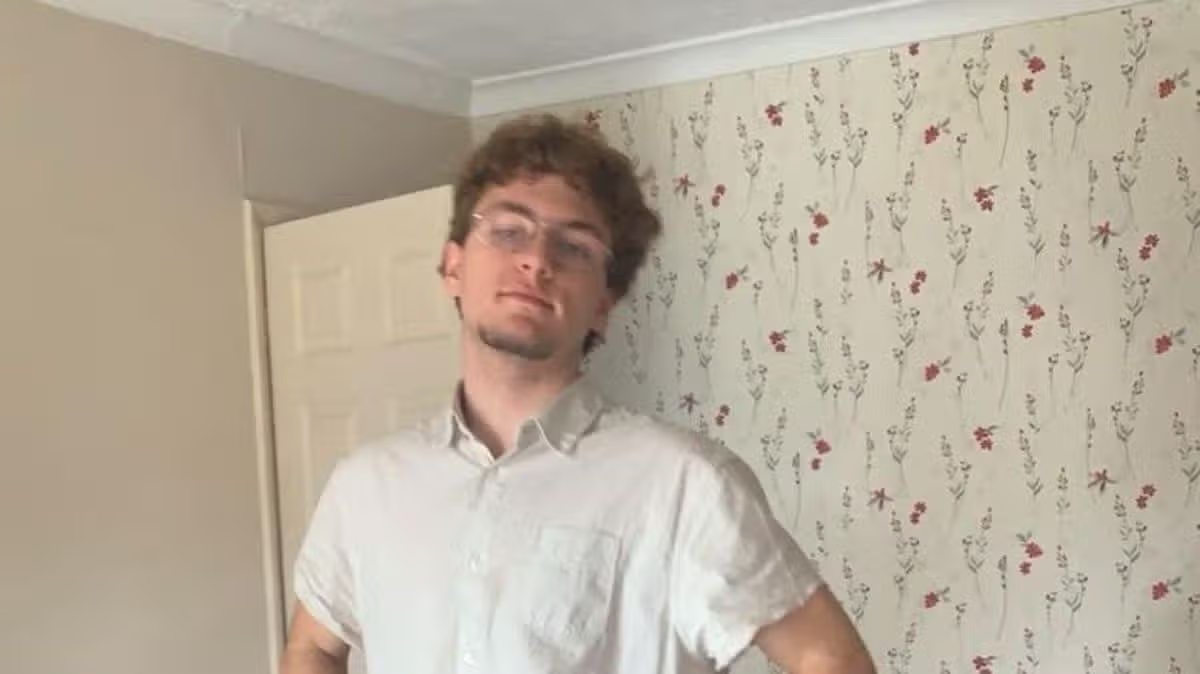
Tyler Morton passed away just weeks after starting to complain about earache
An artist who thought they were suffering from a simple earache died just weeks later after a nightmare diagnosis. In January, 21-year-old Bedford artist Tyler Morton began complaining of a simple, seemingly harmless earache.
Within days, however, the mild discomfort spiralled into something far more alarming. The left side of his face went completely numb, and he suddenly struggled to walk. When doctors first evaluated Tyler, they suspected a routine ear infection and sent him home with antibiotics.
Unfortunately, the medication did nothing to halt his rapidly declining health. Tyler soon began vomiting and lost motor control over the entire left side of his body. His 19-year-old sister, Ella, a mechanic who lived with Tyler and their grandmother, rushed him back to the hospital for further treatment.
A trip to Addenbrooke’s Hospital in Cambridge followed, where Tyler was diagnosed with grade 4 glioblastoma, an incredibly aggressive and incurable form of brain cancer. Because the disease had taken hold so rapidly, medical staff delivered the devastating news that Tyler was too weak to undergo chemotherapy or radiotherapy. His body simply could not cope.
On March 25 – just four weeks after his very first symptoms appeared – Tyler passed away at home. “Three weeks earlier, he was walking and talking, and now he couldn’t do anything himself. He was just a body at that point,” said Ella.
Ella was shocked to discover how severely brain tumours affect patients and how little help is available compared to other forms of cancer.
Ella said: “Everything happened so quickly and he deteriorated so fast.
“Tyler was an amazing older brother. He was funny and kind – the sort of brother I went to for anything. We both lived with our nan and we were inseparable. I was distraught nothing could be done for him.
“I knew you could get cancer everywhere in the body, but I didn’t realise how badly it affects you if it’s in the brain. There are very limited treatment options compared to other cancers.
“I was so angry and upset that we hadn’t found out he had a brain tumour sooner. I definitely think a lot more could have been done for him.”
To honour her brother’s memory, Ella joined forces with the charity Brain Tumour Research during Glioblastoma Awareness Week. She completed the “200k in May Your Way” challenge, raising more than £1,300 to help fund the search for a cure.
According to Brain Tumour Research, glioblastoma, IDH-wildtype, is the most common type of high-grade primary brain tumour in adults, with around 3,200 people diagnosed each year in the UK. It belongs to the glioma family – tumours that arise from glial cells, which support and protect nerve cells in the brain.
Unlike some other gliomas, glioblastomas – formerly known as glioblastoma multiforme or GBM – are highly aggressive, rapidly growing tumours that infiltrate surrounding brain tissue, making them especially challenging to treat. They also have a high likelihood of recurrence following treatment.
All glioblastomas are classified as grade 4 tumours under the World Health Organization (WHO) grading system. They are characterised as ‘IDH-wildtype’, meaning they lack mutations (changes in the DNA) in the IDH1 or IDH2 genes. This form is typically associated with more aggressive tumour behaviour and a poorer prognosis compared to gliomas that carry these mutations, such as astrocytoma, IDH-mutant, and oligodendroglioma, IDH-mutant.
The standard treatment for glioblastoma typically involves surgery to remove as much of the tumour as possible, followed by radiation therapy and chemotherapy to help slow the growth of any remaining cancer cells. The specific treatment plan depends on factors such its location within the brain and the overall health of the patient.





















































You must be logged in to post a comment Login