NewsBeat
Black tomatoes and white aubergines, the future of farming is quantum

In a bid to ensure fresh fruit and vegetables can be grown in increasingly challenging climates, this farm in the heart of the
Italian countryside is using biomimicry and agroecological technology to ensure their crops can handle the heat
I am tucking into the first artichokes of the season, bathed in a pool of olive oil, alongside a slice of polenta cake topped with the most delicious strawberry jam I’ve ever tasted. Made from 15 different kinds of heirloom strawberries and minimal sugar, the fruits are so sweet, they leave a lingering intensity on the tongue.
We are crowded around a kitchen table on an Umbrian hillside at Quintosapore farm in Italy, looking out over Città della Pieve. The scent of crushed juniper and wild thyme clings to the air.
Twin brothers Alessandro and Nicola Giuggioli bustle about the property, pointing out their 62-acre farm below, home to 1,500 varieties of fruit and veg, including 140 types of chilli pepper and even edamame beans.
“We like breaking the rules,” Nicola tells me with a mischievous grin.
The Giuggiolis do farming a bit differently. An ex-actor and CEO respectively, the twins turned ‘farmpreneurs’ just before the pandemic, transforming a piece of depleted Italian countryside into a living laboratory. Now they run the farm with their sister, sustainable fashion icon, Livia Firth.
The family-run estate challenges the central tenets of industrial agriculture, growing fresh produce that is sustainable, oozing with favour and, crucially, serves the whole community.
The farm’s origin is a lockdown pivot story. When the worst drought in Umbrian history hit in 2022 and temperatures soared to 45°C, the twins noticed that while crops in neighbouring fields shrivelled, around 30% of their plants were thriving.
They decided to save the seeds from these drought-surviving individual plants, beginning a process of natural selection. Unlike lab-driven GMOs, these are crops with biological memory – a result of biomimicry: drawing inspiration from nature’s efficiency rather than overriding it with chemical intervention.
Two particularly resilient species are their prized black tomatoes and white aubergines – niche heirloom varieties that are virtually non-existent in European supermarkets.
This regenerative journey relies on core principles: no pesticides, no tilling, and replacing synthetic fertiliser with biological intelligence – what they call their “dynamic toolbox”.
Twin brothers Alessandro and Nicola Giuggioli with their sister Livia Firth (pictured above) at their Quintosapore farm in Italy. Image: Marco Valmarano
“We’ve been farming conventionally for 100 years,” says Nicola. “Chained to a death spiral, we have been forced to buy seeds and fertiliser from monopolies that control 95% of the industry. We end up destroying the soil and the livelihood of our farmers.”
But when you farm more creatively, things change. “You start listening,” Nicola continues. “The old farmers knew that crop diversity is vital. All the ingredients we eat today are the result of an infinite amount of adaptations and crossing. We are developing that biomimic approach.”
The twins replace chemicals with natural microorganisms developed in Japan, which act as probiotics for the earth, building a self-sustaining ecosystem that costs 30% less than their synthetic counterparts.
“Synthetic fertilisers are like protein shakes,” Alessandro explains. “They give a direct hit but do nothing for the long-term health of the ground. Microorganisms build the foundation. Balance is the best pesticide – we don’t need to ‘kill’ anything because when the system is healthy, pests find their place in the cycle.”
Then they use land management techniques like agroforestry, which means planting trees alongside crops (the brothers opt for paulownia –the fastest-growing hardwood tree in the world) and recycled paper mulching sheets to suppress weeds. At 50% cheaper than plastic and fully degradable, this is a regenerative switch which improves their bottom line.
A quantum leap for farming?
Then there is the ‘quantum’ edge – perhaps the most arresting aspect of the farm.
Alessandro and Nicola treat their fields with electromagnetic frequencies, teaching their staff about quantum physics along the way.
As Einstein observed, all matter – whether it’s vegetables, soil, stones or air – has a vibrational frequency. So when plants are in need of essential minerals, like calcium, the duo treat their irrigation water with the vibrational frequency of calcium, rather than putting the synthetic stuff straight into the soil. They tell me it works – and say they are pioneers of this method globally.
To top it off they even use solar-powered speakers to broadcast other specific frequencies that deter pests.
It’s a coral reef for the soil, offering a safe harbour for fungi and bacteria to stay hydrated when the Umbrian sun bakes the ground
Their pioneering approach comes as Europe’s agroeconomic model fractures. We need only look to tensions in the Strait of Hormuz threatening global flows of oil and fertiliser to see the fragility of food production.
“We are not affected by the Strait of Hormuz closing. We are self-sufficient,” Alessandro tells me. “We’re doubling revenue every year. This year we’ve already met our December target for jars sold by March.”
Quintosapore is a case study of costs decreasing in the long run once you invest in the regenerative model. But Alessandro and Nicola are transparent about hurdles like affordability. “Some methods, like high-grade biochar, are expensive,” they admit.
To the naked eye, biochar is just charred wood, but under a microscope, it’s a coral reef for the soil, offering a safe harbour for fungi and bacteria to stay hydrated when the Umbrian sun bakes the ground.
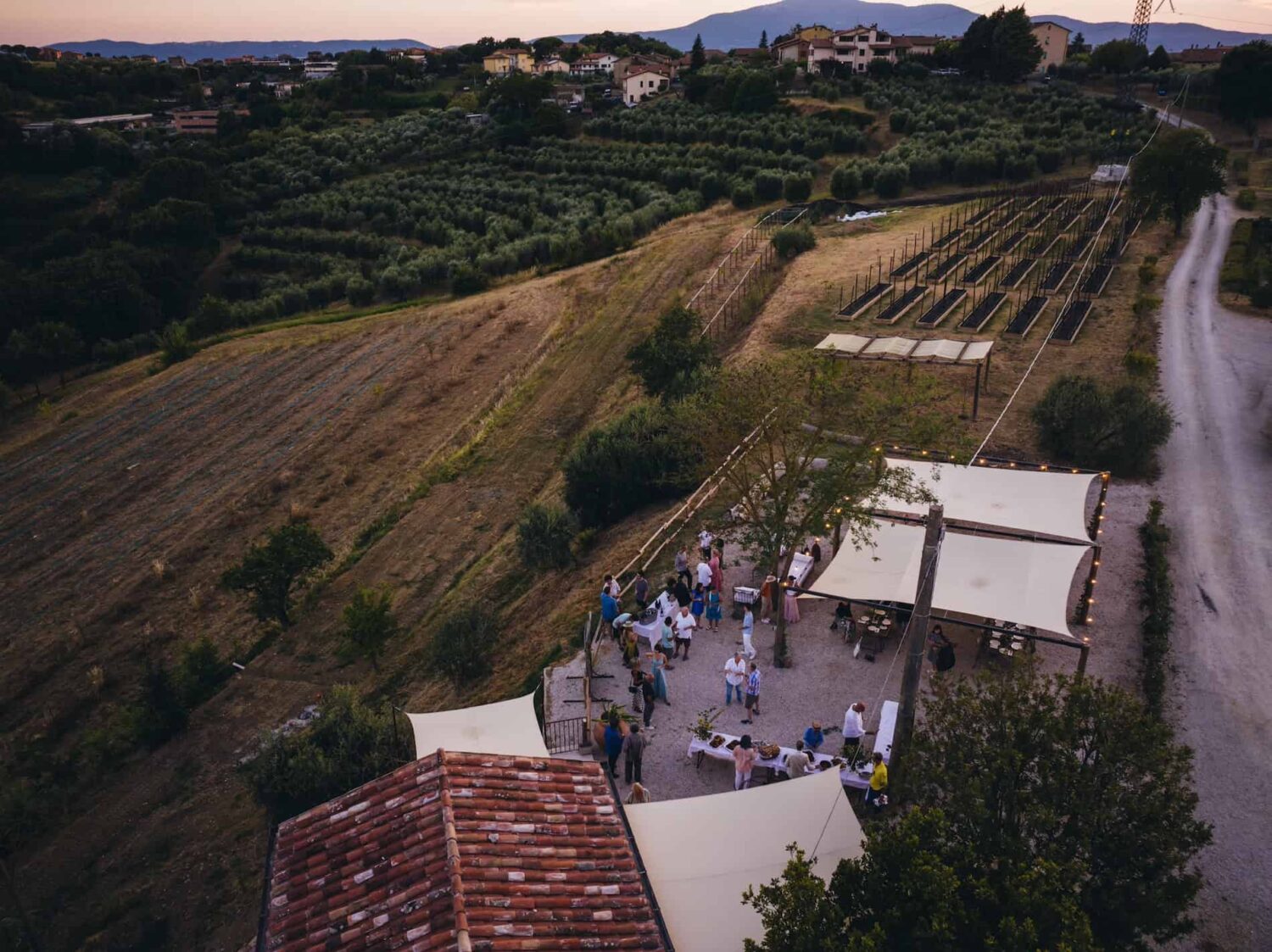

The farm uses a mixture of modern and traditional techniques, from biomimicry to quantum farming, to produce drought-resistant heirloom vegetables
Another problem is the lack of education – something expert Emile Frison agrees with. Emile is the founder of the International Panel of Experts on Sustainable Food Systems (IPES-Food), and has 35 years in the field of agroecology and agrobiodiversity.
“Farmers are continually being told pesticides are the only way,” he tells me. “Virtually the only advice farmers get comes from chemical input suppliers. There are no independent advisory services. Then there’s the problem of lobbying – so much money is going into actively discrediting the alternatives.”
The goal is to show what is doable and replicable, say the twins.
“A farmer does not need to apply the whole toolkit to see the benefits. Even starting with paper mulch or microbial soil health can change the economics of a farm,” says Nicola.
And the research backs it up. A landmark European study recently confirmed what the Giuggiolis have seen on the ground. Across seven or eight countries, agroecological farms now outperform the industrial model economically by anywhere from 20% to 120%.
“We want to show what we are doing can be imitated anywhere in Europe in every climate zone,” says Alessandro.
Radical wellbeing for farmers
The impact extends beyond the soil too. Alessandro and Nicola employ a permanent team, providing stability for a new generation of Italian farmers.
“Kids used to dream about being farmers, but everyone knows they don’t make money anymore,” says Alessandro. “Since we began, teenagers have seen that farming can be rewarding – and cool.”
Luca Del Secco, a young farmer, tells me he was inspired personally. “I inherited land but never thought I would cultivate it. Discovering Quintosapore completely changed my career path. Today I work with them to grow incredible produce using biomimicry.”
Even the Mayor of Città della Pieve, Fausto Ristini, says the farm has created jobs and “brought back the desire for farming.”
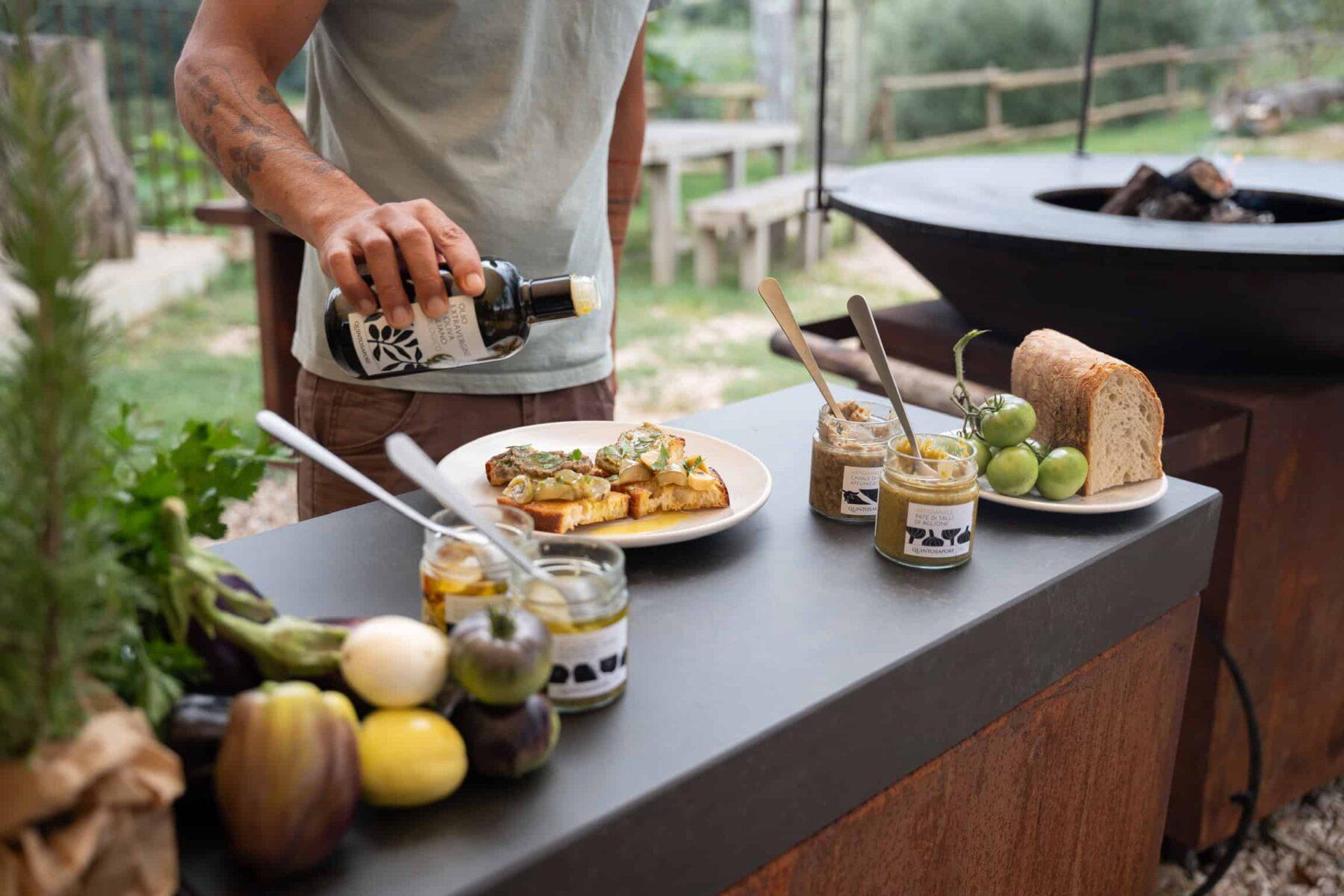
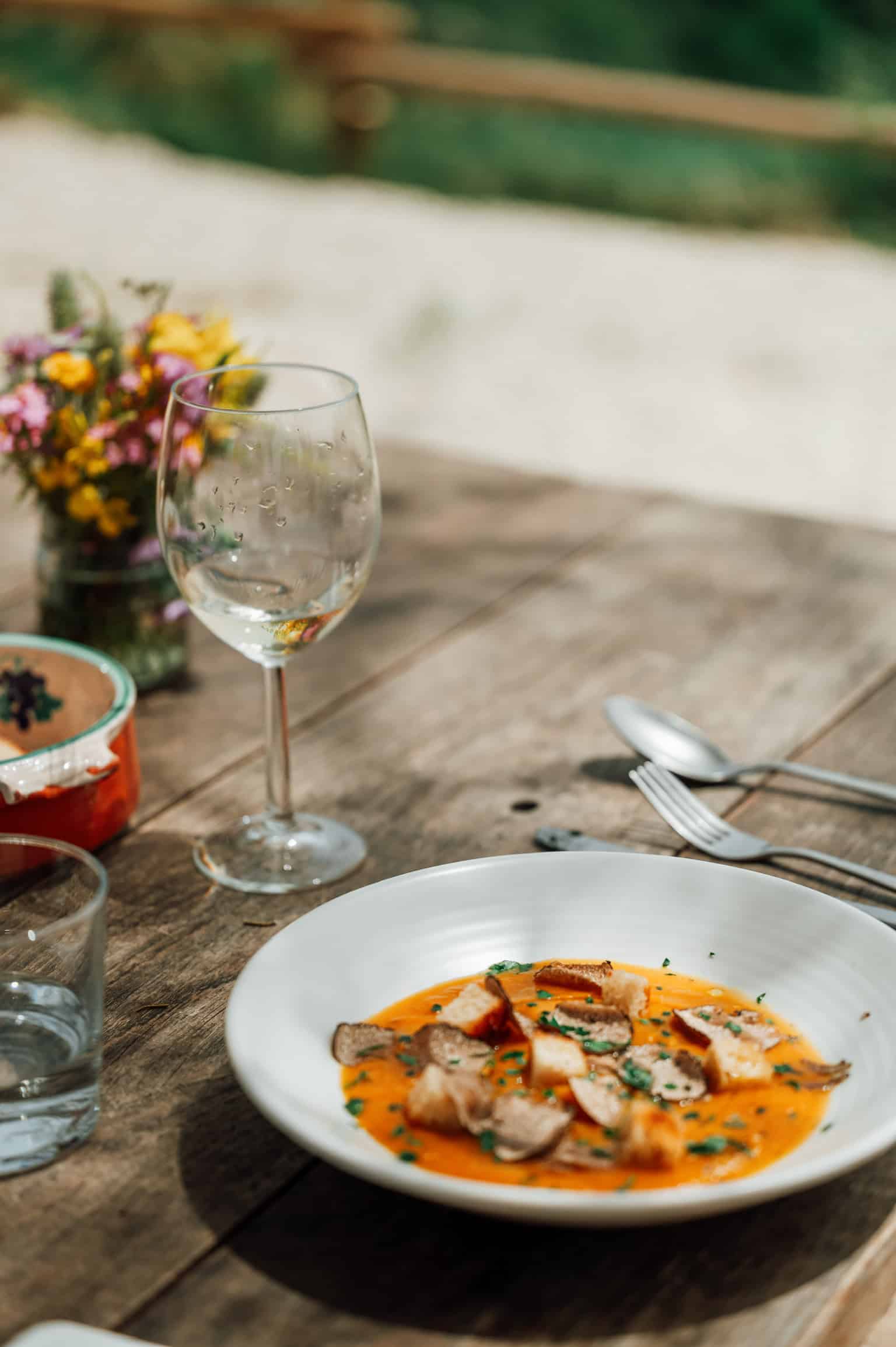
This radical wellbeing economy is a core pillar of Quintosapore’s success. They even offer spiritual retreats for agro-professionals to connect with the land. The most recent gathering, HUMUS, was led by peace activist Satish Kumar, who encourages us to move away from viewing ourselves as superior to nature.
It all begs an obvious question: can an agroecological system replace the industrial monocultures that feed the world?
For the twins, it is the current model that’s living on borrowed time. Emile Frison shares the same view, pointing to his own experience of learning ‘big’ doesn’t have to mean ‘industrial’.
All the ingredients we eat today are the result of an infinite amount of adaptations and crossing. We are developing that biomimic approach
“I recently visited a large farm in France, near Nantes, called La Ferme Ursule,” he explains. “It was around 200 hectares with 100 cows and a wide range of crops grown in long rotations with year-round soil cover. Usually, a farm that size would employ one or two people. This farm employed eight. They all have five weeks of holiday and work only one weekend a month.
“Because they eliminated the cost of pesticides and fertilisers, the farm is more profitable, more productive, and provides a high quality of life for its workers. So it just shows – this works.”
The fruits of Alessandro and Nicola’s labour can be found in the vibrant black tomatoes and ivory aubergines that line Quintosapore’s crates. To me, they are the physical manifestation of a system that works with the Earth rather than against it.
On this Umbrian hillside, the Giuggioli brothers are proving that when you finally allow the land to speak, it sings.
Main image: Marco Valmarano
Be part of the solution
At Positive News, we’re not chasing clicks or profits for media moguls – we’re here to serve you and have a positive social impact. We can’t do this unless enough people like you choose to support our journalism.
Give once from just £1, or join 1,800+ others who contribute an average of £3 or more per month. Together, we can build a healthier form of media – one that focuses on solutions, progress and possibilities, and empowers people to create positive change.
You must be logged in to post a comment Login