Connect with us
DAPA Banner
DAPA Coin
DAPA
COIN PAYMENT ASSET
PRIVACY · BLOCKDAG · HOMOMORPHIC ENCRYPTION · RUST
ElGamal Encrypted MINE DAPA
🚫 GENESIS SOLD OUT
DAPAPAY COMING

NewsBeat

Blair, populism and the battle over human rights

Published

on

Blair, populism and the battle over human rights

Summer 2001. Tony Blair had just won a second thumping election victory, promising opportunity for all. The new census showed a nation losing its religion, more inclined to live alone and more ethnically diverse. The maximum temperature was a tepid 32°C in west London in late June, while the twin towers rose tall and proud as always over the New York skyline.

Twenty five years on, we wanted to look at how the UK has changed. Welcome to the first of a six-part report from a group of 35 specialists, exploring all of the key developments in the intervening period.

Domestic politics

Martin Farr, Senior Lecturer in Contemporary British History, Newcastle University

2001: A Political Odyssey is one way of framing how Britain has changed in the first quarter of the 21st century. When that year arrived, it turned out to be rather less advanced than the world of moon bases and video calls that Arthur C. Clarke and Stanley Kubrick had imagined (even in 2026, the test launch for the latest moon rocket recently exploded on the launchpad).

Advertisement

Tony Blair’s Labour government had been re-elected in June 2001 in a second landslide, its last untarnished victory. By 2005 Labour would be mired in war, and coming to terms with a reduced – though still substantial – parliamentary majority on only 35% of the vote.

Populism was certainly a word in 2001, but its usage in Britain was rare – it derived from America, along with much else in our cultural life. In Britain, the same two parties had been in government since 1924, and power alternated between them. When in opposition, Labour or Conservative had only to wait for their next opportunity.


Advertisement

How has the UK changed since the start of the century? From Blair to Burnham, from the dotcom era to AI agents, time has certainly not stood still. In this six-part series, a team of some 35 experts look at everything from defence spending to species populations to the rise of populism to try and make sense of the intervening years.


The Britain of 2001 was much simpler – only one of the two legacy parties ever in office, their longevity lubricated by economic growth – though complications were in train. Devolution had become institutionalised three years earlier. Those who had advocated for self-government for Wales and Scotland did so for one of two reasons (Northern Ireland being a quite different matter).

Either they saw devolution as a staging post to independence, or they thought the opposite: that desire for independence could only be addressed by devolving – repatriating, as a nationalist might see it – powers from London to Cardiff and Edinburgh. Who was right? Too soon to say, but the First Ministers of both Scotland and Wales are nationalists who advocate independence for their nations.

Brexit

Advertisement

In one very limited sense things actually got simpler. In 2001 Britain had for 28 years been part of the European Economic Community, which had become the European Community, and then the European Union. For those who supported Brexit, the implication of those changes in title were of more than semantic interest: they helped explain the vote to leave. Brexit wasn’t even a word in 2001, of course. “Eurosceptic” was the nearest equivalent, in consequence of Margaret Thatcher’s landmark 1988 Bruges speech, warning of the dangers of a “European super-state”. From such acorns do mighty oaks rise.

The simplification of not having to be part of the 27-country assemblage, however, is dwarfed by the complications spawned by Britain’s departure, not least politically. To effect withdrawal from the EU, a culture of party political insurgency developed, usually promulgated by – one might say requiring – a charismatic individual.

Citizen Nigel.
Alex Hinds

James Goldsmith’s Referendum Party came fourth at the 1997 general election, with nearly a million new voters. A million also voted for Nick Griffin’s almost explicitly racist British National Party in the 2009 local elections. Yet by the 2015 general election, Nigel Farage’s Ukip, effectively the successor to Goldsmith’s party, received almost 4 million votes. Both the Ukip and BNP votes collapsed later that year with the Conservative offer of an EU referendum; Goldsmith died, but Farage would be back.

Brexit was a process as much as an event, but there were several others that were epochal: the 2003 Iraq war and the 2010 political “expenses scandal” shattered much of what public trust remained in Westminster. The SNP winning power in Scotland in 2007 led to the 2014 independence referendum. The nationalists lost, but in doing so created national faultines that could no longer be ignored.

Advertisement

Most of all, the 2008 financial crash defined the period. Stagnant living standards provide fertile grounds for grievances – catnip to populists. And so, in part, the appeal of Alex Salmond and Nicola Sturgeon in Scotland, of Jeremy Corbyn and Farage, and now the Green party’s Zack Polanski; charismatic individuals that characterise an increasingly individualistic society (curious how – conventionally – tainted so many of them became).

The new divisions

The greatest complication is voter fragmentation. In the 1950s more than 90% of voters voted Labour or Conservative (more often than not for the same party as their parents). It would have been inconceivable that there could be comparable standings for five parties in England, and six in Scotland and Wales. Multi-party politics is the new normal.

But the Westminster voting system wasn’t created to deal with such an array. Keir Starmer’s Labour government was elected on 33% of the vote, not only the most disproportionate outcome in British electoral history but the fourth most disproportionate in the world. Proportional voting could become a clarion under Andy Burnham (a longstanding supporter). As advocates see it, this would allow voters to vote for what they actually want, rather than for what they want to prevent.

Advertisement

Today, the new is helping revive the old in the sense that the 1970s question is being asked again: is Britain governable? Then, successive Conservative and Labour governments were both forced from office, effectively by trade union power. Nationalism and populism, in their different forms, have taken its place.

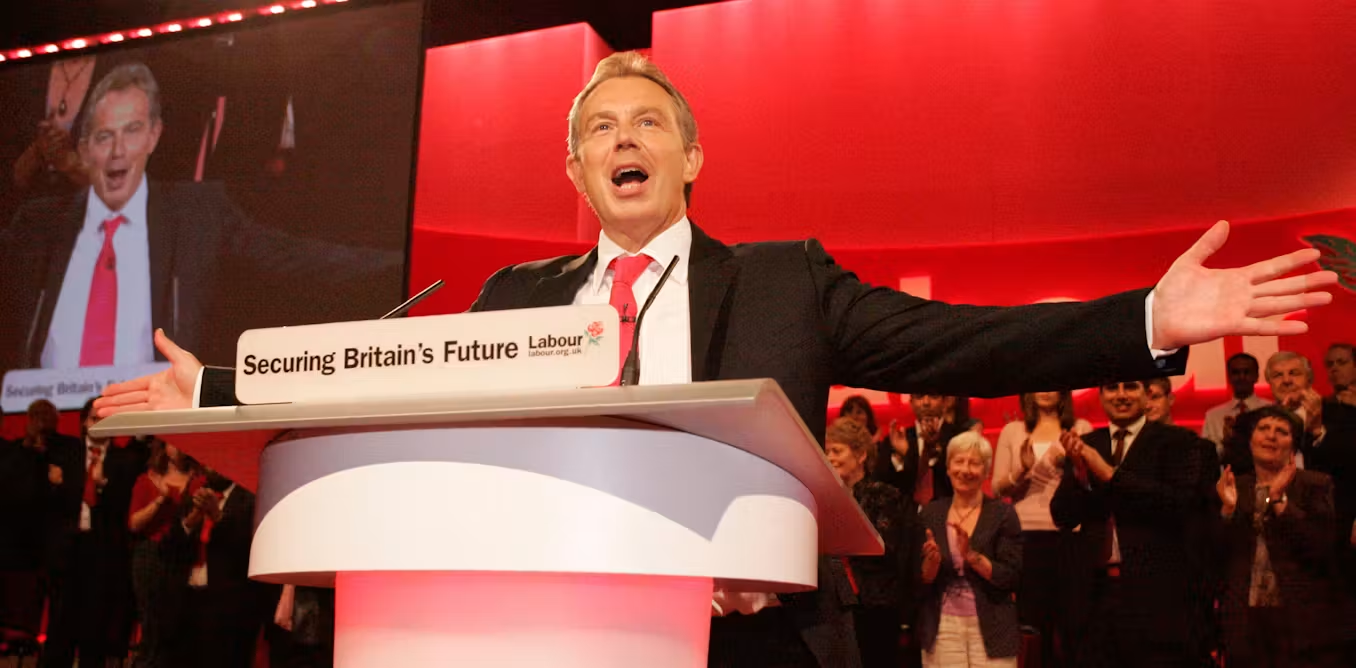
Tony and Cherie Blair on stage at Millbank in 2001

Tony Blair campaigning in 2001.
Trinity Mirror

It is increasingly challenging for those who seek to explain and interpret, even predict, this uniquely fractured and fluid British political scene. In 2001 the Green Party managed 0.6% of votes in the general election. In 2026 they are on around 15%, run councils and have elected mayors.

In Reform UK polling suggests that Britain may have its first new party of government for over a century. Between 1979 and 2007 there were three prime ministers; since 2016 there have been seven.

In Clarke’s and Kubrick’s 2001 conception, a monolith had been left behind by an alien civilisation to help guide the evolution of intelligent life on Earth. If only, one may be forgiven for thinking, there was something similar in British politics.

Advertisement

Geopolitics and defence

Geraint Hughes, Reader in Diplomatic and Military History, King’s College London

In July 1998, the then-Labour defence secretary, George Robertson, presented the new government’s strategic defence review to parliament, with one of its conclusions being that Britain faced no real threat of attack by a major state adversary.

In April 2026 the now Baron Robertson of Port Ellen publicly berated the current Labour government for its “corrosive complacency” over defence. Robertson had co-authored the 2025 strategic defence review, which stated that the UK has to prepare for a possible war between Nato and a resurgent Russia.

Advertisement
Baron Robertson of Port Ellen

The baron wants more greenbacks.
Karl Black

He has clearly become frustrated that the review’s recommendations are being slowly (if at all) implemented, because of costs. And he’s not the only one: John Healey resigned as defence secretary for the same reason, telling the prime minister that the government’s spending plan “falls well short” of what is required to keep the country safe.

Keir Starmer finally responded on June 30, rushing out his long-delayed defence investment plan. It offers a £15 billion top-up focused heavily on drone warfare, yet still leaves the military well short of the funding Robertson and Healey believe is needed.

The new geopolitics

It is of course a constant challenge for the government to ensure that British armed forces have sufficient troops, firepower, ships and planes. Even at the time of the 1998 review there were fierce quarrels between Robertson and the Chancellor of the Exchequer, Gordon Brown, over defence costs. In 2010 the then-coalition government imposed swingeing cuts on the armed forces’ capabilities on the front line and the so-called rear echelon, which includes things like supply lines, logistics and medical care. The Royal Navy, British Army and Royal Air Force are still suffering as a result.

However, the strategic backdrop for British defence policy was very different in previous decades. Ten years after the cold war ended, Europe was largely at peace. Closer to home, the Good Friday agreement of April 1998 ended 30 years of British military operations in Northern Ireland.

Advertisement

At that time, the UK’s armed forces were involved in peace support operations in the former Yugoslavia. In retrospect, the 1999 stand-off between Russian and British paratroopers at Pristina airport, Kosovo, at the end of the war in that country should have warned us that great power rivalries hadn’t disappeared.

After 9/11, Tony Blair’s government committed British forces to fight alongside the US in Afghanistan and – far more controversially – Iraq. These conflicts led to the deaths of 636 British servicemen and women, and undermined public support for military interventionism.

British troops in Iraq in 2003.

British troops in Iraq in 2003.
Trinity Mirror

Blair justified both wars by arguing that the UK needed to pay a “blood price” to bolster ties with its most important ally. President Donald Trump’s denigration of the sacrifice Britain and other Nato allies made in Afghanistan raises the question of whether this price was worth it.

Today, Britain and its European allies face the threat of a major war in Europe. Russia’s all-out invasion of Ukraine in February 2022 may have been a miscalculation, but Vladimir Putin has overseen a process of rapid military expansion, which means that the Russians could still potentially attack a Nato member state.

Advertisement

More alarmingly, the foundation of British defence policy – US membership and support for Nato – is being undermined by the Americans themselves. Trump and his officials blame the lack of European support for Operation Epic Fury against Iran for undermining the Atlantic alliance.

In reality, the current US president has long been a Nato sceptic, and his administration’s 2025 national security strategy had harsher language for America’s European allies than it had for Russia. Although US-European relations have rarely been trouble-free, previous presidents did not threaten to seize territory from their allies by force, as Trump has done with Denmark and Greenland.

It is true that it is very hard for any democracy to spend money on military power when there are other pressing requirements in the form of health, policing, education or welfare. The main political parties will accuse each other of running down Britain’s armed forces, but the uncomfortable truth is that in peacetime defence is never a priority for the British public.

Britons generally respect their servicemen and women. But at this moment of rising geopolitical tensions, they are split over whether to cut other public services to fund them, as well as generally unwilling to join up themselves.

Advertisement

Whether these attitudes will change in the event of another 1914 or 1939 moment is a matter for speculation and debate both inside and outside the UK’s defence establishment.

Constitutional challenges

Stephen Clear, Lecturer in Constitutional, Administrative and Public Procurement Law, Bangor University

Following the September 11 attacks, the UK government moved to expand its powers through measures such as the Anti-terrorism, Crime and Security Act 2001. While intended to strengthen national security, it created tension with civil liberties by permitting extended detention, surveillance and restrictions on the rights of suspected terrorists.

This was tested at the European Court of Human Rights (ECHR) in 2009 in a case about a group of 11 foreign nationals in the UK, who had been detained without charge on the grounds that they had links to al-Qaeda and posed a threat to UK national security. Their lawyers argued that the power to indefinitely detain individuals without a formal charge ran contrary to human rights obligations, and the court found in their favour, forcing the UK government to revise the 2001 legislation.

Advertisement

These events highlighted the struggle to balance security concerns with human rights. It demonstrated the power of the ECHR to intervene in matters concerning individuals’ liberties and the rule of law (in this case the principles that the law applies equally to everyone and no one can be indefinitely imprisoned without a fair trial).

The UK supreme court

The supreme court was established in 2009, replacing the former appellate committee of the House of Lords.

This resulted in the UK’s most senior judges no longer sitting in the House of Lords. The head of the judiciary is now the Lord Chief Justice (rather than the Lord Chancellor) and is therefore no longer a cabinet minister and politician.

Advertisement
UK supreme court justices

The UK’s supreme court justices are no longer linked to the House of Lords.
PA Images

This strengthened the separation of powers by formally separating the judiciary from parliament and enhancing judicial independence, as well as incorporating elements of separation of powers in modern legislation for the first time.

The court also moved to a new publicly accessible building and began live-streaming most open-court proceedings, which improved transparency.

Devolution

Scotland, Wales and Northern Ireland have gained expanded legislative and fiscal powers through successive devolution acts. There have been challenges to the status quo such as the 2014 Scottish independence referendum. There have also been difficulties surrounding the Northern Ireland power-sharing agreement, which notably collapsed from 2017-2020 over a green energy scandal.

Advertisement

These tensions exposed weaknesses in the UK’s unwritten constitutional model and raised questions about Westminster’s parliamentary sovereignty and the future of the union. Meanwhile, devolved governments increasingly shaped their own domestic policies, particularly during the pandemic, demonstrating both the flexibility and fragility of the current constitutional arrangements.

Brexit…again

The vote to leave the EU in 2016 triggered major constitutional change for the UK. Brexit was enacted by the EU (Withdrawal) Act 2018 repealing the European Communities Act 1972, while retaining some EU law within domestic legislation to ensure legal continuity.

Over the Brexit period, the supreme court ruled on the limits of government power in several cases brought by business leader Gina Miller. It reaffirmed parliamentary sovereignty by requiring the UK parliament’s approval for the government to trigger article 50 of the Treaty on European Union (to start the legal process of leaving the EU). It also confirmed the limits on the government’s power to suspend (prorogue) parliament at a strategic point during the negotiations to force through what it wanted.
Advertisement
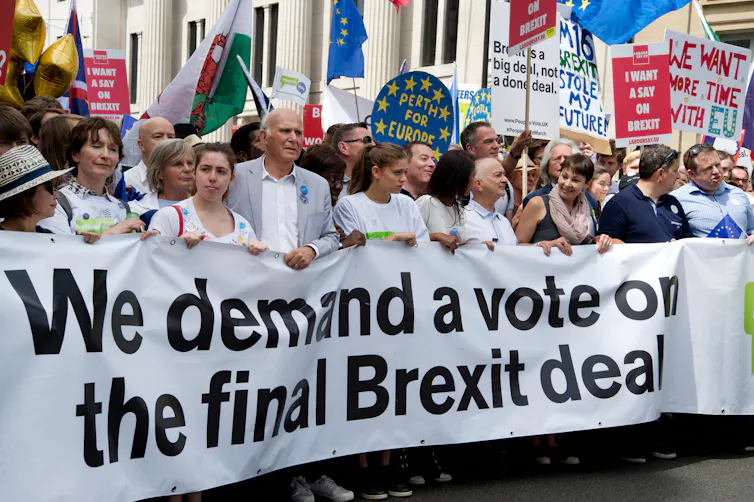
Gina Miller at the front of a campaign banner over Brexit
Gina Miller (centre) rose to prominence as an anti-Brexit campaigner.
Alamy/Jenny Matthews

The initial high-court ruling in the Miller cases in 2016 earned judges newspaper headlines branding them “enemies of the people”. This highlighted constitutional concerns about judicial independence and attempts to undermine their ability to make decisions in such circumstances.

Brexit’s effect on constitutional tensions could also notably be seen through the Northern Ireland Protocol, which created trade arrangements to avoid a hard Irish border, but also generated political and unionist opposition.

Tumultuous elections

Nine prime ministers since 2001 represents a high turnover by the UK’s historic standards. Frequent leadership changes, including prime ministers assuming office mid-parliament, raise concerns about their democratic legitimacy to govern.


The Insights section is committed to high-quality longform journalism. Our editors work with academics from many different backgrounds who are tackling a wide range of societal and scientific challenges.

Advertisement

There are also questions about broader executive accountability, since they can’t properly be held to account by parliament for the mistakes of their predecessor.

Frequent elections and party leadership challenges have led to concerns that the UK system has become constitutionally unstable, and shouldn’t be so flexible as to permit things like changes of prime minister without elections.

The Fixed-term Parliaments Act 2011 was a move in a different direction, mandating general elections every five years and removing the prime minister’s power to unilaterally call them earlier. However, the act’s repeal in 2022 restored the prime minister’s discretion to call elections.

Coronavirus lockdowns

Advertisement

COVID-19 emergency powers expanded government authority to impose lockdowns and restrictions. These developments raised constitutional concerns about the balance between civil liberties, ministerial power and parliamentary scrutiny through extensive secondary legislation which isn’t required to go through the full parliamentary legislative process.

At the same time, we saw rows over perceptions of inequality in how the lockdown rules were applied to elected officials, including through the “partygate” scandal over social gatherings at the heart of government.

Graffiti of Boris Johnson related to the partygate scandal.

Graffiti of Boris Johnson related to the partygate scandal.
Paul Appleyard

The pandemic tested the ability of judicial review to act as an effective check amid a national crisis, in relation to government procurement of personal protective equipment. It also tested how the devolved governments could work with Westminster in such a period.

New head of state

Advertisement
King Charles III

The new king.
Michael Tubi

After Queen Elizabeth II’s death, the accession of King Charles III in 2022 marked a once-in-a-generation constitutional transition.

The immediate transfer of the crown demonstrated the UK constitution’s principle that sovereignty is continuous, with no vacancy in the head of state.

Despite national mourning, the king was formally proclaimed without disruption. It represented a notable “first” for citizens witnessing a modern accession and coronation under contemporary constitutional and media conditions.

The future of human rights

Advertisement

More recently, criticism of judicial influence in immigration cases, migrant hotel use, and small boat asylum claims has fuelled calls for reform or repeal of the Human Rights Act 1998 and for the UK to leave the Council of Europe.

These pressures, alongside the rise of the Reform and Restore parties, have created a major constitutional battleground. They expose a deep clash between what the government can achieve politically, and the strict legal rules around human rights that currently limit what they can do.

The UK’s constitution has become more complex over the past 25 years. While Westminster parliamentary sovereignty remains fundamental to the UK model, it is increasingly balanced with judicial interpretation, devolved power, and stronger rights protections.

The events since the turn of the century confirm that the UK constitution is a living breathing instrument. Whereas it was largely about continuity in the past, where things were done in a certain way out of tradition, the constitution has increasingly been defined by its ability to adapt to major changes like devolution or react fast to developments like the pandemic.

Advertisement

For you: more from our Insights series:

To hear about new Insights articles, join the hundreds of thousands of people who value The Conversation’s evidence-based news. Subscribe to our newsletter.


Source link

Advertisement
Continue Reading
Click to comment

You must be logged in to post a comment Login

Leave a Reply

NewsBeat

Brooklyn Beckham and Nicola Peltz fly to France for romantic holiday as wildfires rage

Published

on

Brooklyn Beckham and Nicola Peltz fly to France for romantic holiday as wildfires rage
Brooklyn and Nicola were spotted by other holidaymakers (Picture: Michael Kovac/Getty Images for Elton John AIDS Foundation)

Brooklyn Beckham has taken a well-earned break from his hot-sauce business to fly into southern France.

Brooklyn and his wife, Nicola Peltz, were seen walking through Nice Airport by other holidaymakers.

It’s thought that the pair may be visiting Brooklyn’s godfather, Elton John, who owns a villa in Nice.

According to The Sun, Brooklyn, 27, was trying to keep a low profile while Nicola, 31, looked a little more confident.

Advertisement

He looked a bit nervous’ an onlooker told The Sun. ‘He kept looking around, but she appeared more laid-back and chilled.

‘Lots of people recognised them and were nudging each other as they came through the arrivals terminal with their luggage.’

Mandatory Credit: Photo by CraSH/Shutterstock (16767510ia) Brooklyn Beckham, Nicola Peltz Beckham 34th Annual Elton John AIDS Foundation Academy Awards Viewing Party, Los Angeles, California, USA - 15 Mar 2026
The happy couple were taken through security and went on their way (Picture: Crash/Shutterstock)

Reportedly, the pair didn’t have to wait long in the security queue, though.

They were apparently taken right to the front and quickly went on their way.

French firefighters and officials are currently battling dangerous wildfires that are burning across the south west of the country.

Advertisement

The BBC reports that 42,000 hectares have been burnt in that part of the country, forcing more than 220,000 people to evacuate.

epa13133450 A handout photo made available by SDIS33 (Gironde Departmental Fire and Rescue Service) shows a firefighting crew being deployed to battle a wildfire spreading in Ares, south-western France, late 25 July 2026 (issued 26 July 2026). EPA/DAMIEN REMBERT / HANDOUT HANDOUT EDITORIAL USE ONLY/NO SALES
France is struggling to contain wildfires (Picture: EPA)

A further 56,000 hectares have been burned across France since the start of the year.

One particular area of concern is the city of Bordeaux, where tens of thousands of people have been evacuated from the surrounding region.

It’s believed that strong winds are pushing the flames towards the city, and an official has claimed that firefighters are ‘far from having the fire under control’.

Captain Nicolas Braz, one of the leaders of the firefighters, has said that the flames are ‘erratic and unmanageable’.

Advertisement
TOPSHOT - This photography shows a burning forest during a wildfire near the town of Lege-Cap-Ferret, southwestern France on July 25, 2026. Fires are raging on July 25, 2026 in France and Spain, with nearly 260,000 people evacuated near the big French city of Bordeaux and in the Madrid region, a metropolis confronted with the
The south-west is particularly affected (Picture: Julien De Rosa/ AFP via Getty Images)

Meanwhile, France’s Interior Minister Laurent Nunez said the situation in the region remained ‘very unfavourable’.

The UK government is currently warning of wildfires ‘affecting parts of Gironde and Landes in the south-west of France.’

They note that authorities have evacuated campsites, tourist accommodation, and warm access to affected areas may be restricted.

They warn that those planning to travel to the affected areas should follow the advice of local authorities, monitor local media, and check with their accommodation or travel provider before travelling.

Advertisement

Source link

Advertisement
Continue Reading

NewsBeat

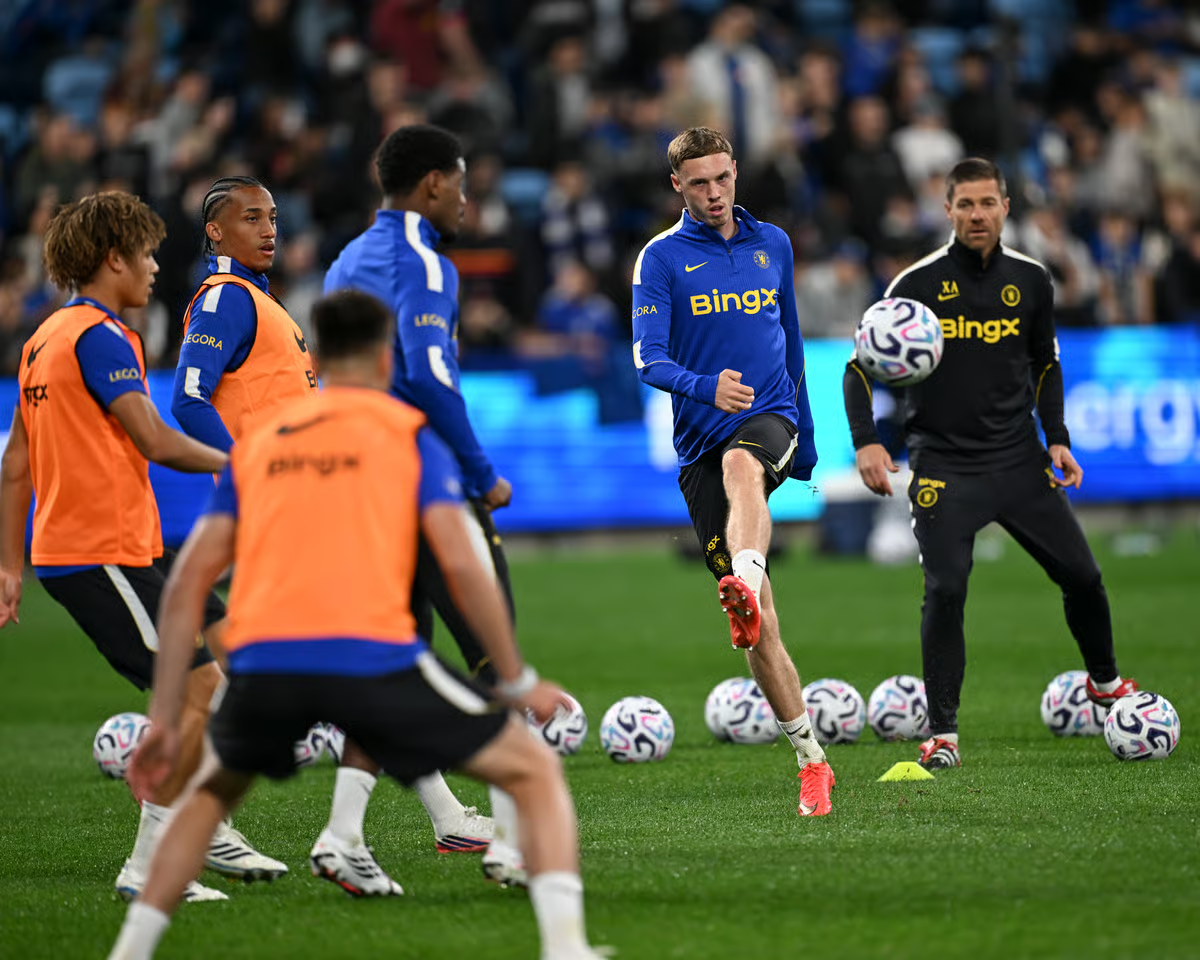
Western Sydney Wanderers vs Chelsea FC: Prediction, kick-off time, TV, live stream, team news, h2h results, odds

Published

on

Western Sydney Wanderers vs Chelsea FC: Prediction, kick-off time, TV, live stream, team news, h2h results, odds

Source link

Advertisement
Continue Reading

NewsBeat

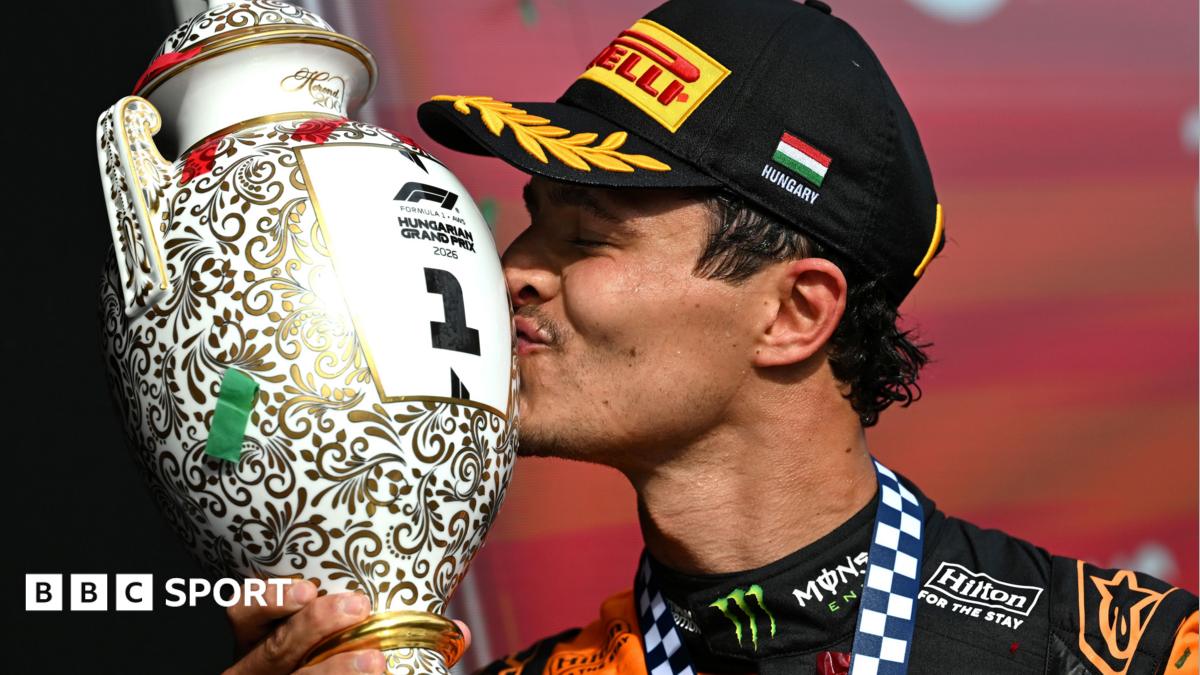
Hungarian Grand Prix result: Lando Norris wins from Max Verstappen with Kimi Antonelli third

Published

on

Anti-doping test kit

Verstappen was unhappy with his car for much of the race, with regular complaints on team radio, but Red Bull pulled a masterstroke when they fitted soft tyres to his car at his second pit stop.

The aim was to challenge Hamilton in the later laps after the seven-time champion made an early second stop with 40 laps still to go.

It was heading towards a tense climax when Piastri’s retirement brought out the VSC.

That prompted a late round of pit stops, Ferrari bringing in both their drivers and putting them behind Verstappen.

Advertisement

Hamilton came out of the pits and passed Antonelli into the first corner, after the Italian stayed out under the VSC, but had to give the place back after the restart because the Mercedes driver had just passed the key line on the track in front.

Antonelli and Hamilton started chasing back towards Verstappen, but they were delayed while lapping Audi’s Gabriel Bortoleto.

That looked as if it might be decisive, but in the end Verstappen was comfortably able to keep Antonelli at bay, crossing the line 3.6 seconds ahead.

Another key point in Verstappen’s race had been his re-passing of Hamilton after the Ferrari had got briefly ahead following the first pit stops.

Advertisement

That gave him clear air and enabled the Dutchman to consolidate his race position in third place behind the McLarens, laying the foundations for Red Bull’s late strategy call.

Hamilton will leave Hungary ruing another penalty – the one for speeding in the pit lane was his second in two days after behind penalised for blocking Piastri in qualifying, and follows two others at the previous two races in Belgium and Britain.

Behind him, Red Bull’s Isack Hadjar was sixth, ahead of Russell, who dropped to 21st place on the first lap after his anti-stall kicked in at the start, and fought back strongly.

At Aston Martin, Lance Stroll finished in 13th, ahead of team-mate Fernando Alonso, their positions dictated to a degree by luck under the VSC and their divergent strategies.

Advertisement

But the key point was that Alonso, in particular, was able to fight with other cars for the first time, and he ran a long first stint on the soft tyres, before switching to the mediums, which was a bold strategy.

The long-awaited upgrade to their car, which was new apart from the front suspension, engine and gearbox, has reduced their lap times by about two seconds.

A Honda engine upgrade is due for the Dutch Grand Prix, the next race in four weeks’ time after the summer break, which the team hope will elevate them further and potentially bring the possibility of the occasional points finish into the picture.

Source link

Advertisement
Continue Reading

NewsBeat

The ‘picture perfect’ Cambridgeshire village home to a world-famous science centre

Published

on

Cambridgeshire Live

The village is also full of thatched cottages and timber-framed homes

Cambridgeshire is a county widely associated with science not only in the UK, but the world. It’s home to one of the most prestigious universities in the world, which has produced some of the smartest scientific brains such as Professor Stephen Hawking.

Advertisement

While Cambridge is considered the science centre of the county, there is one small village that is also highly-regarded in the science world. This is Hinxton, a small village home to just over 300 people in south Cambridgeshire.

Hinxton is home to the world-famous Wellcome Genome Campus, a leading hub for genomics and biodata research. The centre is famous for its major contributions to the sequencing and analysis of the human genome – the complete set of DNA instructions required to build and maintain the human body.

As well as its scientific significance, Hinxton has more beauty to discover. The “picture-perfect” village features many aspects expected from a village.

This includes timber-framed and thatched cottages, historic brick and flint houses, quiet lanes lined with flourishing trees and also a village green. The famous River Cam also flows through the village, making it a scenic and pretty place to walk through.

Advertisement

A prominent spot in the village is Hinxton Watermill on the River Cam. It’s so old that it’s mentioned in the Domesday Survey of 1085 and is noted as being “worth eight shillings”. The current building was constructed in the 17th century, while the adjoining cottage was built in the 18th century.

People can visit the watermill on its open days, giving them an insight into the watermill. They can also experience the beautiful sites that surround it.

The village is home to one pub, known as The Red Lion Inn, which also comes with bed and breakfast accommodation. The award-winning pub has resided in the village since the 16th century.

Advertisement

It provides the “perfect backdrop for enjoying fabulous food and drink, in the company of friends, family and colleagues”, according to the pub website. In the summer months, the pub’s walled gardens are also a pretty place to sit and enjoy a drink.

To enjoy a day out to experience beautiful Cambridgeshire countryside in a place that is well-renowned for science, then Hinxton is the place to visit.

Source link

Advertisement
Continue Reading

NewsBeat

The woman running No 10 North on why it isn’t a gimmick

Published

on

Manchester Evening News

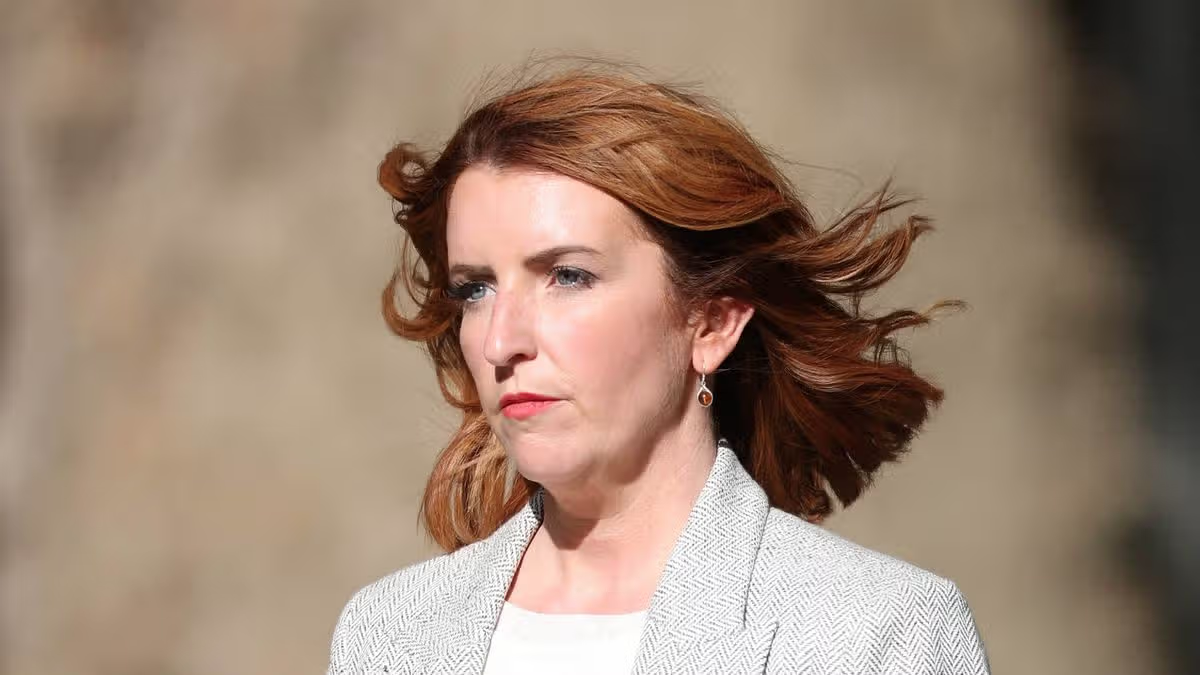
On Friday morning, Louise Haigh arrived at Heron House in Manchester city centre, carrying a bright red folder that stood out against an otherwise understated navy outfit.

Just weeks after Andy Burnham’s victory in the Makerfield by-election, and subsequent coronation as Labour Party leader and new Prime Minister, Miss Haigh now has a big job running the Cabinet Office and the title of First Secretary of State.

She has found herself running one of the defining features of this new Government – shifting power out of Whitehall and into England’s various regions.

Heron House, off Albert Square, is the temporary headquarters of the No 10 North, but is apparently fully operational while work continues on a more permanent base.

Critics have dismissed this as a costly gimmick but Miss Haigh insisted it represented something much bigger – a rewriting of how Britain is governed.

Officers were spotted stationed outside the building, which is also home to GCHQ staff from Wednesday and by Friday morning the entrance had been cordoned off. GMP has confirmed it is using ‘existing resources’ to provide security outside.

Advertisement

“It’s phenomenal, it only took them four days to set it up and it’s fully kitted,” she told the Manchester Evening News. “They’ve done an absolutely brilliant job. It’s an extremely secure site.”

It’s a remarkable return. Miss Haigh was Labour’s youngest MP when she was elected in Sheffield Heeley 2015, and she is still the youngest woman ever to have been appointed to a Cabinet position, at 36.

Less than two years ago, however, Miss Haigh resigned as transport secretary just four months into the role, after it emerged she had pleaded guilty to a fraud offence during her 20s.

Advertisement

Her allies believed she was treated unfairly, as then-Prime Minister, Sir Keir Starmer, had long-known about her conviction.

Instead of retreating, Miss Haigh became one of the architects of Andy Burnham’s leadership campaign. She was seen by his side throughout Makerfield.

Earlier this month, Haigh admitted to the BBC’s Nick Robinson that Mr Burnham had been ‘planning for this moment’ with her and other colleagues ‘for at least the last year’.

Now, as one of his closest allies, the 38-year-old is back at the centre of Government and charged with making one of Burnham’s radical devolution ambitions a reality.

Advertisement

Miss Haigh spoke to the the MEN exclusively and rejected the criticism that No 10 North risks becoming a gimmick, rather than a genuine transfer of power.

“We had a meeting today to discuss how we can rewrite the entire British state to serve the country better,” she said. “No 10 North will be at the heart of that, we’ll be pulling together civil servants across different departments.”

Friday’s gathering brought together senior ministers and cross-party regional mayors – including Steve Rotheram, Ben Houchen, Andrea Jenkins and Tracy Brabin – to put devolution at the heart of Mr Burnham’s government’s mission.

Advertisement

Drawing on Mr Burnham’s experience as Greater Manchester mayor, Miss Haigh argued that Whitehall has spent years ‘hoarding’ power that should have been exercised locally.

“[Mr Burnham] has seen the benefit here. It’s the largest, fastest growing region, it’s seen the biggest drop in deprivation, that’s thanks to the fruits of Andy Burnham’s labour,” she said.

For Haigh, the principle is that ‘every part of the country deserves that now’. However, the challenge will be applying that theory into practice.

Miss Haigh said the new No 10 North would mirror many functions of 10 Downing Street itself, bringing together civil servants from multiple departments under one roof while coordinating devolution across Whitehall.

“There will be two ministers – one for devolution and another for fiscal devolution and growth,” she explained.

Success, she claimed, won’t be measured by the building itself but whether more decisions and investments flow away from London.

She said: “The whole point of devolution is taking decisions to the ground as close as possible. We believe it’s important because decisions will be better. Outcomes for people will be better. We want more investments going in places around the country.”

Advertisement

For now, No 10 North is a work in progress. The permanent headquarters is still some way off – central retail park 2032 – leaving ministers operating from Heron House.

At least seven Greater Manchester Combined Authority employees, including Mr Burnham’s longstanding aide, Kevin Lee, and deputy chief of staff, Caroline Simpson, have moved into Heron House.

The office will be led by Sam Lister, a senior civil servant.

It’s an unassuming building from the outside, and a place where people can register births and weddings. It’s hard to imagine that happening at 10 Downing Street.

Advertisement

But Miss Haigh is relaxed about the temporary arrangement.

“I don’t know yet how long we’ll be based at Heron House. But [it’s] fully operational and this is an excellent state of the art facility. A lot of civil servants will be flocking here.”

Perhaps the biggest test of Burnham’s devolution agenda will be its relationship with the Treasury, which may be reluctant to give away more power willingly. Haigh insists the old rivalries are being dismantled.

Advertisement

“We’re joining up No10 and No 11 closer, we’re sharing expertise in a way that has not been done before,” she said.

She points to the unusual arrangement under which Daniel Tomlinson serves both the Cabinet Office and the Treasury as growth minister, arguing that it reflects the PM’s determination to implement his devolution agenda while using existing budgets.

The Prime Minister also chaired the first meeting of the National Economic Council – a body originally set up by Gordon Brown to deal with the fallout of the 2008 financial crash – where he told regional mayors the committee is ‘here for you, to empower you’.

“We generated a whole host of decisions which will reverberate around the civil service,” said Miss Haigh.

“We’ll be speeding up changes to infrastructure…. Changing how leaders will deal with Whitehall.

“It’s hard to understate the meeting today, and how much the Cabinet is desperate to action their projects.”

Less than two years after leaving Cabinet, Louise Haigh has returned to Government, tasked with helping reshape the British state itself. The First Secretary of State is now determined to prove that power can, at last, move out of Whitehall.

Advertisement

Source link

Continue Reading

NewsBeat

Emma Roberts is married! Actress marries Cody John in romantic Idaho ceremony after two-year engagement

Published

on

Emma Roberts and Cody John are officially husband and wife

Advertisement

Emma Roberts and Cody John are officially husband and wife.

After a two-year-long engagement, the couple said ‘I do’ in a romantic ceremony in Idaho, according to photos obtained by DeuxMoi. 

Roberts, 35, and John, 36, exchanged vows outdoors at the actor’s family estate in Sun Valley, per TMZ and Page Six.

The bride, who previously called off an engagement to Evan Peters, wore a custom white gown with asymmetrical sleeves by Monique Lhuillier, as reported by Vogue.

Advertisement

Following the ceremony, she slipped into an archival after-party dress by the designer.

And for his part, John was dressed in a brown suit. 

Daily Mail has reached out to Roberts’s representatives for comment. 

Advertisement

Emma Roberts and Cody John are officially husband and wife 

A source told Page Six that the 45-minute nuptials took place outdoors in 95-degree weather. 

The outlet reported that Roberts’s five-year-old son Rhodes, whom she shares with  ex-boyfriend Garrett Hedlund, walked her down the aisle. 

Roberts’s father is Eric Roberts, and her aunt is Academy Award-winning actress Julia Roberts.

Advertisement

Julia and her husband Danny Moder were in attendance for the wedding, and seen in photos shared by DeuxMoi on Sunday.

The American Horror Story star announced her engagement in 2024 with an Instagram post.

She flashed her diamond ring in a smiling snapshot with John, quipping in the caption: ‘Putting this here before my mom tells everyone.’

The couple began dating in 2022, and John’s sparse Instagram profile is mostly made up of tributes to Roberts.

Advertisement

This past February he shared pictures of his then-fiancée and wrote, ‘You make everything magic. Happy birthday, Emma,’ to which she replied in the comments, ‘I love you.’

It was reported that Roberts's five-year-old son Rhodes, whom she shares with ex-boyfriend Garrett Hedlund, walked her down the aisle; the now-newlyweds pictured in 2023

It was reported that Roberts’s five-year-old son Rhodes, whom she shares with ex-boyfriend Garrett Hedlund, walked her down the aisle; the now-newlyweds pictured in 2023

The blonde beauty and her man confirmed their relationship in August 2022; seen in March 2024

The blonde beauty and her man confirmed their relationship in August 2022; seen in March 2024

The now-newlyweds previously confirmed their relationship in August 2022 after they were seen kissing in New York City.

Advertisement

Days later, the duo made things Instagram official with a photo John posted of them sharing a kiss on a yacht.

The caption read: ‘sweet sweet.’

At the time, a source close to the pair told ET that New York native Roberts was ‘very content with Cody, and they’re enjoying their relationship and time together.

‘Their friends and family are happy for the both of them and think they make a great couple,’ the insider dished.

Advertisement

Since then, the low-key couple has managed to keep their relationship private. 

Advertisement

Source link

Advertisement
Continue Reading

NewsBeat

Leigh homeowner proposes new build to demolish existing home

Published

on

Leigh homeowner proposes new build to demolish existing home

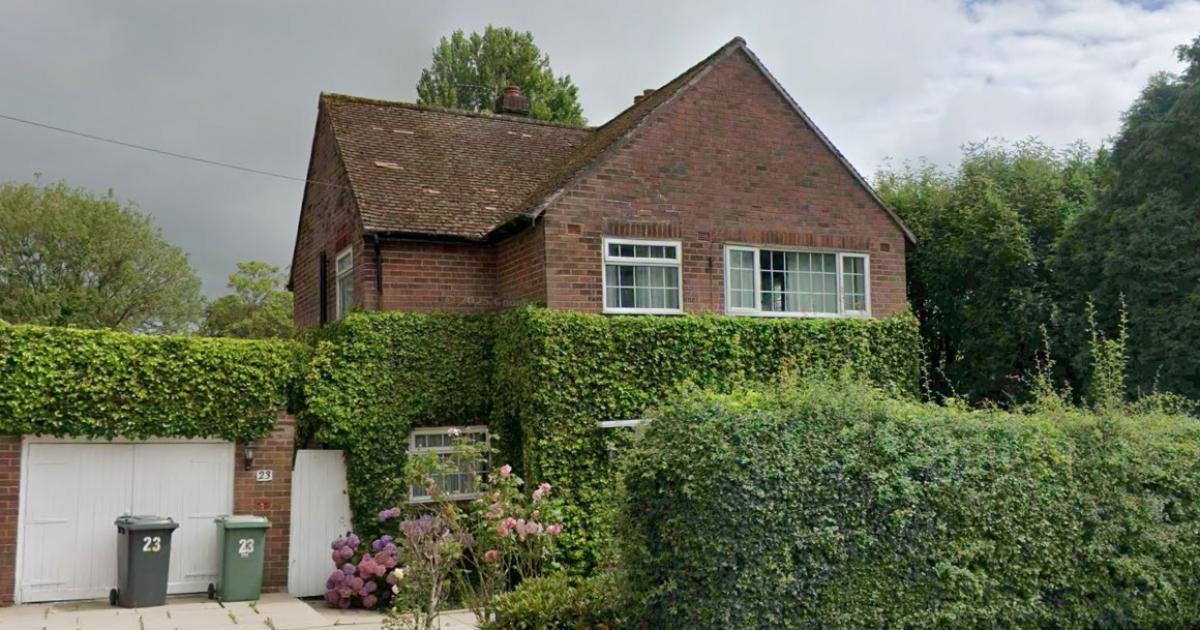
Detailed plans have been submitted for the construction of a detached house on Wenlock Road, Leigh.

The project, which lists MOJO Architects as the agent, includes additional parking spaces, enhanced landscaping, and an extension of the current driveway.

The proposal plans to demolish the existing home and garage to make way for the new development.

Advertisement

The Property Demolition Report found the building has suffered severe subsidence, causing major structural movement and leaving it unsafe.

It warns the property poses a risk to residents, workers, neighbours and the public, with full demolition deemed necessary.

Plans to replace the property are considered justified by the agent, removing a dangerous structure while keeping the site in residential use.

The proposal would see a new family home built in an area already established for housing, without any loss of residential provision.

Advertisement

The application suggests the new house will be adorned with brickwork that mirrors the existing local style and colour.

The roofing is proposed to be clad with grey-style roof tiles.

The new windows will be black double-glazed.

It was confirmed in the application that the home is currently used as residential space.

Advertisement

After the projected development, there will be no change of use, as the new house will also be a residence.

Parking arrangements appear to be a significant component of the new plan.

The application notes that the current number of parking spaces will double from two to four as a result of the development.

Plans also show the inclusion of a waste storage area to the rear of the property.

Advertisement

The new house will have five bedrooms compared to the previous three.

Each new bedroom on the first floor is measured at 14 sq. metres on the drawings for the planned layout.

There will be two en suite bathrooms and a family bathroom on the first floor, a gain from the one shared family bathroom currently.

The addition of a second floor will create a master bedroom of 17 sq. metres, with a walk-in wardrobe and a master en suite bathroom.

Advertisement

The application was made valid on July 16, after being received on June 2, 2026.

The full plans, supporting documents and drawings can be found on Wigan Council’s planning portal via the reference number A/26/101007/FULL.

For more notices affecting YOUR area, visit our Public Notice Portal: https://publicnoticeportal.uk/leigh-journal

Advertisement

Source link

Continue Reading

NewsBeat

Lando Norris claims first win of season at Hungarian Grand Prix

Published

on

Lando Norris claims first win of season at Hungarian Grand Prix

“Max is really slow,” bemoaned Hamilton, unable to find a way past Verstappen. Hamilton attempted the undercut by stopping one lap before Verstappen, and it worked. However, Verstappen caught Hamilton off-guard to snatch the place back at the first corner – a turn renamed after Verstappen’s father-in-law, Nelson Piquet. A major blow for Hamilton having initially made the strategy work.

Source link

Continue Reading

NewsBeat

Michael Carrick is still waiting to see if Manchester United’s new transfer strategy works

Published

on

Manchester Evening News

Manchester United head coach Michael Carrick is aiming to redefine a key area of the pitch this season

As introductions to a new club go, Andrey Santos’ arrival at Manchester United could not have gone much better. The Brazilian midfielder arrived from Chelsea with opinions firmly split. Many questioned spending an initial £48m on a 22-year-old who was third choice at Stamford Bridge last season.

Advertisement

But two games in, Santos has shown he can add something different to United’s midfield. “I’ve watched him from afar, since he’s obviously broken into the first team at Chelsea,” Mason Mount said on Friday about his new teammate, following the 5-0 win over Rosenborg. “I think he’s a really good player. As you said, he reads the game very well.

“I know he’s young, but he’s very experienced in going out on loan and playing in the Premier League as well. He reads the game very well. He’s a little bit more defensive, so it allows me to push on a little bit more forward in these last two games and work off him.

“I think defensively as well, we’re both players that want to get around it, want to put tackles in and win the ball back and be aggressive.”

Despite adding bite to the midfield, Santos is not your quintessential defensive midfielder who can protect the back four. For that matter, neither is Youri Tielemans. United fans have not seen Belgium’s captain in action yet, but they are already familiar with what he will offer them next season. At the World Cup, Tielemans was a box-to-box midfielder and we know he will offer the Reds strength both in and out of possession.

United still want to add a third midfielder this summer but they are more relaxed about that prospect than they were in June. Santos and Tielemans’ arrivals have relieved some of the pressure.

What’s more, there is not a great rush to sign a like-for-like replacement for Casemiro either. Carrick is looking to change United’s midfield this summer. The goal is to cram the midfield with players with high-level technical ability. He wants his side to control the game and set the tempo. Playing proactively, rather than reactively.

This will be music to the ears of United fans. The glory years were defined by a team who asserted their style on matches. But going for this approach is undeniably risky.

Advertisement

Against Rosenborg, the new system worked perfectly. United grabbed the game by the scruff of the neck. Against those lesser opponents, this new strategy can flourish. But this season, Carrick’s side are not always going to be the aggressor.

When up against better quality opposition, United will be forced backwards at times and they will need to dig in. That’s where a Casemiro-esque midfielder is needed. It will be those matches against Premier League title challengers and European football’s elite, when United could need to alter their plan.

With just over a month to go before the transfer window closes, United could still add that more traditional defensive midfielder. A lot could depend on Real Madrid who are sniffing around Rodri. Were the Manchester City man to move to the Bernabeu, that could open the door to Aurelien Tchouameni for United. He is considered the Reds’ dream signing and would fit that defensive midfield role more traditionally.

But as things stand, Carrick is setting out a bold vision for United and it will only be during those major games this season that we shall see if this new strategy works.

Advertisement

Source link

Continue Reading

NewsBeat

People Are Sharing The Weird Things They Said During Sex

Published

on

People Are Sharing The Weird Things They Said During Sex

If you’ve ever blurted out something during sex and immediately wished you could take it back, you’re not alone.

Whether it’s calling someone the wrong name, making a wildly untimely observation or asking a question that absolutely could have waited until later, people have said some pretty embarrassing things during sex more often than they’d like to admit.

According to Todd Baratz (@yourdiagnonsense), a sex therapist at LUBELIFE, these slip-ups are completely normal. “Sex isn’t like a scene out of a movie; it’s not a choreographed dance,” Baratz told HuffPost. “The reality is that sex is not only about the physical aspect of embodiment, but it is also about emotions, relational dynamics and a whole lot of psychology.

“When you combine all those elements, some awkward moments are inevitable.”

Advertisement

eclipse_images via Getty Images

Awkward moments are almost inevitable in close, intimate relationships. But you’re certainly not alone when you have them.

Here are a few of the funniest, most absurd and most mortifying things people accidentally said during intimate moments.

*To allow the embarrassed to be a little more candid and protect their privacy, individuals are identified by only their first names.

‘How’s the air up there?’

Advertisement

Erica still has no idea why one particular name got stuck in her head while she was having sex.

“I was sleeping with a guy, and for some reason I couldn’t get the name Frank out of my head, even though the guy I was having sex with wasn’t named Frank and I didn’t know anyone named Frank,” she said.

The more she tried not to think about it, the worse it became.

“All I could hear in my head was, ‘Frank, Frank, Frank, Frank, Frank,’” she said. Terrified she’d accidentally moan the wrong name, she desperately searched for literally anything else to say.

Advertisement

The solution she said: “So instead I blurted out, ‘How’s the air up there?’ while he was hovering over me.”

The comment earned her a confused look, but she still considered it a better outcome than accidentally calling him Frank.

Later, however, curiosity got the better of her, so she asked whether he happened to know anyone named Frank.

“He told me that was the name of a family member who had just passed away,” she recalled. “So that was really weird.”

Advertisement

‘God, you’re so smart.’

Stu recounted having sex with a woman in college while the two were locked in an affectionate gaze.

“She had her glasses on,” he said. “I don’t know what my brain was thinking because I just lovingly told her, ‘God, you are so smart!’”

He immediately saw the confusion on her face, and just carried on in bed. “It’s amazing the connections your brain makes,” he said.

Advertisement
Some awkward moments can be really weird and off-putting — but some can also be secretly adorable.

PictureNet Corporation via Getty Images

Some awkward moments can be really weird and off-putting — but some can also be secretly adorable.

‘You might want to get that mole looked at.’

Stu has another story that’s just as unforgettable.

“We were having sex doggy style, and I noticed a mole,” he said. “I pointed out that she might want to get it looked at.”

Looking back, he admits it wasn’t exactly the right time.

Advertisement

“Maybe not the best place to say it. It just struck me as important at the time. Totally unfiltered moment,” he said. Thankfully, she laughed – and got her mole looked at.

Accidentally calling your partner by the wrong name.

For Samer, the nightmare scenario that most people dread actually happened. After dating his boyfriend for about three months, the couple finally decided they were ready to have sex.

“In the heat of the moment, I called him John,” Samer said. The problem? “His name is Manny.”

Advertisement

Even worse, Samer has no idea who John is. “Don’t ask me who John is because I have no idea. The name just blurted out of my mouth,” Samer said.

Fortunately, Manny didn’t hear it. The next day, though, Samer confessed what had happened.

“He laughed and said he never heard me,” Samer recalled, “but in my own head I was yelling at myself, ‘How could you, you idiot?’”

Reddit users also had their fair share of awkward confessions.

Advertisement

If the stories above sound painfully relatable, they’re hardly unique. In a Reddit discussion from last year about the most embarrassing things people have said during sex, hundreds of users shared the awkward comments that still make them cringe years later.

One user said that when their partner asked them to “talk dirty,” their brain completely froze and jumped to the literal: “She said talk dirty… I started telling her about my rock collection.”

Another recalled trying to respond after their partner complimented their size. “She said, ‘Oh my God, you’re so big,’ and I panicked and said, ‘No you are.’”

Some brains simply gave up on making sense altogether. “I meant to say ‘seriously’ since I was about to cum. It somehow came out ‘Stop celery.’” Their partner immediately stopped and asked, “Did you call me celery?” The two laughed for 15 minutes before continuing.

Advertisement
Sometimes these OMG-worthy moments can even launch a hilarious inside joke that eventually becomes part of your relationship lore.

Koldunov via Getty Images

Sometimes these OMG-worthy moments can even launch a hilarious inside joke that eventually becomes part of your relationship lore.

One couple accidentally turned foreplay into meal planning. “I asked her to say something sexy and she said, ‘What would you like for dinner tomorrow?’” According to the Reddit user, the phrase has since become the couple’s code for an early night together.

For another couple, a compliment unexpectedly turned into a karaoke moment. “I told my wife, ‘I like the way you work it.’ Without missing a beat she replied, ‘No diggity.’” They laughed so hard they had to stop having sex.

Perhaps the most shocking confession came from one user who suddenly had an unsettling realisation mid-sex. “While I was having intercourse I stopped moving, stared at my (much older) boyfriend and with a very a-ha! tone simply said, ‘I just realised you could actually be my dad.’” Needless to say, he didn’t take it well.

Why saying something weird during sex feels especially embarrassing.

Advertisement

The embarrassment usually has less to do with what was actually said than the meaning we attach to it, according to Baratz.

“A feeling of embarrassment usually comes less from what actually happened and more from the meaning we assign to it,” he explained. “We worry our partner will think we’re unattractive, inexperienced or bad at sex, and if something happens, it can feel like confirmation of those fears.”

Many people also approach sex as though they’re being evaluated rather than participating in a shared experience, he said.

In healthy sexual relationships, awkwardness is something you navigate together, not something you get judged for.

Advertisement

– Todd Baratz, certified sex therapist

“In healthy sexual relationships, awkwardness is something you navigate together, not something you get judged for,” he said. If an awkward moment happens, Baratz recommends acknowledging it, laughing if it feels natural and moving on.

“The best response is often the simplest one,” he said. “You’re probably much more focused on the awkward moment than your partner is.”

In fact, those imperfect moments can become part of what makes intimacy meaningful.

Advertisement

“When two people acknowledge something embarrassing, laugh together and continue to be present with each other, it’s a demonstration of trust and emotional safety,” Baratz said.

“The goal isn’t to eliminate awkwardness completely, but to become comfortable enough with yourself and your partner that it doesn’t ruin the experience.”

Source link

Advertisement
Continue Reading

Trending

Copyright © 2025