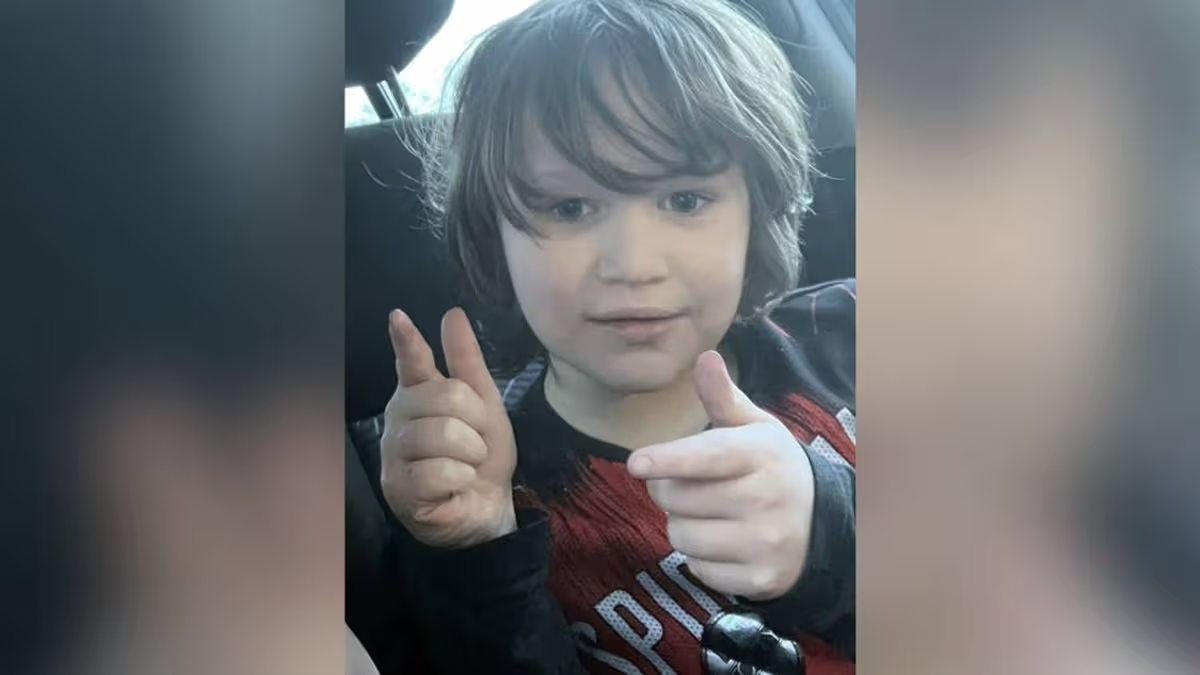
Logan Parker was tragically killed after being struck by a car on the A38 in Nottinghamshire
Tannur Anders and Louis Corbett
02:31, 13 Mar 2026
A young boy who lost his life after a collision on the A38 has been identified by police.
Logan Parker was hit by a car on the A38, Kings Mill Road East, near Kingfisher Way in Nottinghamshire, at 8.26pm on Tuesday, March 10. The seven-year-old passed away at the scene.
Ensure our latest headlines always appear at the top of your Google Search by making us a Preferred Source. Click here to activate or add us as Preferred Source.
Nottinghamshire Police officers said the driver of the vehicle stopped at the scene and is cooperating with their inquiries into the incident.
Logan’s mother honoured her son in a moving tribute: “In memory of a boy who will remain seven forever.
Advertisement
“Always unconditionally loved and cherished, you will never, ever be forgotten.
“There are no words other than you are the most beautiful, happy and mischievous special boy – full of love, light and adventure.
“You will be always part of me and our hearts, my little superhero who loved to play and make us laugh.”
“This is not goodbye but a ‘see you soon’.”
Advertisement
“Love from mum and family.”
Detective Inspector Jamie Moore, of Nottinghamshire Police’s Serious Collision Investigation Unit, said: “This is a devastating incident and our thoughts are with Logan’s family, friends and loved ones.
“The circumstances are being investigated and we would ask the privacy of the family is respected at this tragic and difficult time.
Police have appealed to any witnesses of this incident to come forward, including anyone with dashcam footage which could help in the investigation.
Advertisement
“If you can help, please call us on 101 quoting incident number 770 of 10 March,” Detective Moore said.
Two heavyweight giants will meet at London’s O2 Arena this weekend in what could be the final fight of their careers
Jake Hackney Senior Consumer Writer
08:23, 03 Apr 2026
This article contains affiliate links, we will receive a commission on any sales we generate from it. Learn more
Two boxing giants will go head to head this weekend when Derek Chisora and Deontay Wilder face off in London. The heavyweights will clash on Saturday (April 4) at the capital’s O2 Arena and fans can order the fight here.
It will mark the 50th professional bout for both ‘Del Boy’ and ‘The Bronze Bomber’, and could be the last as reports suggest Chisora may retire after the fight. The Londoner has enjoyed an illustrious career that’s seen him square off against the likes of Tyson Fury, David Haye and Vitali Klitschko.
Advertisement
Chisora goes into the fight enjoying a solid run of form on three straight wins and a record of 36-13 (23 KOs), with Wilder on 44-4-1 (43 KOs). The former WBC champion has lost four of his last six fights, including two stoppage defeats to Fury in Las Vegas.
Ahead of the fight, Chisora said he will remain friends with Wilder whether he wins or loses on Saturday. Speaking to The Ring, he said: “It’s all love, but when that bell goes off, I need to get to him.
“If I give him space, it’ll be a long night for me. I have to get to him and smash him up.”
Boxing fans would usually need to buy the Chisora vs Wilder fight on pay-per-view, but there’s also a way to watch it for free.
Advertisement
When is Derek Chisora vs Deontay Wilder?
Derek Chisora vs Deontay Wilder will take place on Saturday, April 4, with live coverage starting at 7pm. The ringwalks for the main event are expected to start at 10.25pm.
British boxer Derek Chisora will face American Deontay Wilder at London’s O2 Arena on Saturday, April 4.
Advertisement
Fans can order the fight for £24.99 with DAZN pay-per-view or get it free with the new DAZN Ultimate Tier.
How to watch Derek Chisora vs Deontay Wilder for free
Derek Chisora vs Deontay Wilder is airing live and exclusively on DAZN, which is offering several ways to watch the fight. Firstly, the PPV is included for free if fans sign up for DAZN’s Ultimate Tier.
This £24.99 subscription provides at least 12 PPV fights – including Wardley vs Dubois (May 9) and Usyk vs Verhoeven (May 23) – at no extra cost each year as well as another 185 fight nights. There’s the option to pay monthly or for a year upfront, with DAZN claiming the subscription delivers a potential saving of £320 per year compared to the cost of 12 PPV fights.
DAZN holds the exclusive rights to the Derek Chisora vs Deontay Wilder fight, meaning rival broadcasters including Sky Sports and TNT Sports won’t be showing it.
Full Derek Chisora vs Deontay Wilder fight card
Derek Chisora vs Deontay Wilder (heavyweight)
Viddal Riley vs Matuesz Masternak (for the European cruiserweight title)
Denzel Bentley vs Endry Saavedra (middleweight)
Matty Harris vs Franklin Igantius (heavyweight)
Amir Anderson vs Jordan Dujon (middleweight)
Ashton Sylve vs Raul Antonio Galaviz Hernandez (super lightweight)
Can you tackle our mega-quiz and name all 92 teams in England’s top four divisions? There is no time limit. Good luck!
After more quizzes? Go to our dedicated Football Quizzes and Sports Quizzes pages and sign up for notifications to get the latest quizzes sent straight to your device.
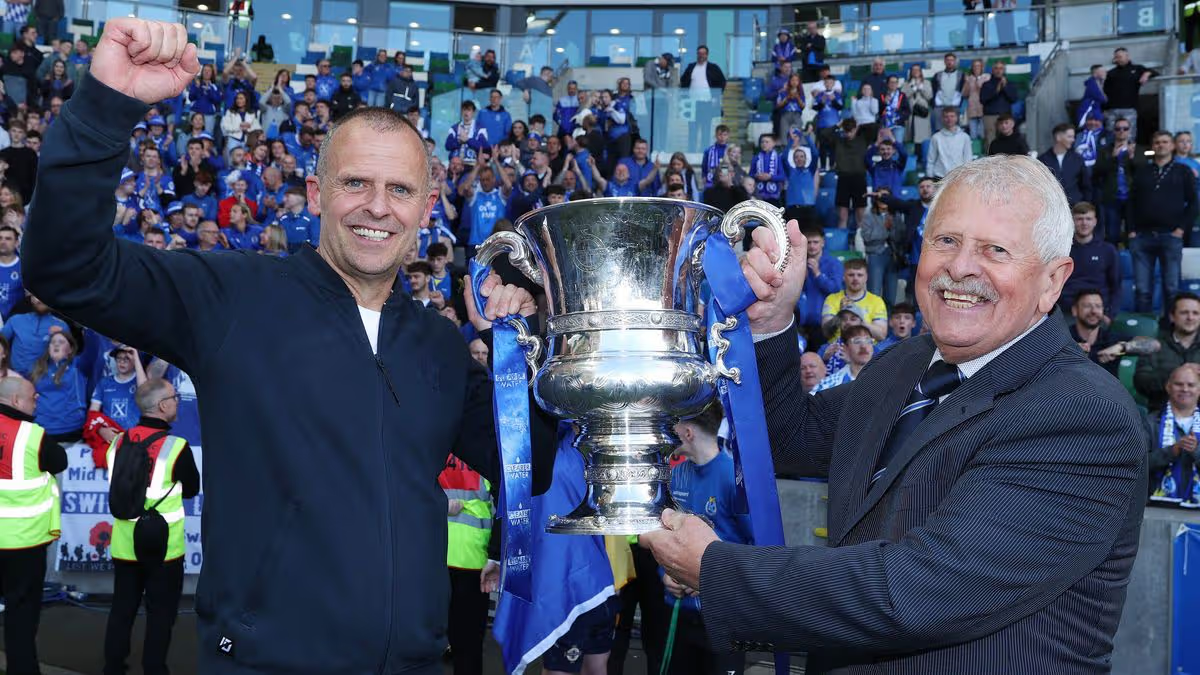
Motorists are being urged to plan ahead and allow extra time for journeys ahead of Friday night’s Clearer Water Irish Cup semi-final
Rob Currell Live news reporter
07:31, 03 Apr 2026
Police have issued traffic and travel advice for road-users ahead of the Clearer Water Irish Cup semi-final football match between Cliftonville and Dungannon on Friday, April 3, The match, which features the two sides in last year’s final, will take place at The National Stadium, Windsor Park, with kick-off scheduled for 7.45pm.
A spokesman for PSNI said drivers should park considerately and be mindful of residents and local businesses in the surrounding area.
Advertisement
They added: “We would ask that those driving to the match park with consideration for local residents and businesses and that supporters are respectful and considerate whilst walking through residential streets convenient to the stadium.
“The areas around the National Stadium are ‘No Street Drinking’ zones under Belfast City Council by-laws and these should be complied with at all times. We hope that the match is enjoyed by all and would ask that those attending the match be considerate of the local community and behave in an appropriate and responsible manner.”
Advertisement
Traffic disruption is expected from around 6.30pm, particularly affecting Falls Road, Broadway, Glenmachan Street, Boucher Road, Windsor Way.
Police have also warned of increased congestion in the Shaftesbury Square, Lisburn Road and Donegall Road areas of South Belfast, as well as the M1 and Boucher Road areas. Delays are anticipated both before and after the game.The busy commercial district around Boucher Road is also expected to be see high footfall, with supporters, commuters and shoppers using the area.
Road users are being advised to plan their journeys in advance and allow extra travel time, as congestion is likely throughout the evening.
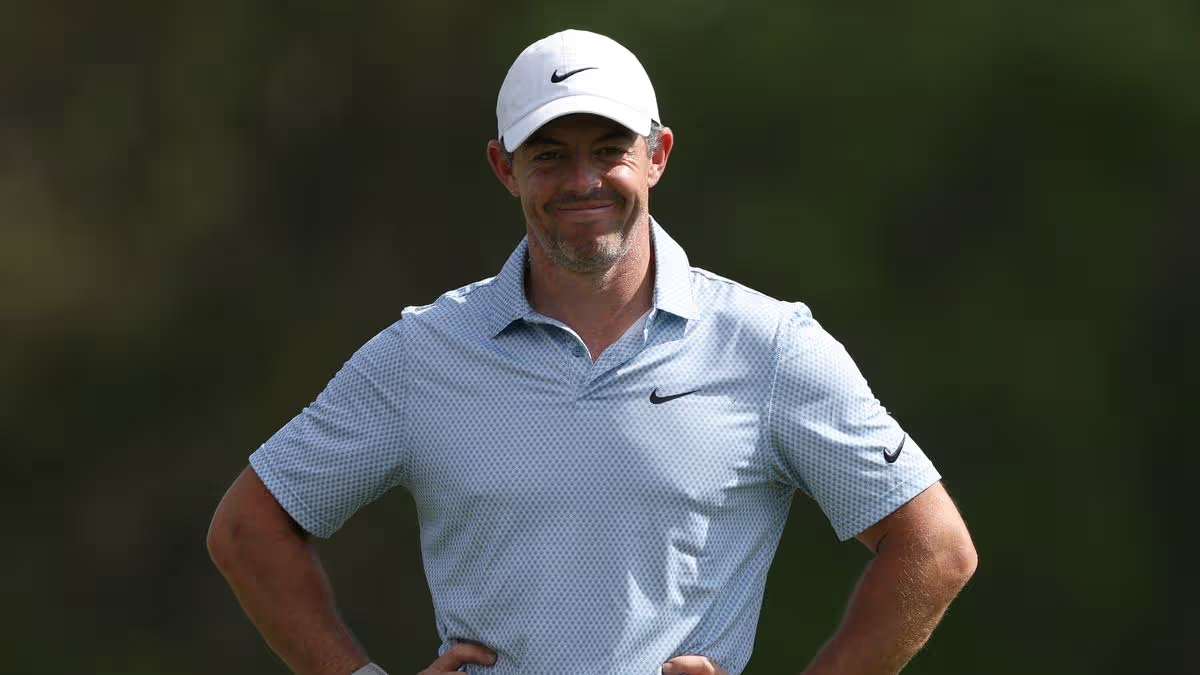
Rory McIlroy is hoping to make more history after completing the career grand slam last year
Rory McIlroy will make his way down Magnolia Lane at Augusta National as a Masters champion for the first time, and he’s determined to savour every moment.
Advertisement
Yet, despite becoming only the sixth golfer to complete the career grand slam by claiming his green jacket, the Holywood man’s competitive fire remains as fierce as ever.
In fact, having finally triumphed at his 17th attempt, McIlroy is convinced that winning it a second time will prove less challenging.
“This is going to be the first time I drive down Magnolia Lane and it’s all going to be about enjoying my week,” said the world number two.
“You know, enjoying the perks that come along with being a Masters champion: having a parking space in the champions car park to using the champions locker room, hosting the dinner on Tuesday night.”
Advertisement
However, once Thursday’s formalities conclude, McIlroy will shift into competition mode as he attempts to emulate Jack Nicklaus, Tiger Woods and Nick Faldo – aiming to become the first golfer in 24 years to secure consecutive victories.
While his performances in two tournaments last month were somewhat underwhelming, McIlroy is banking on the emotional significance of returning to the scene of arguably his greatest triumph to compensate.
“I’ve won it once, and I feel like that will make it a bit easier for me to win again,” he added.
“I don’t think there was any round of golf that I’d played before that can compare to the feelings and the emotions I went through that Sunday.”
Advertisement
The pressure may be slightly reduced, but he’ll still be anticipated to challenge strongly, much like world number one Scottie Scheffler, a two-time Masters winner, whose recent form has been more erratic than at any point over the past two years.
He withdrew from the Texas Children’s Houston Open in his home state as his wife Meredith is due to give birth to their second child, and if he’s searching for a positive sign, their son Bennett arrived just weeks following his second Masters triumph in 2024.
Time spent at home, which he prioritises above all else, might provide him with a chance to refocus, and despite his impressive Augusta record – finishes of fourth, first, 10th and first in his last four outings – opponents may see this as a potential weakness to exploit.
Among those keen to capitalise will be Bryson DeChambeau. Paired with McIlroy in the final group 12 months ago, his hopes ended in disaster when a double-bogey at the 11th left him four strokes behind his playing partner.
Advertisement
The American, who has toned down his bold talk since confidently declaring before the 2020 event that he viewed Augusta National as a par 67 owing to his power off the tee, at least arrives with momentum after consecutive victories on the LIV Golf circuit, though how effectively that has readied him for this challenge is still up for discussion, with doubts continuing about the standard of the Saudi-backed tour.
His LIV colleague Jon Rahm has also shown strong form and, in contrast to DeChambeau, already knows what it’s like to slip on the green jacket, having won in 2023 before making the switch.
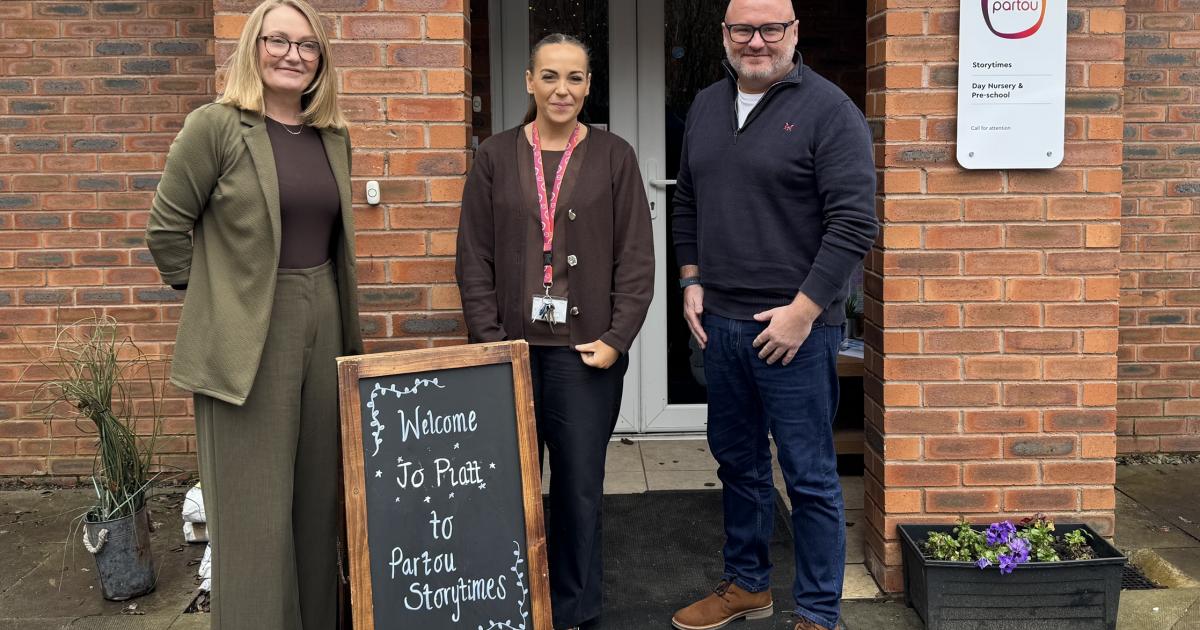
Leigh and Atherton MP Jo Platt toured Partou Storytimes Day Nursery and Pre-school on Leigh Road, one of Atherton’s most established nurseries, during her visit.
She met with commercial director, Chris Conchie, and nursery manager, Kim Thorpe.
Ms Platt said: “Storytimes is an excellent example of what high quality early years provision looks like.
Advertisement
“I was struck by the warmth of the setting, the professionalism of the staff, and the clear commitment to giving every child the best possible start.
“I can’t wait to go back and see their expansion plans come together.”
The nursery, which caters for children aged 0 to 5, is nearing completion of a major expansion that will create 28 additional places for under-twos.
The project is backed by UK Government funding.
Advertisement
Ms Thorpe said: “Everyone was excited to meet Jo and share some of the positive impacts the nursery is having in the local community.
“It was a particularly timely visit with our expansion work in its final stages.
“Jo was keen to maintain contact and return to Storytimes once the additional space is opened up.
“She will always be a welcome guest.”
Advertisement
Part of the Partou group, one of the country’s leading childcare providers, the nursery has a storybook-inspired theme and dedicated rooms for each age group, along with a large outdoor play area.
During the visit, Ms Platt discussed early years policy and workforce recruitment with Mr Conchie.
He said: “It was a privilege to meet with Jo, show her around, and talk about some of the challenges and opportunities facing nurseries following the national expansion of Government-funded places.
“As one of the country’s leading childcare providers, Partou wishes to work with policymakers to attract more recruits into the sector by further professionalising the role of early years educators.
Advertisement
“We also talked about many benefits of increased public funding for early years, and the need to make the process of accessing these monies as clear and simple as possible.
“Jo was receptive to these thoughts and has pledged to keep in touch with us, which is greatly appreciated.”
Scarlett Moffatt was one of the most recognisable faces on the beloved Channel 4 series during her time on it.
She became a regular cast member on the show alongside her parents, Mark and Betty, making their debut in the third series in March 2014.
Scarlett’s younger sister Ava-Grace joined the family on the sofa during the seventh series, with her then boyfriend Luke Crodden appearing in the eighth series.
Scarlett Moffatt will appear on the new series of I’m A Celeb South Africa (Image: Ian West/PA Wire)
Her relationship with Luke ended in March 2017, and Moffatt went on to appear in I’m a Celebrity…Get Me Out of Here! series 16 in 2016, where she was crowned winner.
Advertisement
She has not appeared on Gogglebox since, having gone on to appear on several other shows, such as co-presenting on Ant & Dec’s Saturday Night Takeaway and I’m a Celebrity: Extra Camp.
Gogglebox legend Scarlett Moffatt says she would ‘love’ to return to show
Now, Moffatt has revealed how she would “love” to return to make an appearance on Gogglebox once more.
On an episode of This Morning on Thursday (April 2) Scarlett was asked by Alison Hammond if she would ever do Celebrity Gogglebox.
Scarlett said: “I would love that.
Advertisement
“I honestly would love that.
“I feel like the world would implode on itself if I went on that, though, because it’s proper full circle!”
Fellow This Morning host Dermot O’Leary suggested the former Gogglebox star also get her mum and dad back on the show, before Alison added: “I wanna get your partner on it,” referring to Scarlett’s fiancé Scott Dobinson.
Scarlett said: “To be honest, Scott is the funniest person, he is so funny.”
She added: “I don’t know.
Advertisement
“It was hard because back then you don’t meet the people you’re talking about on the telly.”
Scarlett’s appearance on the show was to talk about her return to I’m a Celebrity, with the star taking part in the new I’m A Celebrity South Africa with several other legends of the show.
A new element for the new series, which has been pre-recorded and hosted by Ant and Dec, will give the viewing public the power to decide who is crowned the “ultimate legend 2026”.
Advertisement
Here is the full lineup for the series:
Harry Redknapp (former football manager – 2018 winner)
Gemma Collins (reality TV star – 2014 series)
Beverley Callard (Coronation Street star – 2020 series)
Sir Mo Farah (Olympian – 2020 series)
Scarlett Moffatt (former Gogglebox star – 2016 winner)
David Haye (boxer – 2012 third place)
Adam Thomas (actor and TV star – 2016 third place)
Ashley Roberts (Pussycat Dolls singer – 2012 runner-up)
Seann Walsh (comedian – 2022 series)
Sinitta (pop star – 2011 series)
Craig Charles (Red Dwarf star – 2014 series)
Jimmy Bullard (footballer – 2014 series)
The first South Africa series aired in 2023 and was won by former Australian series runner-up Myleene Klass.
Recommended reading:
When does the new I’m A Celebrity…South Africa series start?
Fans don’t have long to wait as the new series starts next week.
I’m A Celebrity…Get Me Out of Here! South Africa will return to ITV1, ITVX and STV on Monday, April 6.
Advertisement
What do you think of the lineup for the second series of I’m a Celeb South Africa? Let us know in the comments.
The actress hae been enjoying a date night with her husband after making a tearful admission about her cancer journey
08:00, 03 Apr 2026Updated 08:00, 03 Apr 2026
Former Coronation Street star Beverley Callard has been seen enjoying a date night with her husband after making a tearful admission about her cancer journey ahead of her big TV return.
The actress, who is best known for playing Liz McDonald in the ITV soap for over three decades, announced in January that she had been diagnosed with early-stage breast cancer, with the news coming just 20 minutes before she filmed her first scenes on Irish soap, Fair City, where she now plays Lily Patterson.
She has since undergone more tests and has had two lymph nodes removed. Beverley is now still awaiting her results which will indicate whether she is cancer-free or not.
Advertisement
In a candid Instagram video posted shortly after her 69th birthday earlier this week, the soap star spoke directly to fans about how strange things had felt recently. “Today has been a weird day, the last few days have been really weird, and I just thought I’d talk about it in case someone else is feeling the same,” she shared.
“It was my birthday on Saturday, today, is Monday and on Saturday I was quite tired.” Talking about her low-key birthday, she shared: “I had my nails done, but aside from that, we just had quite an easy day. Yesterday was wonderful, we had a few people round from work and it was really good.”
Having relocated to Ireland for her new soap role, Beverley continued: “This morning, I had to go register with a new GP because I’m in Ireland for quite a long time now. I had to go through everything that has happened. I filled her in, she was really good. But it made me realise that I’m in denial a lot of the time.”
She became emotional as she said she had wondered if it was a “good thing” that she had pushed it all to the back of her mind but then said it was tough because she realised she would have to face up to it all at some point. She said: “If I’m at work, I’ve got lines in my head, and scripts, and I’m really busy all the time but then suddenly – I’m not. I’ve got quite a few weeks off now and explaining everything to the GP made me realise that I’m not concentrating on it, which maybe is a good thing.
“But sometimes I actually think even though they’ve operated on me and all of that – maybe they’re wrong and I didn’t have it or whatever. I’m still waiting for results and it just made me go flat because I have to face it properly and maybe I’m not all the time.”
Beverley’s post, which she captioned: “Wasn’t sure whether to post this or not… so I’m posting it today, a day later. Still feeling up and down, but that’s normal isn’t it?”, was quickly flooded with messages of love and support and she has since returned to her platform to share how she and her husband, John, had enjoyed some time out together
Alongside a video, she wrote: “We are out for a little dinner date tonight, we haven’t done it for a while but we deserve it! Checking out the food at @chester_beatty_inn and judging by the crowd… we are in for a treat!”
Advertisement
Meanwhile, fans will get to see her return to the jungle for a new all-star series of ITV’s I’m A Celebrity… Get Me Out Of Here! South Africa. She previously appeared on the reality show in 2020 when it took place in a Welsh castle during the Covid pandemic – with the actress coming in 10th place.
Joining her on the show, which was pre-recorded last year before her cancer diagnosis and begins on Monday (April 6), is TV personality Gemma Collins, Olympian Sir Mo Farah, former Gogglebox star Scarlett Moffatt, champion boxer David Haye and Pussycat Dolls singer Ashley Roberts.
Others joining the series include comedian Seann Walsh, pop star Sinitta, Red Dwarf star Craig Charles and ex-footballer Jimmy Bullard. The line-up is completed by former football manager Harry Redknapp and actor Adam Thomas.
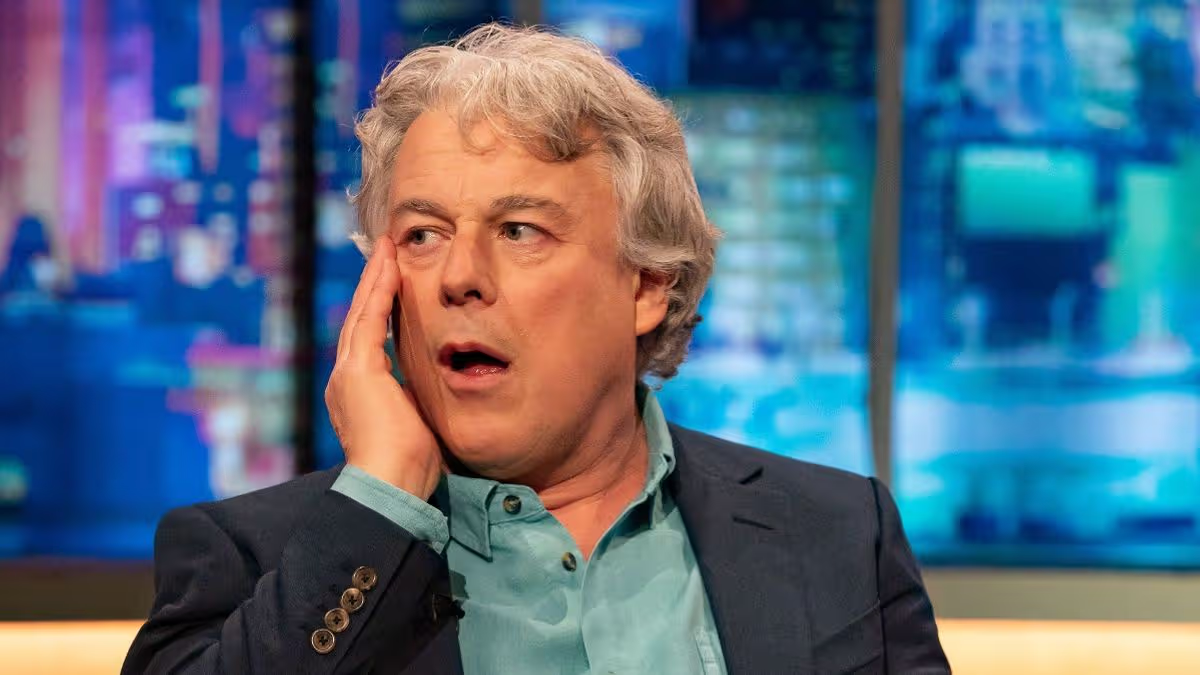
Comedian Alan Davies has opened up to Jonathan Ross about his cancer diagnosis and how he feels lucky to have spotted an issue that first flagged up he was ill
07:55, 03 Apr 2026Updated 07:55, 03 Apr 2026
Alan Davies has provided a candid health update two years after the comedian revealed he had been diagnosed with bladder cancer. And he has revealed the scary sign that made him discover he wasn’t well.
Alan, 60, revealed how he felt “lucky” to have spotted the sign which led to him undergoing surgery. Speaking to Jonathan Ross in scenes to air on The Jonathan Ross show on Saturday, Alan said: “In 2024 I had bladder cancer. Luckily, a little bit of blood in the toilet bowl and I saw it…”
He went on to tell the presenter about the procedure he underwent to remove the cancerous tumour. “To get that tumour out, they have to go… up the… so my advice is, if you’re going to have a flexible cystoscopy…”
As he thanked the surgeons for a successful surgery, he admitted: “It’s not very nice and it’s not as bad as you think. That’s accurate. They got it out, so phew.”
And he shared positive news that he has now received the all clear. Following his health scare, Alan has since began touring again. “I didn’t know if anyone would come,” he told Jonathan.
Advertisement
“It’s a bit like having a party. But people did come, and a lot of them had grey hair and hadn’t been out for ages.”
It marked his first tour in 10 years. Speaking on The One Show last month, Alan opened up on his difficult past and a special gift he was leaving his kids. He had appeared on the show to chat to presenters Clara Amfo and JB Gill about his new stand-up tour.
While also discussing his latest memoir, White Male Stand-Up, which he penned for his three children, Susie, Robert and Francis, whom he shares with his famous wife Katie Maskell, Alan said he wanted his children to gain a deeper understanding of him through his past experience.
He said: “It’s the second volume. I’ve written two volumes. The first one was really about my childhood, [it’s] a little bit bleak.
Advertisement
“And then this one’s about my career in comedy and television, whilst carrying some of this baggage along. I kind of naively thought that you go towards the future and you leave the past behind, but it doesn’t really work like that.”
He continued: “So, it’s about turning around and confronting that and I wanted a record of where I’ve been, what I’ve done and who I am. They can’t read it yet, but it’s there for them.”
The Jonathan Ross Show airs on Saturday at 10pm on ITV1 and ITVX.
But let’s be honest about what is actually happening here.
The Liberal Democrats have and are repeatedly taking councillors who defect to them mid-term – and in those cases there is no outrage, no demands for resignation, no insistence on a fresh mandate.
Why? Because it suits them. So why is this different?
Advertisement
Lib Dem councillors and wannabes cannot present this as a matter of principle while applying it only when it is politically convenient to them.
They cannot welcome defections in one direction, and demand resignation in another.
That is not scrutiny. It is a double standard.
If this is truly about principle, then apply it in every case. If it isn’t, then this is simply selective outrage dressed up as concern for voters.
Advertisement
Residents will see it for what it is. Either it applies to everyone – or it isn’t a principle at all.
Reading Emma Clayton’s article about TV serial A Women of Substance, she mentions the beautiful Yorkshire scenes including Broughton Hall and Ilkley Moor.
May I just mention that the town scenes are taken at Beamish Museum. My husband was born at Beamish before the last war when it was just a village with railway and pits houses, a Church of England and a Methodist chapel, and also Shafto Hall.
Advertisement
Many years ago the museum was first started in the Hall and it has developed into what it is today. There is a song about one of the owners of Shafto Hall which starts ‘Bobby Shafto’s gone to sea with silver buckles on his knee, when he comes back he’ll marry me, bonny Bobby Shafto’.
Maureen Robinson, Broadway, York
___
Sincere thanks for fundraising help
It`s getting really difficult to fundraise now so my heartfelt thanks to those of you who understand the importance of getting our deaf children a cochlear implant.
Advertisement
This means they are able to socialise, go to normal school and lose that awful feeling of “being different”. If you could help by donating old Barbie or Cindy dolls or Action men they would be enormously helpful.So just email me at eunice.birch@bt internet.com and I’ll explain all you may need to know.
Sincere thanks from on old implantee!
Eunice Birch, Coombs Close, Sutton on forest, York
What do you think?
Advertisement
Feel strongly about an issue? Write us a letter. Please write no more than 250 words and you must provide your full name, address and mobile number. Send your views by email to: letters@thepress.co.uk
The following article contains spoilers from the episode of Emmerdale dated April 3. It hasn’t aired on ITV1 yet, but can be viewed on ITVX.
The literal key to saving Moira Dingle (Natalie J Robb) from the rest of her life in prison is currently laying among the grounds of Celia Daniels’ (Jaye Griffiths) old farm in Emmerdale. The problem? No one knows about it.
Evil Celia was killed by her son Ray Walters (Joe Absolom) at the start of this year. He then buried her body on land belonging to Butler’s Farm. Right beside Celia’s shallow grave was another one, hiding refugee Anya’s body.
Ruby Miligan (Beth Cordingly), who knew Anya, began to suspect that the young woman was dead after a comment from Bear Wolf (Joshua Richards). She found the grave and called the police, but had no idea for a second that they’d discover another body in the ground.
Advertisement
As a result of finding the bodies on her farmland, Moira is facing a double murder charge. You’d think this was enough drama for Moira to come up against, but a plan created by Joe Tate (Ned Porteous) has meant she’s also potentially going to be sentenced for modern slavery.
Moira has been in prison for most of this year (Picture: ITV)
The issue Moira has is that no-one has any evidence to prove she is innocent, but that all changed in today’s instalment.
Paddy Kirk (Dominic Brunt) and Marlon Dingle (Mark Charnock) decide to head to Celia’s farm on their quest to confront their inner demons. Outside the house was a huge pile of furniture items, which Paddy and Marlon proceeded to smash up.
We also saw the two men discuss how they handled the situation with Celia and Ray. Smashing chairs and tables to pieces was certainly a good way of getting their anger out of their system, but both Marlon and Paddy found talking honestly about their thoughts far more beneficial when it came to moving forward.
Advertisement
Marlon and Paddy confronted their inner demons (Picture: ITV)
As they reflected on the torture that occurred at Celia’s farm, Marlon spotted a key with a label on that said ‘HSU107’. Due to the fact the police had already turned the place over, Marlon and Paddy concluded that the key probably wasn’t important.
Don’t miss a Soaps scoop! Add us as a Preferred Source
As a loyal Metro Soaps reader, we want to make sure you never miss our articles when searching for stories. We have all the latest soaps news, spoilers, videos, and interviews, with a vibrant community of highly engaged readers.
Click the button below and tick Metro.co.uk to ensure you see stories from us first in Google Search.
Now you can ensure you never miss a story from the Soaps team
Advertisement
But it was.
In central Hotten, we saw a storage facility and the contents of unit 107. It was completely packed full of paperwork – which will more than likely prove Moira’s innocence.
But with Marlon and Paddy believing the key isn’t important, no one else has any reason to go back to Celia’s farm.

















































You must be logged in to post a comment Login