

Connect with us
DAPA Banner

NewsBeat

British passengers ‘pass out’ in hours-long border check queues at Milan airport | News World

Published

on

British passengers 'pass out' in hours-long border check queues at Milan airport | News World
Easyjet said the delay was ‘outside of our control’

Holidaymakers were left vomiting and fainting in a queue from hell at Milan airport.

Around 100 easyJet customers were stranded at Linate airport on Sunday because of delays caused by new border checks in the EU.

The airline said the chaos was ‘outside of our control’ and even delayed take off by 52 minutes to try give passengers extra time to get on board.

Dozens of Britons were left scrambling to find alternative journeys home after some only discovered they had missed their flight once it had taken off without them.

Advertisement

One passenger, Kiera, 17, said that only 30 people made it onto the plane while 100 didn’t.

Sign up for all of the latest stories

Start your day informed with Metro’s News Updates newsletter or get Breaking News alerts the moment it happens.

Advertisement

The Oldham local, who faced a 20 hour wait for an alternative flight, told the BBC: ‘We got here at 7.30am for our flight at 11am so were super early.

‘We got to Border Control and it was a massive queue of people. I wasn’t feeling great anyway because I think I’d got food poisoning.

‘At about 10.50am they brought some water over for people, and when we got to the front of the queue someone asked us if we were going to Manchester, and told us our flight had just gone.’  

The new return journey had cost her mother £520 and that they would be going to Gatwick, not Manchester.

Advertisement

Kiera said easyJet had only offered £12.25 in compensation.

Adam Lomas, 33, an accountant from Wakefield, became stranded with his wife Katy, 31, and their four-month-old daughter.

The dad was sat in the airport for hours and that when he tried to contact easyJet he was faced with ‘chatbots’ and ‘audio issues’.

Advertisement

He told the BBC: ‘The airport and easyJet have spent hours arguing with each other about who is to blame.’

Adam said his family were forced to find a new hotel and book flights back to London, before then needing a to get a two-and-a-half-hour train to Manchester.

Easyjet called the delays caused by the EU’s new Entry/Exit System (EES) ‘unacceptable’.

The new system requires passengers from third-party countries, including the UK, have to have their fingerprints and photographs taken as they enter the Schengen Area.

Advertisement

EES registration is replacing the system of manually stamping passports and the UK government warned it might take longer for passengers to complete.

What are the EU’s new EES border check requirements?

List of countries where the new EES system will come into force soon.
Full list of the EU and EEA countries where the new entry and exit system will be rolled out (Picture: Metro)

The European Union’s new Entry-Exit System, known as the EES, will connect every crossing point in the Schengen Area.

Every EU country in the Schengen area will be connected, other than Ireland and Cyprus, Norway, Iceland and Switzerland.

Travellers will be required to hand over biometric data such as their fingerprints and a photo scanned with facial recognition technology.

Advertisement

The system aims to crack down on crime and enforce the limit on EU stays for British and third-country citizens, which is 90 days within any 180 days.

Most travellers from outside the EU, known as third-country nationals, will be required to register their passport details and biometric data when crossing into an EU country for the first time.

Biometric data includes fingerprints and facial pictures. Borders are likely to be kitted with self-service kiosks where passengers can input this information.

This data, as well as the entry and exit details, will be stored for subsequent visits.

Advertisement
New biometric Entry Exit System machines at Malaga Costa del Sol airport. Malaga, Spain. February 2nd 2026; Shutterstock ID 2734299387; purchase_order: -; job: -; client: -; other:
New biometric Entry Exit System machines at Malaga Costa del Sol airport (Picture: Shutterstock / Colinmthompson)

Future visits will only require a verification of the biometric data, which can speed up the process.

Children are not exempt from the checks, although children under 12 do not need to give fingerprints; however they will also need to have their face scanned.

Advertisement

The system became fully operational on April 10 and caused travel chaos across last weekend.

A spokesman for easyJet said: ‘We are aware that some passengers departing from Milan Linate today experienced longer than usual waiting times at passport control and we advised customers due to fly to allow additional time to make their way through the airport.

‘We have been doing all possible to minimise the impact of the airport queues, holding flights to allow customers extra time and providing free flight transfers for any customers who may have missed their flight including EJU5420 to Manchester.

‘We continue to urge border authorities to ensure they make full and effective use of the permitted flexibilities for as long as needed while European Entry / Exit System is implemented, to avoid these unacceptable border delays for our customers.

Advertisement

‘While this is outside of our control, we are sorry for any inconvenience caused.’

Get in touch with our news team by emailing us at webnews@metro.co.uk.

For more stories like this, check our news page.

Advertisement

Source link

Advertisement
Continue Reading
Click to comment

You must be logged in to post a comment Login

Leave a Reply

NewsBeat

Swalwell exit leaves California governor’s race in disarray

Published

on

Swalwell exit leaves California governor's race in disarray

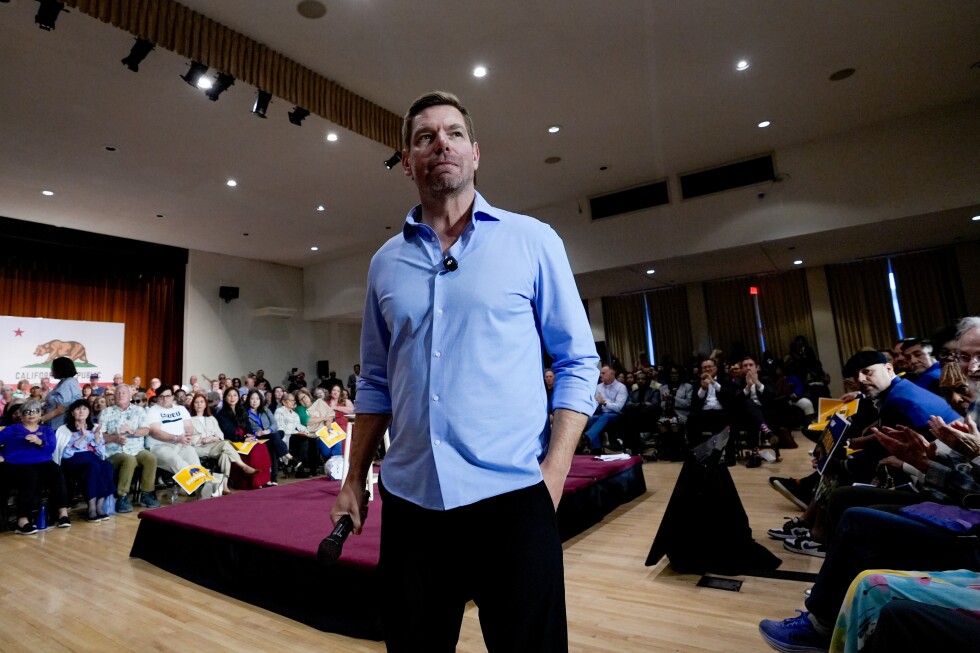
LOS ANGELES (AP) — Democratic Rep. Eric Swalwell’s abrupt exit from the race for California governor left his rivals scrambling to lock down his former supporters in a crowded contest with no clear leader, injecting more turmoil into the campaign to lead the nation’s most populous state.

Swalwell’s decision to suspend his campaign Sunday followed allegations that he sexually assaulted a woman twice, including when she worked for him, that were published Friday in the San Francisco Chronicle and later by CNN. While pulling out of the race he remained defiant in a post on the social platform X, saying, “I will fight the serious, false allegations that have been made — but that’s my fight, not a campaign’s.”

For rival candidates in a wide-open race, the key issue is where Swalwell’s supporters will go. He was among the most prominent Democrats in the contest, with mail ballots scheduled to go to voters in early May in advance of the June 2 primary election.

Katie Porter, one of the leading Democrats, posted a line from a San Francisco Chronicle column on X, “Democrats can pull victory from the jaws of defeat by coalescing around Porter.” Billionaire hedge fund manager-turned-liberal activist Tom Steyer said he secured the support of Rep. Jared Huffman, a Democrat from the San Francisco Bay Area.

Advertisement

With seven established Democrats and two leading Republicans on a primary ballot with more than 50 candidates, the race remains fluid. While Swalwell has suspended his campaign, his name cannot be removed from the ballot.

“Nobody has really caught fire,” said Democratic consultant Andrew Acosta, who is not involved in the campaign. Swalwell’s supporters “will scatter out to other candidates.”

Many voters remain distant from governor’s race

Swalwell is perhaps best known nationally as a House manager in President Donald Trump’s second impeachment trial during his first term in early 2021. But in a media environment dominated by Trump, the race remains distant from many California voters.

After the publicity about sexual misconduct allegations, “I think there are probably more people who know who Eric Swalwell is than can articulate a Tom Steyer position paper,” Acosta added.

Advertisement

Swalwell was considered a leading contender along with fellow Democrats Steyer and Porter and two Republicans, Riverside County Sheriff Chad Bianco and conservative commentator Steve Hilton.

The 48-hour period marked a rapid reversal for a candidate who appeared to be gaining momentum in the packed field to replace outgoing Democratic Gov. Gavin Newsom, who is barred by law from seeking a third term.

Though Swalwell has denied the allegations, he has appeared to reference infidelity in multiple statements.

“To my family, staff, friends, and supporters, I am deeply sorry for mistakes in judgment I’ve made in my past,” he wrote. That followed a video post on Friday where he apologized to his wife.

Advertisement

Swalwell’s exit shakes up campaign

The accusations reordered a wide-open gubernatorial race that had Democrats fretting the party’s large number of candidates could lead to them getting shut out of the general election in November. That’s because California has a top-two primary system in which two candidates advance to the general election, regardless of party.

Swalwell had become a clear target for his Democratic rivals as he began to lock up institutional support. Some had seized on rumors of sexual misconduct that circulated on social media for weeks before the Chronicle’s report.

The San Francisco Chronicle spoke to a woman who alleged Swalwell sexually assaulted her in 2019, when she worked for him, and again in 2024. The woman said she did not go to police at the time of the assaults because she was afraid she would not be believed. In both cases the woman said she was too intoxicated to consent to sex. CNN reported on allegations that appeared to come from the same woman, and spoke to several other women who accused Swalwell of other sexual misconduct.

Neither outlet named the woman, and The Associated Press has not been able to independently verify her account and identity. Her lawyer declined to comment.

Advertisement

The alleged 2024 incident occurred in New York, and the Manhattan District Attorney’s Office said it’s investigating. That office urged anyone with knowledge to contact its special victims division.

House colleagues call for Swalwell to resign

As Swalwell’s campaign flailed over the weekend, fellow California Reps. Jared Huffman, Ro Khanna and Sam Liccardo said Swalwell should resign, as did Reps. Teresa Leger Fernández of New Mexico and Pramila Jayapal of Washington state.

“This is not a partisan issue,” Jayapal said Sunday. “This cuts across party lines. And it is depravity of the way that women have been treated.”

Some representatives said they would support the rare step of expelling him from the U.S. House should he refuse to step aside.

Advertisement

It all added to the mounting political pressure on Swalwell, which began with allies like Sen. Adam Schiff and Rep. Jimmy Gomez cutting their support. Gomez had helped run Swalwell’s campaign and said he was immediately ending his role.

With the House returning to session Tuesday, the question of whether to expel Swalwell could come to a head quickly. Rep. Anna Paulina Luna, R-Fla., said Saturday that she would be filing a motion to start the process.

Expulsion votes in the House are rare and require a two-thirds majority, but there is recent precedent for taking the step. Republican George Santos of New York in 2023 became just the sixth member in House history to be ousted by colleagues for his conduct.

Huffman, Jayapal and Leger Fernández said they would vote to expel Swalwell from the House, though they said they also support expelling Rep. Tony Gonzales, R-Texas, who admitted to an affair with a former staff member who later died by suicide.

Advertisement

Swalwell, who is originally from Iowa, was elected in 2012 and represents a House district east of San Francisco. He launched a presidential run in April 2019 but shuttered it a few months later after failing to catch on with voters.

___

Associated Press writer Ben Finley in Washington contributed to this report.

Advertisement

Source link

Continue Reading

NewsBeat

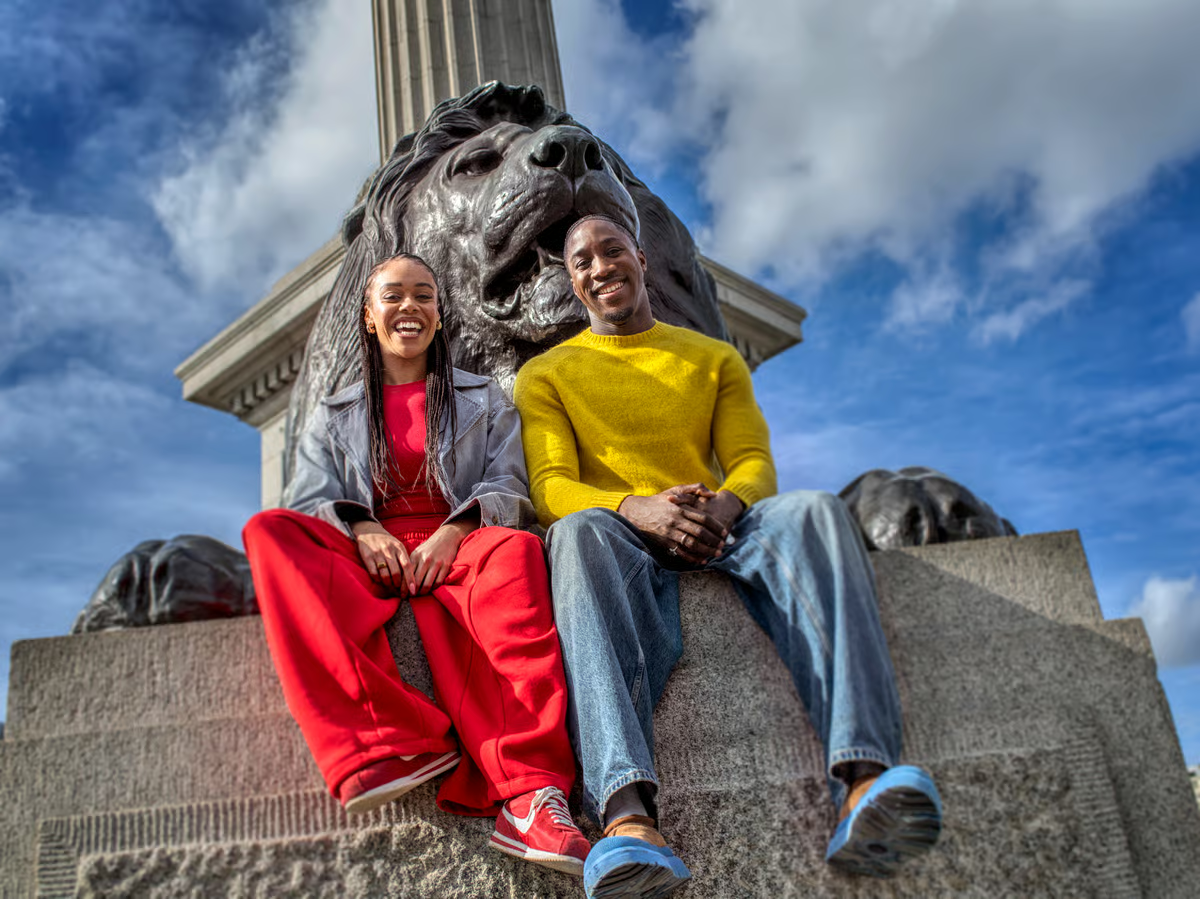
Meet The Lion King’s new leads: ‘The Pride Rock prop is older than us!’

Published

on

Meet The Lion King's new leads: 'The Pride Rock prop is older than us!'

“As performers we like to stay on top of our, physical health and mental health to give the same standard of performance anyway,” says Parker-Wallace, “But here you’ve got to to play animals on stage, you’ve got to be strong in your stature, your stance. The good thing is they’ve had 27 years of refining The Lion King, so the guys taking care of us are more than equipped. Tomorrow we have an injury prevention meeting. They’ve got an in-house physio team. They have many a PT on hand. Someone on the production had broken their ankle and within 7 weeks they were back on stage. So they will care for us while I feel like I can go home and learn my lines, get in the right headspace, try not to put my body in any jeopardizing positions, and as a company they will just usher me on my way to climbing Pride Rock…”

Source link

Continue Reading

NewsBeat

Aldi Scotland calling on sports clubs in Lanarkshire and West Lothian to apply for Sports Fund initiative

Published

on

Daily Record

Now in its 11th year, the fund offers local clubs the chance to secure vital funding, including a top prize of £3,000, helping them continue to grow and thrive within their communities. Additional funding packages of £1,250 and £750 will also be distributed.

Aldi Scotland is calling on sports clubs in Lanarkshire and West Lothian to apply for its annual Sports Fund initiative, with £50,000 up for grabs nationwide.

Advertisement

Now in its 11th year, the fund offers local clubs the chance to secure vital funding, including a top prize of £3,000, helping them continue to grow and thrive within their communities. Additional funding packages of £1,250 and £750 will also be distributed.

Launched in 2016, Aldi Scotland’s Scottish Sport Fund has spent the past decade championing grassroots sport, supporting more than 650 clubs and distributing over £500,000 to date.

From improving facilities to providing essential kit and equipment, the fund has played a key role in widening access to sport across Scotland.

Aldi’s Scottish Sport Fund welcomes applications from all sporting organisations that meet the specified criteria. Last year’s Sports Fund saw the retailer support an array of sports clubs across the region, including Stirling County Rugby Football Club, BaillieFields Community Hub and Girlguides Airdrie.

Advertisement

This year, the top three shortlisted clubs in each region will be selected by an Aldi Scotland judging panel before going to a public vote on social media. The winning club will receive £3,000, with the two runners-up each awarded £1,250.

Sandy Mitchell, Regional Managing Director at Aldi Scotland, said: “Over the past decade, we have seen the real impact this funding has on clubs and communities across Scotland.

“Through the Scottish Sports Fund, Aldi has helped clubs invest in the equipment, resources and spaces they need to grow and succeed.

READ MORE: Specsavers’ Airdrie and Coatbridge staff reach combined 160 years of service

Advertisement

“In what is a monumental year for sport globally, we are proud to continue playing our part in supporting sports clubs here in Scotland and remain committed to making sport more accessible nationwide.

“The response each year is incredibly positive and we look forward to working with even more clubs in 2026. I encourage clubs in Central Scotland to apply and take advantage of this opportunity.”

Sports clubs located across Central Scotland have from Monday, April 13, until Sunday, May 10, to apply for funding.

One applicant will be selected to receive £3,000 of funding, two applicants will each receive £1,250 and one club will each receive £750.

Advertisement

READ MORE: Driver locked up after causing four-vehicle crash while inhaling laughing gas

Applications can be made via the application form found on https://www.aldi.co.uk/scottishsportfund.

The Aldi Scottish Sport Fund is open to any sporting organisation in Scotland that meets the application criteria.

All applications will be considered by the Aldi judging panel and entrants will be notified of the outcome of their funding application within six weeks from the region’s deadline.

Advertisement

*Don’t miss the latest headlines from around Lanarkshire. Sign up to our newsletters here.

And did you know Lanarkshire Live had its own app? Download yours for free here.

READ MORE: North Lanarkshire Heritage Centre receives grant as part of science scheme

Source link

Advertisement
Continue Reading

NewsBeat

John Swinney ‘blagging’ SNP supporters on independence as ‘he knows he’s not going to win a majority’

Published

on

Daily Record

Anas Sarwar said the next five years had to be focused on “fixing the SNP’s mess” and not focusing on the constitutional debate.

Anas Sarwar has accused John Swinney of “blagging his own supporters” over claims the SNP can win a majority of MSPs at May’s election and in turn secure a second referendum on independence.

Speaking at the launch of the Scottish Labour manifesto in Edinburgh today, Sarwar made a direct pitch to Scots who previously voted Yes to ending the union in 2014.

With three weeks until polling day and the SNP on course to another five-year term, the Labour leader said: “After almost 20 years, it is time to change the government. This is the first real opportunity in a generation to do that. An opportunity we cannot afford to miss.

Advertisement

“And to everyone here or watching at home, my message is this – It’s not about how you voted in the past. It’s not about whether you have voted Labour before. It’s not about what side of the past arguments you were on.

“It’s about bringing our country together and making it better right now.”

Sarwar was speaking to audience of Labour activists and candidates at the University of Edinburgh where he insisted their party could still take power at Holyrood next month despite trailing the Nationalists in the polls.

He insisted fixing the country’s crumbling public services had to take priority over the SNP’s ongoing insistence that it was on the brink of ending the Union.

Advertisement

Swinney has argued he would have a mandate for an IndyRef2 if his party can win 65 or more MSPs in May – a position which was yesterday shot down by Wes Streeting, the UK Health Secretary.

READ MORE: Millionaire Malcolm Offord branded a ‘chancer’ as party leaders blast Reform UK chief over immigrationREAD MORE: Inflation-busting Scottish Water bills will be lowered if Labour wins power, Anas Sarwar pledges

Sarwar said: “I’m being direct and honest with people in this election campaign about what my view is – I don’t support independence, I don’t support a referendum.

“But I’m not asking anyone to change their mind on independence. What I’m saying is, this election is not about whether the SNP get a majority or not – it’s about whether the SNP stay in power.

Advertisement

“The next Parliament has to be about bringing our country together, to make it better right now. And if in the future, there’s a stronger Scotland, and it decides a different kind of destination, so be it. But the next five years is about fixing the SNP’s mess, and building that better future.

Sarwar added: “John Swinney knows he’s not going to win a majority. He’s blagging his own supporters. And the reason why he’s doing it, is he knows every minute he spends talking about that, is a minute he doesn’t have to talk about his record on the NHS or schools. And frankly, I think people will see right through it.”

Streeting, a senior Labour minister, yesterday ruled out an IndyRef2 even if the SNP won a majority.

“We are not going to introduce chaos into the UK by having an independence referendum, absolutely not,” he said.

Advertisement

Angus Robertson, SNP campaign director, said: “Today showed that Labour have a complete lack of ideas and no vision for Scotland’s future. Anas Sarwar has had five years to develop this manifesto and he has come up with nothing.

“We’ve heard it all before from Labour – but we know exactly what we get with them.

“Broken promise after broken promise – energy bills up, Grangemouth closed and the Winter Fuel Payment debacle.

“We already have one disastrous Labour government and we don’t need another one. The SNP is the only party with a positive vision for Scotland and a serious plan for government.”

Advertisement

To sign up to the Daily Record Politics newsletter, click here

Source link

Continue Reading

NewsBeat

Call 999 if you see this missing man with links to Cambridgeshire

Published

on

Cambridgeshire Live

Darren hasn’t been seen since Saturday, April 12

Essex Police have released an appeal searching for a man who is currently missing from Colchester. Darren Gillanders, 53, was reported missing shortly after 11.40pm on Sunday, April 12.

Advertisement

He hasn’t been seen since the day before (Saturday, April 11). Darren is described as being 5’10, medium build and bald.

He was last seen wearing a blue North Face tracksuit, white Reebok Classics, a black ‘man bag’, and black glasses. Police believe he may have been in or around Ipswich in Suffolk and the Cambridge and Newmarket areas of Cambridgeshire.

You should call 999 quoting incident 1238 of 12 April if you have seen him, are with him, or have any information about where he might.

To get more news and top stories delivered directly to your phone, join our new WhatsApp community. Click this link to receive your daily dose of CambridgeshireLive content.

Advertisement

To get more news and top stories delivered directly to your phone, join our new WhatsApp community. Click this link to receive your daily dose of CambridgeshireLive content.

Source link

Continue Reading

NewsBeat

Lamborghinis and Ferraris bring town to a standstill

Published

on

Lamborghinis and Ferraris bring town to a standstill

The convoy of some of the most expensive cars on the planet had travelled from Bolton to The Grand Venue in Blackburn for a wedding reception on Sunday.

Around 800 guests attended the ‘Walima’ event at the venue.

The fleet of cars were parked up on Garden Street before the big entrance which is normally a loud but glamourous affair. Passers-by stopped to take pictures of the rare vehicles which are worth hundreds of thousands of pounds.

Advertisement

The convoy then made its way along the busy Bank Top and Whalley Banks bringing traffic to a standstill.

The couple who were travelling in the lead car a black Ferrari had been married in Birmingham the day before and a second reception is normally hosted by the groom’s side.

The groom, Kadva was hoisted on the shoulders of his friends as the excited group stopped to take pictures and film videos of the supercars.

One wedding party member said: “It has been a great day and everyone is having fun.

Advertisement

“The cars are certainly turning heads as we made out made from Bolton. We have about 20 cars in total.”

Hiring expensive cars are a common theme for some weddings with people going out of their way do organise something special for the big day.


Source link

Advertisement
Continue Reading

NewsBeat

the finance tool making a comeback

Published

on

the finance tool making a comeback

In 2023, Ecuador struck an unusual deal. Instead of simply paying back its debts, it refinanced part of them on better terms and promised to spend the savings protecting the Galápagos Islands.

This type of transaction, known as a debt-for-nature swap, is often described as a “win-win”: lower debt costs for governments, and long-term funding for some of the world’s most fragile ecosystems.

Debt-for-nature swap transactions offer a range of benefits. Countries facing heavy debt burdens can reduce their liabilities, while bondholders are able to offload risky assets. At the same time, the financial saving is redirected into environmental projects, supporting vulnerable ecosystems.

These deals have been around since the late 1980s. Early swaps were typically small and led by environmental charities, which bought distressed debt cheaply and converted it into local funding for conservation. Through the late 1980s and early ’90s, there was a wave of enthusiasm for such deals, particularly in Latin America and Africa.

Advertisement


À lire aussi :
Your essential guide to climate finance


That enthusiasm faded in the 2000s, as large-scale debt relief programmes reduced both the availability of distressed debt and the need for swaps. But in recent years, interest has returned. With banks now involved, today’s swaps can be far larger and more complex. Ecuador’s 2023 deal involved US$1.6 billion (£1.2 billion) of debt.

Since 1989, 169 debt-for-nature swap deals have been agreed, involving US$8 billion of debt being converted to fund environmental initiatives. But despite their appeal, they have not been universally popular.

Why Asia lags behind

Africa and Latin America have dominated these deals. By contrast, Asia has lagged behind, comprising just 13% of total global swaps. That’s surprising at first glance. Asia has an abundance of viable environmental projects, from vast biodiverse tropical forests in Malaysia to the carbon-storing mangroves of Indonesia and the threatened coral reefs in the Maldives.

Advertisement

So why have Asian economies not embraced debt-for-nature swaps?

During the peak of these swaps, many Asian economies had relatively little debt held in international markets, leaving less available to restructure. Borrowing was also comparatively cheap, reducing the incentive to pursue swaps.

Without a large amount of distressed, tradable debt, the financial mechanics that made swaps attractive and logistically viable in other regions were largely absent in Asia.

Advertisement

When it comes to adoption of debt-for-nature swaps, Asia is lagging behind.
maeching chaiwongwatthana/Shutterstock

There were also political and institutional factors. Debt-for-nature swaps often involve foreign charities, foreign governments or international investors that influence how environmental funds are used within the country in question. In parts of Asia, concerns about sovereignty and external interference have made governments more cautious about such arrangements.

But today, that picture is changing. Across Asia, debt levels have risen sharply, particularly after the COVID pandemic. At the same time, more governments are borrowing through international bond markets, meaning a larger share of their debt is now held by private investors – and can, in principle, be bought back or restructured.

Potential candidates include Indonesia, Laos, Mongolia and the Maldives, where growing debt pressures combined with significant environmental assets provide the core ingredients required to justify effective swaps.

A tool gaining traction

Despite the resurgence in interest in debt-for-nature swaps, even the largest deals often only address a small share of total debt.

Advertisement

The latest structures can be complex and costly to arrange. There are also concerns about both national sovereignty and impinging on the rights of local communities, whose lives are often most affected by the transaction.

By trying to explicitly link debt relief to environmental outcomes, well-designed swaps can create dedicated, long-term funding streams for conservation. This can help protect ecosystems that support livelihoods, store carbon and buffer communities against climate-related consequences such as storms and rising sea levels.

As climate change accelerates and debt burdens rise, countries – including across Asia – are being squeezed between repaying creditors and protecting their future. Debt-for-nature swaps won’t solve either problem alone, but they can offer one of the few ways to tackle both issues at once.

Advertisement

Source link

Continue Reading

NewsBeat

Can London’s electric vehicle charging network ever catch up with Amsterdam?

Published

on

Here we go again...can markets take the latest turmoil in their stride?

None of which should obscure the fact that London is, by some distance, the best model the rest of England has. Greater London’s 26,668 public charge points – nearly a third of all the chargers in the country, serving just 11 per cent of its EV drivers – sit at a density of almost 17 per sq km. The average London driver is 126 metres from a public charger. In Newcastle, that distance is 336 metres. In Birmingham, 241. In Sheffield, 288. These are not trivial differences. They are the physical expression of a two-tier country, and they explain why range anxiety persists as a barrier to EV adoption outside the capital.

Source link

Continue Reading

NewsBeat

Specsavers’ Airdrie and Coatbridge staff reach combined 160 years of service

Published

on

Daily Record

Eleven dedicated team members have marked hugely impressive milestones.

Eleven dedicated team members from Specsavers’ Airdrie and Coatbridge stores have reached hugely impressive long-service milestones.

Advertisement

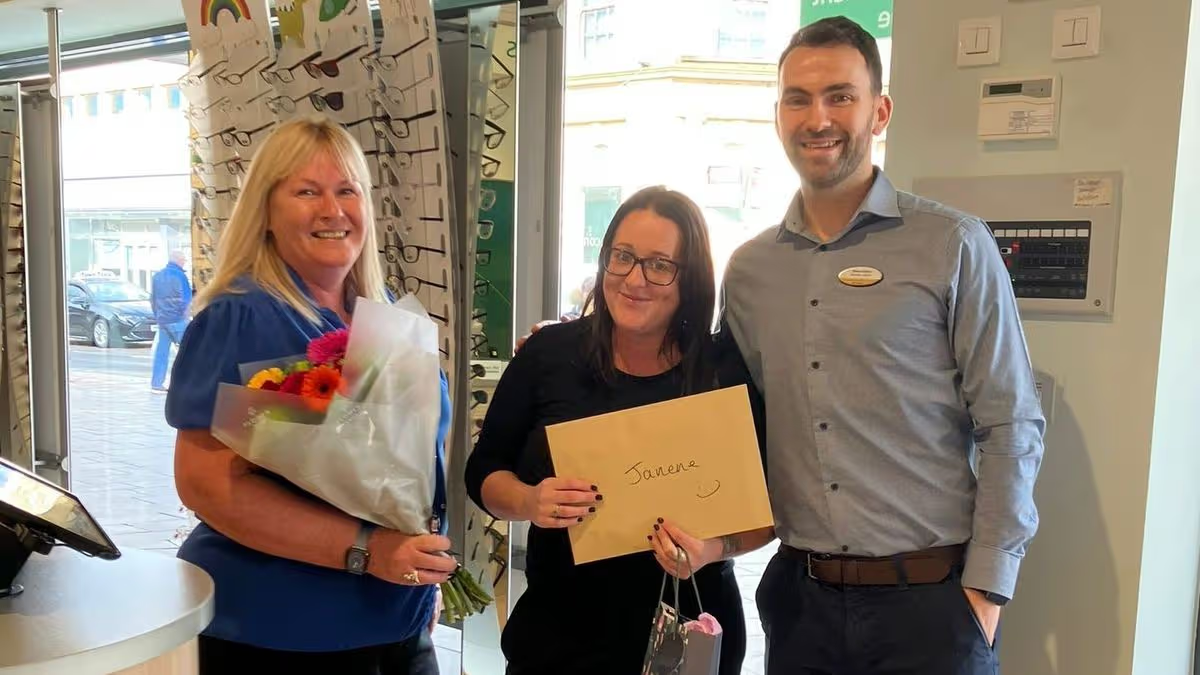
Leading the celebrations is optical assistant June Boyle, who is marking an incredible 30 years with the opticians business.

Optical assistants Janene Bell and Debbie Kelly are celebrating 23 and 15 years of service respectively, while Morgan Grieve and Claire Brannen have both reached their 10-year milestones.

Across the wider team, assistant manager Susanne Fearon is celebrating 16 years of service, and retail supervisor Jennifer McLaughlan is marking 15 years.

Within the lab technician team, Connor Grieve and John McKelvie are marking 15 and 10 years in their roles, while Phil McVey is celebrating six years.

Advertisement

Cleaner Carol O’Byrne, who works across both stores, is also celebrating 10 years of dedicated service, helping to ensure a welcoming and professional environment for customers and colleagues alike.

READ MORE: Man rushed to hospital with ‘serious injuries’ after single-vehicle crash in Coatbridge

Together, the 11 colleagues represent exactly 160 years of combined service across the Airdrie and Coatbridge stores, playing vital roles from clinical support and laboratory services to retail assistance and maintaining a welcoming environment for customers.

Ewan Grieve, retail director of Specsavers Airdrie and Coatbridge, said: “I’m incredibly proud to celebrate these significant milestones with our team.

Advertisement

“Hitting a variety of 10, 15 and 30-year milestones is a remarkable achievement – and a testament to the dedication, professionalism and passion each of these colleagues bring to their roles.

‘Between the team, they have supported thousands of customers and helped shape the warm, community-focused environments we’re so proud of in Airdrie and Coatbridge.

READ MORE: Singer-songwriter James Grant returning to Airdrie Town Hall

“We’re here to support our customers through the generations, and having such experienced, long-standing team members means families know they can trust us with their eye care year after year.

Advertisement

‘Their loyalty and commitment are at the heart of our continued success, and we’re grateful for the difference they make every single day.’

The stores continue to invest in their teams and services, ensuring customers in Airdrie and Coatbridge receive the highest standard of eye care and customer service.

To book an appointment, or speak to a member of the team at Specsavers Airdrie or Specsavers Coatbridge, visit the websites https://www.specsavers.co.uk/stores/airdrie or https://www.specsavers.co.uk/stores/coatbridge

READ MORE: People invited to take part in The Big Lunch weekend, packed with food, friendship, fun and community action

Advertisement

*Don’t miss the latest headlines from around Lanarkshire. Sign up to our newsletters here.

And did you know Lanarkshire Live had its own app? Download yours for free here.

Source link

Advertisement
Continue Reading

NewsBeat

What neurodivergent people really think about the words used to describe them

Published

on

What neurodivergent people really think about the words used to describe them

Labels like autism, attention deficit hyperactivity disorder (ADHD) and dyslexia are not new. But the way we understand them is changing.

In recent years, researchers have increasingly worked with neurodivergent people rather than simply studying them from the outside. That change has brought better access to diagnosis, more inclusive approaches in schools and workplaces and a growing challenge to the idea that neurological difference is something to be fixed.

Language sits at the heart of that change. But getting it right can feel daunting. Should we say “a person with autism” or “an autistic person”? Are medical terms respectful, or do they quietly reinforce stigma? And who gets to decide these things anyway?

For years, professionals were encouraged to use person-first language – phrases such as “person with autism” – to emphasise humanity over diagnosis. But research published in 2016 upended that assumption. Autistic people themselves, it turned out, largely preferred identity-first language: “autistic person”.

Advertisement

That finding has been repeated many times since. Until our recent study, however, very little was known about whether the same preferences applied across the wider neurodivergent community. So, our research team – all neurodivergent – set out to discover just that.


À lire aussi :
What autistic people – and those with ADHD and dyslexia – really think about the word ‘neurodiversity’


In our new study, we surveyed more than 900 neurodivergent adults across the UK about their terminology preferences. Participants identified with a range of diagnoses, including autism, ADHD, dyslexia, dyspraxia, dyscalculia, Tourette syndrome and stuttering. For each, we presented a list of commonly used terms.

Some were identity first, such as “dyslexic”. Others were person first, such as “person with dyslexia”. We asked people to rate how likeable and how offensive they found each term. Crucially, we also asked why. Those open-text responses revealed far more than a simple preference list.

Advertisement

What we found

Overall, most groups preferred identity-first language. Terms like “autistic people” or “dyslexic people” were seen as more likeable and less offensive. There were important exceptions. People with Tourette syndrome and people who stutter tended to prefer person-first terms.

And when we looked more closely, the picture became more complicated still. Some groups – particularly people with ADHD – felt that none of the available terms really fit. Many said existing labels were vague or failed to capture the full reality of their lives. “Attention deficit”, for example, was seen as too narrow. People described ADHD as affecting far more than focus, shaping energy, emotions, creativity and daily functioning in ways the term barely hints at.

shutterstock.
Vitalii Vodolazskyi/Shutterstock

In other words, the issue was not just how language was structured, but whether it worked at all.

Across diagnoses, people spoke powerfully about how certain words made them feel. Words such as “disorder” were widely disliked. Many felt they implied something broken or defective, rather than acknowledging that difficulties often arise because society is not designed with neurodivergent people in mind. Several participants said these terms reinforced stereotypes and shaped how others treated them.

Advertisement

Respect, identity and disagreement

Participants were also clear about one thing: people should be allowed to describe themselves in the way that feels right to them. Even among autistic participants – a group with a well-established preference for identity-first language – many stressed that others should be free to choose person-first terms if that reflected their own identity.

Community infighting over “correct” language was seen as unhelpful. Several people pointed out that neurodivergent communities face far bigger challenges than internal policing of words, including discrimination, exclusion and lack of support.

At the same time, participants drew a clear line between self-description and professional language. They felt that teachers, doctors, researchers and journalists should follow group-level community preferences when speaking in general terms – and be open to correction when they get it wrong. Who is using the language, and in what context, mattered enormously.


À lire aussi :
Why it’s time to rethink the notion of an autism ‘spectrum’

Advertisement

What emerged most clearly from our study was that debates about language are rarely just about words. They are about power. About who gets to define whom. And about whether neurodivergent people are seen as fully human, with authority over their own lives and identities. Participants were often less concerned with perfect terminology than with intent, respect and action.

Terminology discussions are not just about language, but about the dehumanisation and associated stigma of people considered “disordered” or “abnormal”. Language shapes action. How we treat people is shaped by whether we see them as being worthy of the same dignity and respect that we afford to those we see as fully human. As such, self-determination, autonomy and respect sit at the centre of such language debates.

We recommend listening to neurodivergent people to find out about their preferences and using the words that they prefer, instead of solely being led by traditions which have developed without the input of the communities we are referring to. When it comes to dignity and respect, actions speak louder than words. People want to feel respected and accepted for who they are, regardless of the labels people use to describe their differences.

Advertisement

Source link

Continue Reading

Trending

Copyright © 2025