In January 2026, he announced that he had been diagnosed with stage four cancer and would be beginning treatment soon.
Today( July 20), Kevin’s family announced that he had passed away in a touching statement.
The family’s statement read, “It is with immense sadness that we announce that Kevin Keegan has passed away at the age of 75.
“The former England player and manager had been battling cancer and was surrounded by his wife and daughters in his final moments.
“Kevin, a double Ballon D’or winner, was a much loved husband, father and grandfather.
“The family would like to thank Kevin’s incredible medical team for all their support.
“This is a hugely difficult time and they are requesting space and privacy.”
![]() Kevin Keegan with Alex Ferguson. (Image: PA)
Kevin Keegan with Alex Ferguson. (Image: PA)
Kevin Keegan dead aged 75
Known affectionately as “King Kev” and “Mighty Mouse”, Keegan was renowned for his tireless running, fearless attacking play, dribbling ability, finishing and aerial prowess.
A charismatic figure on and off the pitch, he was widely regarded as one of England’s greatest footballers and became a hero to generations of supporters.
Born on 14 February 1951 in Armthorpe, near Doncaster, Keegan grew up in a football-loving family and developed his skills playing in local parks before beginning his professional career with Scunthorpe United in 1968.
His performances quickly attracted attention, and in 1971 he was signed by Liverpool manager Bill Shankly.
At Liverpool, Keegan became a central figure in one of the club’s most successful eras. Playing alongside John Toshack, he helped the team win three First Division titles, two UEFA Cups, the FA Cup and, in his final season, the club’s first European Cup in 1977.
He scored 100 goals in 323 appearances for Liverpool before moving abroad in a then-record British transfer to Hamburger SV.
Keegan’s time in Germany cemented his reputation as a global star. He won the Ballon d’Or award in 1978 and 1979, becoming one of the first English players to achieve such international recognition.
He also helped Hamburg win the Bundesliga title in the 1978–79 season and reached the European Cup final in 1980.
Returning to England, Keegan joined Southampton in 1980, where he enjoyed one of the finest seasons of his career. In 1982 he was named PFA Players’ Player of the Year after scoring 30 goals in all competitions.
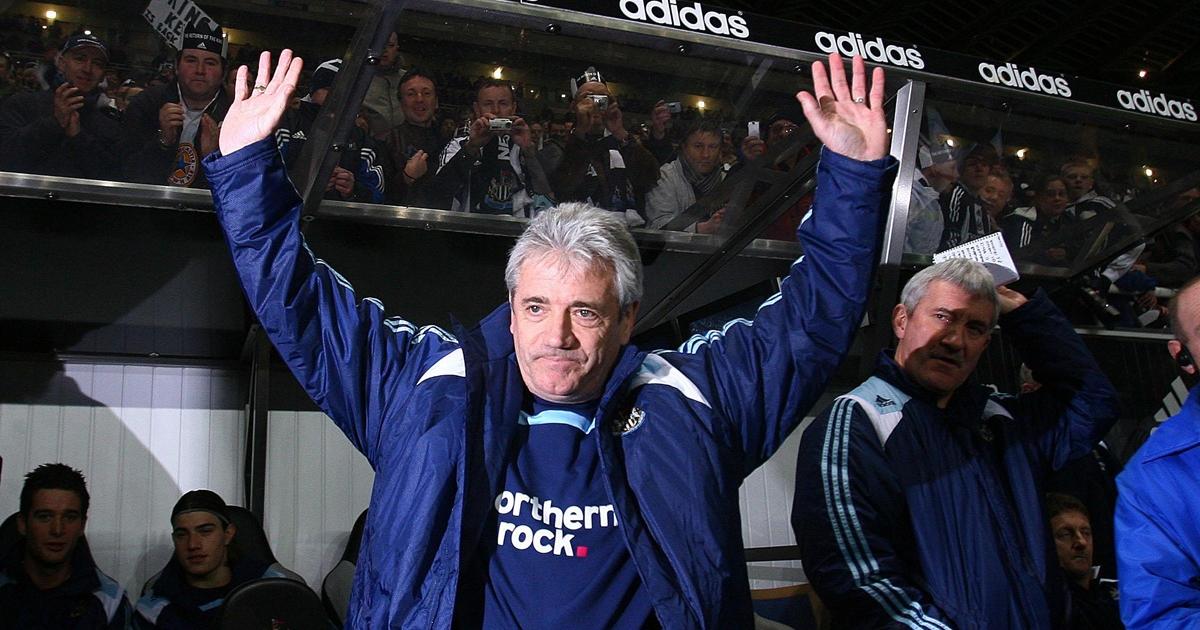
Later that year he moved to Newcastle United, fulfilling a childhood dream of playing for the club he had supported through his family’s influence.
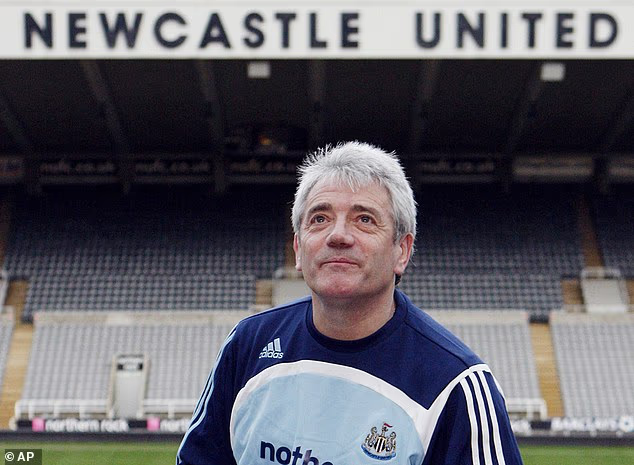
Keegan became an icon at Newcastle, where his passion and connection with supporters made him one of the most loved players in the club’s history.
He scored 48 goals in 78 appearances and helped Newcastle earn promotion to the First Division before retiring from playing in 1984.
His international career saw him win 63 England caps and score 21 goals. He captained his country 31 times, including at the 1980 European Championship and the 1982 World Cup, and was recognised as one of England’s leading players during the 1970s and early 1980s.
After retiring as a player, Keegan turned to management, with his first managerial role coming at Newcastle United in 1992, where he transformed the club’s fortunes.
He guided Newcastle to promotion as First Division champions in 1993 and built a thrilling attacking side that finished runners-up in the Premier League in the 1995–96 season.
Keegan later managed Fulham, leading them to promotion, before becoming England manager in 1999. He guided the national team to qualification for Euro 2000 but resigned in 2000 following defeat to Germany in a World Cup qualifier.
In 2001, Keegan took charge of Manchester City and immediately led them back to the Premier League as First Division champions. He later guided the club into European competition before leaving the role in 2005.
He returned for a second spell as Newcastle manager in 2008, though the appointment lasted only eight months before he resigned following disagreements with the club’s ownership and transfer policy.
A subsequent Premier League arbitration panel ruled in Keegan’s favour in a dispute over his departure.
Beyond football, Keegan became a popular television personality, appearing as a pundit and in documentaries, while his distinctive style and personality made him one of the most recognisable sporting figures of his generation.
Away from the game, Keegan was married to Jean Woodhouse, whom he met in 1970, and the couple had two daughters. He was also remembered for his famous 1970s hairstyle, his warm relationship with supporters and his infectious enthusiasm for football.
























































You must be logged in to post a comment Login