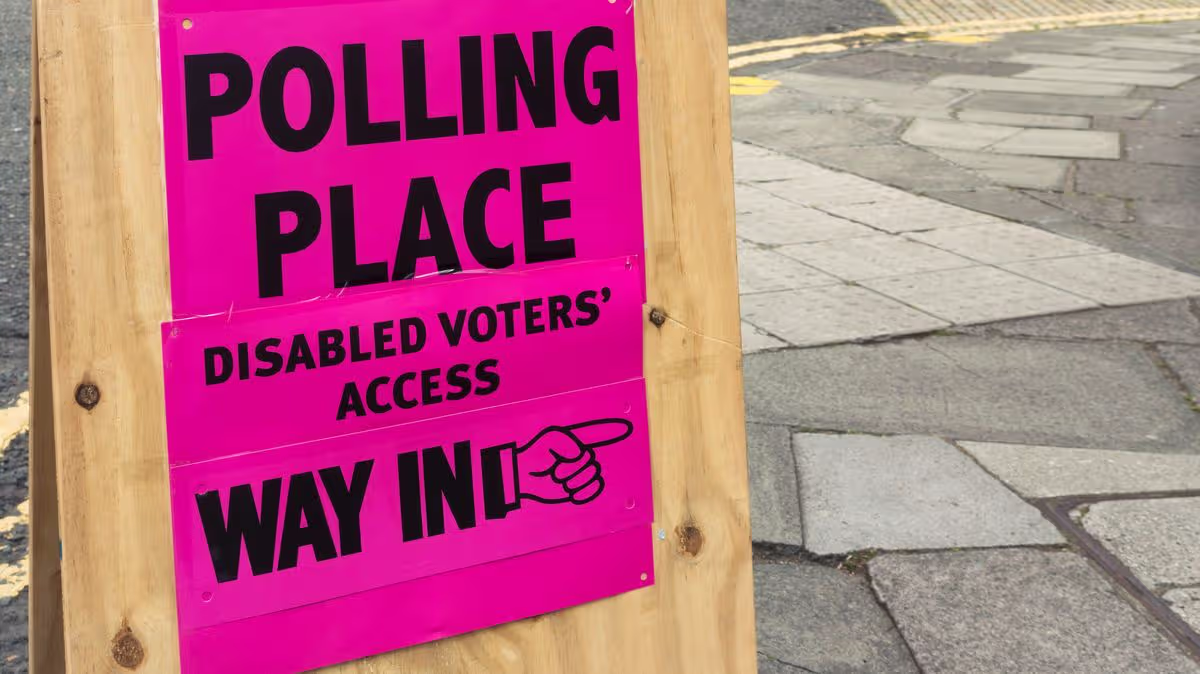
Cambridge voters can cast their vote a week early in a new pilot scheme
Voters have praised a new pilot scheme allowing them to cast their vote for next week’s election early.
Advertisement
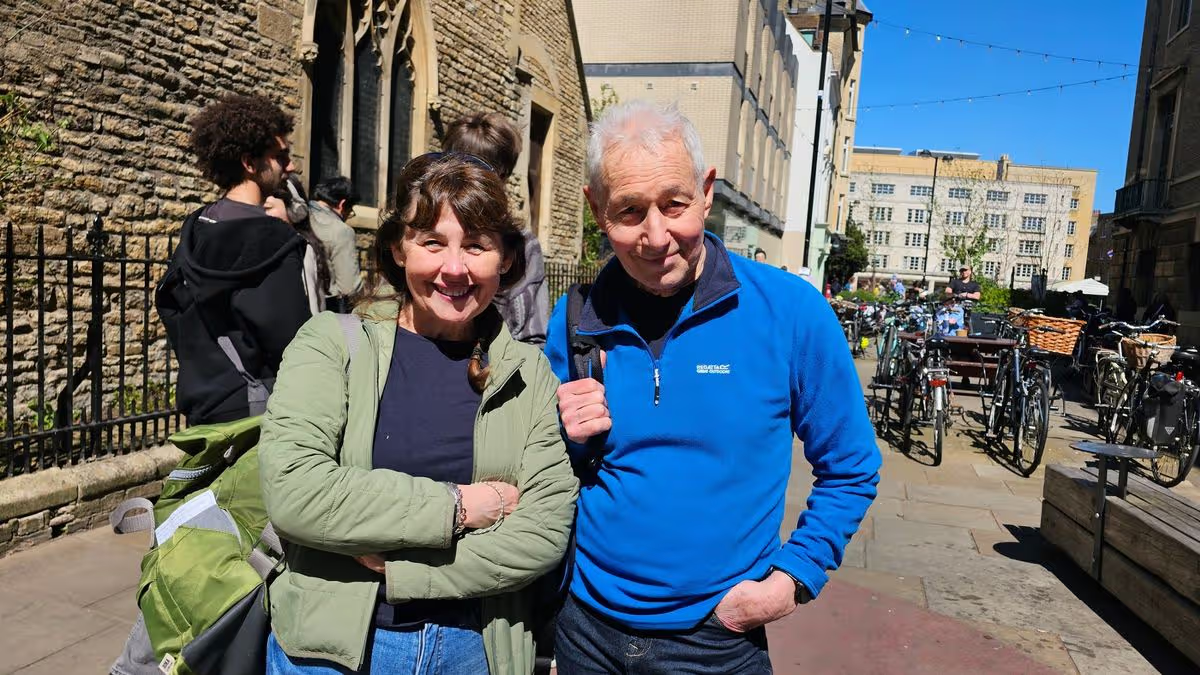
Alex Downie and his wife Fiona came to vote at the Guildhall in central Cambridge – one of three locations where votes can be cast this week from Thursday to Saturday. He said: “I think it’s a very good idea, because if you’re going on holiday it’s otherwise very awkward to vote – it’s important for democracy.”
The 77-year-old said they would register for postal vote otherwise, but praised the scheme for making voting much more convenient. He said: “It’s better this way because we come into town quite a lot – it’s nice and straight forward.”
Fiona, 66, added: “It’s fantastic, because as Alex said we were going to be away so we didn’t want to do a postal vote because it’s more hassle. Sometimes it’s hard to vote when you’re working, I once almost missed it. This was perfect – quick, easy and we were coming into town anyway. Do it all the time, do it in the general election!”
Voting will be open from 9am until 6pm and votes can also be cast at the Meadows Community Centre on Arbury Road and Clay Farm Centre in Trumpington.
Advertisement
Chris Burton said: “It was a very, very, efficient experience – immensely convenient because I’m not here next week and I don’t want to go through the postal vote and all of that. I do tend to be away from Cambridge the first or second week in May – this week is earlier, it’s the first week.”
Though he said he’s never failed to vote while being away, the 80-year-old said: “It just gets more complicated when you’ve got to take a postal vote.
“The fact you can come here and bring the day forward effectively works very well indeed – so as long as the system works on a legal basis, that’s all that matters.”
Advertisement
Corin Hoad praised the flexibility, after a last-minute change of plans meant he couldn’t make it to vote in person on May 7. The 32-year-old said: “It means I can still make it without having to worry about getting a last-minute postal vote or anything like that.
“You should have another few days to vote and have that flexibility – it should enable a lot more people to vote for a politician they might not have been able to.”
Vicky Jenner, electoral services manager at Cambridge City Council, said turnout was “busier than we expected” suggesting earlier voting “is an appealing option for many.”
Advertisement
She said: “We’ve received some very positive feedback from early voters, and in fact some people were so keen to take part that they were queuing outside at 9 o’clock this morning, waiting for the doors to open. Ultimately, giving people more options for how they can cast their vote is about strengthening democracy and enabling even more people to get involved in important decisions affecting their lives and the place they call home.”
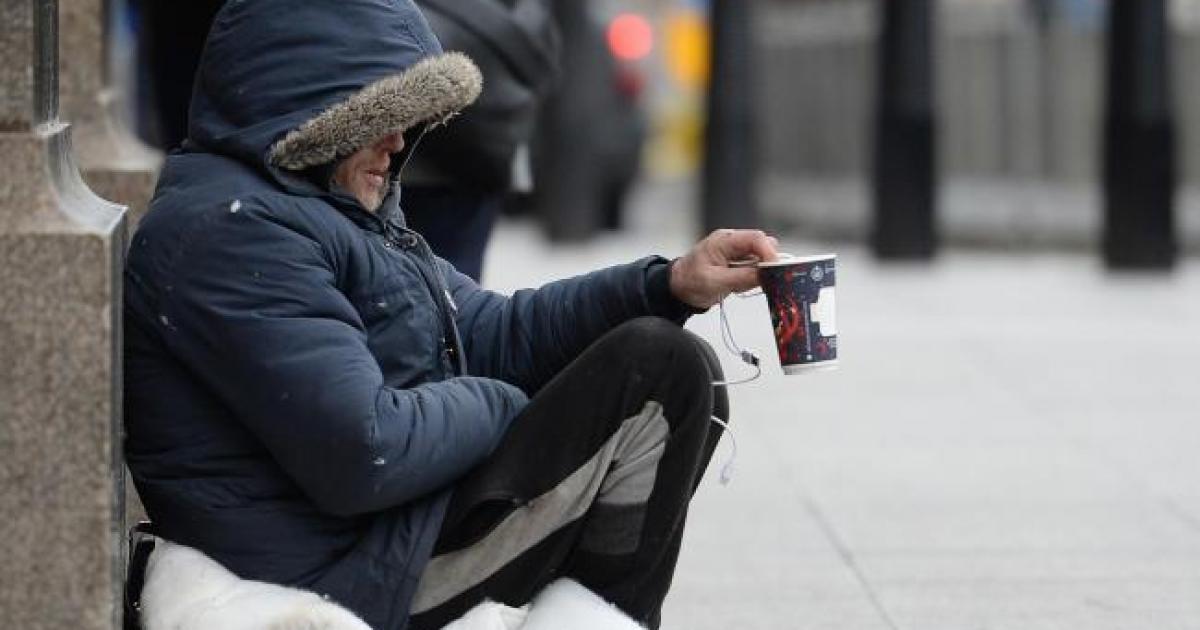
Three Scarborough properties owned by North Yorkshire Council will be turned into temporary accommodation for homeless households.
NYC said the properties identified for refurbishment were in a poor state of repair which resulted in them remaining empty.
They are located within Scarborough, allowing easy access to services, the authority added.
Advertisement
Eight flats are set to be created from the three properties, according to documents published by the council.
A spokesperson told the Local Democracy Reporting Service (LDRS) that the authority anticipates that the refurbishment required to bring the properties back into residential use, including any necessary planning permissions, will be completed by the end of 2027.
“Using council-owned homes for homeless households is one of our strategies to provide appropriate accommodation and reduce the use of B&B and hotels, which is more cost-effective and delivers better outcomes for families and individuals,” the spokesperson added.
In recent years, Scarborough has faced some of the highest levels of homelessness in North Yorkshire.
Advertisement
NYC was one of the first authorities in England to introduce a 100 per cent tax on second homes.
The scheme has raised about £10 million so far, according to North Yorkshire Council, all of which has been ring-fenced for housing projects.
The authority’s homelessness strategy for 2025-30 states that while North Yorkshire is among the least deprived local authority areas in England, there are “pockets of deprivation, particularly in Scarborough”.
“Approaches are consistently highest in Scarborough and Harrogate. We are seeing more single homeless people and more people declaring support needs and multiple disadvantages, including mental health, substance use, domestic abuse, and contact with the criminal justice system,” the report states.
Advertisement
The number of households in temporary accommodation is also increasing, with the council reporting particularly strong demand in Scarborough and Harrogate.
NYC’s gross spend on emergency accommodation has grown rapidly in recent years, from just over £500,000 in 2019/20 to over £2.1 million in 2022/23 – an increase of 400 per cent. Particular pressures are within the Scarborough area, with more people staying longer in emergency accommodation, according to the report.
Actor Sarah Michelle Gellar, best known for her role as teenage demon slayer Buffy Summers, recently shared in an interview that she uses an “EMS suit” during workouts to stay fit. And she’s not the only one who has made this form of exercising a trend – with celebrities from Tom Holland to Cindy Crawford all using EMS workouts to get fit.
EMS, short for electromyostimulation, uses electrical impulses to support muscle contraction. The idea is that the machine uses electricity to stimulate your muscles to work harder, to help you get more out of your workout without lifting heavy weights.
Some companies even claim that a 20-minute EMS session (roughly half an episode of Buffy the Vampire Slayer), can deliver the same benefits as hours in the gym. For people who are short on time, dislike traditional exercise or want a novel way to stay motivated, this sounds very tempting.
But while EMS does have some evidence-based benefits, particularly in rehabilitation settings, it’s far from a miracle shortcut to getting fit.
Advertisement
In clinical contexts, EMS works by sending small, electrical impulses through pads placed on the skin. Just like with regular workouts, these impulses stimulate nerves, triggering muscles to contract. Physiotherapists have used EMS for decades to help patients recovering from injury or surgery, especially when regular movement is difficult.
It has even been used in spaceflight simulations, in which participants have to lie in a bed tilted slightly downwards for extended periods to replicate the effects of being in space on the body. This can cause muscles to weaken, and research has explored EMS as a countermeasure loss during these conditions, particularly when combined with resistance exercise.
What is new is the rise of “whole body EMS” in the fitness industry. Instead of placing electrodes on a single muscle group, users wear the suit or vest. It contains multiple electrodes targeting the arms, legs, glutes, back and core. During a session, people perform squats, lunges, arm raises and more, while the suit pulses to intensify muscle activation.
In practice, the benefits depend heavily on who you are and how you train.
Advertisement
Does it work?
Research suggests EMS can help maintain strength and muscle mass after five to six weeks of treatment compared with doing a conventional exercise programme. A meta analysis in 2023 supports this, outlining how between one to three whole-body EMS sessions per week for six to 12 weeks can result in modest improvements in muscle mass, strength and power.
Another separate study also reported strength gains after a similar frequency of use in non-athletic, sedentary adults.
For people who are sedentary, or have joint pain, EMS may offer an alternative to stimulating muscles without the stress of exercise.
However, it is not a substitute for the broad, well established, whole-body health benefits of regular exercise, which extend beyond muscles to the cardiovascular and metabolic systems, among others.
Advertisement
This distinction becomes clearer when we look at regular exercisers. A recent study, which examined EMS use in athletes and trained sportspeople, found little to no benefit on performance measures such as jumping, sprinting or agility.
EMS suits may not be as beneficial for regular exercisers. Chester-Alive/ Shutterstock
Furthermore, studies examining strength outcomes report inconsistent findings, with results varying widely depending on the EMS protocol used and how it’s combined with conventional training.
Taken together, these findings suggest that for people who are already active, EMS probably won’t provide a meaningful edge as conventional exercise is already very effective. Lifting weights, sprinting or doing bodyweight exercises all produce strong, natural muscle contractions without the need for electrical stimulation.
Should you try it?
Overall, the research on EMS is promising but far from definitive. Many studies are small, short term, or use differing protocols, making comparisons difficult.
Advertisement
Some combine EMS with exercise, while others compare it to doing nothing at all. This makes it challenging to determine whether improvements come from EMS alone, its combination with exercise or because participants are just being more active.
Because EMS can produce strong, involuntary muscle contractions, overuse can also lead to severe muscle soreness or, in rare cases, a condition called rhabdomyolysis. This occurs when muscle tissue breaks down rapidly and releases proteins into the bloodstream, harming the kidneys.
Several cases of rhabdomyolysis have been reported after intense EMS sessions, even after a single workout. For this reason, it is recommended to start slowly, stay hydrated and use EMS under professional supervision.
Advertisement
Cost is another factor. Whole body EMS sessions can be expensive, and purchasing a suit for home use can be even more costly. For many people, that money might be better spent on evidence-based, personal training or structured exercise programmes.
For those that can afford it, EMS should be viewed as a supplement, not a substitute, for regular exercise. The strongest evidence for improving health, fitness and body composition still comes from simple, consistent habits: lifting weights a few times a week, walking more, cycling, swimming, jogging or following a gym programme.
There’s no shortcut around the basics. EMS may add a spark, but it can’t replace the benefits of real exercise.
Alvarez scored a penalty in the second half of Atletico’s 1-1 draw with Arsenal on Wednesday night but was forced off with 13 minutes remaining after injuring his ankle in a challenge from Eberechi Eze.
Atletico travel to Valencia for their game in La Liga on Saturday and Simeone has revealed that Alvarez will play no part in the fixture.
Simeone is also without his son Giuliano, Alexander Sorloth, Jose Gimenez and Pablo Barrios.
Advertisement
‘If there hadn’t been a match on Tuesday, Julian probably wouldn’t have made it to Saturday either, nor would Sorloth, Giuliano, Barrios or Gimenez,’ Simeone said on Friday.
‘It’s more than clear that we’re going to go with those who are in the best shape to compete tomorrow.
‘The players’ form dictates it [the squad rotation]. We’re going to field fresh legs so we can compete, which is what matters to us.
‘I expect a lot from them. They have the responsibility of being at Atletico Madrid and the opportunity to show why they’re at Atletico Madrid.’
Netherlands attacking midfielder Simons has been ruled out for the rest of the season after rupturing his anterior cruciate ligament (ACL) against Wolves – and joined a lengthy Spurs injury list.
Striker Dominic Solanke also went off at Molineux with a hamstring injury, while goalkeeper Guglielmo Vicario will also be unavailable against Villa – with Ben Davies, Mohammed Kudus, Dejan Kulusevski, Wilson Odobert and Cristian Romero among long-term absentees.
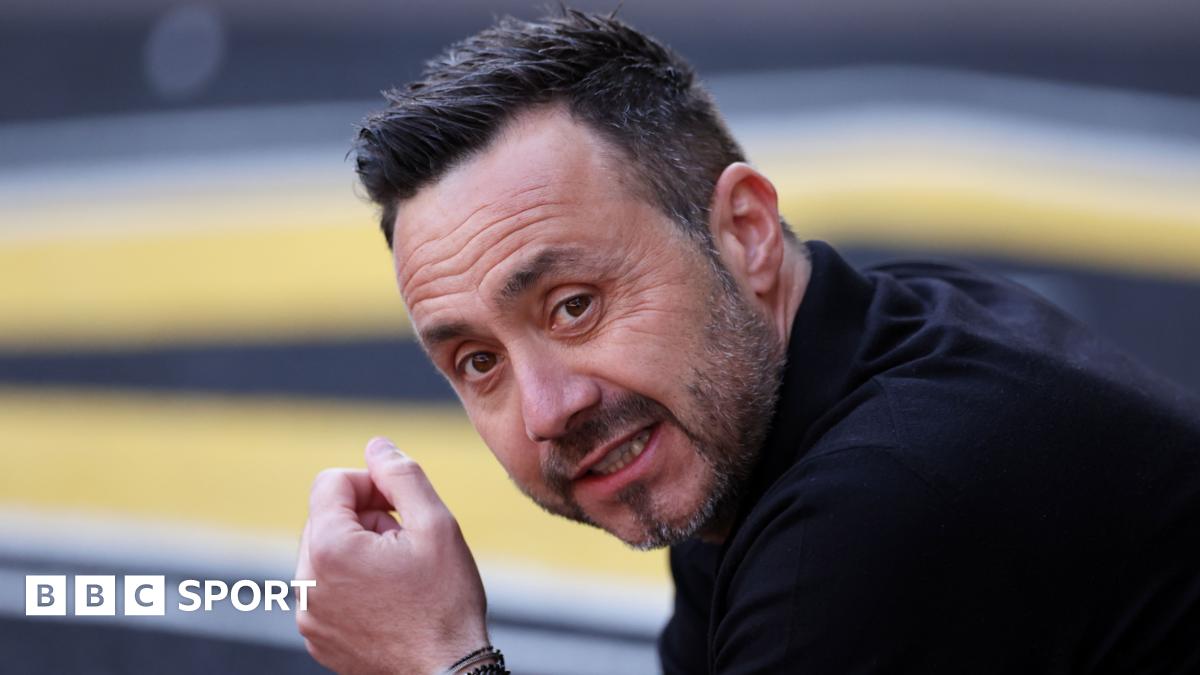
“I want to keep the focus on ourselves and the quality of my players,” De Zerbi said.
“We go to play against one of the best teams in this moment Premier League, but if Tottenham win at Villa Park it’s not a miracle. Maybe we lose but we have the quality to win this game. It’s not a miracle. We have to be positive.
Advertisement
“If Xavi and Solanke are injured we can play with [Randal] Kolo Muani, [Mathys] Tel, Richarlison… they are different but very good players. All these things – I don’t have too much time to hear these things.
“We are good enough to win the games and to stay up and then we will see because it’s the unique way. The way I know is to work hard, give my best, to trust in my idea of the players, their confidence and to be realistic.”
However, one player close to returning from a long-term injury is James Maddison.
The England playmaker has not featured this season because of an ACL injury but was named on the bench against both Brighton and Wolves.
Advertisement
“I would like to play with Maddison because he is a special player but we have to consider physical condition, a lot of things. But I think he can be important in the next three games,” De Zerbi said.
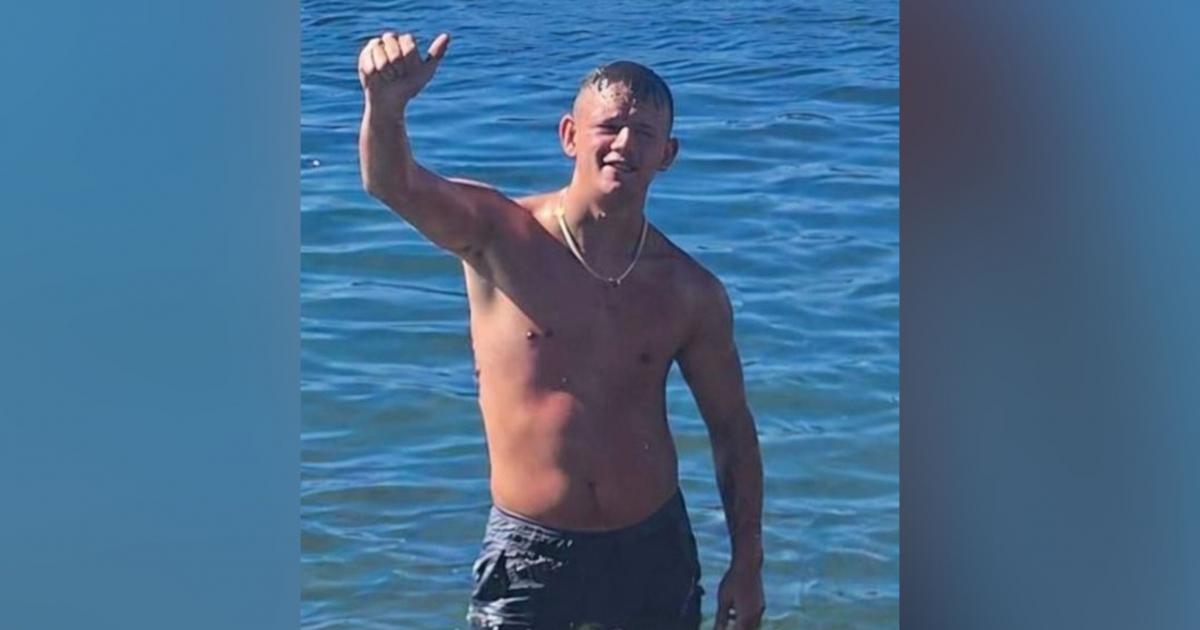
Lewis Smith died following a crash on the A1(M) near Chester-le-Street on Sunday evening (April 26).
Lewis was a passenger in a Mercedes A Class which is believed to have struck the central reservation before coming to rest on its roof.
The 20-year-old, from South Shields, sustained life-threatening injuries and was taken to the Royal Victoria Infirmary, in Newcastle, for treatment.
Sadly, he died the following afternoon.
Advertisement
Today (May 1), his family have paid a touching tribute to Lewis, describing him as their “beautiful, sparkly blue-eyed boy who had a great respect for everyone”.
They said: “You were the glue that kept our family together with a smile that lit up a thousand skies.”
“We are heartbroken to say that Lewis sadly took his last breath at 3pm on Monday, April 27.
“Lewis, our beautiful, sparkly blue-eyed boy; you were your dad’s sun, and your mam’s voice of reason.
Advertisement
“You were the glue that kept our family together with a smile that lit up a thousand skies.
“He was a young lad, only aged 20, and had his whole life ahead of him.
“He already had a holiday booked for his 21st to Ibiza in July and had only been back home for a few days following his first holiday away without family before this tragedy struck.
“He was the best big brother to his little sister, Ezzy, best aunty Lew to his niece, Revada, and, although the youngest brother of Stephen and Ryan, he was definitely the wisest.
Advertisement
“Lewis was a handsome young man with great respect for everyone. He had a heart of gold and wouldn’t hesitate to help someone in need and would always put a smile of the faces of the people he was with.
“He was a well-known lad in South Shields as he had an excellent attitude and was polite and well-mannered around everyone he met.
“He will be deeply missed by his dad (Smeg), mam, Kristen, his nine-year-old little sister, Esmée, his two older brothers, Stephen and Ryan, his five-year-old niece, Revada, his grandparents, uncles and aunties, cousins, as well as all his friends and the people he knew.
“We are all heartbroken and totally devastated by this loss. We all love you, son – you will be missed but never forgotten and will stay in our hearts and thoughts forever.
Advertisement
“Sleep tight our beautiful boy, may you rest in peace.”
The crash took place at around 10.50pm on the northbound carriageway.
The driver, 20-year-old Jordan Orrock, sadly died at the scene.
Jordan Orrock (Image: DURHAM POLICE)
A second passenger, a man also aged 20, sustained serious injuries and was taken hospital for treatment.
Advertisement
A North East Ambulance Service (NEAS) spokesperson said previously: “We received a call from police on Sunday (April 26) night at 10.53pm to reports of a serious road traffic collision on the A1(M) north near junction 62 at Chester-le-Street.
“We sent six resources to the scene, including a duty officer, hazardous area response team, a doctor and emergency ambulance crews, which began arriving at the scene from 10.59pm onwards.
“We took two male patients to the Royal Victoria Infirmary in Newcastle, one of whom was in a critical condition, for further treatment.”
The road was closed in both directions for several hours while collision investigators worked at the scene.
Advertisement
A spokesperson from Durham Police said: “Officers would like to speak to anyone who witnessed the collision, or anyone who may have dashcam footage of the vehicle prior to the incident, which happened at around 10.50pm.”
Anyone with any information should contact the Serious Collision Investigation Unit by emailing sciu@durham.police.uk, or call 101 quoting incident number 516 of April 26.
He will also miss the opening two games of next season after being hit with a suspension
Ospreys wing Daniel Kasende has been banned for four matches after being shown a red card in his side’s United Rugby Championship clash with Cardiff last week.
Advertisement
The 30-year-old was carded in the first half of the Ospreys‘ 24-21 defeat at Cardiff Arms Park after leading with his forearm while in possession and striking opposition fly-half Callum Sheedy in the face. While Kasende was initially shown a yellow card by referee Christopher Allison, this was later updated to a 20-minute red card.
Appearing at a disciplinary hearing earlier this week, the South African back accepted that he had committed an act of foul play warranting a red card.
An initial six-match suspension was halved due to Kasende’s apology, acceptance of the red card and good conduct throughout the disciplinary process. However, an extra match was then added to his ban due to his previous disciplinary record.
Advertisement
With the Ospreys now out of the URC play-off race, the wing will now miss the final two matches of this season as his side take on Scarlets this weekend before travelling to Leinster seven days later.
He will also miss the first two games of the 2026/27 campaign, which will include pre-season matches.
There were four other yellow cards shown during Friday’s ill-disciplined derby match, with Ospreys’ Dan Edwards and Owen Watkin and Cardiff’s Liam Belcher and Josh McNally all sent to the sin-bin.
Ospreys head coach Mark Jones admitted after the game that was “surprised” Kasende had not been given the same punishment as Belcher, who was shown an early yellow card for a head-on-head collision with Morgan Morris.
Advertisement
“They [match officials] thought his [Kasende] offence was worthy of a red for 20 minutes,” he said. “I’m not adept with the criteria of these things, but I look at the force of the forearm compared to two heads coming together and one looks like it could do more damage than the other.
“I was surprised perhaps they weren’t treated the same, but that’s not for me to comment on.”
A statement from the URC on Friday read: “The disciplinary process related to Daniel Kasende’s red card in the BKT United Rugby Championship Round 16 game against Cardiff Rugby on Friday, April 24 has resulted in a four-game suspension.
“After an act of foul play by player No 14 (Daniel Kasende), referee Christopher Allison showed the player a red card in the 18th minute of the game under Law 9.11 – Players must not do anything that is reckless or dangerous to others including leading with the below or forearm.
Advertisement
“In the Player’s responses to the Judicial Officer overseeing the disciplinary process (Rose Alice Murphy), he had accepted that he had committed an act of foul play which warranted a red card. Ms. Murphy found that the incident met the red card threshold, with entry of mid-range warranting six weeks.
“The player received three weeks (50%) mitigation due to his apology, acceptance of the red card and good conduct throughout the disciplinary process, however due to his previous record, a further week was added which results in a four-game suspension.”
More than 4.2 million people are registered to vote in the Scottish Parliament election in May.
14:54, 01 May 2026Updated 15:03, 01 May 2026
Scotland is gearing up for a major national vote that will determine its political direction for the coming years, with voters set to choose representatives at both local and regional level.
Millions of people across the country are expected to take part in the Scottish Parliament election on Thursday, May 7, marking the biggest democratic event since the 2024 general election. Most postal votes have already been delivered, while in person voting will take place between 7am and 10pm on election day.
All 129 Members of the Scottish Parliament will be elected, shaping the composition of Holyrood and influencing decisions on key areas such as health and education.
Advertisement
Here is everything you need to know about the upcoming elections.
Which elections are taking place in Scotland on May 7?
The Scottish Parliament election will decide who governs across a range of devolved issues. Every MSP seat is up for election, including 73 constituency MSPs and 56 regional MSPs, with seven representatives elected in each region.
Voters are given two ballot papers and cast two separate votes. One vote is used to elect a constituency MSP, while the second is for regional representation.
Advertisement
Constituency MSPs are chosen using a first past the post system, where the candidate with the highest number of votes wins. Regional MSPs are selected through a proportional system, with voters choosing either a political party or an individual candidate. Seats are then allocated using a formula that takes into account both the number of votes received and the number of constituencies already won.
In most cases, the party with the highest number of MSPs goes on to form the Scottish Government, with its leader becoming first minister.
What ID do I need to vote?
Voters do not need to show identification to vote in person in the Scottish Parliament election.
How can I find my polling station?
The deadline to register to vote was midnight on Monday, April 20. Anyone who registered by that date should receive a polling card with details of their local polling station.
Advertisement
Those who have voted previously and have not changed address will already be registered. Polling station locations can also be checked online by entering a postcode here.
What is the difference between the two ballot papers?
At polling stations, voters will receive two ballot papers. The lilac coloured paper is for the constituency vote and lists candidates standing to represent the local area. The candidate with the most votes becomes the constituency MSP.
The peach coloured ballot paper is used for regional voting. Instead of selecting an individual candidate, voters choose a party or a name from a list. This system is designed to balance representation, meaning parties that win fewer constituencies have a greater chance of gaining regional seats.
When will the results be announced?
Unlike some previous elections, ballots will not be counted overnight. Counting will begin on the morning of Friday, May 8, with results expected throughout the afternoon. A full picture of the outcome is likely by early evening.
Advertisement
Who can vote in Scotland?
Anyone aged 16 or over on polling day who is registered to vote and lives in Scotland can take part, provided they are not legally excluded. Eligible voters must be British or Irish citizens, or qualifying foreign nationals with permission to live in the UK.
Ways to vote in Scotland
There are three ways to vote in the election. People can vote in person at polling stations between 7am and 10pm, vote by post, or appoint a proxy to vote on their behalf.
Voting rules and what to expect
Polling stations provide writing materials, although voters can bring their own. Mobile phones can be used for accessibility purposes such as magnification or lighting, but taking photos inside polling stations is strictly prohibited.
Taking selfies or revealing how someone has voted can result in a fine or imprisonment. Photography is allowed outside polling stations.
Advertisement
Other polling station guidance
Children are allowed to accompany voters but cannot mark ballot papers. Assistance dogs are permitted, while other animals may be allowed at the discretion of local authorities.
People who have consumed alcohol can still vote unless their behaviour is disruptive. Staff are available to assist disabled voters, and equipment such as tactile voting devices and large print ballot papers should be provided.
The airline has confirmed that the route will be axed at the end of May despite running since 2018, as the price of jet fuel leads to cancellations of a number of flight routes across Europe
A major European airline has cancelled a route from the UK that has been running since 2018, and confirmed that it’ll no longer be available to book as of the end of the month.
Advertisement
The move comes as the German airline, one of the largest in Europe, also announced plans to cut 20,000 short-haul flights over the summer as conflict in the Middle East drives up jet fuel prices and has led to fears of shortages.
Lufthansa, the flag carrier airline for Germany, has announced it’ll no longer run its service between Glasgow and Frankfurt, and the last flight between the two cities available to book is on May 31.
A Lufthansa Group spokesman told the Scottish Sun: “Following the decision to discontinue Lufthansa CityLine flights effective immediately and to reduce unprofitable flights in the future due to high kerosene prices, the Lufthansa Group’s summer schedule will be reduced by just under one percent of available seat-kilometers.
Advertisement
“To compensate for this, Lufthansa has taken immediate action and will consolidate the flight schedules of all Lufthansa Group airlines, cancelling 20,000 flights by the end of October. As a result of these decisions, flights to Glasgow will no longer be operated by Lufthansa via Frankfurt, but for the time being, by Edelweiss via Zurich offering access to the Swiss International Air Lines network.”
Lufthansa isn’t the only European airline to cancel flights. Scandinavian airline SAS confirmed it’s cancelling over 1,000 flights after the cost of jet fuel doubled. In the USA, United Airlines announced it would be cancelling 5% of flights in the short term, aiming to restore its full schedule by autumn.
Other airlines are raising prices to try to cover the soaring costs. Virgin Atlantic has said the aviation sector “cannot absorb” jet‑fuel costs at their current levels, forcing them to increase ticket prices.
Corneel Koster, Virgin Atlantic’s chief executive, told the Telegraph: “I was looking at improving our financial results by a really significant chunk. And then this happens. We have never seen jet fuel at these levels, with prices more than doubling. The industry cannot absorb increases like this.”
The airline has added a surcharge of £50 to its economy class tickets, while those in premium economy will need to pay another £180, and business class passengers will be faced with an additional £360 cost. However, the airline says these surcharges still don’t cover the rising costs.
After labour costs, fuel is the second-highest expense for airlines, and accounts for around 27% of its operating expenses. Prices for jet fuel have doubled since the conflict began, rising from $85 to $90 per barrel to $150 to $200 per barrel in recent weeks.
Have a story you want to share? Email us at webtravel@reachplc.com
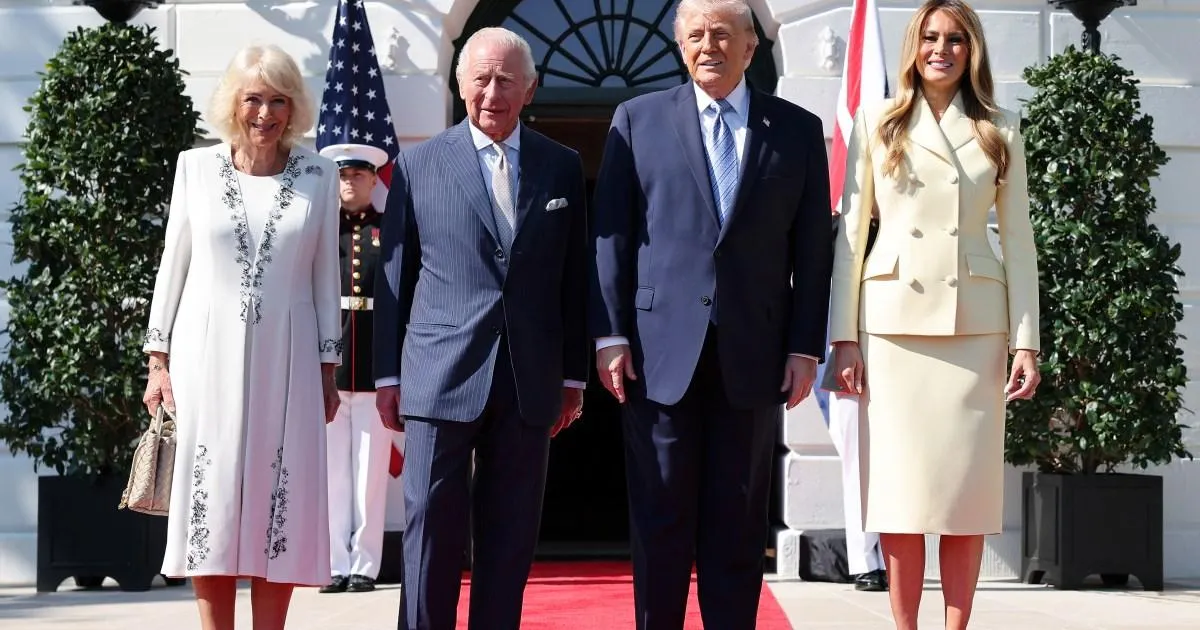
Considering the current state of UK and US relations, due to the transatlantic divide over Ukraine and the Middle East, it was a high-stakes trip.
However, the POTUS and monarch seemed to put on a united front, with state dinners and ceremonial welcomes used to complement and tease one another.
Case in point: Trump described the two countries’ friendship as ‘unlike any other on Earth,’ while the King poked fun at the president, reminding him that he’s Canada’s head of state.
Advertisement
Schmoozing aside, it would be remiss to ignore all the times Trump went against the royal rule book. After all, he’s famous for it.
Sign up for all of the latest stories
Start your day informed with Metro’s News Updates newsletter or get Breaking Newsalerts the moment it happens.
Advertisement
From ignoring the ‘look but don’t touch’ policy to history literally repeating itself, it’s like it’s 2018 all over again.
You know, when he brazenly walked in front of Queen Elizabeth during a guard of honour inspection?
Trump walked in front of Queen Camilla
Yep, we’re going straight in on this one, because Trump clearly hasn’t learned his lesson from last time.
The president cut in front of Queen Camilla (Picture: Getty Images)
On Tuesday, the King and Queen were returning to the White House after a private welcome from the president and First Lady, Melania. The foursome was greeted by a long line of officials, including US Secretary of Defense Pete Hegseth.
Footage showed Camilla making the first move by shaking the outstretched hands. But it wasn’t long before Trump was caught cutting in front of the Queen, who immediately appeared taken aback.
Advertisement
King Charles was also reportedly caught in the crossfire, struggling to get through the handshakes. Eventually, the pair both gave up, as Trump continued to make himself the centre of attention.
Trump touched King Charles
We get it, there are a lot of rules and regulations surrounding the royals — but one of the most well-known is the ‘don’t touch’ policy.
The royals have a strict ‘no touching’ rule (Picture: Getty Images)
Traditionally, protocol states that non-royals cannot touch royals unless they have initiated the contact first.
On this trip, Trump clearly considered himself an exception to the rule, as when greeting the monarch at the White House, he patted the King’s shoulder.
Following the interaction, body language expert Judi James told the Daily Mail: ‘This touch on the arm as they walked in also looked like a more political gesture.
Advertisement
‘It was also the first real gesture of active, “special” friendship here from a rather more subdued Trump than the very effusive rituals we saw during their last meeting [in September 2025].’
Despite the breach, James suggested that it didn’t offend the monarch.
She said: ‘Charles has always seemed more relaxed about that than his mother [Queen Elizabeth II], and Trump’s gesture was extremely tempered for Trump.
‘Just a light, tentative and rather polite touch to steer Charles inside.’
Advertisement
And again… (Picture: Getty Images)
This wasn’t the only time some non-consensual touching went on, though. Trump also touched Charles’ knee during a meeting in the Oval Office of the White House.
Trump made it political
This is perhaps the most shocking disregard of the rules. Anyone who has watched The Crown will know that the monarch’s job is to keep things neutral, especially when it comes to politics.
Trump broke the golden royal rule (Picture: Getty Images)
Royals cannot be seen favouring one political party over another, as it undermines their position as non-partisan. The monarchy’s survival literally depends on staying above politics, as part of the King’s job is to serve as a constant figurehead while elected governments change.
Still, it’s one rule for us and another for Trump, as he announced to a room of dignitaries that the King ‘agreed’ with him on the ongoing war in Iran.
Following a lavish White House state dinner, he said: ‘Charles agrees with me even more than I do. We’re never going to let that opponent have a nuclear weapon.’
Former Cardiff City captain Sean Morrison’s exclusive WalesOnline column
14:31, 01 May 2026
Advertisement
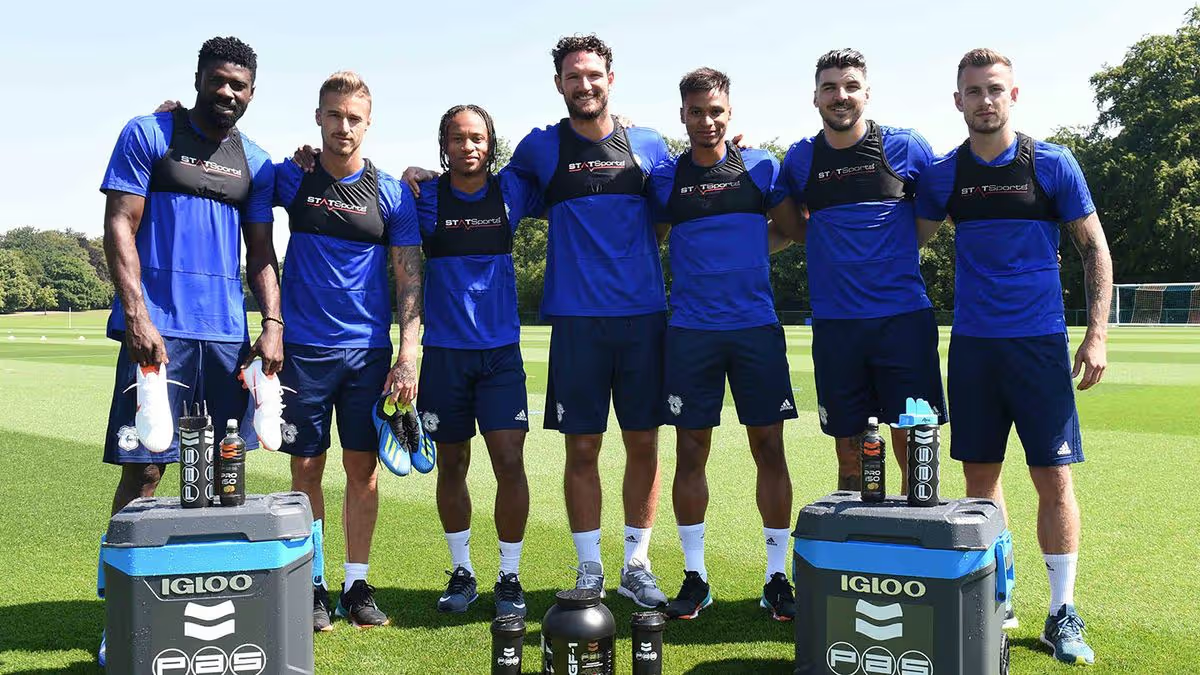
Pre-season is a funny one. From the outside, people see footballers jetting off to Portugal or Spain and assume it’s all sunshine and easy living. The reality? Sometimes it can be absolute chaos.
First things first, the off-season is crucial.
As soon as the season finishes, the lads are told to have two or three weeks of complete rest – and I mean complete. Don’t lift a finger.
Even if you haven’t played much, you’ve still trained non-stop for 10 months, so your body needs that reset.
Advertisement
After that, you’re back into it with an individual programme. Everyone’s is different – gym work, running, body fat targets. The staff keep a close eye on it all.
These days, most lads are so professional you don’t really see anyone coming back in terrible shape anymore. If you do, you’re instantly chasing it and it shows.
I always liked to tick over a bit, especially with leg weights, just to keep everything around my knees strong. But generally, by the time you report back, you should be ready to hit the ground running – literally.
When I first started, it was brutal. Eight to 10 days of just running – 400s, 800s, mile runs – getting absolutely beasted. Football in the morning, running again in the evening. Proper old-school.
The best one I ever did was under Nigel Adkins at Reading.
Everything was ball-based from day one. You were still working hard, still getting your fitness in, but it was all through football. I loved that. And to be fair, that’s the direction the game has gone in now.
But not every pre-season is smooth.
Advertisement
I remember one Cardiff City pre-season in Germany under Paul Trollope and Ryland Morgans – the pitches we played on were a disgrace. Rock hard, massive divots everywhere, genuinely dangerous.
I remember Lennie Lawrence saying, “We can’t play here, this is ridiculous!”
One game got called off, so we went back to the training ground to play another game and it was abandoned half way through because of a storm!
The gym wasn’t great, the hotel was poor… those little details matter more than people think. The boys were then chasing minutes right into the start of the season and we started terribly. Paul lost his job after just 12 games that season. Brutal.
Advertisement
Then you’ve got the random stuff.
Under Neil Warnock we went to Champneys in Leicestershire during a heatwave. No air-con.
It was so hot that lads were dragging their mattresses into corridors and even bathrooms just to try and sleep.
Me and Joe Ralls were roommates and we would to sit in the lobby playing cards until late because we didn’t want to go back to the room.
Advertisement
Trying to train properly after a night like that? No chance.
And then there was America, the summer immediately after relegation from the Premier League.
We turned up to one pitch and it wasn’t even grass — it was sand. They’d spray-painted it green to make it look like a football pitch! You could literally put your finger straight through it. It was baking hot as well. You couldn’t make it up.
After that we went to New Mexico, about 1,500 metres above sea level. The altitude was a killer.
Advertisement
We had to train at the crack of dawn, couldn’t do double sessions, and again the pitches weren’t great. It’s a bit of pot luck sometimes – you just don’t know what you’re going to get.
There were also the “team bonding” ideas, which weren’t always popular to say the least.
I remember being sent into a forest in Germany with a compass and coordinates. We were split into five teams and had to rendezvous back at a certain point.
Lads had never read a map in their lives. Kagisho Dikgacoi was still with Cardiff then and, bless him, I remember the look on his face. He was devastated!
Advertisement
It was pouring down with rain – an absolute shambles. The boys were fuming. They gave us a golf day afterwards to calm things down!
It’s a different world now, though.
When I was 17 at Swindon, the bonding session was going out into the nearest town after the last game and being on it until 4am. I loved it at the time, trying to prove myself with the older lads. That doesn’t really happen anymore.
Advertisement
These days it’s more golf, maybe a quiet beer, a bit of fishing. I remember doing clay pigeon shooting one pre-season. The professionalism has gone through the roof.
And to be fair, clubs are smarter with pre-season planning now.
Brian Barry-Murphy, returning to his hometown, will know exactly what he’s getting – pitches, facilities, all of it.
Advertisement
Because trust me, if you get that wrong, it can make a long few weeks feel even longer.
And, needless to say, this pre-season is important. There is a real buzz and momentum around Cardiff and there will be positive press and a little spotlight on them when that Championship season hurtles around in August. And rightly so.
They are an exciting team, group of players and staff. With supporters on their side, I cannot wait to see what they do this summer and am already excited to see this team test themselves back in the Championship.
First, though, it’s time for them to rest. They’ve certainly earned it.



















































You must be logged in to post a comment Login