NewsBeat
Can fermented food move beyond the hype?

Fermented foods have gone from niche health-shop staples to supermarket mainstays, promising everything from better digestion to a more sustainable way of eating. But is there substance behind the trend, or has fermentation become the latest food buzzword?
For years, fermentation was something most people barely noticed. It sat in the background of everyday eating: the tang of yoghurt, the funk of blue cheese, the fizz of beer and the sharpness of pickles.
Now, it is everywhere. Kimchi has become a supermarket staple. Kombucha is no longer confined to health food shops. Sourdough went from niche bakery obsession to lockdown essential. Miso, kefir and sauerkraut have become shorthand for “gut health”, while probiotic claims and microbiome-friendly marketing have become some of the food industry’s favourite sales pitches.
That growth is being driven not just by health claims, but also by changing tastes. Fermentation can make vegetables more savoury, more complex and, crucially, more satisfying.
One convert to fermentation is Neil Rankin. At places such as Pitt Cue Co, Smokehouse and Temper, Rankin became one of Britain’s best-known advocates for fire cooking, barbecue and nose-to-tail eating. Now he is betting that the future tastes more like mushrooms, onions and beetroot.
He still eats meat, but says he no longer sees it as the most exciting or important direction for food culture. Fermented vegetables, by contrast, feel more relevant to the future. Part of that future, he argues, is environmental. Meat is already expensive and, in his view, it is likely to become more so.
“The meat and dairy industry is currently subsidised heavily,” he says. “I just think the metrics around it just aren’t going to work in the future.”
That does not mean fermented vegetables are a silver bullet. Plenty of consumers became disillusioned with the first wave of plant-based food, which often relied on ultra-processed ingredients, additives and lab-style engineering.
Fermented vegetables feel more relevant to the future
“I think people will prefer animal products to that sort of stuff because it just doesn’t give you the emotional reward that real food does,” he says. “It needs to come from a place of trust. It needs to be built up. It needs to be delicious and nutritious.”
Rankin has recently released a range of fermented products under the brand symplicity foods, built around simple ingredients such as mushrooms, beetroot and onions rather than protein isolates or powders.
“These ingredients are abundant throughout the world. This is not some niche ingredient that we’re using,” he says. He adds that there are ample ‘wonky’ vegetables that might not make supermarket shelves but can certainly be turned into fermented products.

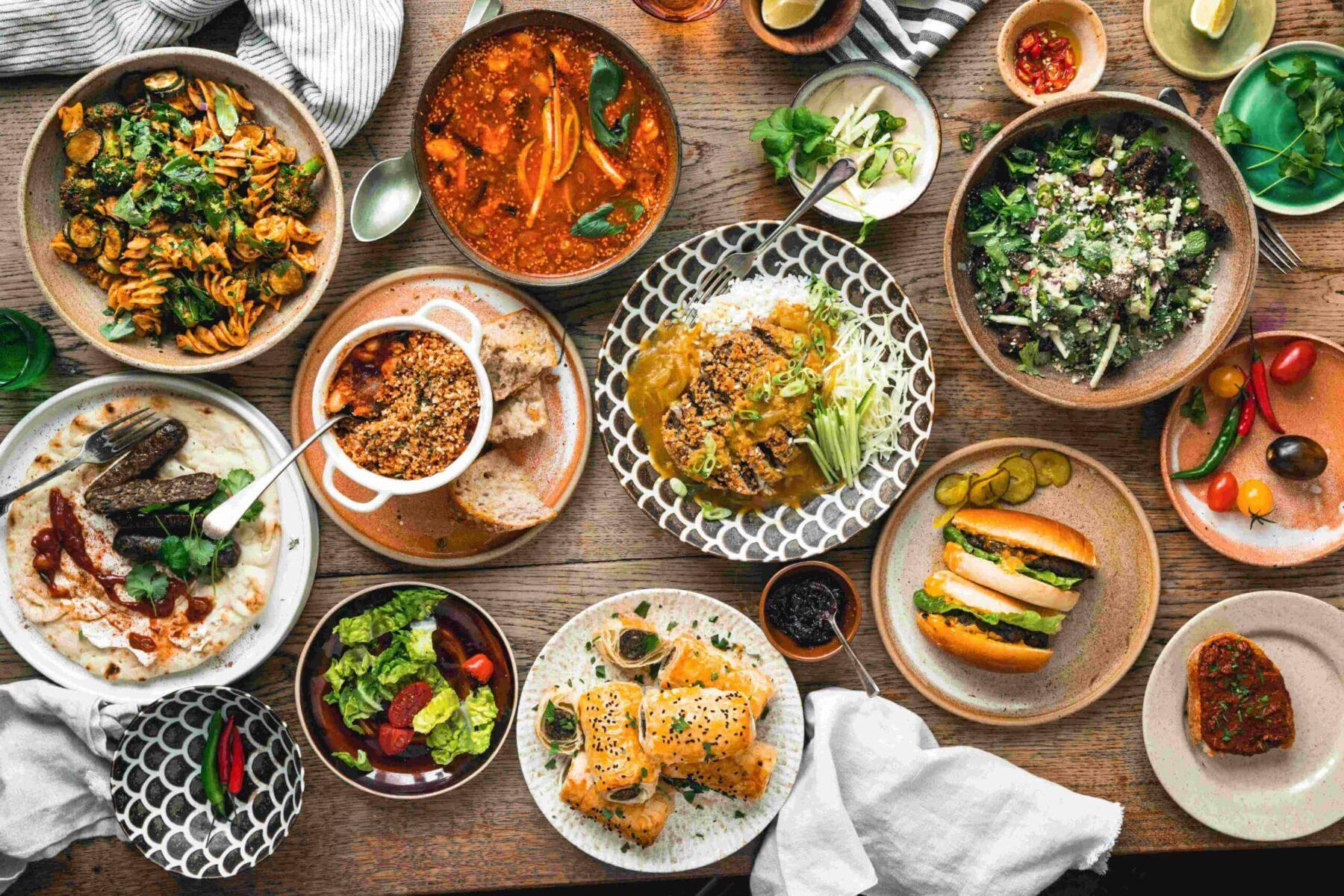
That focus on whole ingredients is part of what has made fermentation attractive to health-conscious shoppers. The theory is simple enough: fermented foods can contain beneficial bacteria, known as probiotics, which may help support digestion, immunity and gut health.
There is growing evidence that fermented foods can positively affect the gut microbiome, both in the short and long term. Some studies suggest they can help increase microbial diversity in the gut, which is associated with better digestion and overall health.
But the science is still developing, and there is a risk that the marketing has raced ahead of the evidence.
The British Dietetic Association says that fermented foods can support the microbiome, but that more studies are needed before stronger health claims can be made.
These ingredients are abundant throughout the world. This is not some niche ingredient that we’re using
Immunologist Daniel M. Davis warned that although microbial diversity is linked to good health, “the evidence is largely correlative rather than causative,” and scientists still do not fully understand what makes a healthy microbiome.
People often buy fermented products believing they are a cure-all for digestive problems, immunity and general wellbeing, when the evidence is much more mixed.
Rankin is careful not to oversell the benefits. “I don’t think there’s any silver bullet ingredient or product that’s out there that’s going to change it,” he says. “It’s going to have to be something broader than that.”
Dietitian Tanzil Miah has warned that many products “lose some of that goodness in the processing and batch production”. He also acknowledges that cooking can reduce some probiotic benefits, although he says: “There are some survivable pre-biotics in there.”
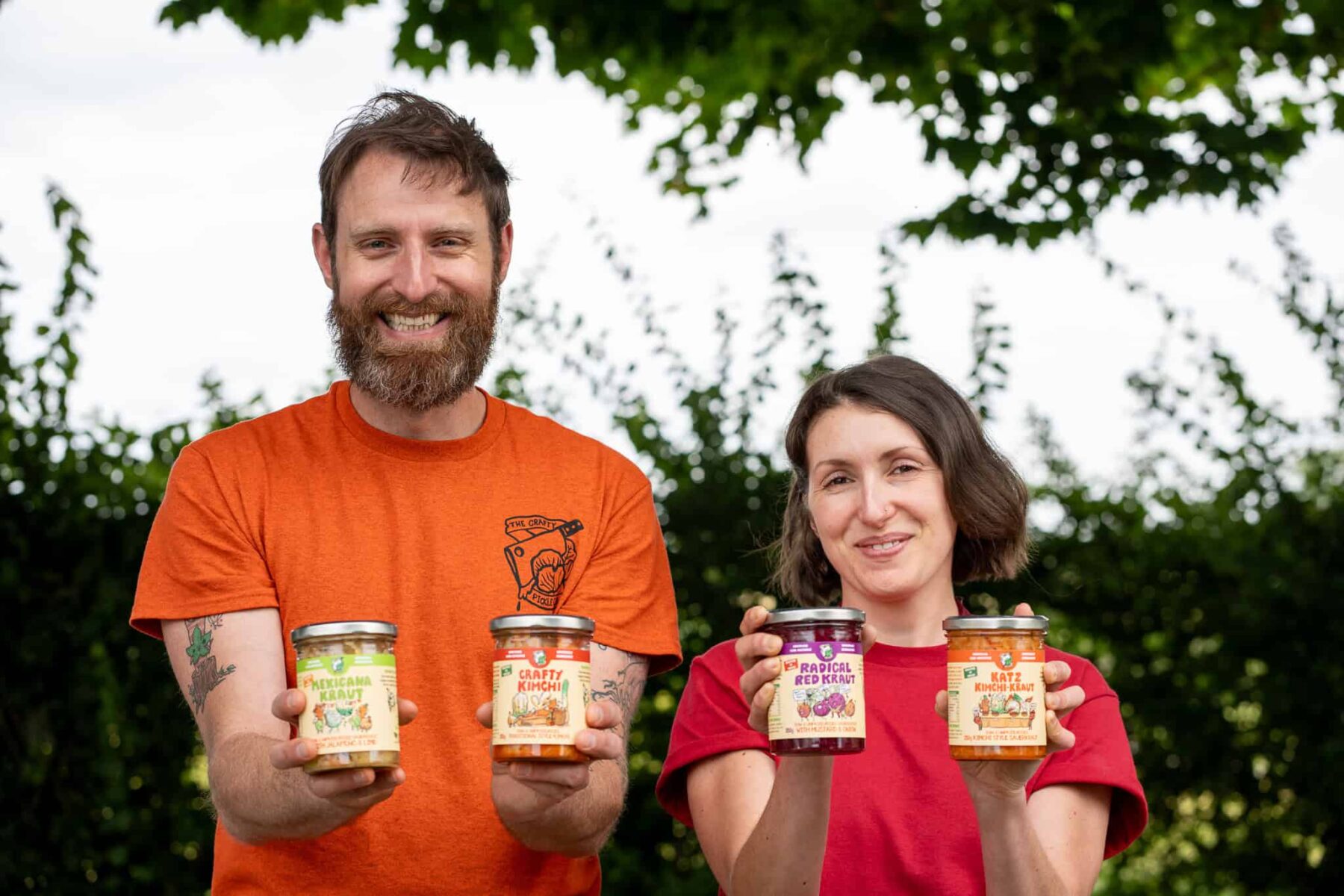
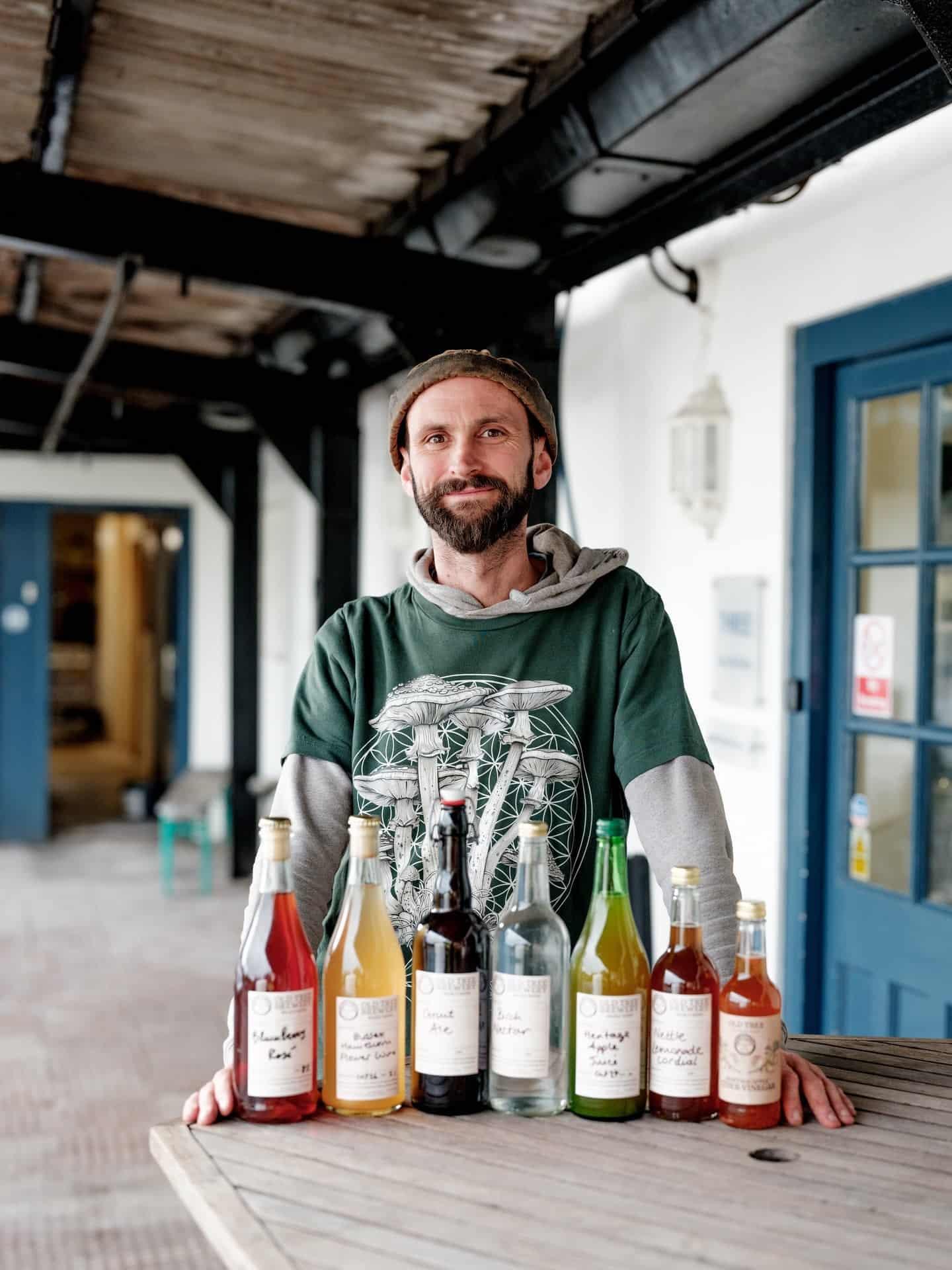
The rise in popularity of all things fermented has put some traditional makers at odds with the mass-produced products that are increasingly visible on sale. Thomas Daniell is the founding director of Old Tree Brewery CIC, which produces kombucha, a type of fermented tea. He argues that the economy’s obsession with shelf life above all else dilutes the positive impact real kombucha can have.
“Bigger brands of kombucha are not made using traditional methods, contain added sweeteners or are just fizzy drinks with a couple of added microbes in,” says Madi Myers, co-founder of Crafty Pickle Co. “We think this gives kombucha a bit of a bad name and doesn’t demonstrate the depth of flavour traditional methods achieve.”
Some products still contain live cultures when they reach the consumer. Others are pasteurised or heat-treated, which can kill off the microbes that many shoppers are seeking out.
The economy’s obsession with shelf life above all else dilutes the positive impact real kombucha can have
Daniell argues that large-scale production can flatten the complexity that makes fermented foods special. “Biological complexity is certainly lost with the fermentation of probiotic and prebiotic foods,” he says. “Biodiversity is what our bodies need, and this is hard to containerise.”
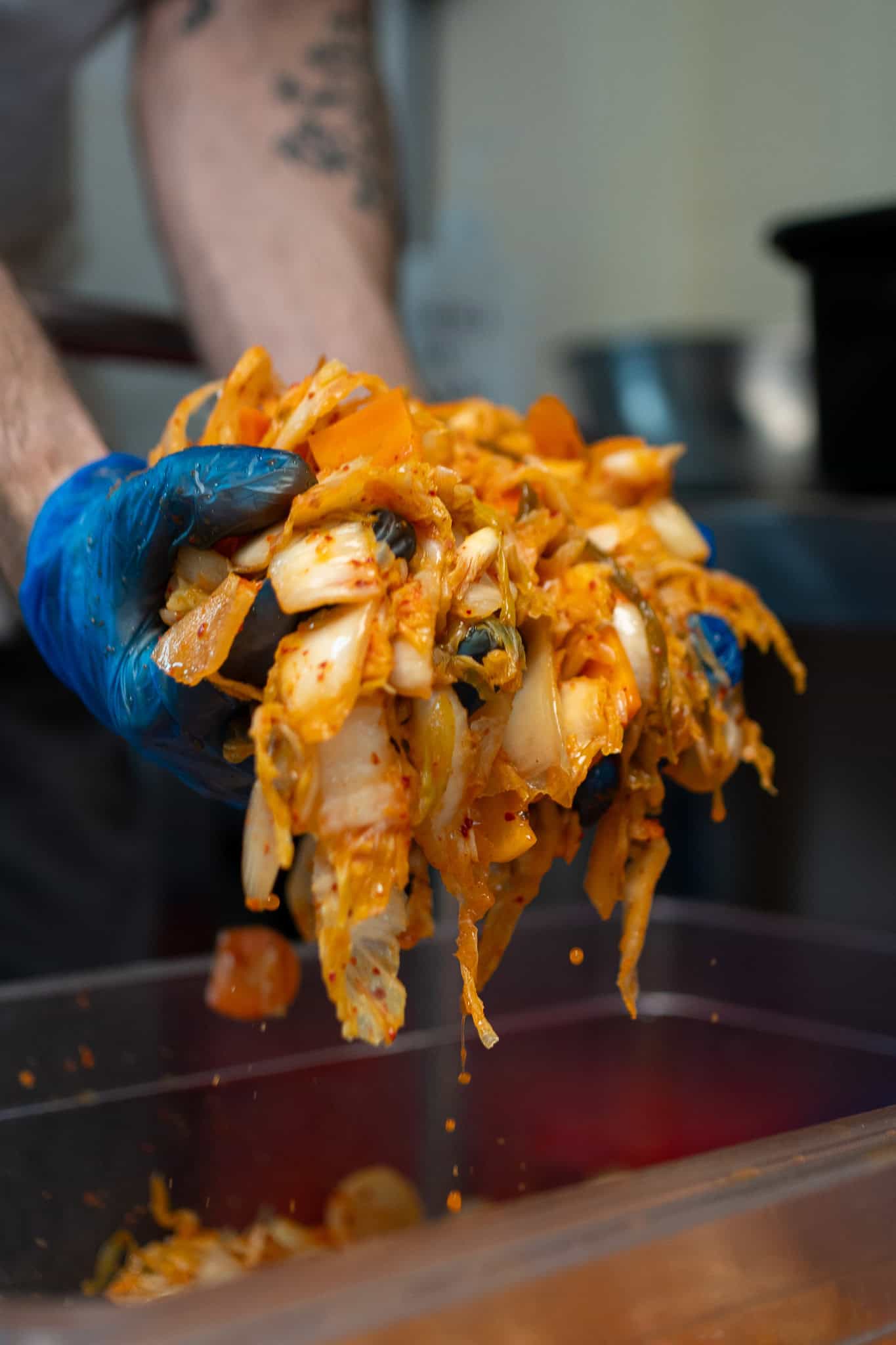
Myers believes fermentation can survive scale, but only up to a point. “You can’t recreate the deliciousness of small-scale fermentation with scale,” she says. “Some of the best batches of sauerkraut and kimchi we’ve made have been in one litre glass jars.” Still, she sees supermarket growth as an overall positive.
“Accessibility is important; most people shop in large supermarkets, so this will be the main way most people are introduced to these foods if they’re on store shelves,” she says. “Scale also helps bring prices down so we’re not opposed to scale and competition.”
There is certainly plenty of appetite for fermented foods. The UK kombucha market alone was worth an estimated £134m in 2024 and is expected to more than triple by 2033. Meanwhile, Ocado reported a 139% rise in searches for “fermented food”, with kimchi sales up sharply and raw sauerkraut also seeing strong growth.
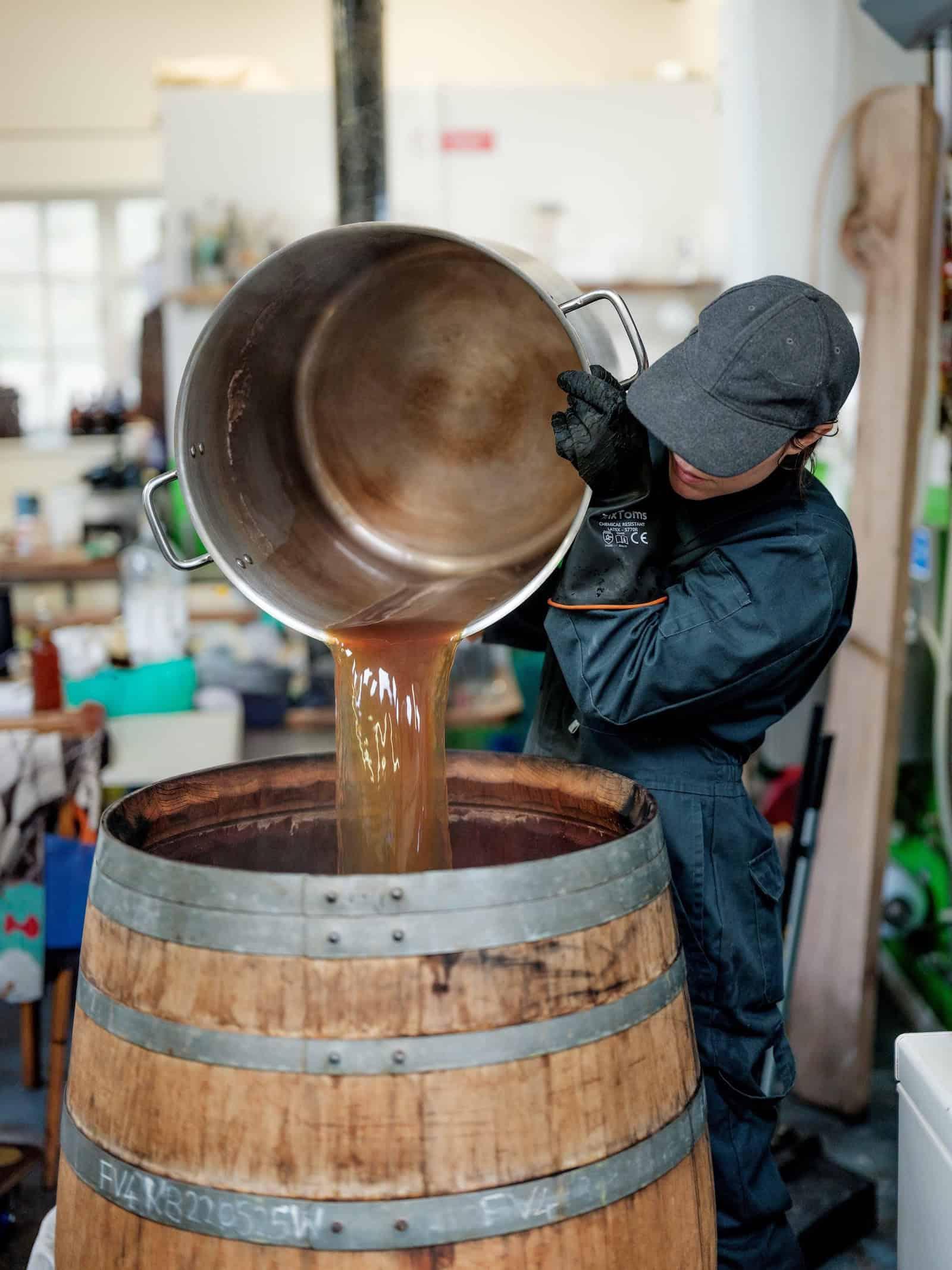
Globally, the fermented ingredients market was estimated at £27.7bn in 2023 and is forecast to reach £57.7bn by 2030. Humans have been fermenting food for thousands of years. Bread, cheese, beer, wine and yoghurt all rely on it. What is changing is that consumers are becoming more aware of the process, more interested in gut health, and more willing to see vegetables as something worth celebrating rather than simply tolerating.
As Myers puts it: “Fermented foods aren’t scary, or novel or niche and it’s certainly not allowing foods to rot as we sometimes hear. It’s a highly controlled, curated process that gives flavours that can’t be achieved in other ways.”
Whether fermentation proves to be a lasting shift or simply the latest food craze will depend on what happens next. If chefs such as Rankin can persuade people that vegetables can be every bit as indulgent, flavourful and satisfying as meat, there may be much more behind the trend than a few jars of kimchi in the supermarket fridge.
Main image: Brooke Lark
Be part of the solution
At Positive News, we’re not chasing clicks or profits for media moguls – we’re here to serve you and have a positive social impact. We can’t do this unless enough people like you choose to support our journalism.
Give once from just £1, or join 1,800+ others who contribute an average of £3 or more per month. Together, we can build a healthier form of media – one that focuses on solutions, progress and possibilities, and empowers people to create positive change.
You must be logged in to post a comment Login