NewsBeat
Can festivals leave the land better than they found it?

As festival season reaches its peak, a growing number of gatherings are going beyond reusable cups and recycling bins, putting land restoration, community action and lasting environmental change on the programme
At UK Youth Day in central London on 12 August, festival-goers arrived carrying the one thing most events spend considerable effort trying to get rid of: plastic waste.
Rather than buying a ticket, visitors to the event in Victoria Embankment Gardens brought polypropylene and HDPE plastics, which were sorted and fed into live recycling workshops. Organisers had three large bags of recyclable material left by the end of the day, which will now be turned into an artwork with advice from sculptor Zac Ové and unveiled at an exhibition and fundraiser at October Gallery in September.
“I am a father, my son is four and I often think about what we are leaving behind for him and his friends,” founder Darcy Thomas tells Positive News. “My son and I often take part and arrange community clean ups in our spare time and it has changed how he views waste and his involvement in keeping our planet clean, stewardship and taking action.”
For Thomas, the point was as much about changing the experience of environmental action as collecting plastic. “I created ‘UK Youth Day’ because young people shouldn’t just inherit the future, they should have the power to shape it,” he says. “International Youth Day is the perfect moment to prove that taking action on recycling and sustainability isn’t a chore; it’s a community celebration, a creative release, and a direct way for our generation to protect the places we love.”
Among those attending was London’s deputy mayor for environment and energy, Mete Çoban, who praised the festival for bringing young people into the climate conversation. “What me and [Mayor] Sadiq [Khan] need to make change is leaders like you who can engage with young people”, he says.
Across this summer’s festival circuit, similar experiments are pushing environmental ambition further than reducing waste or telling audiences to behave more sustainably. Claire O’Neill, CEO and co-founder of A Greener Future, which independently assesses the environmental performance of festivals, sees organisers beginning to think about what remains once everyone has gone home.
“We are definitely seeing a shift from just awareness-raising to building lasting solutions,” O’Neill tells Positive News. She is wary, however, of ‘regenerative’ becoming another convenient green label. “Before a festival can claim to be ‘regenerative’ we look for independent verification of behind-the-scenes activity rather than just taking front-of-house optics at face value.”
Participants of UK Youth Day were encouraged to turn up with plastic waste instead of tickets
The practical solutions can take very different forms. O’Neill points to Grid Faeries and Ecotricity, whose renewable-powered batteries have replaced diesel for stages at events including Massive Attack’s Act 1.5 show, LIDO Festival and WOMAD, as well as the Arcadia Dragonfly at Glastonbury.
Others are putting festival-goers themselves to work. Positive Trace Festival, which runs in Denmark from 19–23 August, combines its music programme with morning sessions restoring land at Hyllegaard Høje. Participants will help establish a market garden, food forest and nut savanna, while creating new habitats and increasing native vegetation. The organisers say previous editions have involved more than 1,000 people in restoration work across more than 30 hectares.
Ten Lives tested a similar idea in Cidadelhe, Portugal, this spring, where festival-goers spent their mornings digging and moving rocks before turning to talks and music later in the day. During its Genesis gathering, they created 69 small earthworks known as ‘Smilands’, designed to slow rainwater as it crosses the landscape, allowing more to sink into the ground rather than carrying soil away.
We are definitely seeing a shift from just awareness-raising to building lasting solutions
For O’Neill, one of the strongest examples of what can happen when this approach is given time is Boom Festival in Portugal. Its reforestation programme began in 2015 and has since planted and cared for more than 1,000 trees, alongside work on gardens, soil, biodiversity and water retention. The site continues to be worked on between festivals, with new swales and a green corridor among the projects under way ahead of Boom’s 30th anniversary edition in 2027.
“A long term favourite of mine for water conservation, ecosystem restoration and rewilding people has been Boom Festival in Portugal,” says O’Neill. “They use the energy of the festival in all of its forms to regenerate the land and boost biodiversity and water retention.”
That word ‘people’ is part of the equation too. Roshan Netalkar has spent a decade exploring the relationship between entertainment and conservation as founder and festival director of Echoes of Earth in Bengaluru, India, where stages and installations are made from materials including scrap metal, discarded cloth and e-waste, alongside renewable energy, waste reduction and conservation workshops.
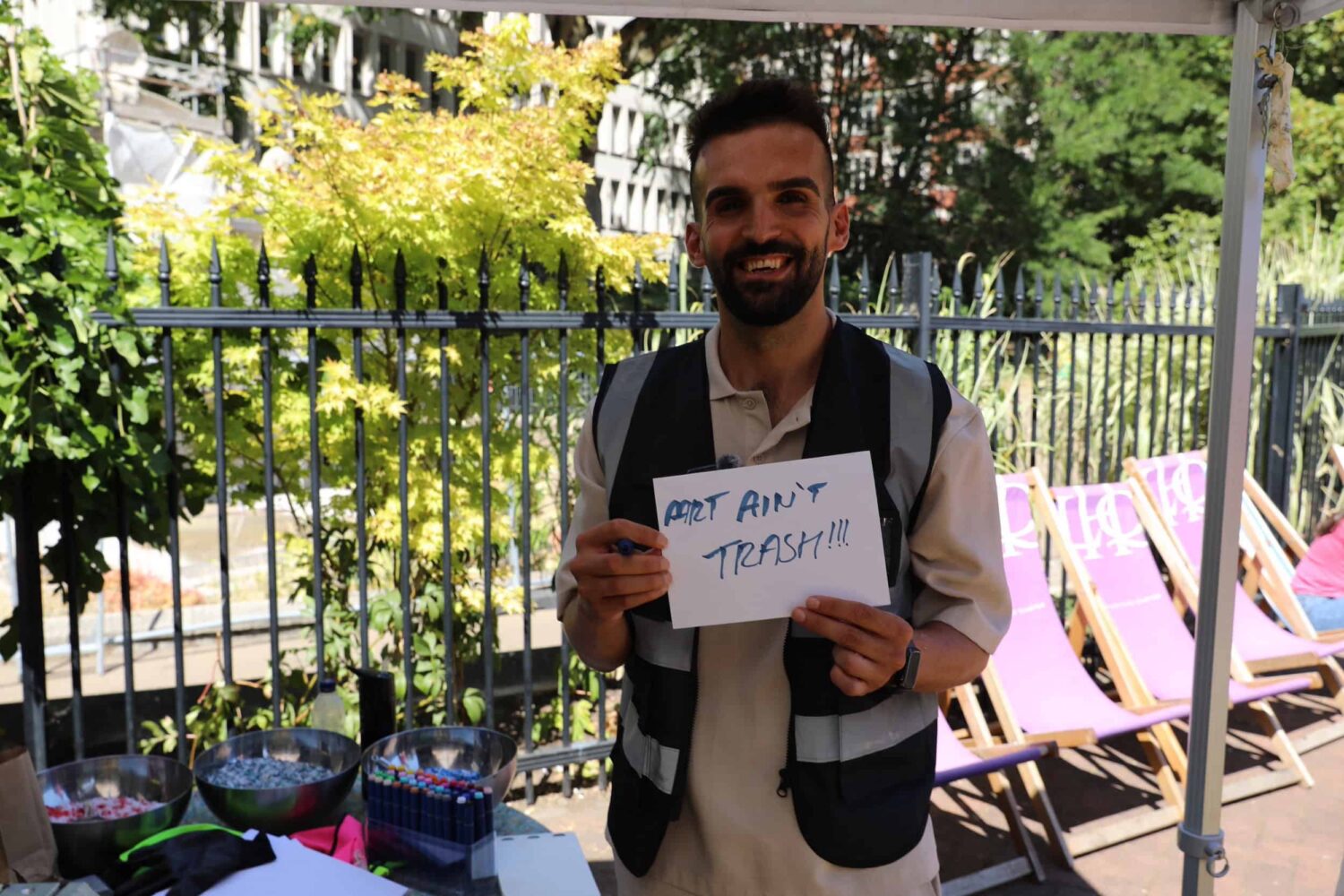

London’s deputy mayor for environment and energy, Mete Çoban, was among those attending UK Youth Day
“From our experience, people do change behaviour after a festival, but rarely because of a single message or campaign,” Netalkar tells Positive News. “What seems to stay with them is an experience where protecting our earth is something they have felt, participated in and enjoyed, rather than something they have simply been told about.”
After ten years, he says audiences respond better when sustainability becomes part of the experience rather than a lecture attached to it. “What turns audiences off is tokenism or preaching; what works is showing that a more responsible way of living can also be beautiful, exciting and aspirational.”
British festivals are exploring the same territory in different ways. Into The Wild, which takes place in Sussex from 28–31 August, mixes music with more than 200 workshops and experiences around wildlife, traditional skills and nature, while supporting habitat restoration through Wilderlands CIC. Earlier this summer, Positive News also reported on the Isle of Wight Biosphere Festival, where beaches, reserves, libraries and community spaces replaced the conventional fenced-off festival site.
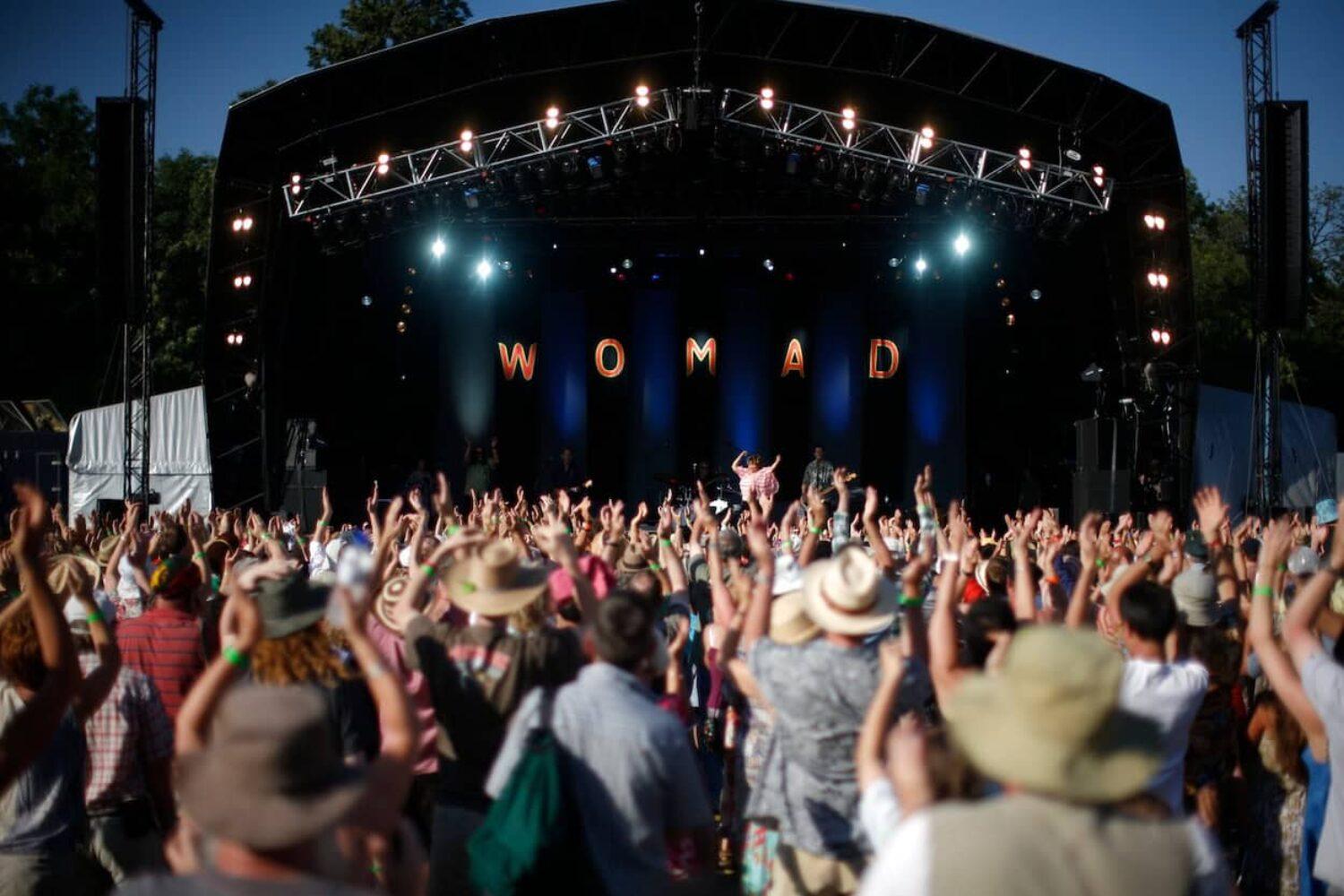
Stages at WOMAD festival are now powered by batteries instead of diesel generators. Image: York Tillyer
None of this makes spending a weekend in a field impact-free. People still have to get there, stages need power and large gatherings produce waste, but organisers have considerably more options than they did a decade ago for reducing those impacts and directing some of the energy, money and people gathered in one place towards something useful.
O’Neill is equally keen that the search for better solutions does not turn into a demand for perfection. “It is important to not allow perfect to be the enemy of good,” she says. “We should do what we can now within our means and capabilities, whilst striving to do more.”
Festival season has always been good at persuading people to try things they might never contemplate on an ordinary weekend. If that increasingly includes restoring soil, planting orchards, replacing diesel generators and turning the contents of a recycling bag into the price of admission, some of this summer’s fields could be left with rather more than footprints once the crowds move on.
Main image: Aranxa Esteve
Be part of the solution
At Positive News, we’re not chasing clicks or profits for media moguls – we’re here to serve you and have a positive social impact. We can’t do this unless enough people like you choose to support our journalism.
Give once from just £1, or join 1,800+ others who contribute an average of £3 or more per month. Together, we can build a healthier form of media – one that focuses on solutions, progress and possibilities, and empowers people to create positive change.
You must be logged in to post a comment Login