NewsBeat
Can volunteering abroad build the next generation of global citizens?

For young adults who feel cut off from global politics, overseas volunteering can offer a more practical route into global citizenship – one built through classrooms, communities and cross-cultural exchange
When politics feels remote, polarised or simply too big to touch, one of the oldest youth organisations in the world is offering a more hands-on answer: get on a plane, meet people whose lives are unlike your own, and work on something useful.
Founded in 1948, in the aftermath of the second world war, AIESEC describes itself as the world’s largest youth-run non-profit. Its original purpose was rooted in cross-cultural understanding at a time when Europe was trying to rebuild trust across borders. More than 75 years later, that idea has not exactly gone out of date.
Through its Global Volunteer programme, the organisation sends 18- to 30-year-olds abroad for projects linked to the UN’s Sustainable Development Goals, with placements typically lasting four to eight weeks. Volunteers work on schemes ranging from education and first aid to tourism marketing, economic development, marine conservation and projects designed to challenge prejudice.
“The reason why conflict starts is that people don’t understand each other,” says Mary-Treesa Rozario from AIESEC’s Sydney University branch. “So cross-cultural understanding and global volunteering – the main purpose of the project – allow the volunteers to understand new cultures.”
There is a danger with any international volunteering programme that it can drift into worthy tourism, or sell transformation too neatly to young people looking for experience. The more useful version is harder, less flattering and more reciprocal: arrive with something to offer, then realise how much you do not know.
For many participants, the initial motivation is practical. They want independence, work experience, a stronger CV or proof that they can handle themselves outside the structures of home and university. Some are also drawn by the chance to receive a certificate linked to the UN’s global goals. But Rozario says the reason for going often shifts once they are there. After working in unfamiliar environments, “the whole type of purpose in doing this exchange completely changes,” she says. “It provides more meaning.”
Sarah Sepuldiva, who volunteered on a Global Classroom project in Vietnam in June 2025, says she joined because she wanted “to become more independent and gain first hand experience about issues happening”. Teaching English without speaking Vietnamese forced her to rethink what communication really depends on.
Cross-cultural understanding and global volunteering allow the volunteers to understand new cultures
“The biggest lesson I learned was patience,” she says. “Not speaking Vietnamese meant I had to rely on careful listening, observation, and creative communication. I learned to interpret what students were trying to express and respond in a way that made sense to them.”
In the classroom, that meant designing activities that were engaging and accessible, watching students closely, and building confidence through encouragement and humour. Sepuldiva found she was especially effective when working one-to-one with students who felt nervous about their English. She would tell them about her own experiences learning languages and joke that, even as a native English speaker, she still made mistakes.
“Their laughter and smiles showed me that this approach helped them feel safe to try and make mistakes,” she says. “I like to think that my presence helped create a supportive environment where students felt confident, motivated, and proud of their progress.”
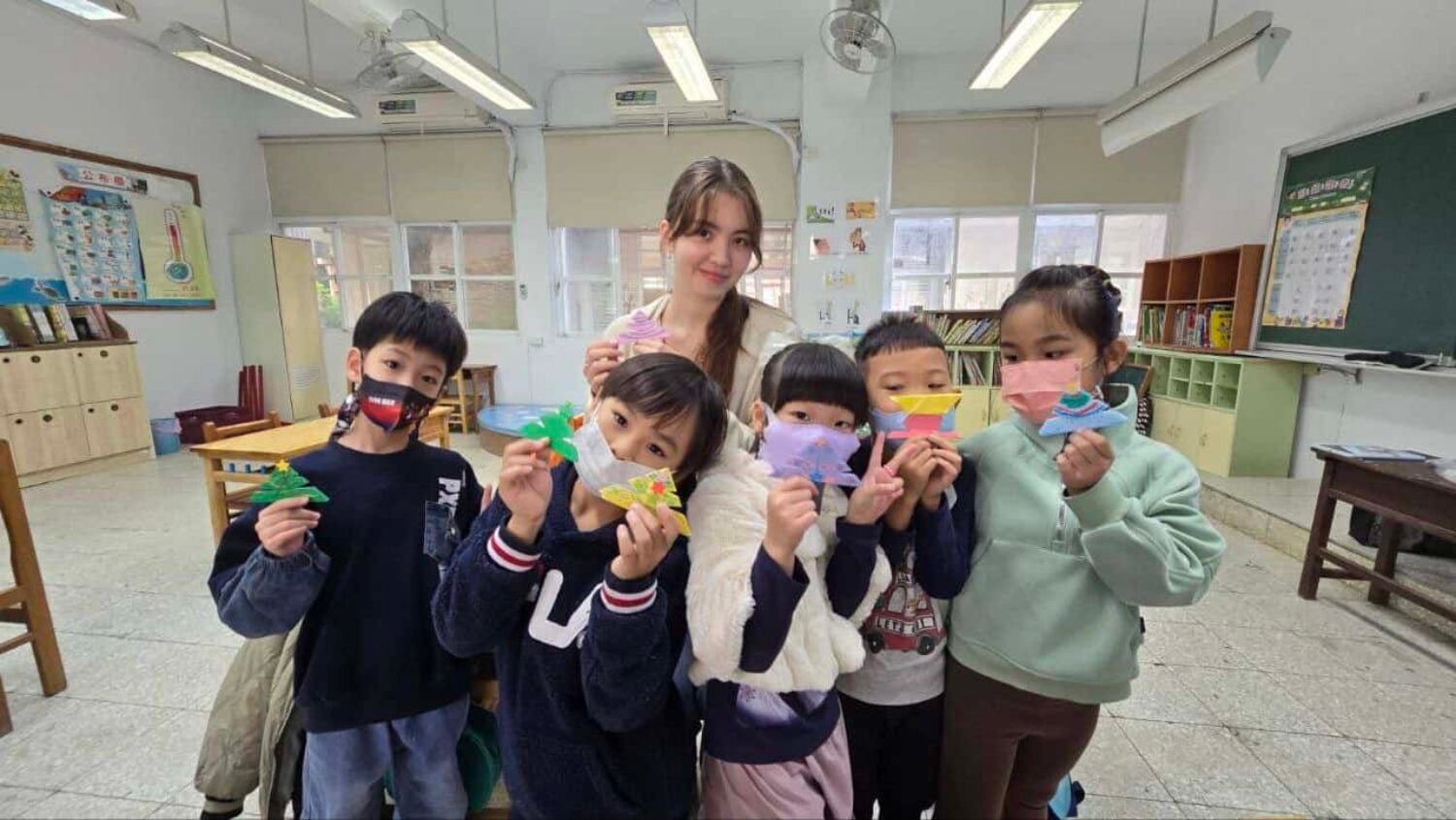

Founded in 1948, in the aftermath of the second world war, AIESEC describes itself as the world’s largest youth-run non-profit
For Harry Kwon, who volunteered on the Beyond Race project in Jakarta in 2018 and 2019, the starting point was partly restlessness. Raised in Perth after being born in Asia, he says he wanted “to get out of Perth” and see more of the world. At 19, during his first summer at university, he travelled to Indonesia, where he taught in primary and middle schools.
“The premise was I was teaching English but the hidden agenda was to raise awareness of diversity and stereotypes,” he says.
Indonesia’s mix of ethnicities, cultures and religions gave those conversations an immediacy that classroom theory rarely has. Kwon used his own experience of growing up in a foreign environment to talk to students about difference, social harmony and the potential that can exist across cultural divides. He also found himself learning from the other volunteers around him, who had come from Germany, Turkey, Malaysia, China, Korea and beyond.
“I learned the world is vast and also that I can make some kind of change,” he says. “I also saw my privilege of living in Australia and what I had that many others around the world don’t – so I realised I should use some of this privilege in ways I can.”
That experience did not end when he came home. Kwon went on to work for AIESEC Australia, helping other young people take part in exchange programmes. He now works for an education philanthropy focused on developing young people to pursue social impact.
“It shaped a lot of what life after looked like,” he says.
That may be the clearest argument for the model. The point is not that a few weeks overseas can solve global inequality, climate breakdown or cultural division. It cannot. The point is that it can interrupt a young person’s assumptions early enough to shape what they do next.
For a generation surrounded by global crises but often shut out of meaningful influence, that shift is not insignificant. AIESEC’s promise is modest when stripped of the marketing language, but it is still powerful: travel with purpose, work across difference, and come back less certain that the world is someone else’s responsibility.
Images: AIESEC
Be part of the solution
At Positive News, we’re not chasing clicks or profits for media moguls – we’re here to serve you and have a positive social impact. We can’t do this unless enough people like you choose to support our journalism.
Give once from just £1, or join 1,800+ others who contribute an average of £3 or more per month. Together, we can build a healthier form of media – one that focuses on solutions, progress and possibilities, and empowers people to create positive change.
You must be logged in to post a comment Login