





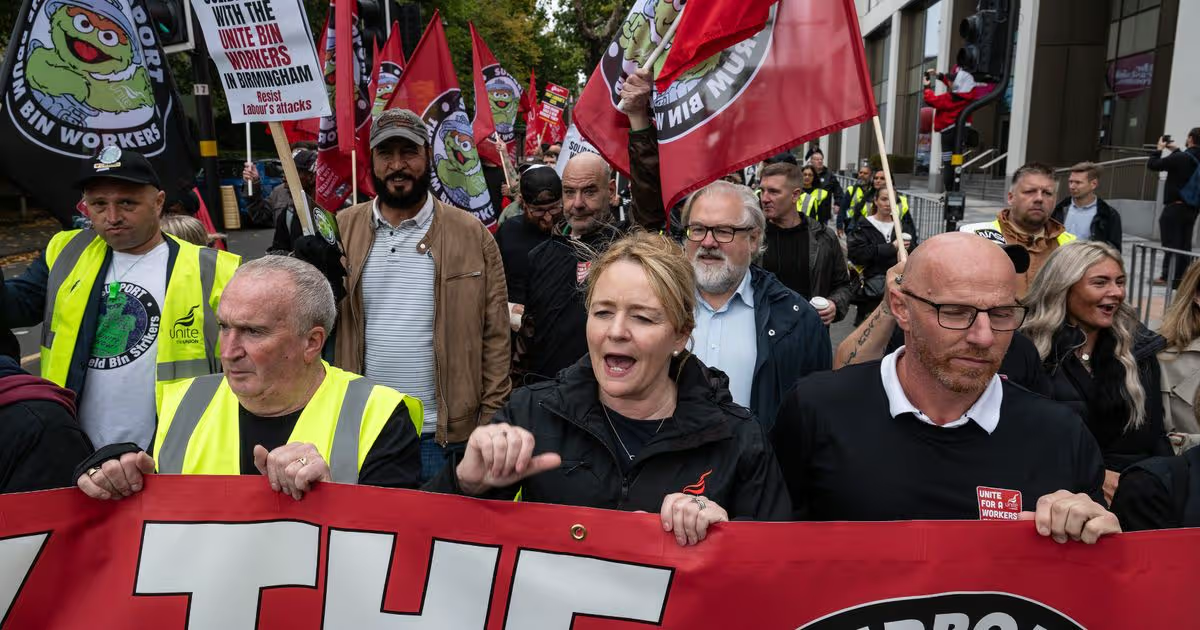
Birmingham City Council has been granted a High Court injunction banning protests outside its waste depots as the city’s all-out bin strike nears its first anniversary
It has been almost a year since refuse workers in a major UK city launched an all-out bin strike.
Birmingham City Council has been granted a High Court injunction banning protests outside its waste depots as the long-running all-out strike approaches its first anniversary. The council sought the order last year after reporting that protesters were blocking depot entrances and preventing vehicles from carrying out collections.
Birmingham’s refuse workers first began striking on January 6, 2025, in a dispute over pay and the removal of a number of roles. An all-out strike followed several weeks later on March 11.
Today, the city council was granted an injunction against “persons unknown”, which it said is intended to “tackle recent blockading and obstruction being experienced at its waste depots”. The judgement comes after a hearing at the High Court on 13 February.
The injunction bans protesters supporting strike action organised by Unite the Union from “entering, occupying or remaining on, or blocking or obstructing the entering or exiting of any other individual or vehicle to and from four depots”. These are Atlas Depot in Kings Road, Tyseley, Lifford lane Depot in Ebury Road, Kings Norton, Perry Barr Depot in Holford Drive or Smithfield Depot in Sherlock Street.
Ensure our latest headlines always appear at the top of your Google Search by making us a Preferred Source. Click here to activate or add us as your Preferred Source in your Google search settings.
The ban also prevents people from “blocking or obstructing any of the council’s street management vehicles within the City of Birmingham”. Anyone who breaches the injunction could face a fine or imprisonment, Birmingham Live reports.
The council said the injunction does not seek to limit protests that do not block or obstruct the provision of its waste services. It added that it does not restrict lawful picketing.
The city council said: “The injunction will be in in effect until trial or further order but in any event for not more than an initial period of three months.”
While Unite the Union members had previously been stopped, other protesters took their place blocking lorries, disrupting collections during the bitter long-running dispute.
The council claimed it acted as disruption had escalated since Christmas, with demonstrators blocking depots and causing 67,000 households – around 19 per cent – to miss bin collections in January.
However, protesters described the legal move for an injunction as “cowardly”. Some council bin staff council have been taking action on what Unite called “fire and rehire pay cuts of up to £8,000 for drivers and former WRCOs (waste recycling and collection officers)” since January last year.
Job & Talent agency staff also joined the action over alleged “bullying, harassment and the threat of blacklisting” following a vote in November last year. The bin strike has resulted in rubbish piling up on streets and no recycling or green waste collections for more than a year.
The council has now succeeded in its High Court bid to ban “persons unknown” – effectively anyone – from blocking bin lorries outside its depots for three months, in a judgment by Mr Justice Pepperall.
In a post on X, the city council said: “On 20 February 2026, following a hearing on 13 February, the High Court handed down a judgment granting Birmingham City Council an injunction against persons unknown to tackle the recent blockading and obstruction being experienced at its waste depots.
“The Court are yet to provide the Sealed Order setting out the full terms of the injunction but it will be uploaded to the webpage when it is available.
“Once the Sealed Order is issued anyone breaching the injunction could be imprisoned for up to 2 years, fined, and/or have their assets seized for contempt of court.
“Therefore, it is essential that anyone who has been involved or interested in the protests take note of the terms of the injunction.”