The average BBC viewer might not realise from the muted set-up and dimmed lights, but much is riding on Winkleman’s eponymous show debut. The fringetastic phenom has helmed the Beeb’s two marquee franchises (the castle and the ballroom), and the question now is whether she can conquer the sofa too.
But show guest Tom Allen (also the first episode’s runaway star) summed up the premiere best: ‘It does feel sometimes like I’m in a nursing home.’
Advertisement
That wasn’t necessarily a bad thing, except when it was.
Clear effort has been made to set Winkleman’s intimate saloon apart from Graham Norton’s shining, showbiz-forward studio. Smooth jazz soundtracked the show, with lighting from stylish sconces that created a speakeasy effect, but one in which celebs flog their wares.
Much was made over The Claudia Winkleman Show’s green sofa (Picture: Matt Crossick/PA Media Assignments)
Advertisement
With no real warm-up, we were straight in with the sofa set: Hollywood’s Jeff Goldblum and Vanessa Williams, as well as national treasure Jennifer Saunders and Allen on the end bit of the emerald velvet settee, absent of back support. As if the comedians didn’t already get short shrift with the seating plan.
It was strange to see Winkleman nervous, but she did admit as much. The anxious grinning was a foreign quality from her unflappable demeanour on The Traitors and Strictly, but the self-deprecation was still there. It was ‘the first and possibly last show’. (Except they’ve already booked big names for next week).
The hour-ish unfolded much like the jazz tunes Goldblum was promoting: winding, with sedate interludes and no clear chorus. This is where Winkleman’s freewheeling ability to get out of the way runs up against the chat show as we know it.
As the celebrity podcast industrial complex has shown, inane luvvie musings are in no short supply. Being low on ego is commendable, until you’re in a room of people brimming with it. Then, you can get lost in the shuffle.
Advertisement
Tom Allen was the runaway star of the sofa (Picture: Matt Crossick/PA Media Assignments)
Winkleman’s laid-back hosting style left the show prone to clumsy moments. Certain questions and anecdotes failed to take off. We paused to observe Goldblum wiggle his ears one at a time, which somehow merited applause and left me wondering what might be on the cutting room floor.
In such moments, it was Allen who saved the day, doing bit after bit from the end of the sofa. Did I look up tickets to the show he was promoting? Yes, I did. Winkleman felt disappointingly static by comparison.
But this was an inaugural outing (when are pilots ever perfect?), and The Claudia Winkleman Show held promise. There were glimmers of those spontaneous celeb interactions – the gold-dust these shows are powered on – like Allen’s mild horror when Goldblum started to read at random from his new novel.
The intimate studio set-up includes audience interaction (Picture: Matt Crossick/PA Media Assignments)
The crowd engagement is where Winkleman has sought to set herself apart from Norton; they fill the void of the Big Red Chair anecdotes, but without that bleak sense that the audience members are court jester puppets for the elite.
In Winkleman’s world, the spectators are just as interesting as the sofa. There was the person who designed the sofa and the one who makes pencils for a living. Some of these interactions struck better than others, but they offered a nice point of difference.
The show needs a speck of polish, but I do hope the gentler, more intimate feel remains in future episodes, as long as the thing can still be kept on the rails. Perhaps for the second episode, Winkleman will have sparked to life and won’t feel the need to bring out a sweet pup to win us over.
Advertisement
Verdict
Only a fool would discount Claudia Winkleman at this point in her career. She hasn’t figured out the format yet, but I don’t doubt she will.
The Claudia Winkleman Show returns to BBC One on Friday at 10.40pm.
Advertisement
Got a story?
If you’ve got a celebrity story, video or pictures get in touch with the Metro.co.uk entertainment team by emailing us celebtips@metro.co.uk, calling 020 3615 2145 or by visiting our Submit Stuff page – we’d love to hear from you.
The refurbishment of a primary school in Stanground is set to benefit from a new specialist unit for pupils with Special Educational Needs and Disabilities (SEND).
Advertisement
The work will see a space at Southfields Primary School that is currently underutilised comprehensively refurbished to create a dedicated SEND Specialist Unit for 38 children. Set to open in 2027, the facility will welcome pupils aged five to 11 with autism spectrum disorder and associated learning difficulties.
The refurbishment is part of the council’s commitment to ensuring every child and young person in the city will have access to quality education in their local community, and have their needs met by trained staff, regardless of their individual requirements.
Councillor Katy Cole, Cabinet Member for Children’s Services, said the council was “proud to take this important step” in helping to provide a nurturing and inspiring environment that will enable every child to flourish.
“By investing in inclusive provision, we are making strong inroads into ensuring that children and families can remain rooted in their communities while benefiting from specialist support,” she said.
Advertisement
At present, 66 primary-aged children in Peterborough are waiting for specialist SEND placements, none of which are likely to become available until September 2027.
Cllr Cole said: “Our vision is for every child to experience belonging and opportunity in their local school, supported by trained staff who share our commitment. This new unit will help us realise this key aim and I look forward to seeing it established.”
The remodelling work at Southfields Primary School was authorised by Peterborough City Council at a Cabinet meeting on March 24.
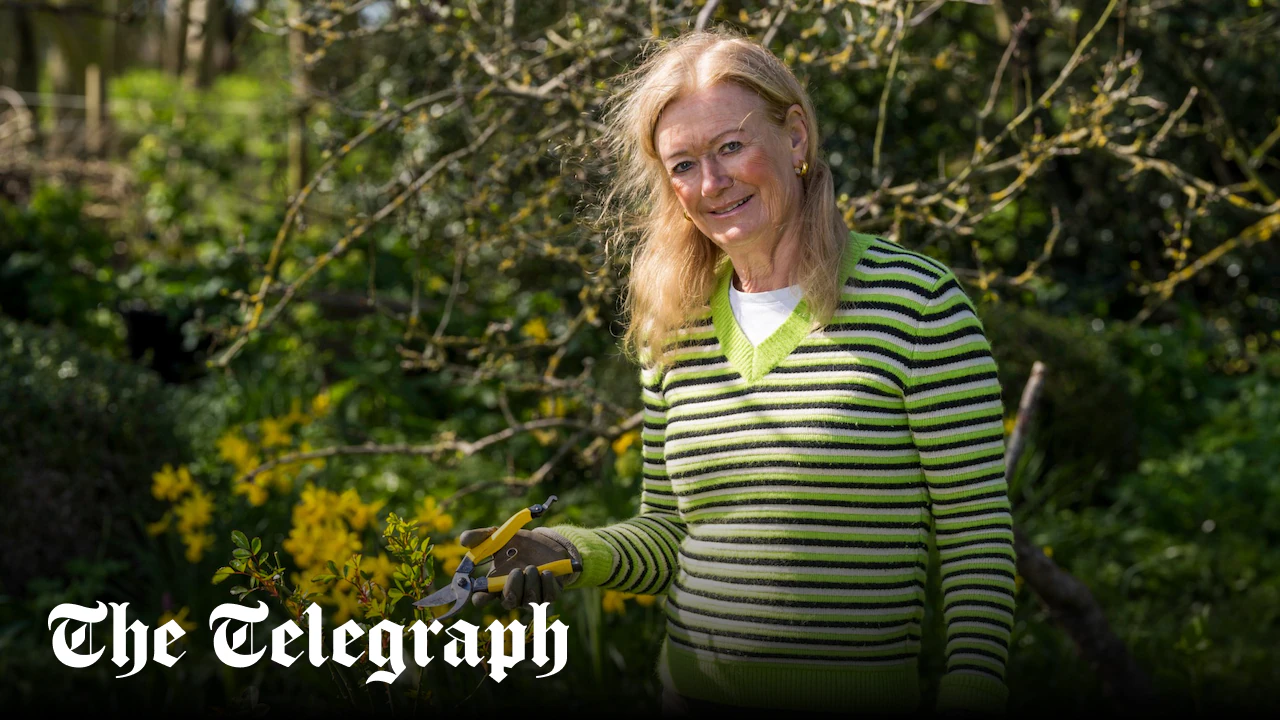
Having hit the big 70, I am determined to maintain my garden with two days of work a week. One from me and a second from Dave, who helps me keep things in shape. The huge advantage in my favour is the massive surge in great tools and techniques, which reduce the time required from me.
Over the last 50 years of gardening, my favourite tools have changed dramatically. My biggest time saver is the robot lawn mower. I love almost all aspects of gardening, but starting mowers, cleaning spark plugs and emptying the box are all more of a chore than a joy. Their carbon footprint is also staggering.
Here I share the ten essentials categories and items I consider worth investing in for every gardener.
Advertisement
If you don’t like gardening in inclement weather, you are in the wrong clothes. The Genus Three-Season Gardening Trousers (£159) have built in kneepads, useful pockets and they are in a cut that allows for easy movement. They keep me snug but not sweaty and have transformed my attitude to gardening in all weather.
I also never garden without a hat to shield my face from damaging rays. On a hot summer’s day, it helps keep me energised rather than wilting in the heat. I love Niwaki’s camo hat (£24). It has a deep peak and is fully adjustable, plus it washes well. In winter, I often use a woollen hat with a built-in head torch. Ideal for working in the dark, you can often find one on Amazon or a local garage for less than £10. Just look for an LED light that is rechargeable.
I have chronic Reynaud’s syndrome, so have tried many gloves. For me, the best for wet, cold gardening are Toolant’s 100% Waterproof Gloves (£16.99). Available in several sizes, they have grip and they are touchscreen-compatible. Designed for working in deep freezers, they have revolutionised my winter gardening. For warmer months, I like Portwest’s A310. They come in many sizes, cost around 49p per pair, and allow you to have great connectivity with plants.
YAS is appealing for caring and compassionate individuals to join its volunteer team, supporting others through emergency response, patient transport, or service development.
To make getting involved easier, the service has launched a new website showcasing roles, training opportunities, and stories from current volunteers.
Amy Ingham, volunteer development manager at YAS, said: “We have over 1,000 volunteers who come from all walks of life to support their local communities.”
Advertisement
Ms Ingham explained that the volunteer opportunities are varied and flexible to suit individual circumstances.
She added: “Whether it’s supporting patients in an emergency, taking people to vital medical appointments, or contributing to service developments, our volunteering opportunities are varied.
“We also offer total flexibility so you can choose when you volunteer to fit around your work, family, and other commitments.”
The three main roles include:
Advertisement
Community first responders, who are trained to attend 999 emergencies in their area.
Patient transport service volunteers, who use their own vehicles to take eligible patients to and from their pre-booked hospital appointments.
Critical friend network volunteers, who have experience with the ambulance service, help shape its development.
More information is available at yasvolunteering.uk.
Aston Villa’s Morgan Rogers is attracting interest from fellow Premier League clubs in a summer that could prove significant for the forward ahead of the World Cup
Premier League clubs are monitoring Aston Villa star Morgan Rogers ahead of the summer window. Arsenal, Chelsea and Liverpool are long‑standing admirers of the 23‑year‑old, who is expected to attract significant interest at the end of the season.
Advertisement
Rogers, who came through West Bromwich Albion’s academy, joined Villa in 2024 and has become a mainstay in Unai Emery ’s attack. He signed a six‑year deal last November, but that is not expected to deter potential suitors.
The Sun claims Rogers and Villa’s hierarchy have an understanding that it is ‘probably the right time to part ways.’ Villa have limited room to manoeuvre under financial rules and have been forced to sell before they buy in recent windows.
Currently fourth in the Premier League, Villa are fighting to secure Champions League football next season but any slip‑up could make it harder for them to keep hold of their prized asset. Even so, there remains a possibility that Rogers could depart if it allows Villa to reinvest across the squad.
Advertisement
However, Villa are expected to demand a hefty fee, with Rogers viewed as one of their most valuable players and a potential England starter at the World Cup. Villa boss Emery always been full of praise for Rogers and recently said: “He is growing up so quickly and performing more and more better. He has qualities and he is strong. His mentality is a huge mentality.
“He is a really fantastic guy. I need to push him sometimes and we need him. He feels the ambitions I want, but it is not pressure. Ambitions. In the dressing room is also very important. He is fantastic as a person.
“He is funny and he is responsible, focusing on his task. I am so, so happy how he is responding. The idea I have is to use him through our structure. All the players need to feel confident and working in our demands.”
Chelsea are expected to move for a new attacking midfielder this summer if Enzo Fernandez leaves, with rumours continuing to link him to Real Madrid.
Rogers is also close friends with Cole Palmer, having come through Manchester City’s youth ranks together while Liverpool could make a major push for a forward of Rogers’ profile as they prepare for life after Mohamed Salah, who is set to depart on a free at the end of June.
Join our new WhatsApp community and receive your daily dose of Mirror Football content. We also treat our community members to special offers, promotions, and adverts from us – and our partners. If you don’t like our community, you can check out any time you like. If you’re cu rious, you can read our Privacy Notice.
There are two ways of looking at a racing driver’s job.
Primarily, it is to get whatever car they have been given around a lap as fast as possible. In that sense, nothing has changed.
But on a more philosophical level, F1 is meant to be the ultimate challenge – the driver taking their machine and themselves to the limit of what is possible. In that sense, it very much has changed.
There is almost unanimous agreement that the challenge of a flat-out qualifying lap has diminished as a consequence of the demand for energy management. To the extent there is no longer such a thing as a flat-out lap.
Advertisement
Some of the sport’s most challenging corners have been made less demanding because they are now what Fernando Alonso has referred to as “charging zones”.
On some circuits, drivers are having to ‘lift and coast’ – lifting off the accelerator before corners so the electric motor can run against the engine – on qualifying laps to produce the best all-round performance.
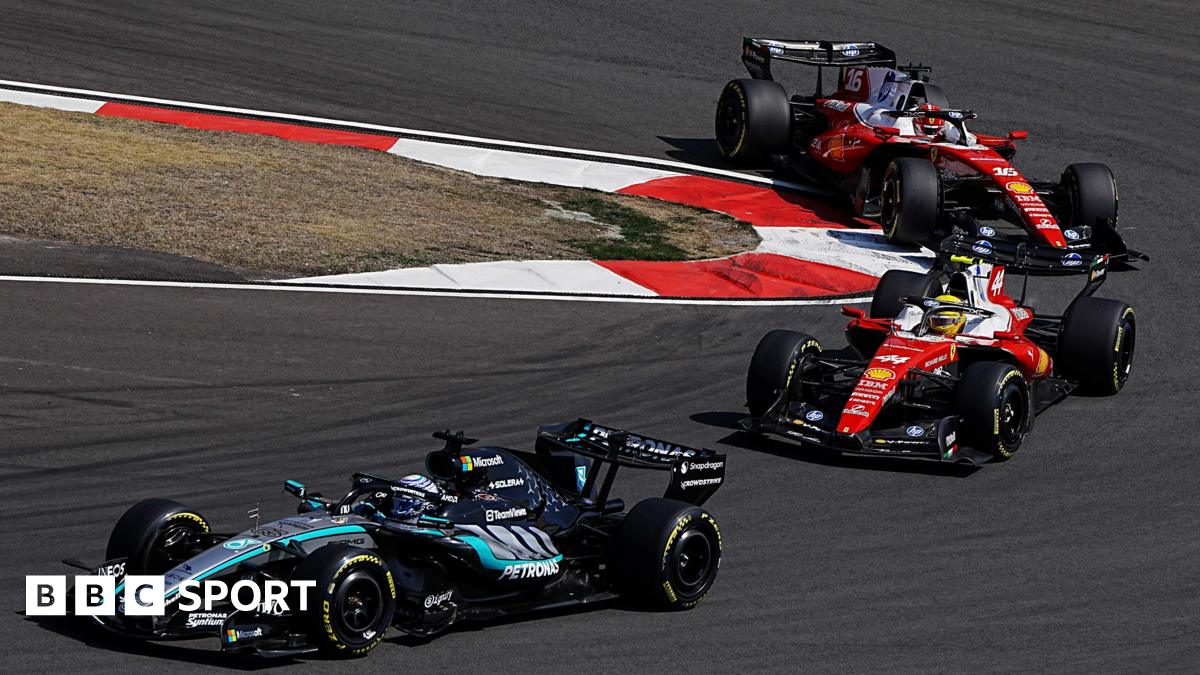
Suzuka, which hosted the Japanese Grand Prix last weekend and is regarded as possibly the most challenging circuit on the calendar, was a test case for the new rules. And in the eyes of the drivers, the rules failed it.
The Esses – perhaps the most technically demanding piece of racetrack on the planet – was designated a “zero kilowatt zone”, where teams could deploy no electrical energy.
Advertisement
That meant the engines operated at more or less half power through there. The speed changes in between corners were not very much different from before, and the corners were still grip limited, but it changed the nature of the challenge.
Worse were the two Degner corners.
As McLaren team principal Andrea Stella put it: “Degner One has always been one that the drivers will mention in a season. Like, what are the most challenging corners? That’s one of those.
“Now, you think about the battery as you go through the corner, you don’t think about gaining half a tenth just by committing to it. It is now a corner in which you almost lift and roll through, and then you have to avoid going on power between Degner One and Two, because that way of using your battery would not be efficient.”
Advertisement
The same applied to the entry to Spoon Curve, and through Turns One and Two.
Norris said a lap of Suzuka “still feels special” but admitted it “hurts the soul” to lose, as the cars were, about 37mph from the high-speed 130R kink until braking for the chicane because the car had run out of electrical power.
Leclerc, meanwhile, swore over the radio to his team after Saturday’s session, saying: “I honestly can’t stand these new rules in qualifying. I go faster in corners, I go on throttle earlier… I’m losing everything in the straight!”
Essentially, drivers are having to do a series of actions in qualifying that McLaren’s Oscar Piastri has described as “counter-intuitive”.
Advertisement
Leclerc said: “Consistency is paying off more than being brave and going to take something that you’ve never tried before, which is a shame and which makes qualifying a little bit less challenging. This is something we need to work on.
“It’s a known issue. It’s not that the FIA or the teams are just accepting the situation as it is. There’s a lot of work behind the scenes and I hope that we can find a solution as soon as possible.”
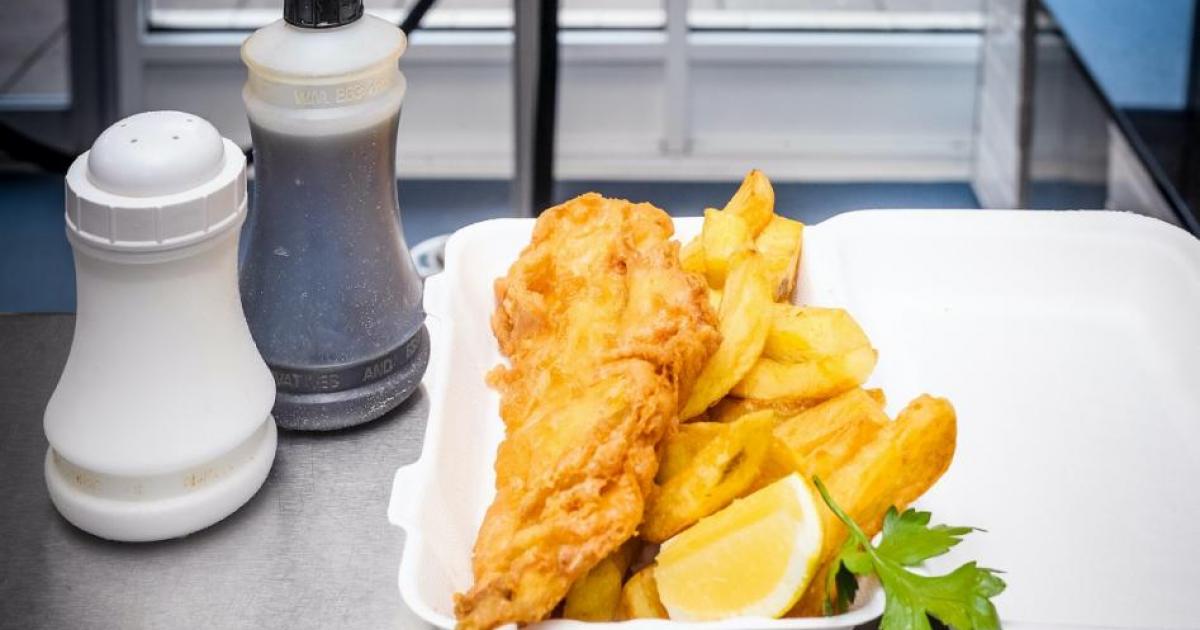
Good Friday (this year marked on April 3) is arguably the biggest day in the country for fish and chips – a British staple which can be found in thousands of shops and restaurants across the UK.
And in the North East, we are no stranger to a good chippy. Our proximity to the seaside means a classic, tasty portion is always close by.
With that in mind, we’ve compiled a list of some of the most-loved spots in the region, including their food hygiene ratings, so you can decide where to go this Good Friday.
Advertisement
Which one is your favourite?
Seaham
Bells Fish and Chips – Five stars
Downey’s Fish and Chips – One star
Seaham Chippy – Five stars
South Tyneside
Colmans Food Temple – Five stars
North Tyneside
Bill’s Fish Bar – Four stars
Fisherman’s Bay – Five stars
Teesside/North Yorkshire
Oliver’s Fish and Chip Restaurant – Five stars
The Little Chip – Five stars
Why do we have fish and chips on Good Friday?
Well, it all stems from the fact that Christians believe that Jesus was executed on Good Friday, sacrificing himself for his followers.
Because of this, Christians do not eat red meat on Good Friday to honour this, and instead eat fish as an alternative.
‘War’ Chisora was in a typical mischievous mood; he repeatedly swore as he predicted a “one-round” knockout.
Host Adam Smith was forced to frequently interrupt and apologise to viewers for the bad language, but Chisora did not relent, at one point encourgaing chants from the crowd.
Despite 13 losses against elite opposition – including Vitali Klitschko, Oleksandr Usyk, and three bouts with Tyson Fury – Chisora has built a loyal fanbase through his quirky personality and relentless, come-forward style.
“Boxing is so easy: it’s put your hands up and hit the other guy. That’s it,” he said.
Advertisement
A loss for Wilder would also likely spell the end of his career.
Arriving 45 minutes late and apologising for his “tardiness”, the American made a bizarre plug for a brand of mouthguard before repeating previous comments about needing to “heal” from personal issues and past losses.
Once regarded as boxing’s most devastating puncher, the former WBC heavyweight champion has stopped 43 opponents in 44 wins, often in spectacular fashion.
“What happens when a warrior comes against a freak of nature? Derek comes to fight, but I’m coming with detonation,” Wilder said.
Advertisement
However, the “Bronze Bomber” has lost four of his past six fights. Since his punishing trilogy with Tyson Fury – a rivalry that saw him knocked down five times and stopped twice – Wilder has struggled to rediscover his destructive form.
“I know when I hang up the gloves, people will miss me,” he said. “When I say I’m gone, I’m gone. So enjoy me while I’m here.”
A secret library, the best book shops and a bar with student union prices: poet and actor Greta Bellamacina knows all the best spots for embracing London’s literary side. Here, she names her favourite spots and shares some hidden gems.
I live in the countryside in Kent, with my husband Robert and our children Lorca, Lucian and Ersilia. I grew up in north London, so the countryside is new for me. I come into town most days. My train comes into Victoria, so Pimlico has become my new London village. On Upper Tachbrook Street I have my dry cleaner, my cobbler and the fabulous Italian café Ben Venuti, which has become my local.
Where do you stay in London?
I like the rooms at the Chelsea Arts Club; it feels like staying at a long-lost aunt’s house. It’s timeless and somehow unpretentious — and the bar has student union prices.
Advertisement
Where was your first flat?
On Camden Road, opposite the skate park. We had no money and we decorated the flat with things we found on the street.
Where would you recommend for a first date?
The Holly Bush pub in Hampstead. It’s at the top of the hill, with hardly any phone reception. The ceilings are really low and there is always a fire burning. There isn’t much space, so you have no choice but to huddle together. It’s the perfect spot for a winter date, because when you step back outside the view of London in the mist is always heart-stopping.
Advertisement
Which shops do you rely on?
Hatchards on Piccadilly for the wonderful rare books curated by Richard, who sits on the top floor at his very public desk and welcomes you with new books and gossip. Choosing Keeping, in Seven Dials, for thank-you cards and stationery. The antique dealers on Flask Walk in Hampstead for the occasional piece of furniture. Retromania in Pimlico for vintage; it’s quite a special shop as it’s also a Fara charity shop and nothing is too expensive. And I love Santa Maria Novella in the Piccadilly Arcade for the lily water and the pomegranate soap.
What’s the best meal you’ve had?
Sentimentally, I love Lemonia in Primrose Hill; we went there throughout my childhood. We recently took the children for a late Sunday lunch of calamari, hummus and cheese saganaki. Our waiter had been there since I was a child and the room never changes. It always feels like a homecoming.
Advertisement
What would you do if you were Mayor for the day?
I would like one continuous long dinner table that runs down all of the roads in London and I would invite everyone to dinner. I would put microphones in the trees and speakers in the streets to amplify the bird song.
Who is the most iconic Londoner
Virginia Woolf — I used to live next to her house in Fitzroy Square. I would walk past every day and think about her there, writing behind the window.
Advertisement
Where do you go to have fun?
I love a middle-of-the day cinema screening, maybe at the Prince Charles Cinema or the Curzon Soho. I also love a theatre restaurant; my favourite is J Sheekey. You can feel the ghosts of the West End stage in the booths.
What’s your biggest extravagance?
Tights, hundreds of them. I tend not to wear trousers, so I have drawers and drawers full of red, white and lacy tights.
Advertisement
What’s your London secret?
The London Library — it looks like a townhouse from the front but inside it’s a maze of books, with desks that look out on to St James’s. I go there to write and to think.
What are you up to for work?
I’ve been all over the place this year. I was just in Madrid filming Florian Zeller’s new movie Bunker, alongside Penélope Cruz and Javier Bardem, then I went to Wales to make a sitcom called The Golden Valley. Now I am working on my new non-fiction poetry and prose novel, Incarnadine, and finishing my masters at Cambridge.
Advertisement
Greta Bellamacina
My husband, artist Robert Montgomery — he has a quiet optimism in everything he makes and believes in the goodness of strangers.
I collect the paper camellias that come free with the bags when you buy a Chanel lipstick. I stick them on my dressing room mirror.
What’s your favourite work of art?
The warped window of St Martin-in-the Fields church in Trafalgar Square, by Iranian artist Shirazeh Houshiary. It’s as though God or a saint melted the classical window.
Advertisement
Greta Bellamacina’s poetry collection, Who Will Make the Fire, is out now (Cheerio, £12.99) She is also a model at Viva London
Key changes to the state pension are taking effect over the coming years
HMRC has issued a statement on how tax on the state pension works. The update follows an enquiry regarding the deductions that apply to payments.
Advertisement
A person contacted the tax authority via social media with a query. They asked the organisation: “Where can I find a monthly statement of my state pension showing the payment and deductions?” Now is an opportune time to review your state pension payments.
The state pension is rising by 4.8 per cent from April, increasing the full new state pension from £230.25 a week to £241.30 a week. In response to the enquiry, HMRC outlined the essential rules to understand.
The organisation said: “State pension is paid by the Department for Work and Pensions (DWP) and no tax is deducted at source.
“Your pension payments do appear only on your bank statements – DWP pays the same amount every four weeks.” This means if you’re entitled to the full new state pension, you’ll receive £965.20 each payment period.
Advertisement
State Pensioners to face major tax change
If you’re receiving the full basic state pension, this will amount to £184.90 a week, or £739.60 each four-week payment period. Payments typically arrive in arrears.
The particular day you receive your state pension depends on the last two digits of your National Insurance (NI) number. This is how it operates:
00 to 19: Monday
20 to 39: Tuesday
40 to 59: Wednesday
60 to 79: Thursday
80 to 99: Friday
Those planning for their retirement should be aware of another significant change set to take effect from April 2026.
The state pension age will rise from 66, moving up gradually to reach 67 between April 2026 and April 2028.
Legislation has also been enacted for a further increase to 68, between 2044 and 2046.
Advertisement
You can find out how much state pension you’re projected to receive using the forecast tool on the Government website.



















































You must be logged in to post a comment Login